 Editor-written summary
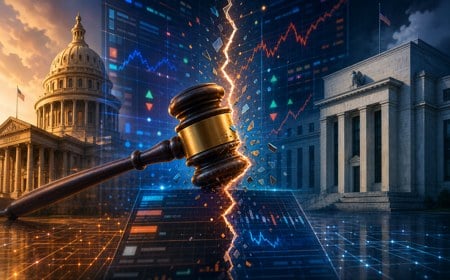
Utah has filed criminal charges against Kalshi and two executives, escalating a dispute over prediction markets from civil enforcement to felony prosecution. The move follows Utah’s civil lawsuit alleging Kalshi’s markets violate state gambling law and the CFTC’s separate lawsuit seeking to block Utah from interfering with federally registered contract markets. The case is becoming a test of who controls the operating system for priced public forecasts: states enforcing gambling bans or federal commodities regulators supervising event contracts.
Inside this report
- Salt Lake City Turns Kalshi Felony Charges Into a Prediction-Market Jurisdiction Test
- Quick Read
- Table of Contents
 Editor-written summary
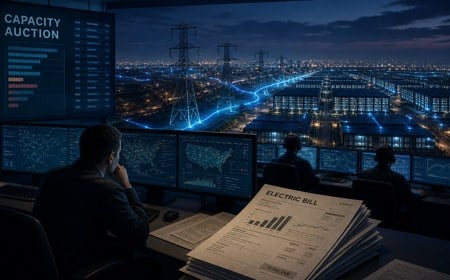
State ratepayer advocates asked PJM’s board to seek FERC approval to postpone the December 9-15, 2026 capacity auction for the 2029/2030 delivery year until forecast data-center load is removed and handled through a separate reliability backstop process. The request leans on PJM’s Independent Market Monitor, which warned that data-center load already raised capacity costs by $29.4 billion and could add another $5 billion to $10 billion in the upcoming auction. PJM says delaying the auction this close to execution could destabilize the market and raise reliability risk.
Inside this report
- PJM Turns AI Load Forecasts Into a Capacity-Cost Stress Test
- Quick Read
- Table of Contents
 Editor-written summary
U.S. strikes have resumed near Hormuz as Israel presses Trump for a wider campaign. PN verifies the November incidents, the reported target categories, the disputed intelligence and what the January 1 remark does—and does not—mean.
Inside this report
- The War Is Already Active, but Its Intensity Is Being Debated
- The November 13–19 Sequence
- What Netanyahu Is Asking for—and What Trump Has Not Approved
 Editor-written summary
ECB Banking Supervision Chair Claudia Buch said on November 19, 2026 that euro-zone banks’ direct data-center exposure is still small but growing quickly. Reuters reported that data centers account for about 1.2% to 1.3% of euro-zone banks’ corporate exposures and that 12 banks are materially exposed to AI-related private credit. The system signal is that AI infrastructure is becoming a supervisory credit-risk channel, not only an energy-demand or equity-valuation theme.
Inside this report
- Frankfurt Turns AI Data-Center Lending Into a Bank-Supervision Stress Test
- Quick Read
- Table of Contents
 Editor-written summary
Google and Blue Origin confirmed a launch-services agreement for Project Suncatcher, with New Glenn targeted for a dedicated heavy-lift mission in Q1 2029. The satellites are planned to carry Google TPUs and roughly rack-scale compute capacity into sun-synchronous orbit. The system read is that AI infrastructure competition is widening from chips, data centers and grids into launch economics, orbital power, radiation hardening and thermal design.
Inside this report
- Mountain View Turns Project Suncatcher’s New Glenn Booking Into an Orbital AI-Power Test
- Quick Read
- Table of Contents
 Editor-written summary
The Bureau of Industry and Security’s interim final rule, published in the Federal Register and effective November 19, 2026, restricts certain exports, reexports and in-country transfers of advanced semiconductors to overseas data centers that provide large-scale compute access to entities headquartered in Country Group D:5 or Macau. The rule also adds destination-based licensing requirements for Brazil, Indonesia, Malaysia, Singapore and Thailand, tightens oversight around advanced-node chip fabrication and packaging, and formally rescinds the Biden-era AI Diffusion Rule. The strategic shift is clear: Washington is moving from controlling boxes of chips to policing the operating layer of global compute.
Inside this report
- Washington Turns BIS’s Remote-Compute Rule Into an AI-Chip Containment Test
- Quick Read
- Table of Contents
 Editor-written summary
Saudi Arabia’s coalition said on November 19, 2026, that it dealt with a Houthi missile threat toward Riyadh and was assessing debris and material damage. AP, Reuters, and AFP reported damage in Riyadh’s financial district, with Reuters and AFP identifying the affected skyscraper as the Public Investment Fund Tower. The incident reframes the conflict as a direct test of Saudi capital security, Vision 2030 credibility, and regional deterrence.
Inside this report
- Riyadh Turns a Houthi Strike on PIF Tower Into a Gulf Capital-Risk Test
- Quick Read
- Table of Contents
 Editor-written summary
Loudoun County, Virginia, said its Board of Supervisors voted on November 17, 2026, to pause action on legislative data-center and electrical-substation applications for up to 12 months, retroactive to September 15. The county says the move could affect 33 active legislative applications while leaving administrative reviews, new submissions and several exceptions in place. The decision turns Data Center Alley into a test case for how AI compute growth is increasingly constrained by local permitting, substations, transmission planning and ratepayer politics.
Inside this report
- Loudoun Turns Data Center Alley’s Pause Into an AI-Grid Bottleneck Test
- Quick Read
- Table of Contents
 Editor-written summary
At the APEC summit in Shenzhen on November 19, 2026, Xi Jinping urged leaders to keep trade and technology development open while Donald Trump, Vladimir Putin and Xi prepared for high-stakes talks. Reuters, AP, APEC and AnewZ reporting show AI, chip controls, sanctions, energy disruption and macroeconomic risk converging around what was formally billed as an agenda of openness, innovation and cooperation.
Inside this report
- Shenzhen Turns APEC’s AI-Trade Agenda Into a Great-Power Control Test
- Quick Read
- Table of Contents
 Editor-written summary
Episode 3 of The Next Normal explains why a connected digital civilization is more likely to reorganize through pressure, fracture, adaptation, and reintegration than follow one clean historical collapse script.
Inside this report
- The Myth of Collapse — Audio-Video Edition
- About this episode
- The future reorganizes faster than historical collapse models expect
 Editor-written summary
CISA urged organizations on November 17, 2026, to immediately patch CVE-2026-114938, a Java memory-corruption flaw known as Java4Shell. Oracle, CERT-EU and Tencent Cloud issued related guidance, while Reuters reported parallel warnings from U.S., South Korean, German and British authorities. The larger signal is a resilience test for software inventories, cloud workloads, vendor-bundled runtimes and patch governance under shrinking response windows.
Inside this report
- Washington Turns Java4Shell Into a Critical-Software Patch-Rush Test
- Quick Read
- Table of Contents
 Editor-written summary
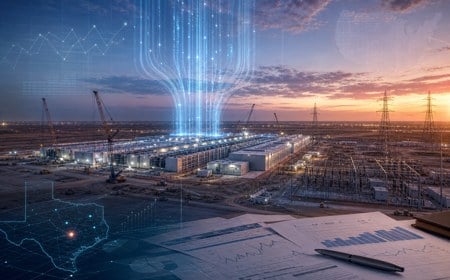
ChronoScale announced definitive agreements with STN for a 50/50 Odessa, Texas AI data-center development partnership tied to a first deployment for a frontier AI lab. The company says the first phase carries up to $7.5 billion of expected total contract value over six years and is supported by up to $750 million of financing. The setup shifts the AI infrastructure story from chips alone to campus development, capital structure, HSR clearance, megawatt economics and delivery timing.
Inside this report
- Odessa Turns ChronoScale’s $7.5B AI Campus Into a Frontier-Compute Financing Test
- Quick Read
- Table of Contents

