 Editor-written summary
France is pushing G7 partners at the June 15-17 Évian summit to back a critical-minerals statement aimed at reducing Western reliance on China, Reuters reported via Internazionale. Japan separately proposed a G7 stockpiling framework, while the French G7 presidency had already named critical-minerals value-chain resilience as a cross-cutting priority. The system signal is that allied governments are moving beyond diversification rhetoric toward stockpiles, guaranteed demand, price support and market rules for non-China supply.
Inside this report
- G7 Moves the Critical-Minerals Chokepoint Into an Allied Supply-Chain Bloc
- Quick Read
- Table of Contents
 Editor-written summary
SpaceX disclosed a June 16, 2026 agreement to acquire Anysphere, maker of Cursor, in an all-stock merger valuing the company at $60 billion. Cursor is expected to become a wholly owned SpaceX subsidiary in the third quarter of 2026, subject to regulatory approvals. The strategic signal is that SpaceX and xAI are moving closer to the developer interface where AI-generated software production happens.
Inside this report
- SpaceX Turns Cursor Into the Developer Interface for Its AI-Compute Stack
- Quick Read
- Table of Contents
 Editor-written summary
The Justice Department moved to intervene in and dismiss an NAACP Clean Air Act citizen suit targeting gas turbines used to support xAI-linked AI data center operations in Mississippi. DOJ argues the facility’s power supply supports AI models important to the economy and military operations, while the NAACP and environmental counsel frame the case as a local air-pollution and accountability fight. The result is a larger precedent battle over whether AI compute infrastructure can be treated as strategic capacity that limits local and citizen enforcement.
Inside this report
- Washington Turns xAI’s Gas Turbines Into a National-Security Compute Shield
- Quick Read
- Table of Contents
 Editor-written summary
Reuters reported that at least 57 off-grid U.S. power plants are proposed or under construction to serve individual data centers, totaling about 73,000 MW. Cleanview, The Washington Post and industry reporting show the same direction of travel: AI data-center developers are increasingly using behind-the-meter power to bypass grid queues. The result is a new fight over siting, emissions, reliability, public notice and who controls the next layer of AI infrastructure.
Inside this report
- AI Data Centers Move the Power Plant Behind the Fence
- Quick Read
- Table of Contents
 Editor-written summary
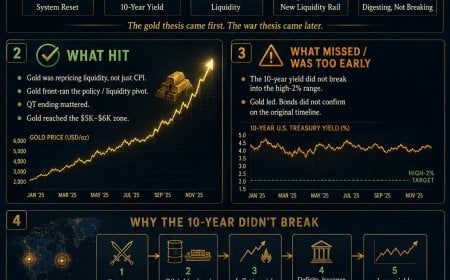
The original Pattern Nexus gold call hit the structural move: gold was not just trading inflation, it was repricing liquidity, policy failure, and the collateral stack. The miss was the 10-year yield. It did not break into the high-2% range because two wars changed the inflation, oil, shipping, deficit, and term-premium path after the gold call was already made.
Inside this report
- Gold Was Right. The 10-Year Was Early.
- Gold Was a System Signal
- Liquidity Was the Rail
 Editor-written summary
A Pattern Nexus three-level research article mapping deep-time human capability, lost archives, drowned coastlines, megalithic architecture, ancient astronomy, undeciphered scripts, UAP secrecy, invention secrecy, and the recurring pattern of civilizational amnesia.
Inside this report
- The Older Signal
- Listen to the full narrative version of this article.
- What I am actually saying.
 Editor-written summary
The United States launched strikes on Iranian targets near the Strait of Hormuz after the loss of a U.S. Army Apache helicopter, while Iran reported retaliatory attacks against U.S.-linked targets in Jordan and the Gulf. AP reported that the exchange again tested a two-month ceasefire, and Reuters-linked oil coverage showed crude rising as the flare-up renewed supply-risk concerns. The strategic signal is a maritime-energy choke point turning into a repeat escalation loop.
Inside this report
- Hormuz Ceasefire Breaks Into Direct U.S.-Iran Strike Cycle
- Quick Read
- Table of Contents
 Editor-written summary
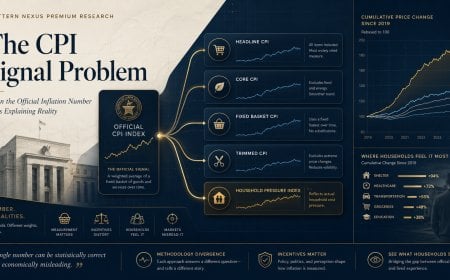
A Pattern Nexus data analysis audit using official BLS CPI data from 1960 through April 2026 to compare headline inflation against fixed-basket, current-method, and trimmed-basket frameworks.
Inside this report
- The CPI Signal Problem: When the Official Inflation Number Stops Explaining Reality
- Pick the version that matches how deep you want to go.
- Level 1 — Reader-Friendly: The Number Is Official. That Does Not Mean It Explains Reality.
 Editor-written summary
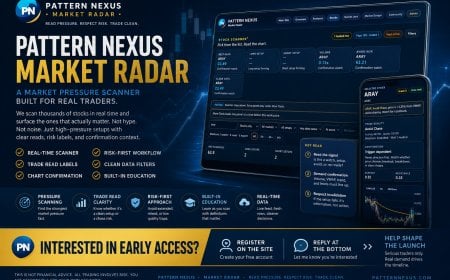
Pattern Nexus Market Radar is being built as a scanner-first trading dashboard that helps users read market pressure before chasing a move. It does not promise magic signals. It organizes live market data, chart context, risk labels, confirmation checks, and watchlist logic into one guided workflow.
Inside this report
- Interested in early access?
- Step 1
- Step 2
 Editor-written summary
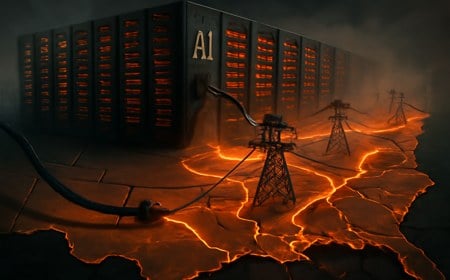
Surging data-center demand is pushing PJM from a reliability problem into a governance problem. Bloomberg reporting carried by the Los Angeles Times says American Electric Power has threatened to leave PJM and federal officials are discussing structural changes, while Reuters reports PJM is weighing market reforms as data centers outstrip available energy supplies. FERC filings and market-monitor materials show data-center load has already added billions of dollars to PJM capacity-market costs.
Inside this report
- AI Load Starts Breaking the Grid Operator, Not Just the Grid
- Quick Read
- Table of Contents
 Editor-written summary
Antioch High School shooting survivor Antonyous Henin has sued Omnilert and System Integrations, alleging an AI-powered gun-detection system was installed and operating but failed to detect the shooter’s handgun before shots were fired. Local reports and the complaint say the system had been marketed around early firearm detection, while Ars Technica framed the case as a national tech-policy test of how accurate AI public-safety systems must be when deployed in schools. The verified facts are still allegations at this stage; the broader signal is that AI safety tools are moving from procurement promises into courtroom accountability.
Inside this report
- AI Security Theater Gets Its Liability Test in Nashville
- Quick Read
- Table of Contents
 Editor-written summary
OpenAI has made Lockdown Mode available as an opt-in advanced security setting for ChatGPT, with rollout details varying by account type and workspace. The feature limits or disables network-enabled capabilities such as live browsing, deep research, agent mode, file downloads, some web-derived image support, and certain connector actions to reduce prompt-injection-based data exfiltration risk. The Pattern Nexus read: the AI economy is shifting from model intelligence alone toward controlled runtime architecture, where egress, permissions, and side effects become core security primitives.
Inside this report
- OpenAI Builds the Blast Door Into the Agent Stack
- Quick Read
- Table of Contents

