 Editor-written summary
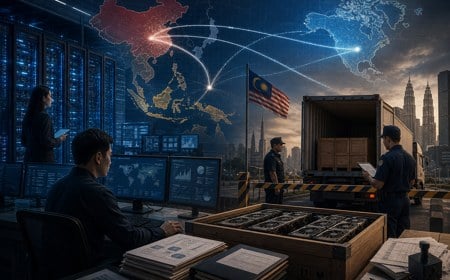
Malaysia’s trade minister said on November 18, 2026 that data-center operators using U.S.-origin GPUs must comply with new U.S. restrictions on advanced AI chips. The comments followed a BIS interim final rule that extends controls toward overseas data centers supplying significant compute to restricted users and adds license requirements for advanced chips bound for Malaysia and several other diversion-risk markets. The result is a shift from chip-shipment compliance to operating-level controls over data-center customers, remote access, GPU provenance and re-export risk.
Inside this report
- Kuala Lumpur Turns U.S. AI-Chip Curbs Into a Data-Center Compliance Test
- Quick Read
- Table of Contents
 Editor-written summary
Federal Reserve Governor Christopher Waller said on November 18 that the Fed may need to act more aggressively against inflation, including a possible 50-basis-point move at the December 8-9 meeting or clearer communication that hikes will continue quickly into 2027. Reuters, Anadolu, Quartz, and NDTV Profit all reported the remarks from Waller’s CNBC appearance, while market coverage showed the comments landing into a fragile backdrop for futures, Treasury yields, and AI-linked risk appetite. The signal is not just hawkish Fed-speak; it is a repricing test for duration-heavy assets built around low discount rates.
Inside this report
- Washington Turns Waller’s 50bp Warning Into an Inflation-Psychology Test
- Quick Read
- Table of Contents
 Editor-written summary
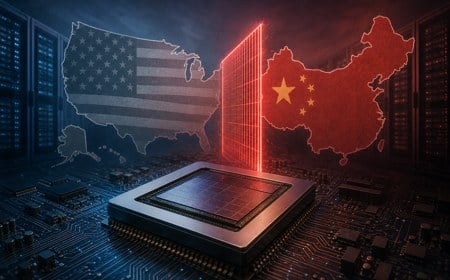
Nvidia said it sold $2.4 billion of licensed Hopper data-center products to China in its fiscal third quarter but is no longer shipping those products there. The company’s SEC-filed outlook for the fourth quarter assumes no Data Center compute revenue from China, making the prior licensing pathway look less like a stable compromise and more like a narrowing corridor. The signal is not just a China revenue issue; it is a live stress test for U.S. chip controls, allied supply chains and the geography of advanced AI compute.
Inside this report
- Santa Clara Turns Nvidia’s China Shipment Halt Into an AI-Chip Decoupling Test
- Quick Read
- Table of Contents
 Editor-written summary
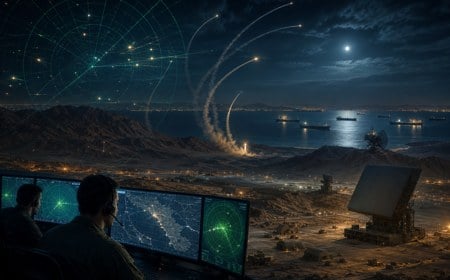
Iran said it targeted U.S. drone and missile installations at Kuwait’s Ali Al Salem air base on November 18, while Bahrain reported another round of intercepted Iranian aerial attacks. The incidents followed a U.S. strike on a missile launch site on Iran’s Qeshm Island, near the Strait of Hormuz. The operational signal is that the confrontation is no longer a Bahrain-only harassment cycle; it is becoming a distributed Gulf base-resilience test with direct implications for shipping, oil flows, and U.S. regional posture.
Inside this report
- Kuwait Turns Iran’s Gulf Strikes Into a U.S. Base-Resilience Test
- Quick Read
- Table of Contents
 Editor-written summary
BNY said it and Microsoft completed an industry-first pilot negotiation of a U.S. Treasury bill trade using AI agents and BNY’s Agentic Negotiation Protocol. Bloomberg reported that the agents agreed on price before human traders approved the transaction, while Microsoft’s Ignite coverage also referenced the first agentic-negotiation U.S. Treasury trade. The test points to a new control problem for market infrastructure: how to let authorized agents negotiate without letting them execute outside institutional guardrails.
Inside this report
- BNY Turns an AI-Negotiated Treasury Trade Into a Market-Microstructure Control Test
- Quick Read
- Table of Contents
 Editor-written summary
Cleanview says U.S. developers began construction on 8.4 GW of data-center capacity across 65 buildings in Q3 2026, down 28% from 11.7 GW across 96 buildings in Q2. OPIS and Axios both reported the slowdown, with Axios and Cleanview pointing to political and permitting pressure as a key variable for the next phase of the AI buildout. The signal is not that AI demand has cracked; it is that physical deployment may be shifting from a GPU-constrained story to a power, permitting and local-consent story.
Inside this report
- America Turns a Data-Center Construction Drop Into an AI Buildout Bottleneck Test
- Quick Read
- Table of Contents
 Editor-written summary
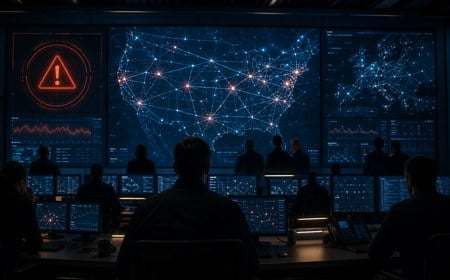
The NSA’s classified internal network, widely described as NSA Net or NSANet, suffered a Tuesday outage tied by officials and sources to routine maintenance, patching or software upgrades. AP, CBS News, Defense One and The Washington Post all reported the disruption, while available reporting found no immediate evidence of a cyberattack. The Pattern Nexus read: this is a resilience story about brittle high-trust systems under maintenance pressure, not a confirmed adversary operation.
Inside this report
- Fort Meade Turns an NSA Net Outage Into a Classified-Comms Resilience Test
- Quick Read
- Table of Contents
 Editor-written summary
Anthropic is pressing ahead with a potentially $60 billion-plus IPO as AI-linked equities wobble and investors question the cost of frontier-model scale. Offering and index documents point to 825 million Class A shares at an expected $70 to $78 range, with pricing expected November 18, first Nasdaq trading anticipated November 19 and a concurrent $26 billion private placement tied to major AI infrastructure counterparties. The listing is a live referendum on whether public capital will keep funding the AI industrial flywheel.
Inside this report
- Anthropic Turns a $60B IPO Into an AI-Capital-Markets Stress Test
- Quick Read
- Table of Contents
 Editor-written summary
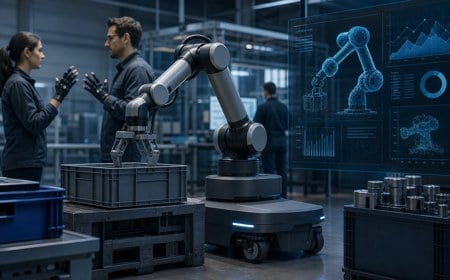
Genesis AI said on November 17, 2026 that it raised a $500 million Series A at a $3.5 billion post-money valuation, co-led by Premji Invest, Khosla Ventures and Eclipse. Reuters reported that the company is prioritizing industrial use cases and a U.S. supply-chain buildout, while TechCrunch’s facility visit highlighted the gap between a compelling dexterity demo and durable, repeatable automation. The Pattern Nexus read: physical AI is becoming a full-stack capex race, and reliability is the bottleneck.
Inside this report
- Paris Turns Genesis AI’s $500M Round Into a Physical-AI Deployment Test
- Quick Read
- Table of Contents
 Editor-written summary
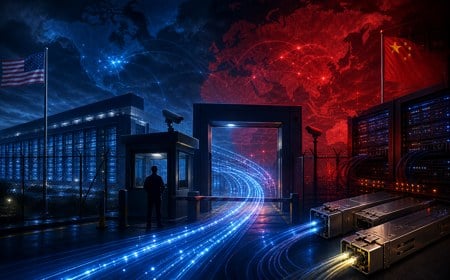
Reuters reported on November 17, 2026, that the Trump administration plans to continue efforts to block imports of Chinese data-center equipment, including optical transceivers, despite opposition from Amazon, Google, Meta, CoreWeave, Cisco and Microsoft. The dispute is backed by an August ITI filing urging the FCC not to add optical transceivers broadly to the Covered List and a September bipartisan Senate bill targeting Chinese optical transceivers in sensitive federal systems. The strategic question is whether Washington can harden the AI data-center stack without constraining the infrastructure race it is trying to win.
Inside this report
- Washington Turns Chinese Optical Transceivers Into an AI Data-Center Supply-Chain Test
- Quick Read
- Table of Contents
 Editor-written summary
Nvidia announced Rubin HPC at SC26 on November 16, 2026, positioning the Vera Rubin-family GPU for simulation, data processing, science, engineering and analytics workloads. The company disclosed more than 50,000 CUDA cores, sparse-data acceleration, seventh-generation NVLink and expected 2028 availability. Independent technical coverage framed the move as a renewed push into HPC while noting that memory, power, pricing and full precision-performance details remain open.
Inside this report
- Nvidia Turns Rubin HPC Into a Scientific-AI Compute Roadmap Test
- Quick Read
- Table of Contents
 Editor-written summary
Trump is in Manila on Nov. 17 for Quad, ASEAN, and trade-related meetings before traveling to Shenzhen for APEC. Verified schedules and reporting show a compressed diplomatic stop involving Quad leaders, a U.S.-Thai trade deal signing, ASEAN engagement, and discussions tied to security, digital transformation, supply chains, AI, and maritime stability. The system read: Manila is being used as the staging ground for Washington’s broader Indo-Pacific posture before Trump faces China on its home summit terrain.
Inside this report
- Manila Turns Trump’s Quad Stop Into an Indo-Pacific Posture Test
- Quick Read
- Table of Contents

