 Editor-written summary
True legacy isn’t built from success — it’s built from reconstruction. This essay explores what happens when life dismantles everything you thought was secure, and how rebuilding from the ground up creates not just wealth, but internal architecture. It’s about the psychology of endurance, the discipline behind creation, and the systems that transform pain into permanence.
Inside this report
- The Architecture of Resilience
- The Rebuilding Phase
- The System Within
 Editor-written summary
War has evolved. It’s no longer fought over borders but over information, algorithms, and infrastructure. From digital surveillance to AI-driven propaganda, the world’s most powerful actors are now competing to control the flow of truth itself. This long-form analysis dissects how nations weaponize data, energy, and perception in the modern geopolitical battlefield — and why narrative has become the new form of territory.
Inside this report
- Shadows of Influence
- From Hard Power to Cognitive Power
- The Hidden Architecture of Influence
 Editor-written summary
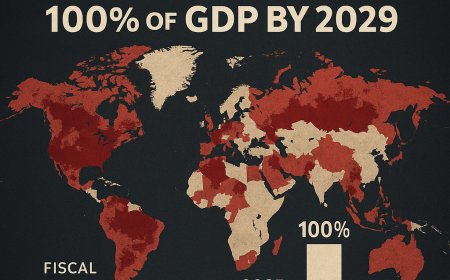
The IMF’s latest Fiscal Monitor warns that world public debt could climb beyond 100 percent of GDP by 2029 — a threshold unseen since the aftermath of World War II. Behind the numbers lies a structural problem: modern economies are addicted to debt-funded growth, and the world’s fiscal architecture is entering a critical phase.
Inside this report
- IMF Warns Global Debt Could Exceed 100% of GDP by 2029
- Sources & Further Reading
 Editor-written summary
The post–Cold War world promised stability through American dominance. Instead, it produced dependency through debt and energy control. Three decades later, that system is cracking — replaced by a network of regional powers, resource alliances, and digital financial blocs. This analysis examines how power is fragmenting, why liquidity defines modern empire, and what the next monetary architecture may look like.
Inside this report
- The Fracturing World Order
- The Dollar’s Empire of Debt
- BRICS and the Birth of Parallel Systems
 Editor-written summary
For decades, the idea of homeownership was synonymous with security. But after 2008, that dream quietly shifted from ownership to leverage — from building roots to building returns. This analysis explores how central banks, institutional capital, and modern lending turned the middle class from owners into participants in a liquidity machine, and what that means for those still trying to build lasting wealth.
Inside this report
- The Illusion of Ownership: How Leverage and Liquidity Redefined the Middle Class
 Editor-written summary
Algorithms no longer just deliver content—they shape human behavior, attention, and even identity. In this long analysis, we explore how the digital architecture of the modern world has rewired the human mind, redefined truth, and created a civilization built on data-driven persuasion.
Inside this report
- The Age of Algorithmic Influence
- The Invisible Feedback Loop
- The Economics of Attention
 Editor-written summary
The housing market was once a ladder — a path from one stage of life to the next. Now, for most people, it’s a plateau. The combination of high rates, tight credit, and structural scarcity has transformed homes from symbols of progress into instruments of leverage. But for those who understand the system, real estate remains one of the last tangible ways to grow wealth in a world where everything else is digitized and abstracted.
Inside this report
- The Psychological Shift: From Shelter to Strategy
- The Structural Transformation: How Finance Rewired the Home
- The Macro Mechanics: Liquidity, Credit, and the Pulse of Real Estate
 Editor-written summary
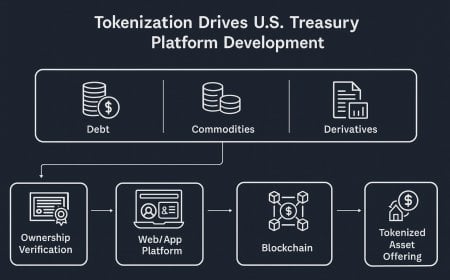
The dollar isn’t dying — it’s upgrading. The U.S. converts liabilities into globally demanded collateral (Treasuries), backstopped by the world’s largest official gold reserve and increasingly distributed over programmable rails (stablecoins, tokenized T-bills, institutional blockchains). This essay explains how that liquidity system actually works, why “hard pegs” like a BRICS gold currency would choke elasticity, and how the next easing cycle may flow through digital conduits.
Inside this report
- 🟩 The Dollar Isn’t Collapsing — It’s Evolving
- The Hard-Asset Backstop: Gold as Collateral, Not Currency
- The Liquidity Game: How the U.S. Exports Debt but Imports Demand
 Editor-written summary
Algorithms promised to connect humanity. Instead, they’ve divided it — not just politically or culturally, but psychologically. We are no longer living inside one shared reality; we’re living inside millions of overlapping digital ones, each optimized for engagement. The result isn’t just polarization — it’s a slow rewiring of what it means to be human.
Inside this report
- The Digital Mind Divide: How Algorithms Are Rewiring Human Values
- Sources & Further Reading
 Editor-written summary
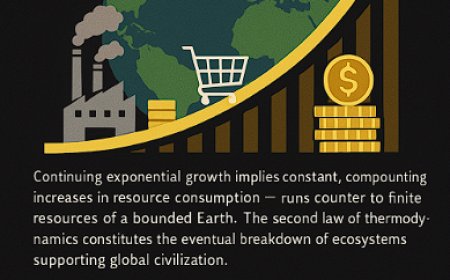
The AI revolution isn’t just changing software — it’s rewriting the energy equation of civilization. As machine intelligence accelerates, Big Tech’s investment in nuclear fusion reveals an unspoken truth: the race for artificial intelligence is ultimately a race for power — in the most literal sense.
Inside this report
- Big Tech’s Fusion Bet: How AI’s Energy Demand Is Rewriting Physics
- Sources & Further Reading
 Editor-written summary
After Powell’s quiet remarks in Philadelphia about ending Quantitative Tightening (QT), subtle tremors are building across the repo and collateral markets. The system is whispering before it screams — and all signs suggest the next liquidity cycle is approaching.
Inside this report
- The Calm Before the Liquidity Storm
- The Liquidity Loop — Why Tightening Always Ends in Easing
- The Quiet Warning: Repo Stress Returns
 Editor-written summary
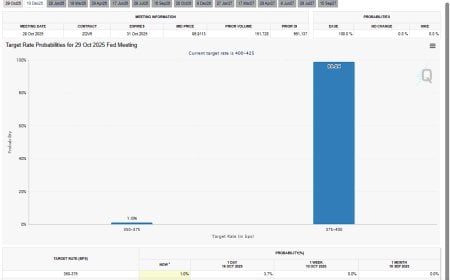
Markets now expect another 25 bps rate cut at the Fed’s Oct 28–29 meeting as unemployment rises and repo-market strains flicker. Powell signaled QT’s end is “coming into view,” Waller endorsed another cut, and Musalem said he could support one if inflation risks stay contained. This post connects those signals to the longer liquidity cycle and to where the next easing wave is headed: tokenized Treasuries, stablecoins, and programmable liquidity.
Inside this report
- Rising Job-Market Risks vs. Anchored Expectations
- Tariffs: One-Off Level Shift, Not a Spiral
- Plumbing Check: Repo, SRF, RRP, and Reserves

