
Shadows of Influence: The New Age of Digital Geopolitics
War has evolved. It’s no longer fought over borders but over information, algorithms, and infrastructure. From digital surveillance to AI-driven propaganda, the world’s most powerful actors are now competing to control the flow of truth itself. This long-form analysis dissects how nations weaponize data, energy, and perception in the modern geopolitical battlefield — and why narrative has become the new form of territory.
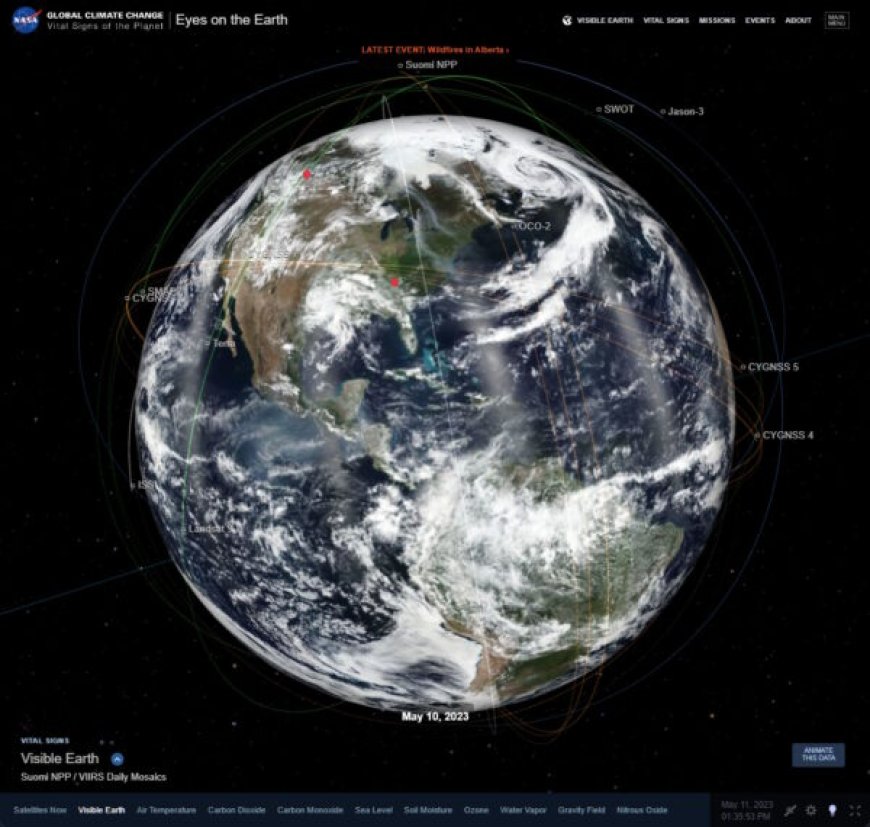
Shadows of Influence
The old wars were fought over land, oil, and ideology. The new wars are fought over perception — over who controls the signal, the algorithm, and the attention span of the collective mind. We’ve entered a stage of civilization where conflict is invisible, and victory is measured in belief. The battlefield is no longer a place; it’s a feed.
Every major power understands this. The 21st century isn’t about who has the most tanks or aircraft carriers; it’s about who programs the narrative engine of society. The world’s most influential weapon systems are now algorithms, data centers, and AI-driven psychological operations operating quietly across the network layer of human consciousness.
It’s easy to underestimate how deep this transformation goes because it doesn’t feel like war — it feels like news, entertainment, or ideology. But underneath, it’s structural: nations are reengineering their populations’ perceptions through targeted digital ecosystems. China, Russia, the United States, and dozens of smaller powers now compete through the invisible levers of algorithmic influence.
This is the Geopolitics of Information — a system where control of narrative equals control of power.
From Hard Power to Cognitive Power
In the industrial age, nations fought for material resources: steel, oil, shipping routes, manufacturing hubs. But in the digital age, the most valuable resource is cognitive bandwidth — the attention and emotional engagement of billions of connected individuals.
The human mind has become the new natural resource, mined by algorithms and traded in influence markets. Social media platforms aren’t communication tools anymore; they’re geostrategic assets. Each platform functions as a digital embassy of soft power — Facebook for the West, WeChat for China, X for the multipolar frontier. Whoever controls the algorithm controls the interpretation of reality.
That’s why states are now racing to nationalize their information infrastructure. China’s “Great Firewall,” Russia’s “sovereign internet,” and America’s regulatory dominance over cloud infrastructure are all different versions of the same move: securing narrative sovereignty.
As the Council on Foreign Relations noted in 2024, information has become a weapon of mass manipulation — not through censorship, but through saturation. Truth is no longer suppressed; it’s buried in noise.
The Hidden Architecture of Influence
When people imagine propaganda, they think of posters, slogans, and speeches. But modern influence operates through feedback loops — millions of micro-interactions that train AI systems to model human psychology at scale.
Every click, like, and pause in a scroll becomes training data for narrative optimization. AI models now predict not just what we think, but how to make us think it. This is the real revolution — the weaponization of engagement metrics as tools of cognitive warfare.
According to a 2025 study by the NATO Strategic Communications Centre of Excellence, over 80% of digital disinformation campaigns traced back to state or quasi-state entities. But what’s more alarming is that these operations aren’t designed to persuade — they’re designed to confuse. A confused population is easier to manage than an informed one.
That’s the new form of control: not manufacturing consent, but manufacturing chaos.
Energy, Data, and the Infrastructure of Control
Energy and data are converging into the same strategic layer. The same cables that move electricity now move information. The same nations that once fought for oil now fight for semiconductor dominance, undersea internet cables, and rare earth materials used in data storage and AI computation.
Semiconductors are the new oil fields. Whoever controls the chips controls the cognitive infrastructure of civilization. That’s why Taiwan, a tiny island with fewer than 24 million people, has become the geopolitical epicenter of the 21st century. The Semiconductor Industry Association estimates that 90% of advanced chips come from there. In geopolitical terms, that’s the equivalent of holding 90% of global oil in one refinery.
Meanwhile, digital energy demand — driven by AI and data centers — is merging with physical energy geopolitics. The nations investing in nuclear, solar, and fusion are the same ones investing in large-scale AI infrastructure because the next war won’t be over land; it’ll be over bandwidth and watts.
The old term “energy security” is now synonymous with “data sovereignty.”
The Invisible Empire
Empires used to leave monuments — forts, flags, statues. The new empires leave APIs, app stores, and operating systems. The invisible empire is one of compliance by convenience.
When a country adopts a foreign cloud provider, it’s not just renting infrastructure — it’s surrendering informational autonomy. Every file stored, every user interaction logged, becomes a potential vector of influence.
The Carnegie Endowment’s 2025 report on cloud geopolitics calls this “digital colonization” — the process by which nations appear independent but rely entirely on foreign data systems to function. It’s not an occupation in the traditional sense; it’s a quiet absorption.
That’s how influence scales in the 21st century — not through armies, but through architecture.
The Next Frontier: Algorithmic Governance
The next evolution of geopolitical power will emerge not through borders, but through *governance algorithms.* When AI begins managing supply chains, trade settlements, and even social credit systems, the biases within those algorithms will effectively become law.
The question isn’t whether AI will govern — it’s who will program its values. And that’s the new geopolitical fault line.
Projects like the WEF’s Global AI Governance Initiative and Europe’s AI Act are early attempts to codify control before it’s decentralized. But the deeper truth is that whoever aligns AI with their national ideology — democracy, authoritarianism, or technocracy — will effectively export their system of governance through code.
The fight for AI ethics is the fight for civilizational architecture.
The Battle for Perception
The war for truth won’t end with a treaty. It’ll end when the majority of the population stops knowing which signals to trust.
That’s where the geopolitical frontier now lies: in the perception gap between what is and what can be made to seem true. The nations that master this — the ones who blend soft power, AI infrastructure, and cultural narrative into a coherent system — will control the next century of human thought.
As the information sphere fractures into echo chambers and synthetic realities, sovereignty itself becomes a question of cognitive resilience. In this world, critical thinking is no longer just education — it’s defense strategy.
The battle isn’t for land, or oil, or money anymore. It’s for the operating system of reality.
Sources & References
#Geopolitics #Cyberwar #AI #Surveillance #Media #PatternNexus #Power
Ano ang Iyong Reaksyon?
 Gusto
0
Gusto
0
 Hindi Gusto
0
Hindi Gusto
0
 Pag-ibig
0
Pag-ibig
0
 Nakakatawa
0
Nakakatawa
0
 Wow
0
Wow
0
 Malungkot
0
Malungkot
0
 Galit
0
Galit
0

Founder of Pattern Nexus. I research markets, macro, geopolitics, AI, history, ancient systems, and the patterns most people overlook. I’m also building Market Radar, a trading scanner designed to read pressure, risk, confirmation, and setup quality before chasing a move. Pattern Nexus is where I connect the dots between data, history, technology, and the bigger system playing out around us.













Mga Komento (0)