

You’re offline. Open downloads
2026
Automatically indexed from the existing article tag.
Theses, forecasts, models, and paths
No published research objects yet
This topic is ready for editors to connect a thesis, forecast, model, or research path.
Latest articles
 Article · related
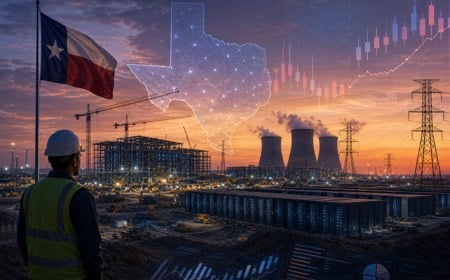
Austin Turns Oracle’s Fully Funded OpenAI Buildout Into an AI-Capex Solvency Test
Oracle said on November 20, 2026, that it has secured all funding needed to fulfill its OpenAI infrastructure contract, including the vendor-financing structure previously outlined to investors. The statement followed a roughly $20 billion stock-and-notes financing announced earlier in November and documented in an SEC Form 8-K. The immediate signal is not just that Oracle has capital for this cycle, but that AI infrastructure is becoming a test of funding capacity, vendor credit, debt tolerance, and future free cash flow.
Published Nov 21, 2026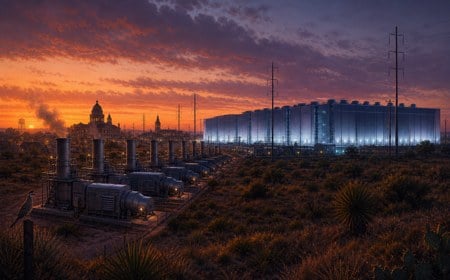 Article · related
Starbase Turns SpaceX’s Gas-Powered AI Campus Into a Behind-the-Meter Power Test
TCEQ authorized Space Exploration Technologies Corp.’s electric-generating-unit standard permit registration for the Boca Chica facility on November 16, 2026, covering 43 natural-gas-powered generators with 1,456.22 MW of listed generating capacity. Local and national reporting ties the power build to a proposed $24 billion super-compute/data-center and gas-plant project in Starbase, Texas. Cameron County commissioners then voted 3-2 to stop consideration of a county tax abatement, leaving SpaceX with state air authorization but a more contested local-incentive path.
Published Nov 20, 2026 Article · related
Washington Turns Senate Permitting Passage Into an AI-Grid Cost Test
The U.S. Senate voted 62-33 on November 19, 2026, to pass the Bipartisan American Affordability and Jobs Act, a broad permitting package covering energy and infrastructure projects including power plants, transmission lines, mines, pipelines and data centers. The bill now moves to the House. Its AI-economy significance is the cost-allocation test: if enacted, large new data centers would face stronger requirements to pay for the incremental grid and energy infrastructure needed to serve them.
Published Nov 19, 2026 Article · related
Sacramento Turns Nvidia’s China Subpoena Into an AI-Chip Disclosure Test
California’s Department of Justice served Nvidia with an investigative subpoena on November 19, 2026, seeking information on whether advanced chips or confidential information may have gone to China and whether the company misled investors or the public. The move reframes the Nvidia-China controversy as a state securities and corporate-governance issue, not only a federal export-control fight. The next pressure points are document production, congressional interviews, Nvidia’s board response and any signs that state disclosure enforcement becomes a new front in AI-chip governance.
Published Nov 19, 2026 Article · related
Washington Turns 879,000 AI-Chip Licenses Into a China-Controls Credibility Test
House Foreign Affairs Committee Chairman Brian Mast released export-control license information on November 19, 2026, saying Chinese buyers sought 3.4 million Nvidia and AMD AI chips and that the Bureau of Industry and Security approved more than 879,000. Reuters, SCMP and Anadolu reported the disclosure while noting that approvals do not necessarily prove completed shipments. The episode sharpens a core U.S.-China technology question: whether export controls can credibly restrict the AI compute layer when commercial incentives and national-security controls collide.
Published Nov 19, 2026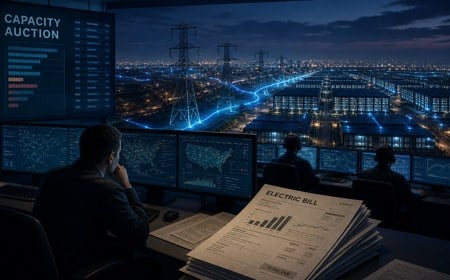 Article · related
PJM Turns AI Load Forecasts Into a Capacity-Cost Stress Test
State ratepayer advocates asked PJM’s board to seek FERC approval to postpone the December 9-15, 2026 capacity auction for the 2029/2030 delivery year until forecast data-center load is removed and handled through a separate reliability backstop process. The request leans on PJM’s Independent Market Monitor, which warned that data-center load already raised capacity costs by $29.4 billion and could add another $5 billion to $10 billion in the upcoming auction. PJM says delaying the auction this close to execution could destabilize the market and raise reliability risk.
Published Nov 19, 2026 Article · related
Frankfurt Turns AI Data-Center Lending Into a Bank-Supervision Stress Test
ECB Banking Supervision Chair Claudia Buch said on November 19, 2026 that euro-zone banks’ direct data-center exposure is still small but growing quickly. Reuters reported that data centers account for about 1.2% to 1.3% of euro-zone banks’ corporate exposures and that 12 banks are materially exposed to AI-related private credit. The system signal is that AI infrastructure is becoming a supervisory credit-risk channel, not only an energy-demand or equity-valuation theme.
Published Nov 19, 2026 Article · related
Washington Turns BIS’s Remote-Compute Rule Into an AI-Chip Containment Test
The Bureau of Industry and Security’s interim final rule, published in the Federal Register and effective November 19, 2026, restricts certain exports, reexports and in-country transfers of advanced semiconductors to overseas data centers that provide large-scale compute access to entities headquartered in Country Group D:5 or Macau. The rule also adds destination-based licensing requirements for Brazil, Indonesia, Malaysia, Singapore and Thailand, tightens oversight around advanced-node chip fabrication and packaging, and formally rescinds the Biden-era AI Diffusion Rule. The strategic shift is clear: Washington is moving from controlling boxes of chips to policing the operating layer of global compute.
Published Nov 19, 2026 Article · related
Riyadh Turns a Houthi Strike on PIF Tower Into a Gulf Capital-Risk Test
Saudi Arabia’s coalition said on November 19, 2026, that it dealt with a Houthi missile threat toward Riyadh and was assessing debris and material damage. AP, Reuters, and AFP reported damage in Riyadh’s financial district, with Reuters and AFP identifying the affected skyscraper as the Public Investment Fund Tower. The incident reframes the conflict as a direct test of Saudi capital security, Vision 2030 credibility, and regional deterrence.
Published Nov 19, 2026 Article · related
Loudoun Turns Data Center Alley’s Pause Into an AI-Grid Bottleneck Test
Loudoun County, Virginia, said its Board of Supervisors voted on November 17, 2026, to pause action on legislative data-center and electrical-substation applications for up to 12 months, retroactive to September 15. The county says the move could affect 33 active legislative applications while leaving administrative reviews, new submissions and several exceptions in place. The decision turns Data Center Alley into a test case for how AI compute growth is increasingly constrained by local permitting, substations, transmission planning and ratepayer politics.
Published Nov 19, 2026 Article · related
Shenzhen Turns APEC’s AI-Trade Agenda Into a Great-Power Control Test
At the APEC summit in Shenzhen on November 19, 2026, Xi Jinping urged leaders to keep trade and technology development open while Donald Trump, Vladimir Putin and Xi prepared for high-stakes talks. Reuters, AP, APEC and AnewZ reporting show AI, chip controls, sanctions, energy disruption and macroeconomic risk converging around what was formally billed as an agenda of openness, innovation and cooperation.
Published Nov 19, 2026 Article · related
Washington Turns Java4Shell Into a Critical-Software Patch-Rush Test
CISA urged organizations on November 17, 2026, to immediately patch CVE-2026-114938, a Java memory-corruption flaw known as Java4Shell. Oracle, CERT-EU and Tencent Cloud issued related guidance, while Reuters reported parallel warnings from U.S., South Korean, German and British authorities. The larger signal is a resilience test for software inventories, cloud workloads, vendor-bundled runtimes and patch governance under shrinking response windows.
Published Nov 18, 2026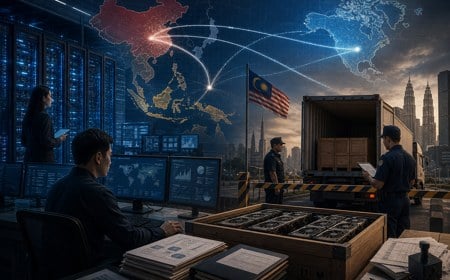 Article · related
Kuala Lumpur Turns U.S. AI-Chip Curbs Into a Data-Center Compliance Test
Malaysia’s trade minister said on November 18, 2026 that data-center operators using U.S.-origin GPUs must comply with new U.S. restrictions on advanced AI chips. The comments followed a BIS interim final rule that extends controls toward overseas data centers supplying significant compute to restricted users and adds license requirements for advanced chips bound for Malaysia and several other diversion-risk markets. The result is a shift from chip-shipment compliance to operating-level controls over data-center customers, remote access, GPU provenance and re-export risk.
Published Nov 18, 2026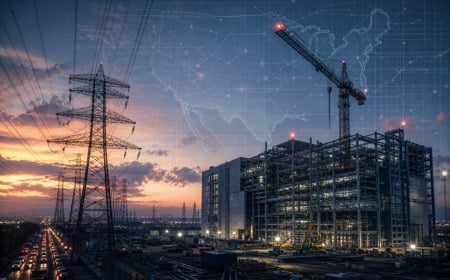 Article · related
America Turns a Data-Center Construction Drop Into an AI Buildout Bottleneck Test
Cleanview says U.S. developers began construction on 8.4 GW of data-center capacity across 65 buildings in Q3 2026, down 28% from 11.7 GW across 96 buildings in Q2. OPIS and Axios both reported the slowdown, with Axios and Cleanview pointing to political and permitting pressure as a key variable for the next phase of the AI buildout. The signal is not that AI demand has cracked; it is that physical deployment may be shifting from a GPU-constrained story to a power, permitting and local-consent story.
Published Nov 17, 2026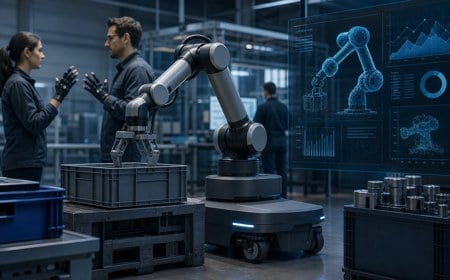 Article · related
Paris Turns Genesis AI’s $500M Round Into a Physical-AI Deployment Test
Genesis AI said on November 17, 2026 that it raised a $500 million Series A at a $3.5 billion post-money valuation, co-led by Premji Invest, Khosla Ventures and Eclipse. Reuters reported that the company is prioritizing industrial use cases and a U.S. supply-chain buildout, while TechCrunch’s facility visit highlighted the gap between a compelling dexterity demo and durable, repeatable automation. The Pattern Nexus read: physical AI is becoming a full-stack capex race, and reliability is the bottleneck.
Published Nov 17, 2026 Article · related
Washington Turns Chinese Optical Transceivers Into an AI Data-Center Supply-Chain Test
Reuters reported on November 17, 2026, that the Trump administration plans to continue efforts to block imports of Chinese data-center equipment, including optical transceivers, despite opposition from Amazon, Google, Meta, CoreWeave, Cisco and Microsoft. The dispute is backed by an August ITI filing urging the FCC not to add optical transceivers broadly to the Covered List and a September bipartisan Senate bill targeting Chinese optical transceivers in sensitive federal systems. The strategic question is whether Washington can harden the AI data-center stack without constraining the infrastructure race it is trying to win.
Published Nov 17, 2026 Article · related
Nvidia Turns Rubin HPC Into a Scientific-AI Compute Roadmap Test
Nvidia announced Rubin HPC at SC26 on November 16, 2026, positioning the Vera Rubin-family GPU for simulation, data processing, science, engineering and analytics workloads. The company disclosed more than 50,000 CUDA cores, sparse-data acceleration, seventh-generation NVLink and expected 2028 availability. Independent technical coverage framed the move as a renewed push into HPC while noting that memory, power, pricing and full precision-performance details remain open.
Published Nov 17, 2026 Article · related
OpenAI Turns TensorWave’s 457MW AMD Deal Into a Non-Nvidia Compute-Scale Test
TensorWave announced on November 16, 2026, that it will provide OpenAI with 457MW of dedicated AI infrastructure powered by AMD Instinct MI455X GPUs. The deal is framed as part of OpenAI’s previously announced AMD partnership and as TensorWave’s largest deployment contract to date. The system read is that OpenAI is testing whether an AMD-focused neocloud can deliver frontier-scale capacity outside the dominant Nvidia-hyperscaler channel.
Published Nov 16, 2026 Article · related
Antalya Turns AI Data-Center Emissions Into a Climate-Disclosure Test
The COP31 Presidency and the International Telecommunication Union officially launched the voluntary Antalya Artificial Intelligence Pledge on November 16, 2026, asking governments, companies and institutions to align AI growth with cleaner power, efficiency, lifecycle standards and environmental reporting. The launch arrived alongside Associated Press reporting on a Harvard/Nature Sustainability study estimating that 403 large U.S. data centers produced about 25.7 million metric tons of CO2 from May 2024 to April 2025. The result is a new test of whether AI’s physical footprint becomes measurable infrastructure governance or remains largely voluntary climate branding.
Published Nov 16, 2026 Article · related
Seoul Turns SKT-Hyosung Into an AI Power-Equipment Supply Test
SK Telecom and Hyosung Heavy Industries signed a strategic partnership MOU on November 16, 2026, to support gigawatt-class AI data-center construction in South Korea. The agreement covers stable supply of core 345kV substation equipment, advance coordination on long-lead power gear, joint review and demonstrations of 800V DC distribution, and cooperation on operations, maintenance and future AI data-center business development. The larger signal is that AI scale-out is becoming a power-equipment and grid-delivery problem as much as a chip-procurement problem.
Published Nov 16, 2026 Article · related
Geneva Turns Autonomous Weapons Talks Into an AI Battlefield Governance Test
The Geneva meeting runs from November 16 to 20, 2026, and will decide future work on lethal autonomous weapons systems under the CCW. Reuters and AFP report that the United States and Russia are expected to resist a push for legally binding negotiations, while a recent UN First Committee vote showed broad support for action and a small group of opponents including the U.S., Russia, Israel, North Korea and Belarus. The stakes are larger than arms-control procedure: the talks test whether systems that can select and engage targets are governed before they become ordinary battlefield infrastructure.
Published Nov 15, 2026 Article · related
Tokyo Turns a Flat GDP Print Into an Energy-Import Stress Signal
Japan’s Cabinet Office said real GDP was essentially unchanged in July–September 2026 but fell at a 0.1% annualized rate, with private consumption down 0.3%, imports up 2.5% and net exports subtracting 0.6 percentage point from growth. Independent reports from Reuters, AP and ChosunBiz tied the miss to higher living costs, oil and energy import pressure, weak-yen dynamics and poor weather, while noting that private non-residential investment rose 1.6%. The Pattern Nexus read: Japan’s problem is less a classic demand collapse than a terms-of-trade and purchasing-power squeeze that complicates Bank of Japan tightening.
Published Nov 15, 2026 Article · related
Bahrain Turns Iranian Drone Interceptions Into a Fifth Fleet Air-Defense Stress Test
Bahrain said on November 15, 2026, that its air-defense systems intercepted and destroyed several Iranian aerial attacks. Iran’s IRGC separately claimed it targeted a U.S. radar defense site at Al-Riffa with six drones, but available reporting does not independently confirm damage, casualties or a successful strike. The incident turns Bahrain into a live test of Gulf sensor coverage, warning systems and U.S.-linked basing resilience.
Published Nov 15, 2026 Article · related
Houthis Turn a Bab el-Mandeb Withdrawal Into a Two-Chokepoint Energy Stress Test
Yemen’s southern forces said on November 15, 2026, that they were redeploying from Dhubab airport and the Bab el-Mandeb area toward Aden, with Reuters-syndicated reporting saying the move left Houthis in control of ground overlooking the strategic strait. Regional and conflict-tracking outlets reported the same repositioning, while AFP-backed context shows Houthi advances toward Aden after earlier government losses along the Red Sea coast. The Pattern Nexus read: Bab el-Mandeb is becoming a second pressure point alongside Hormuz, tightening risk around Gulf oil routing, Red Sea shipping, Saudi security and U.S.-Iran posture.
Published Nov 15, 2026 Article · related
Canberra Turns a Manila Defense Pact Into a South China Sea Interoperability Rail
Australia and the Philippines are scheduled to sign a Defense Cooperation Arrangement in Manila on November 15, 2026, with reports saying it will expand access, information sharing, maritime awareness, training, planning, interoperability, and defense infrastructure cooperation. The timing, alongside the ASEAN summit and expected Quad activity, makes the Philippines a live test bed for allied maritime deterrence architecture in the South China Sea. The key question is whether this becomes a practical operating network, not simply another diplomatic document.
Published Nov 14, 2026 Article · related
New Orleans Turns a Tanker Crash Into a Port-Control Litigation Test
The Port of New Orleans has filed a federal maritime lawsuit after the Atlantic Asphalt tanker struck the docked American Heritage river cruise vessel on November 13, 2026. Multiple outlets reported that everyone aboard survived, while officials said injuries, terminal damage, fuel removal and vessel recovery remain active issues. The incident has become a port-control and maritime-liability test rather than a mass-casualty disaster.
Published Nov 14, 2026 Article · relatedFed Turns AI Data-Center Leverage Into a Financial-Stability Warning
The Fed’s latest Financial Stability Report says AI was the top-cited near-term risk among market contacts, with 87% naming it in the fall survey, up from 50% in the spring. The report also details more than $680 billion of advanced-computing debt issuance by October 2026, more than $1 trillion of not-yet-started lease obligations, and more than $2 trillion of guarantees and contract commitments tied to the data-center buildout. Pattern Nexus reads the report as a shift: AI infrastructure is now a macro-financial transmission channel, not just a technology investment cycle.
Published Nov 14, 2026 Article · related
Everything Bubble 3 — Markets Priced in Gold Reveal the Structural Melt-Up Ahead
Pricing markets in gold through October 29, 2026 exposes the dispersion beneath nominal records, near-record leverage, high-rate reserve support and a larger global debt structure.
Published Oct 30, 2026 Article · related
The Polar Vortex Is Stretching: A Historic November Forecast, and the Cold Outbreak That Hasn't Happened
polar vortex, November 2026, Arctic polar vortex, sudden stratospheric warming, NASA Ozone Watch, ECMWF, vortex collapse, planetary waves, wave-2, stratospheric warming, 10 hPa, 60N zonal wind, winter 2026-2027, Arctic Oscillation, QBO, El Niño, North American winter, cold outbreaks, stratosphere, Pattern Nexus
Published Oct 29, 2026 Article · related
Ankara Turns Renewable Finance Into an AI Data-Center Sovereignty Rail
The Asian Development Bank said on October 22, 2026 that it signed a $75 million loan with Rönesans Holding to support renewable energy, battery storage by 2029 and a hybrid-renewable hyperscale data center in Türkiye. The financing follows Rönesans and Digital Realty’s Ankara data-center push, with the first phase planned for more than 22 MW of IT capacity by 2028. The pattern is larger than one campus: Türkiye is trying to convert geography, clean power and state incentives into sovereign AI and cloud infrastructure.
Published Oct 24, 2026Join Pattern Nexus for premium research, the archive, and ad-free reading.