

You’re offline. Open downloads
Compute
Automatically indexed from the existing article tag.
Theses, forecasts, models, and paths
No published research objects yet
This topic is ready for editors to connect a thesis, forecast, model, or research path.
Latest articles
 Article · related
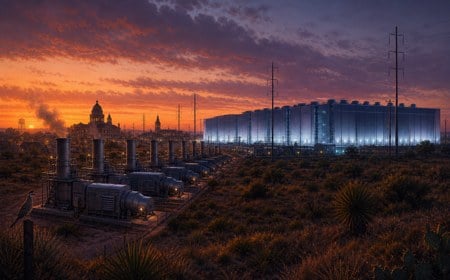
Starbase Turns SpaceX’s Gas-Powered AI Campus Into a Behind-the-Meter Power Test
TCEQ authorized Space Exploration Technologies Corp.’s electric-generating-unit standard permit registration for the Boca Chica facility on November 16, 2026, covering 43 natural-gas-powered generators with 1,456.22 MW of listed generating capacity. Local and national reporting ties the power build to a proposed $24 billion super-compute/data-center and gas-plant project in Starbase, Texas. Cameron County commissioners then voted 3-2 to stop consideration of a county tax abatement, leaving SpaceX with state air authorization but a more contested local-incentive path.
Published Nov 20, 2026 Article · related
Washington Turns 879,000 AI-Chip Licenses Into a China-Controls Credibility Test
House Foreign Affairs Committee Chairman Brian Mast released export-control license information on November 19, 2026, saying Chinese buyers sought 3.4 million Nvidia and AMD AI chips and that the Bureau of Industry and Security approved more than 879,000. Reuters, SCMP and Anadolu reported the disclosure while noting that approvals do not necessarily prove completed shipments. The episode sharpens a core U.S.-China technology question: whether export controls can credibly restrict the AI compute layer when commercial incentives and national-security controls collide.
Published Nov 19, 2026 Article · related
Mountain View Turns Project Suncatcher’s New Glenn Booking Into an Orbital AI-Power Test
Google and Blue Origin confirmed a launch-services agreement for Project Suncatcher, with New Glenn targeted for a dedicated heavy-lift mission in Q1 2029. The satellites are planned to carry Google TPUs and roughly rack-scale compute capacity into sun-synchronous orbit. The system read is that AI infrastructure competition is widening from chips, data centers and grids into launch economics, orbital power, radiation hardening and thermal design.
Published Nov 19, 2026 Article · related
Washington Turns BIS’s Remote-Compute Rule Into an AI-Chip Containment Test
The Bureau of Industry and Security’s interim final rule, published in the Federal Register and effective November 19, 2026, restricts certain exports, reexports and in-country transfers of advanced semiconductors to overseas data centers that provide large-scale compute access to entities headquartered in Country Group D:5 or Macau. The rule also adds destination-based licensing requirements for Brazil, Indonesia, Malaysia, Singapore and Thailand, tightens oversight around advanced-node chip fabrication and packaging, and formally rescinds the Biden-era AI Diffusion Rule. The strategic shift is clear: Washington is moving from controlling boxes of chips to policing the operating layer of global compute.
Published Nov 19, 2026 Article · related
Loudoun Turns Data Center Alley’s Pause Into an AI-Grid Bottleneck Test
Loudoun County, Virginia, said its Board of Supervisors voted on November 17, 2026, to pause action on legislative data-center and electrical-substation applications for up to 12 months, retroactive to September 15. The county says the move could affect 33 active legislative applications while leaving administrative reviews, new submissions and several exceptions in place. The decision turns Data Center Alley into a test case for how AI compute growth is increasingly constrained by local permitting, substations, transmission planning and ratepayer politics.
Published Nov 19, 2026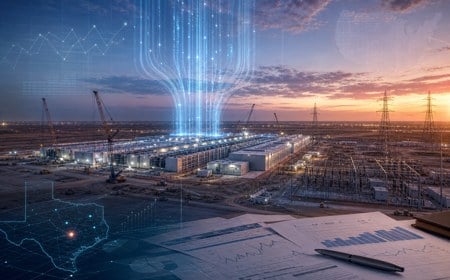 Article · related
Odessa Turns ChronoScale’s $7.5B AI Campus Into a Frontier-Compute Financing Test
ChronoScale announced definitive agreements with STN for a 50/50 Odessa, Texas AI data-center development partnership tied to a first deployment for a frontier AI lab. The company says the first phase carries up to $7.5 billion of expected total contract value over six years and is supported by up to $750 million of financing. The setup shifts the AI infrastructure story from chips alone to campus development, capital structure, HSR clearance, megawatt economics and delivery timing.
Published Nov 18, 2026 Article · related
Kuala Lumpur Turns U.S. AI-Chip Curbs Into a Data-Center Compliance Test
Malaysia’s trade minister said on November 18, 2026 that data-center operators using U.S.-origin GPUs must comply with new U.S. restrictions on advanced AI chips. The comments followed a BIS interim final rule that extends controls toward overseas data centers supplying significant compute to restricted users and adds license requirements for advanced chips bound for Malaysia and several other diversion-risk markets. The result is a shift from chip-shipment compliance to operating-level controls over data-center customers, remote access, GPU provenance and re-export risk.
Published Nov 18, 2026 Article · related
Santa Clara Turns Nvidia’s China Shipment Halt Into an AI-Chip Decoupling Test
Nvidia said it sold $2.4 billion of licensed Hopper data-center products to China in its fiscal third quarter but is no longer shipping those products there. The company’s SEC-filed outlook for the fourth quarter assumes no Data Center compute revenue from China, making the prior licensing pathway look less like a stable compromise and more like a narrowing corridor. The signal is not just a China revenue issue; it is a live stress test for U.S. chip controls, allied supply chains and the geography of advanced AI compute.
Published Nov 18, 2026 Article · related
Nvidia Turns Rubin HPC Into a Scientific-AI Compute Roadmap Test
Nvidia announced Rubin HPC at SC26 on November 16, 2026, positioning the Vera Rubin-family GPU for simulation, data processing, science, engineering and analytics workloads. The company disclosed more than 50,000 CUDA cores, sparse-data acceleration, seventh-generation NVLink and expected 2028 availability. Independent technical coverage framed the move as a renewed push into HPC while noting that memory, power, pricing and full precision-performance details remain open.
Published Nov 17, 2026 Article · related
OpenAI Turns TensorWave’s 457MW AMD Deal Into a Non-Nvidia Compute-Scale Test
TensorWave announced on November 16, 2026, that it will provide OpenAI with 457MW of dedicated AI infrastructure powered by AMD Instinct MI455X GPUs. The deal is framed as part of OpenAI’s previously announced AMD partnership and as TensorWave’s largest deployment contract to date. The system read is that OpenAI is testing whether an AMD-focused neocloud can deliver frontier-scale capacity outside the dominant Nvidia-hyperscaler channel.
Published Nov 16, 2026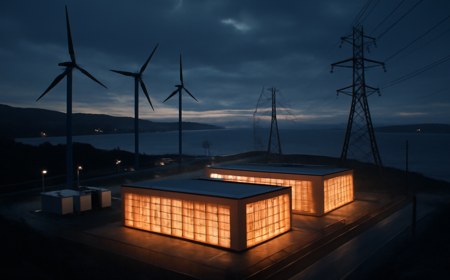 Article · related
Anthropic Turns Nova Scotia Wind Into a 420-Megawatt Claude Compute Rail
EverWind announced more than C$10 billion in planned private investment for a Point Tupper data-centre campus and Nova Scotia wind projects on October 16, 2026. Reuters identified the frontier AI tenant as Anthropic, while Canadian Press and Global News reported a long-term lease, a 95-megawatt first phase in late 2027, a 325-megawatt expansion, and 420 megawatts at full buildout. The project ties Claude-scale compute demand to local power, water, ratepayer, and data-sovereignty politics.
Published Oct 18, 2026 Article · related
Super Micro Contractor Turns Nvidia AI Servers Into a China Export-Control Guilty Plea
Ting-Wei “Willy” Sun, a contractor linked to Super Micro Computer, pleaded guilty on October 8, 2026, to four counts tied to an alleged scheme to illegally route AI servers containing advanced Nvidia chips to China. The Justice Department had previously alleged that the broader conspiracy involved about $2.5 billion worth of U.S. AI server technology. The plea is an enforcement signal for the U.S.-China compute-control regime: advanced AI servers are now being treated as traceable strategic infrastructure, not just commercial hardware.
Published Oct 11, 2026 Article · related
Washington Turns Tech Compute Credits Into a Federal AI-Science Operating System
On October 8, 2026, the White House announced $2.4 billion in super-intelligence science tools and compute credits from 11 industry partners for the Genesis Mission Consortium. Nvidia, Anthropic and AWS separately detailed commitments that turn private AI infrastructure into usable research capacity for federal agencies, national laboratories and partner institutions. The system read: Washington is not merely buying compute; it is organizing a quasi-public AI-science operating layer around private infrastructure.
Published Oct 9, 2026 Article · related
National Compute Turns Idle GPUs Into an AI-Access Grid
National Compute launched the National Compute Grid on October 7, 2026, with a plan to pool AI compute across clouds, labs, providers and chip architectures through a shared scheduler. Vultr says it has joined as a founding consortium member and will contribute capacity to the Grid Exchange, while the network is targeting 2 GW of pooled capacity by 2030. The key caveat: early capacity figures mix resources already connected with capacity still only “in sight,” so the operational scale remains to be proven.
Published Oct 7, 2026 Article · related
Wall Street Turns Broadcom-Anthropic Chips Into a $60B AI-Credit Test
Bank of America, Citigroup and Morgan Stanley have begun syndicating a record-sized financing package tied to Anthropic’s Broadcom-Google compute stack, according to multiple reports. The structure is reported to include roughly $42 billion of senior secured debt and $18 billion of junior financing, with Blackstone committing to a large part of the riskier tranche. The deal turns AI chips, leases, vendor support and future model revenue into a live credit-market test.
Published Oct 6, 2026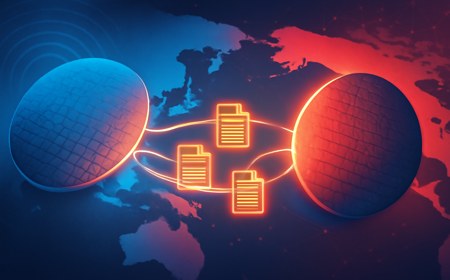 Article · related
Huawei Turns Qualcomm Patents Into a Sanctions-Resilient AI-IP Rail
Huawei and Qualcomm announced a broad multi-year patent license agreement on October 5, 2026, covering 5G, compute, AI and networking technologies. The deal includes cross-licenses and Qualcomm’s planned purchase of certain Huawei U.S. patents, subject to regulatory approvals. The bigger signal is that technology control is shifting from devices and chips toward standards-essential patents, licensing flows and ownership of foundational AI-era infrastructure IP.
Published Oct 5, 2026 Article · related
DeepSeek Turns Huawei Ascend Tools Into a CUDA-Bypass Stack
DeepSeek said on September 30, 2026 that it partnered with Huawei to build programming infrastructure for Huawei Ascend chips, including open-source compute and communication libraries. The release includes DeepGEMM-Ascend, DeepEP-Ascend, and Ascend support around TileLang, with DeepGEMM-Ascend listing initial Ascend 950 support. The strategic signal is clear: China’s AI hardware bottleneck is becoming a software ecosystem contest against Nvidia’s CUDA-centered moat.
Published Oct 2, 2026 Article · related
Alibaba Turns Zhenwu V900 Into a 20-Gigawatt AI-Sovereignty Map
Alibaba announced a full-stack AI roadmap at its Apsara Conference on September 22, 2026, including the Zhenwu V900 AI processor, Qwen 4 training, future Qwen models planned at 5 trillion to 10 trillion parameters, and a target for Alibaba Cloud global data-center capacity to exceed 20GW by 2032. The verified facts point to a vertically integrated strategy spanning chips, cloud infrastructure, models and agents. The system read is that Alibaba is turning compute sovereignty into an operating layer for China’s AI industrial flywheel.
Published Sep 23, 2026 Article · related
Seoul Turns Texas Gas Power Into an AI-Compute Alliance Rail
South Korea has identified a Texas gas-fired power project as the first investment under its $350 billion U.S. package, according to Yonhap, KBS, Kyunghyang and Reuters reporting. The project is tied to rising Texas electricity demand from AI data centers and semiconductor facilities, while Seoul is also discussing U.S. nuclear and Alaska LNG follow-ons. The system read: tariff diplomacy is being converted into firm-power infrastructure for the AI industrial stack.
Published Sep 23, 2026 Article · related
Huawei Turns UnifiedBus Into China’s Nvidia-Bypass AI Factory Stack
Huawei says its Ascend 960DT will be ready in Q1 2027, with Ascend 960PR following in Q3 2027, while its UnifiedBus and Peerium architecture aim to scale AI systems from SuperPoDs to very large SuperClusters. Reuters also reports Huawei says domestic AI-compute demand already exceeds its production capacity, which makes the story less about one chip beating Nvidia and more about whether China can industrialize a substitute stack fast enough.
Published Sep 18, 2026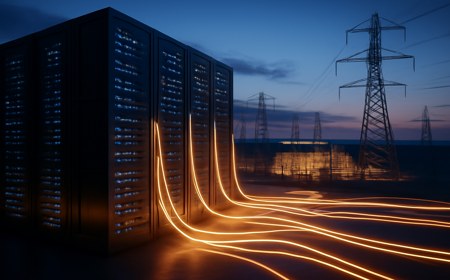 Article · related
Google and Nvidia Turn Flexible Load Into an AI-Data-Center Fast Lane
Google, Nvidia and Emerald AI have launched the AI Energy Management Alliance to promote flexible AI data centers that can adjust electricity demand in response to grid conditions. The coalition is pushing utilities, grid operators and regulators to treat verifiable flexibility as a reason to accelerate large-load interconnection. The Pattern Nexus read: AI compute demand is being converted from a fixed grid burden into a dispatchable power-market asset.
Published Sep 16, 2026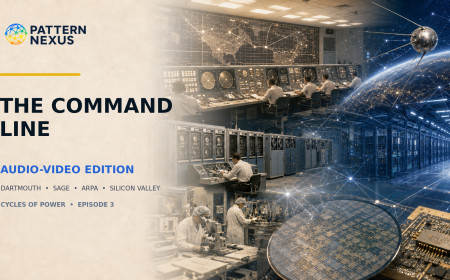 Video · related
The Command Line — Audio-Video Edition
Episode 3 of the weekly Pattern Nexus audio-video series turns Part 3 of Cycles of Power into a shorter story about how Dartmouth, integrated circuits, ARPA, SAGE, Fairchild Semiconductor, Silicon Valley, and IBM built the first compute–defense–industrial command layer—and why today's AI–defense–cloud complex is its direct descendant.
Published Aug 25, 2026 Article · related
RUM Group Turns AI Compute Into a Penny-Warrant Financing Test
RUM Group disclosed a six-year GPU-services agreement with an unaffiliated U.S.-based cloud customer, tied to its Maysville, Georgia site that is still under development. The contract carries an approximately $13.7 billion three-tranche order value and is paired with a warrant for up to 50,808,408 Class A shares at $0.01 per share. The key Pattern Nexus signal is that AI compute demand is being converted into equity-linked financing and dilution risk before the underlying data-center capacity exists.
Published Aug 25, 2026 Article · related
Alibaba Turns Hong Kong Equity Into an AI-Compute War Chest
Alibaba announced the pricing of a HK$80 billion placement of 710 million new ordinary shares at HK$112.70 each, with closing expected on August 26, 2026, subject to customary conditions. The company said 100% of net proceeds will go toward full-stack AI capabilities, including expansion and enhancement of AI infrastructure. Reuters, Bloomberg and South China Morning Post reported the deal as roughly US$10.2 billion and tied it to Alibaba’s broader push across chips, cloud infrastructure, AI models and applications.
Published Aug 23, 2026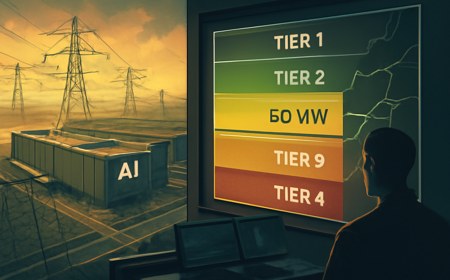 Article · related
PJM Turns AI Data Centers Into Interruptible Grid Load
PJM’s proposed Interim Resource Adequacy Service framework would treat some new 50 MW-plus data centers and other large loads as curtailable unless they secure qualifying capacity. The move follows a 6,831 MW capacity shortfall for the 2028/2029 delivery year and rising forecasts for large-load demand across PJM’s footprint. The system read: AI compute is being recast from passive load growth into a reliability obligation.
Published Aug 19, 2026 Article · related
Nvidia Turns AI Compute Into a Wall Street Collateral Machine
Nvidia announced on August 10, 2026 that it had signed memorandums of understanding with Apollo, BlackRock, Blackstone, Brookfield, Goldman Sachs and KKR to establish AI compute infrastructure financing platforms designed to mobilize more than $500 billion of third-party capital over time. Axios reported that the effort could move through GPU securitizations, spreading exposure to AI compute across insurers, pensions, sovereign wealth funds and other long-duration capital pools. The verified fact is the financing push; the system read is that Nvidia is helping turn compute from purchased hardware into financeable collateral.
Published Aug 12, 2026 Article · related
Amazon Turns AI Compute Into a Private Gas-Grid Emissions Test
Amazon has confirmed that its planned Pecos County, Texas data center will use new on-site generation, while reporting and project documents point to a 7.65 GW gas-fired power platform with major permitted emissions. The larger signal is that hyperscalers are moving beyond power-purchase agreements into vertically integrated energy, permitting and behind-the-meter generation. That may accelerate AI compute deployment, but it also creates a parallel industrial power system with unresolved emissions, accountability and public-cost questions.
Published Aug 10, 2026 Article · related
G7 Turns Frontier AI Into a Sovereignty-and-Access Bargain
G7 leaders used the final day of the Évian summit to put artificial intelligence in front of heads of government and major AI executives. The immediate question was safe deployment, but the deeper fight is over who controls access to frontier models, compute, data and security-sensitive AI capabilities.
Published Jun 17, 2026 Article · related
SpaceX Turns Cursor Into the Developer Interface for Its AI-Compute Stack
SpaceX disclosed a June 16, 2026 agreement to acquire Anysphere, maker of Cursor, in an all-stock merger valuing the company at $60 billion. Cursor is expected to become a wholly owned SpaceX subsidiary in the third quarter of 2026, subject to regulatory approvals. The strategic signal is that SpaceX and xAI are moving closer to the developer interface where AI-generated software production happens.
Published Jun 17, 2026 Article · related
Washington Turns xAI’s Gas Turbines Into a National-Security Compute Shield
The Justice Department moved to intervene in and dismiss an NAACP Clean Air Act citizen suit targeting gas turbines used to support xAI-linked AI data center operations in Mississippi. DOJ argues the facility’s power supply supports AI models important to the economy and military operations, while the NAACP and environmental counsel frame the case as a local air-pollution and accountability fight. The result is a larger precedent battle over whether AI compute infrastructure can be treated as strategic capacity that limits local and citizen enforcement.
Published Jun 17, 2026Join Pattern Nexus for premium research, the archive, and ad-free reading.