

You’re offline. Open downloads
conflict
Automatically indexed from the existing article tag.
Theses, forecasts, models, and paths
No published research objects yet
This topic is ready for editors to connect a thesis, forecast, model, or research path.
Latest articles
 Article · related
Riyadh Turns a Houthi Strike on PIF Tower Into a Gulf Capital-Risk Test
Saudi Arabia’s coalition said on November 19, 2026, that it dealt with a Houthi missile threat toward Riyadh and was assessing debris and material damage. AP, Reuters, and AFP reported damage in Riyadh’s financial district, with Reuters and AFP identifying the affected skyscraper as the Public Investment Fund Tower. The incident reframes the conflict as a direct test of Saudi capital security, Vision 2030 credibility, and regional deterrence.
Published Nov 19, 2026 Article · related
Washington Turns a Third Carrier in the Middle East Into a Hormuz Escalation Test
The USS Theodore Roosevelt has arrived in the Middle East, joining two other U.S. aircraft carriers already in the region amid the Iran war. The deployment coincides with renewed hazards around the Strait of Hormuz, including reported mine incidents and attacks on tankers. The move shifts the conflict from episodic maritime response toward a sustained coercive posture around the world’s most important oil chokepoint.
Published Nov 16, 2026 Article · related
Houthis Turn a Bab el-Mandeb Withdrawal Into a Two-Chokepoint Energy Stress Test
Yemen’s southern forces said on November 15, 2026, that they were redeploying from Dhubab airport and the Bab el-Mandeb area toward Aden, with Reuters-syndicated reporting saying the move left Houthis in control of ground overlooking the strategic strait. Regional and conflict-tracking outlets reported the same repositioning, while AFP-backed context shows Houthi advances toward Aden after earlier government losses along the Red Sea coast. The Pattern Nexus read: Bab el-Mandeb is becoming a second pressure point alongside Hormuz, tightening risk around Gulf oil routing, Red Sea shipping, Saudi security and U.S.-Iran posture.
Published Nov 15, 2026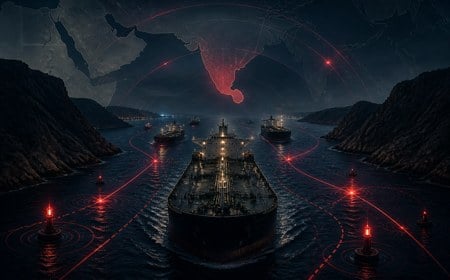 Article · related
UN Turns Hormuz Seafarer Deaths Into an Energy-Chokepoint Stress Signal
UN Assistant Secretary-General Khaled Khiari told the Security Council that at least 25 seafarers have been killed in and around the Strait of Hormuz since the war on Iran began in February. Reports differ slightly on the incident count, with Al Jazeera citing 136 IMO-tracked vessel-security incidents through November 11 and The National citing 134 confirmed incidents. The hard signal is not one mine claim, but the conversion of regional conflict into shipping risk, energy-market stress and supply-chain cost pressure.
Published Nov 15, 2026 Article · related
Iran’s Election Pause: The Escalation Window Has Narrowed
The first follow-up to the October 8 Iran forecast confronts Trump’s election pause, checks actual naval posture, and follows the conflict through shipping, infrastructure, fuel and financing. The November 5 endpoint stays fixed. Four original figures, dated source notes and reproducible data are included.
Published Oct 20, 2026 Article · related
War Is Back On: The U.S.–Iran Ceasefire Has Collapsed Into a Wider Logistics and Chokepoint War
The United States is striking Iranian military, port, power, transportation, and logistics infrastructure. Iran is retaliating against the American Gulf basing network. Israel is ready to reenter. The conflict is evolving from a Hormuz chokepoint war into a wider campaign over Iran’s maritime and Eurasian connections.
Published Jul 9, 2026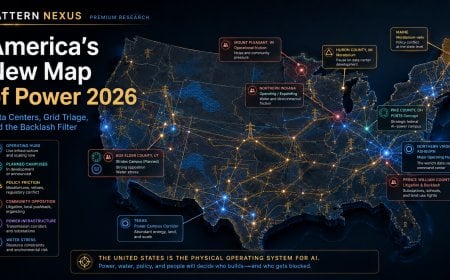 Article · related
America’s New Map of Power 2026: Data Centers, Grid Triage, and the Backlash That Will Not Stop the AI Buildout
The AI data center boom has moved from abstract tech hype into physical infrastructure conflict. The map now runs through substations, water tables, transmission corridors, tax incentives, state permits, private power campuses, local lawsuits, and public backlash. By May 2026, Americans are angry, communities are fighting back, projects are being blocked or downsized, and regulators are openly trying to separate real load from speculative grid requests. But the deeper Pattern Nexus read is that backlash does not stop the buildout. It filters it, reroutes it, and forces the system to move toward places with power, land, political permission, and private energy control.
Published May 30, 2026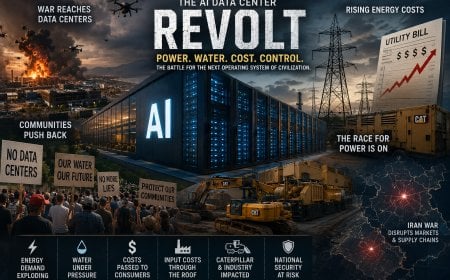 Article · related
War, Backlash and Build‑Out: The 2026 AI Data Center Report
The year 2026 has been unprecedented for AI infrastructure. A global conflict disrupted supply chains and even targeted data centers; nearly 40 % of U.S. projects faced delays. Communities across America escalated their pushback with ballot measures, moratoria and protests. Tech firms responded with new power strategies, cooling innovations, community agreements and even nuclear plans. This report synthesizes the year’s events, from war‑zone drone strikes to closed‑loop cooling, large‑load tariffs, behind‑the‑meter power and the economic ripple effects on suppliers like Caterpillar.
Published May 11, 2026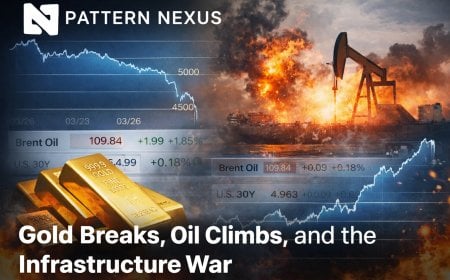 Article · related
Gold Breaks, Yields Surge, Oil Climbs: The New Energy Shock and the Week Ahead
Gold breaks below $4,400, silver resets toward the 60s, oil keeps climbing, and long-end yields press toward 5% as the Middle East conflict moves deeper into infrastructure risk. A full Pattern Nexus breakdown of the setup and the week ahead.
Published Mar 22, 2026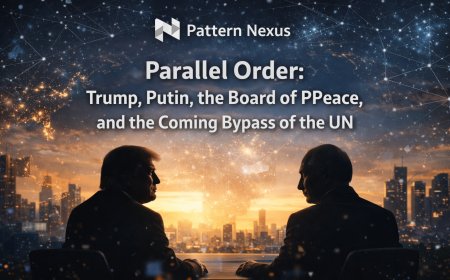 Article · related
Parallel Order? Trump, Putin, and the Emergent Board of Peace
Trump’s new “Board of Peace” began as a Gaza conflict tool but is already expanding into something bigger. This piece explores the speculative, but plausible, scenario where it becomes a parallel world-order surface — with Trump and Putin as parallel actors, Europe as spectator, and China as the unspoken center of gravity.
Published Jan 21, 2026 Article · related
Weeks Where Decades Happen: January 2026 Acceleration Log
January 2026 did not ease into the decade; it detonated into it. From Venezuela’s regime shock and the Greenland tariff crisis to Iran’s crackdown, Syria’s realignment, the UN High Seas Treaty, demographic shifts, IMF revisions, and industrial pivots, this is a log of weeks where decades happen.
Published Jan 19, 2026 Article · related
Greenland, the Board of Peace, and the Fracturing Order: Territorial Leverage, Trusteeship Platforms, and the Liquidity Regime
U.S. tariffs over Greenland, Trump’s Board of Peace for Gaza, elevated U.S. force posture, and the rise of synthetic dollar liquidity are not isolated stories. Together they mark a structural transition: from consensus-based multilateralism to capital-gated trusteeship, territorial coercion, and fragmented liquidity rails.
Published Jan 17, 2026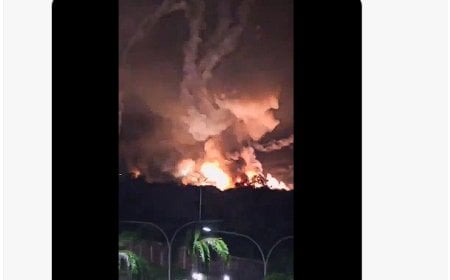 Article · related
Caracas Escalation: Explosions, Airstrikes, and the Fog of Verification
Explosions near Caracas, airstrike claims at Higuerote Airport, armored deployments, and U.S. aerial assets on radar. A Pattern Nexus reconstruction separating verified events from information warfare.
Published Jan 3, 2026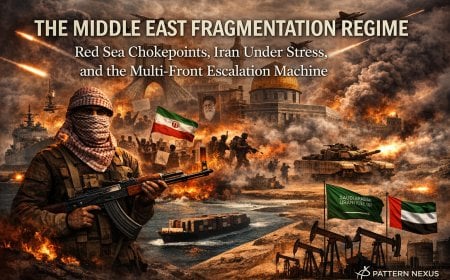 Article · related
The Middle East Fragmentation Regime: Red Sea Chokepoints, Iran Stress, and the Multi-Front Escalation Machine
Over the last month, the Middle East has shifted into a fragmentation regime: Red Sea disruption remains a global trade lever, Iran is under acute internal stress, Israel’s conflict geometry stays multi-front, and Gulf alignment is no longer bloc-discipline. This Pattern Nexus framework maps the interacting theaters, the country-specific incentives, and the next 30–90 day escalation triggers.
Published Jan 2, 2026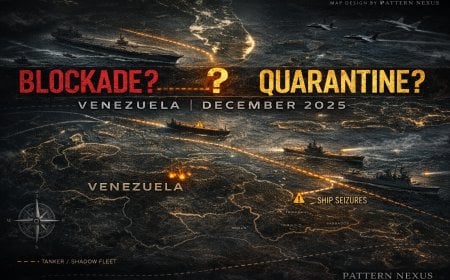 Article · related
Venezuela, December 2025: The Quarantine, the Blockade Word Game, and the Resource Prize
The U.S. escalation around Venezuela in December 2025 is not a single event. It is a coercion stack: maritime interdictions, sanctions enforcement by force, airspace signaling, Congressional war-powers friction, internal administration messaging conflict, and a resource prize sitting underneath it all. This report maps the timeline, actors, legal thresholds, and the “stable point” the system keeps snapping back to.
Published Dec 28, 2025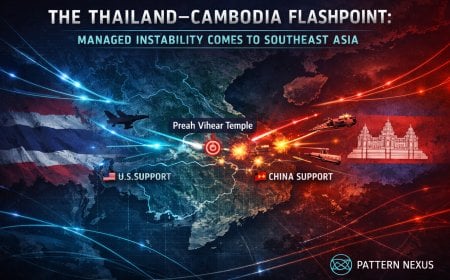 Article · related
The Thailand–Cambodia Flashpoint: Managed Instability Comes to Southeast Asia
The Thailand–Cambodia border conflict is not a local anomaly. It is a repeatable flashpoint where alliance hedging, great-power leverage, and managed instability intersect. A Pattern Nexus systems-level analysis.
Published Dec 16, 2025Join Pattern Nexus for premium research, the archive, and ad-free reading.