

You’re offline. Open downloads
🌍Geopolitics
Automatically indexed from the existing article archive.
Theses, forecasts, models, and paths
No published research objects yet
This topic is ready for editors to connect a thesis, forecast, model, or research path.
Latest articles
 Article · primary
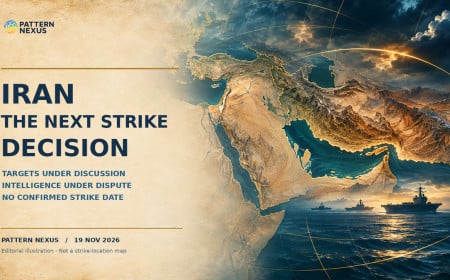
Iran Is Back on the Strike Table: The Qeshm Attacks, Reported U.S.–Israeli Targets, and the Dates We Can Actually Verify
U.S. strikes have resumed near Hormuz as Israel presses Trump for a wider campaign. PN verifies the November incidents, the reported target categories, the disputed intelligence and what the January 1 remark does—and does not—mean.
Published Nov 19, 2026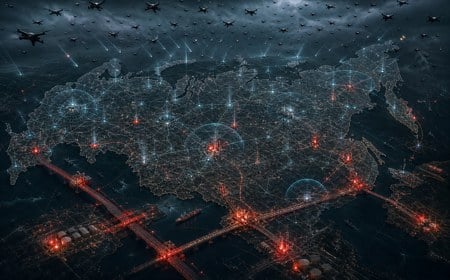 Article · primary
Moscow Turns a Record Ukrainian Drone Swarm Into an Air-Defense Saturation Test
Russia’s Defense Ministry said air defenses downed 1,336 Ukrainian drones overnight across Russian regions, occupied Crimea, and nearby seas. Reuters and AP reported that the figure would make it Ukraine’s largest such attack since the full-scale invasion began, while other reports tied the barrage to disruption around the Crimean/Kerch Bridge and strikes on fuel-related infrastructure. The attack should be read less as a single raid than as a pressure test of Russia’s national-scale air-defense, logistics, and energy-security systems.
Published Nov 16, 2026 Article · primary
Estonia Turns a Drone-Maker Sabotage Claim Into a Russia Border-Closure Test
Estonia says it plans to close road border crossings with Russia from December 1 after an alleged sabotage attempt against Threod Systems, an Estonian defense company that makes drones. Authorities attribute the operation to Russia's GRU military intelligence service, while local reporting says eight people were detained after an attempted break-in and arson plan. The move reframes a suspected attack on a defense supplier as a border-security and hybrid-warfare problem on NATO's eastern flank.
Published Nov 15, 2026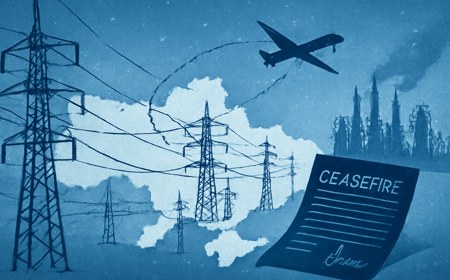 Article · primary
Trump Turns a Claimed Russia-Ukraine Energy Ceasefire Into a Winter-Power Verification Test
Trump announced on October 11, 2026, that Russia and Ukraine had agreed to an immediate “energy ceasefire,” but AP and Reuters reported that he gave no operational details and that there was no immediate confirmation from Moscow. Ukraine’s presidency said Kyiv supports the step but needs Russia’s response, while also reporting Russian strikes on Ukrainian energy facilities after Trump’s statement. The signal now becomes a verification test for winter power security, Russian refining pressure, and U.S. fuel-market politics.
Published Oct 11, 2026 Article · primary
Berlin Turns €1.3B Ukraine Aid Into a Drone-and-Winter-Energy Deterrence Stack
German Chancellor Friedrich Merz used an Oct. 4, 2026 visit to Kyiv to announce more than €1.3 billion in new support for Ukraine. The package includes roughly €1 billion in military aid and about €350 million for energy-sector repairs ahead of winter, while German and Ukrainian actors expand cooperation on drones, interceptors, air defense, radar and weapons production. The strategic read is that Berlin is shifting from episodic aid toward a combined military-industrial and infrastructure-resilience stack.
Published Oct 4, 2026 Article · primary
One System, Many Flags: Ukraine, Iran, North Korea and the Illusion of Separate Wars
The United States can arm Ukraine while temporarily easing pressure on Russian oil, convert stockpile transfers into new procurement, court North Korea while Pyongyang supplies Russia, and fight Iran while Russia and China-linked systems help Tehran. The contradictions resolve when the wars are mapped as one connected system of energy, munitions, intelligence, shipping, sanctions and leverage.
Published Aug 22, 2026 Article · primary
The Lincoln Trap: 265+ Days Deployed, an Indefinite Iran War, and a Carrier Gap in the Pacific
USS Abraham Lincoln was supposed to return home in May. More than 265 deployment days later, the Navy is pulling USS George Washington—the only forward-deployed U.S. carrier in the Pacific—west to relieve it. The rotation exposes the real limit of American carrier readiness: eleven hulls do not equal eleven available carriers, and an open-ended Iran mission is transferring the readiness gap from the Middle East to the Pacific.
Published Aug 14, 2026 Article · avenue
Khasab Turns Fresh Hormuz Tanker Strikes Into an Energy-Chokepoint Stress Test
UKMTO warnings said two outbound tankers were struck by unknown projectiles near Khasab, Oman, on November 21, one at the stern and another in the engine room. AP reported at least three tanker attacks in or near the Strait of Hormuz, including a separate Iranian state-media account of a tanker hitting a naval mine east of the strait. Iran International, citing UKMTO, reported Hormuz shipping was about 65% below pre-war levels in the week ending November 18, with six tanker attacks during that period.
Published Nov 21, 2026 Article · avenue
Washington Turns 879,000 AI-Chip Licenses Into a China-Controls Credibility Test
House Foreign Affairs Committee Chairman Brian Mast released export-control license information on November 19, 2026, saying Chinese buyers sought 3.4 million Nvidia and AMD AI chips and that the Bureau of Industry and Security approved more than 879,000. Reuters, SCMP and Anadolu reported the disclosure while noting that approvals do not necessarily prove completed shipments. The episode sharpens a core U.S.-China technology question: whether export controls can credibly restrict the AI compute layer when commercial incentives and national-security controls collide.
Published Nov 19, 2026 Article · avenue
Washington Turns BIS’s Remote-Compute Rule Into an AI-Chip Containment Test
The Bureau of Industry and Security’s interim final rule, published in the Federal Register and effective November 19, 2026, restricts certain exports, reexports and in-country transfers of advanced semiconductors to overseas data centers that provide large-scale compute access to entities headquartered in Country Group D:5 or Macau. The rule also adds destination-based licensing requirements for Brazil, Indonesia, Malaysia, Singapore and Thailand, tightens oversight around advanced-node chip fabrication and packaging, and formally rescinds the Biden-era AI Diffusion Rule. The strategic shift is clear: Washington is moving from controlling boxes of chips to policing the operating layer of global compute.
Published Nov 19, 2026 Article · avenue
Riyadh Turns a Houthi Strike on PIF Tower Into a Gulf Capital-Risk Test
Saudi Arabia’s coalition said on November 19, 2026, that it dealt with a Houthi missile threat toward Riyadh and was assessing debris and material damage. AP, Reuters, and AFP reported damage in Riyadh’s financial district, with Reuters and AFP identifying the affected skyscraper as the Public Investment Fund Tower. The incident reframes the conflict as a direct test of Saudi capital security, Vision 2030 credibility, and regional deterrence.
Published Nov 19, 2026 Article · avenue
Santa Clara Turns Nvidia’s China Shipment Halt Into an AI-Chip Decoupling Test
Nvidia said it sold $2.4 billion of licensed Hopper data-center products to China in its fiscal third quarter but is no longer shipping those products there. The company’s SEC-filed outlook for the fourth quarter assumes no Data Center compute revenue from China, making the prior licensing pathway look less like a stable compromise and more like a narrowing corridor. The signal is not just a China revenue issue; it is a live stress test for U.S. chip controls, allied supply chains and the geography of advanced AI compute.
Published Nov 18, 2026 Article · avenue
Kuwait Turns Iran’s Gulf Strikes Into a U.S. Base-Resilience Test
Iran said it targeted U.S. drone and missile installations at Kuwait’s Ali Al Salem air base on November 18, while Bahrain reported another round of intercepted Iranian aerial attacks. The incidents followed a U.S. strike on a missile launch site on Iran’s Qeshm Island, near the Strait of Hormuz. The operational signal is that the confrontation is no longer a Bahrain-only harassment cycle; it is becoming a distributed Gulf base-resilience test with direct implications for shipping, oil flows, and U.S. regional posture.
Published Nov 18, 2026 Article · avenue
Washington Turns Chinese Optical Transceivers Into an AI Data-Center Supply-Chain Test
Reuters reported on November 17, 2026, that the Trump administration plans to continue efforts to block imports of Chinese data-center equipment, including optical transceivers, despite opposition from Amazon, Google, Meta, CoreWeave, Cisco and Microsoft. The dispute is backed by an August ITI filing urging the FCC not to add optical transceivers broadly to the Covered List and a September bipartisan Senate bill targeting Chinese optical transceivers in sensitive federal systems. The strategic question is whether Washington can harden the AI data-center stack without constraining the infrastructure race it is trying to win.
Published Nov 17, 2026 Article · avenue
Manila Turns Trump’s Quad Stop Into an Indo-Pacific Posture Test
Trump is in Manila on Nov. 17 for Quad, ASEAN, and trade-related meetings before traveling to Shenzhen for APEC. Verified schedules and reporting show a compressed diplomatic stop involving Quad leaders, a U.S.-Thai trade deal signing, ASEAN engagement, and discussions tied to security, digital transformation, supply chains, AI, and maritime stability. The system read: Manila is being used as the staging ground for Washington’s broader Indo-Pacific posture before Trump faces China on its home summit terrain.
Published Nov 16, 2026 Article · avenue
Washington Turns a Third Carrier in the Middle East Into a Hormuz Escalation Test
The USS Theodore Roosevelt has arrived in the Middle East, joining two other U.S. aircraft carriers already in the region amid the Iran war. The deployment coincides with renewed hazards around the Strait of Hormuz, including reported mine incidents and attacks on tankers. The move shifts the conflict from episodic maritime response toward a sustained coercive posture around the world’s most important oil chokepoint.
Published Nov 16, 2026 Article · avenue
Bahrain Turns Iranian Drone Interceptions Into a Fifth Fleet Air-Defense Stress Test
Bahrain said on November 15, 2026, that its air-defense systems intercepted and destroyed several Iranian aerial attacks. Iran’s IRGC separately claimed it targeted a U.S. radar defense site at Al-Riffa with six drones, but available reporting does not independently confirm damage, casualties or a successful strike. The incident turns Bahrain into a live test of Gulf sensor coverage, warning systems and U.S.-linked basing resilience.
Published Nov 15, 2026 Article · avenue
Houthis Turn a Bab el-Mandeb Withdrawal Into a Two-Chokepoint Energy Stress Test
Yemen’s southern forces said on November 15, 2026, that they were redeploying from Dhubab airport and the Bab el-Mandeb area toward Aden, with Reuters-syndicated reporting saying the move left Houthis in control of ground overlooking the strategic strait. Regional and conflict-tracking outlets reported the same repositioning, while AFP-backed context shows Houthi advances toward Aden after earlier government losses along the Red Sea coast. The Pattern Nexus read: Bab el-Mandeb is becoming a second pressure point alongside Hormuz, tightening risk around Gulf oil routing, Red Sea shipping, Saudi security and U.S.-Iran posture.
Published Nov 15, 2026 Article · avenue
UN Turns Hormuz Seafarer Deaths Into an Energy-Chokepoint Stress Signal
UN Assistant Secretary-General Khaled Khiari told the Security Council that at least 25 seafarers have been killed in and around the Strait of Hormuz since the war on Iran began in February. Reports differ slightly on the incident count, with Al Jazeera citing 136 IMO-tracked vessel-security incidents through November 11 and The National citing 134 confirmed incidents. The hard signal is not one mine claim, but the conversion of regional conflict into shipping risk, energy-market stress and supply-chain cost pressure.
Published Nov 15, 2026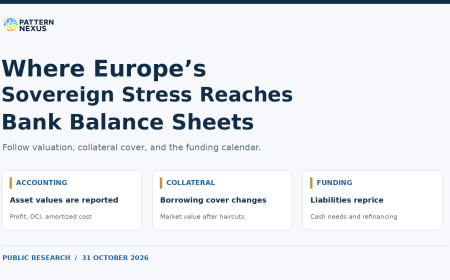 Article · avenue
Where Europe’s Sovereign Stress Reaches Bank Balance Sheets
Government-bond repricing can reach a bank through accounting, collateral cover, and funding costs on different schedules. PN examines the latest sovereign-exposure data and follows one bond through those channels to identify where pressure could become a constraint.
Published Nov 1, 2026 Article · avenue
Iran’s Election Pause: The Escalation Window Has Narrowed
The first follow-up to the October 8 Iran forecast confronts Trump’s election pause, checks actual naval posture, and follows the conflict through shipping, infrastructure, fuel and financing. The November 5 endpoint stays fixed. Four original figures, dated source notes and reproducible data are included.
Published Oct 20, 2026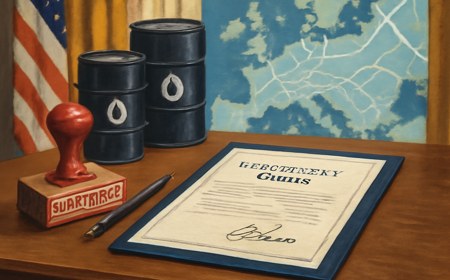 Article · avenue
Washington Turns Russia Sanctions Into an Energy-Price Waiver Fight
President Trump signed an executive order on October 16 waiving major sanctions, restrictions, and duties under the Lindsey O. Graham Sanctioning Russia and Iran Act of 2026, just before implementation was due. The move drew congressional criticism and a public appeal from Ukrainian President Volodymyr Zelenskyy, while independent reports connected the pause to a broader energy-price and Russia-Ukraine posture fight. The strategic question is whether secondary sanctions remain a coercive tool or become a discretionary valve for managing fuel-market pressure.
Published Oct 17, 2026 Article · avenue
Super Micro Contractor Turns Nvidia AI Servers Into a China Export-Control Guilty Plea
Ting-Wei “Willy” Sun, a contractor linked to Super Micro Computer, pleaded guilty on October 8, 2026, to four counts tied to an alleged scheme to illegally route AI servers containing advanced Nvidia chips to China. The Justice Department had previously alleged that the broader conspiracy involved about $2.5 billion worth of U.S. AI server technology. The plea is an enforcement signal for the U.S.-China compute-control regime: advanced AI servers are now being treated as traceable strategic infrastructure, not just commercial hardware.
Published Oct 11, 2026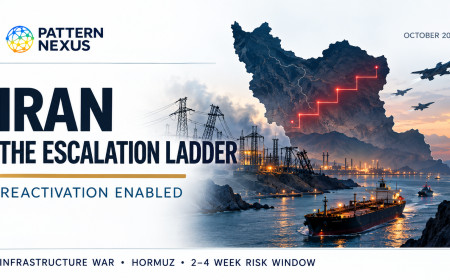 Article · avenue
Iran: Escalation Ladder — Reactivation Enabled
The Iran escalation ladder is active again. I examine the October strike risk, the infrastructure-war danger, rising tanker attacks alongside recovering exports, the Gulf defense response, financial isolation, current oil inventories and the Federal Reserve’s position. My working window is October 22–November 5. The article connects the latest evidence to the Pattern Nexus research trail from January through October.
Published Oct 8, 2026 Article · avenue
G7 Turns Emergency Diesel Stocks Into a No-Export-Ban Bargain
G7 leaders agreed on October 2, 2026 to coordinate an IEA-linked release of 100 million barrels of diesel and crude over four months, with a substantial diesel release in the first 20 days. The package followed U.S. pressure on Europe over emergency diesel inventories and included a pledge not to impose energy-export restrictions among G7 members. The move turns strategic stocks into a market-stabilization tool and an alliance-management mechanism.
Published Oct 3, 2026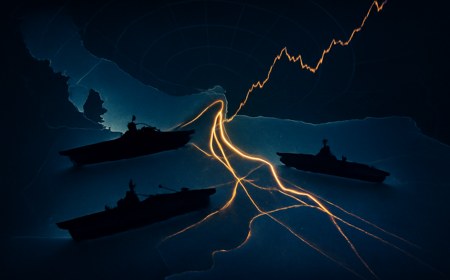 Article · avenue
Washington Turns a Third Carrier Into an Iran-War Escalation Option
The United States is dispatching the USS Theodore Roosevelt carrier strike group and the Makin Island amphibious ready group toward the Middle East, according to multiple reports citing U.S. officials. The deployment could briefly put three U.S. aircraft carriers in the region, depending on timing, as President Donald Trump weighs further pressure or renewed strikes against Iran. The strategic signal is not just military: it lands in an energy system already strained by Hormuz disruption, low distillate inventories, and elevated oil-price risk.
Published Oct 2, 2026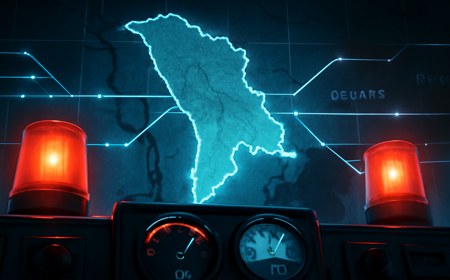 Article · avenue
Moldova Turns a 60-Day Emergency Into a Winter Energy-Security Firewall
Moldova’s parliament approved a nationwide 60-day state of emergency in the energy and hydrological sectors beginning September 26, 2026. The government says the measure is preventive, aimed at giving authorities faster tools before winter as drought, electricity-import dependence, fuel-market stress and regional-war risks overlap. The system signal is that Moldova is treating water, electricity, fuel and cross-border grid access as one integrated resilience stack.
Published Sep 27, 2026 Article · avenue
Tehran Turns Hormuz Reopening Into a Seven-Day Energy-Security Bargain
Iranian Foreign Minister Abbas Araghchi says Tehran has sent Washington a seven-day roadmap through Qatar that would reopen the Strait of Hormuz and restart nuclear talks if U.S. conditions are met. AP, Al Jazeera, Reuters and The National reporting indicate the offer is tightly conditional, contains no near-term Iranian nuclear concession and is now colliding with Western efforts to build parallel maritime-security pressure at the UN.
Published Sep 26, 2026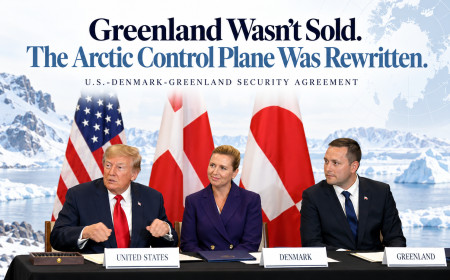 Article · avenue
Greenland Wasn't Sold. The Arctic Control Plane Was Rewritten.
Greenland wasn't sold or annexed. The September 22, 2026 U.S.–Denmark–Greenland security agreement expands Pituffik, provides for defense areas at Narsarsuaq and Mestersvig, establishes broad U.S. military access, limits non-NATO military presence and sensitive foreign investments, and seeks continuity even if Greenland becomes independent. Pattern Nexus places the signed treaty inside its earlier Monroe Doctrine and Arctic control-plane coverage—and separates what was signed from what remains to be approved, funded and built.
Published Sep 22, 2026 Article · avenue
London Turns RAF Tankers Into a Red Sea Energy-Security Backstop
British Prime Minister Andy Burnham has approved limited defensive air-to-air refueling support for Saudi Arabia after Riyadh requested help countering intensified Houthi attacks. Reporting from AP, Reuters, The Guardian and Bloomberg says the mission is expected to involve one RAF Voyager for a time-limited deployment measured in weeks. The move links Yemen’s renewed escalation directly to oil-route security, allied burden-sharing and the cost-of-living politics of keeping maritime chokepoints open.
Published Sep 22, 2026Join Pattern Nexus for premium research, the archive, and ad-free reading.