

You’re offline. Open downloads
Global Macro Signals (🌐📡)
High-level international macro signals across major economies, sovereign stress, and policy shifts.
Theses, forecasts, models, and paths
No published research objects yet
This topic is ready for editors to connect a thesis, forecast, model, or research path.
Latest articles
 Article · primary
Washington Turns Waller’s 50bp Warning Into an Inflation-Psychology Test
Federal Reserve Governor Christopher Waller said on November 18 that the Fed may need to act more aggressively against inflation, including a possible 50-basis-point move at the December 8-9 meeting or clearer communication that hikes will continue quickly into 2027. Reuters, Anadolu, Quartz, and NDTV Profit all reported the remarks from Waller’s CNBC appearance, while market coverage showed the comments landing into a fragile backdrop for futures, Treasury yields, and AI-linked risk appetite. The signal is not just hawkish Fed-speak; it is a repricing test for duration-heavy assets built around low discount rates.
Published Nov 18, 2026 Article · primary
Tokyo Turns a Flat GDP Print Into an Energy-Import Stress Signal
Japan’s Cabinet Office said real GDP was essentially unchanged in July–September 2026 but fell at a 0.1% annualized rate, with private consumption down 0.3%, imports up 2.5% and net exports subtracting 0.6 percentage point from growth. Independent reports from Reuters, AP and ChosunBiz tied the miss to higher living costs, oil and energy import pressure, weak-yen dynamics and poor weather, while noting that private non-residential investment rose 1.6%. The Pattern Nexus read: Japan’s problem is less a classic demand collapse than a terms-of-trade and purchasing-power squeeze that complicates Bank of Japan tightening.
Published Nov 15, 2026 Article · primary
The Yen's Hidden Backstop: FIMA, Dollar Creation and the Treasury Market
Japan's 2026 yen intervention was enormous, but Federal Reserve balance-sheet data show FIMA was not used to fund it. That may be the more important finding. FIMA sits behind the global dollar system as a mechanism allowing approved foreign monetary authorities to temporarily turn U.S. Treasury collateral into newly supplied dollars instead of selling those Treasuries into the market. This report examines what FIMA actually does, why it is a form of temporary central-bank dollar creation rather than QE, what Japan's reserve structure looks like, and why another serious yen crisis could migrate directly into U.S. Treasury-market plumbing.
Published Aug 19, 2026 Article · primary
McDonald’s Did Not Bring Back Value Because It Felt Nostalgic. It Did It Because the System Sees Demand Breaking.
A Pattern Nexus analysis of McDonald’s new under-$3 menu as a signal on consumer stress, franchise economics, real-estate control, fast-casual pressure, and the broader architecture of demand destruction.
Published Apr 4, 2026 Article · primary
The 2075 GDP Rankings Aren’t About Power — They’re About Demographic Compounding
Goldman Sachs’ 2075 GDP projections aren’t a leaderboard of global power. They’re a demographic compounding map built on liquidity, population, and time. Here’s how to read it correctly.
Published Jan 5, 2026 Article · primary
Why Silver Terrifies China: Velocity, Manufacturing Fragility, and the Limits of Control
Silver’s rapid rise threatens China’s manufacturing model, export margins, and capital controls. Unlike gold, silver is an embedded industrial input—making volatility, not price level, the real danger.
Published Dec 27, 2025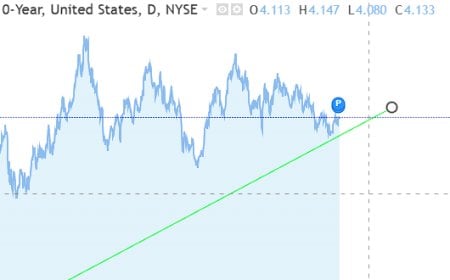 Article · primary
The Gravity Zone: How the 10-Year Treasury Revealed the Real Neutral Rate
The 10-year Treasury has been oscillating around a hidden 3–4% neutral zone since 2022, revealing the true equilibrium rate the Fed keeps missing. This article breaks down why long rates refuse to fall, why the market no longer trusts traditional rate cuts, how the Treasury’s trillion-dollar TGA fits into the picture, and why quiet yield-curve management is becoming the new operating system of U.S. monetary policy.
Published Nov 18, 2025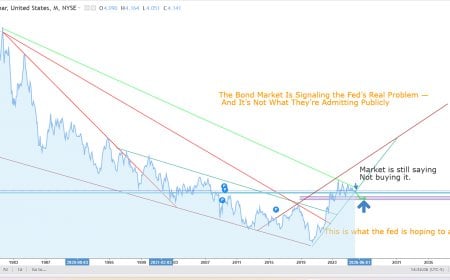 Article · primary
The Bond Market Is Exposing the Fed’s Real Problem — And It’s Not Inflation
The 10-year yield reveals the Fed’s real challenge: a shrinking debt-sustainability corridor the market refuses to accept. Here’s why the system can’t stay here.
Published Nov 14, 2025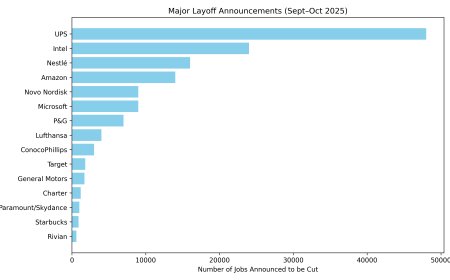 Article · primary
Mass Layoffs: The Big Cuts of Sep–Oct 2025
From UPS and Amazon to Nestlé, Intel, Target, and Paramount—here are the biggest layoff waves announced over the last 60 days and why they happened.
Published Oct 30, 2025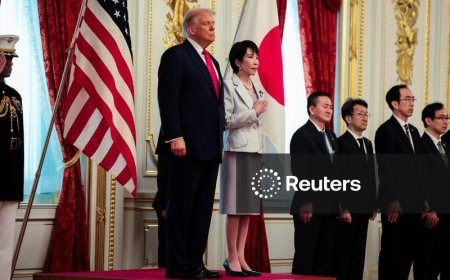 Article · primary
The $550 Billion Pivot: How the U.S.–Japan Alliance Is Re-Wiring Global Power
The U.S. and Japan have unveiled a historic $550 billion trade and investment framework linking critical minerals, nuclear energy, and AI infrastructure — a deal that redefines global economic and geopolitical balance as the Pacific alliance enters a “new golden age.
Published Oct 28, 2025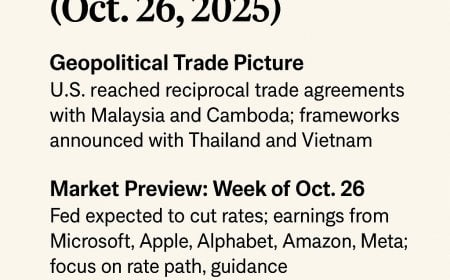 Article · primary
Trade Signal: Southeast Asia Deals, U.S.–China Talks, and the Week Ahead (Oct 26, 2025)
Geopolitics meets markets: new U.S. reciprocal trade deals in Southeast Asia, U.S.–China negotiations, a Fed preview, and what futures are signaling for the week of Oct 26, 2025.
Published Oct 26, 2025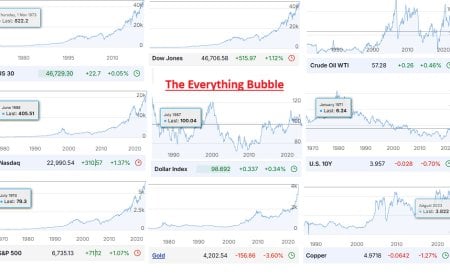 Article · primary
The Everything Bubble: When Money Outruns Production
Since the 2000s, nearly every major asset has inflated together — stocks, commodities, yields, and metals. As money supply outruns real production, prices rise despite rising productivity. The “Everything Bubble” isn’t about growth — it’s about distortion.
Published Oct 21, 2025Join Pattern Nexus for premium research, the archive, and ad-free reading.