

You’re offline. Open downloads
oil
Automatically indexed from the existing article tag.
Theses, forecasts, models, and paths
No published research objects yet
This topic is ready for editors to connect a thesis, forecast, model, or research path.
Latest articles
 Article · related
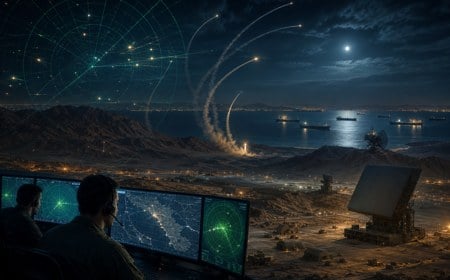
Kuwait Turns Iran’s Gulf Strikes Into a U.S. Base-Resilience Test
Iran said it targeted U.S. drone and missile installations at Kuwait’s Ali Al Salem air base on November 18, while Bahrain reported another round of intercepted Iranian aerial attacks. The incidents followed a U.S. strike on a missile launch site on Iran’s Qeshm Island, near the Strait of Hormuz. The operational signal is that the confrontation is no longer a Bahrain-only harassment cycle; it is becoming a distributed Gulf base-resilience test with direct implications for shipping, oil flows, and U.S. regional posture.
Published Nov 18, 2026 Article · related
Washington Turns a Third Carrier in the Middle East Into a Hormuz Escalation Test
The USS Theodore Roosevelt has arrived in the Middle East, joining two other U.S. aircraft carriers already in the region amid the Iran war. The deployment coincides with renewed hazards around the Strait of Hormuz, including reported mine incidents and attacks on tankers. The move shifts the conflict from episodic maritime response toward a sustained coercive posture around the world’s most important oil chokepoint.
Published Nov 16, 2026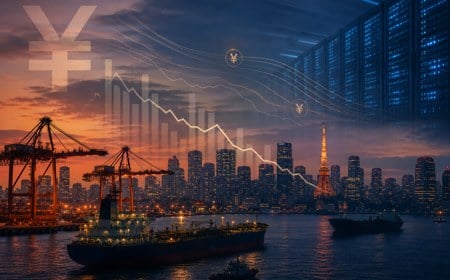 Article · related
Tokyo Turns a Flat GDP Print Into an Energy-Import Stress Signal
Japan’s Cabinet Office said real GDP was essentially unchanged in July–September 2026 but fell at a 0.1% annualized rate, with private consumption down 0.3%, imports up 2.5% and net exports subtracting 0.6 percentage point from growth. Independent reports from Reuters, AP and ChosunBiz tied the miss to higher living costs, oil and energy import pressure, weak-yen dynamics and poor weather, while noting that private non-residential investment rose 1.6%. The Pattern Nexus read: Japan’s problem is less a classic demand collapse than a terms-of-trade and purchasing-power squeeze that complicates Bank of Japan tightening.
Published Nov 15, 2026 Article · related
Houthis Turn a Bab el-Mandeb Withdrawal Into a Two-Chokepoint Energy Stress Test
Yemen’s southern forces said on November 15, 2026, that they were redeploying from Dhubab airport and the Bab el-Mandeb area toward Aden, with Reuters-syndicated reporting saying the move left Houthis in control of ground overlooking the strategic strait. Regional and conflict-tracking outlets reported the same repositioning, while AFP-backed context shows Houthi advances toward Aden after earlier government losses along the Red Sea coast. The Pattern Nexus read: Bab el-Mandeb is becoming a second pressure point alongside Hormuz, tightening risk around Gulf oil routing, Red Sea shipping, Saudi security and U.S.-Iran posture.
Published Nov 15, 2026 Article · related
Hot CPI, Wrong Consensus: The Inflation Pressure Pattern Nexus Saw Coming
October CPI exceeded consensus on both headline and core inflation. Eight earlier Pattern Nexus articles connect the oil and diesel shock, fertilizer risk, Fed tightening and refinancing pressure, with new Federal Reserve research and the November energy outlook.
Published Nov 10, 2026 Article · related
The Diesel Trap: Why the Oil War Is Bending Sanctions Before Winter
The October Russia-sanctions waiver adds a new policy chapter to the Pattern Nexus oil-war thesis. I connect the diesel bottleneck to emergency fuel commitments, uneven winter heating costs, the original Iran escalation window, household purchasing power and the next Fed financing test. Includes four dated figures and reproducible data.
Published Oct 20, 2026 Article · relatedSeptember CPI: Inflation Is Running Hot—and the Oil Work Explains Why
September CPI rose 0.6% for the month and 3.7% over the year, with gasoline responsible for more than half the monthly increase. I connect the report to the earlier Pattern Nexus oil, inventory, diesel and fertilizer research, explain the damage to real wages, and update the Fed and liquidity sequence.
Published Oct 15, 2026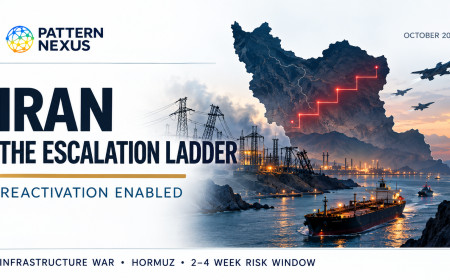 Article · related
Iran: Escalation Ladder — Reactivation Enabled
The Iran escalation ladder is active again. I examine the October strike risk, the infrastructure-war danger, rising tanker attacks alongside recovering exports, the Gulf defense response, financial isolation, current oil inventories and the Federal Reserve’s position. My working window is October 22–November 5. The article connects the latest evidence to the Pattern Nexus research trail from January through October.
Published Oct 8, 2026 Article · related
Washington Turns a Third Carrier Into an Iran-War Escalation Option
The United States is dispatching the USS Theodore Roosevelt carrier strike group and the Makin Island amphibious ready group toward the Middle East, according to multiple reports citing U.S. officials. The deployment could briefly put three U.S. aircraft carriers in the region, depending on timing, as President Donald Trump weighs further pressure or renewed strikes against Iran. The strategic signal is not just military: it lands in an energy system already strained by Hormuz disruption, low distillate inventories, and elevated oil-price risk.
Published Oct 2, 2026 Article · related
Tehran Turns Hormuz Reopening Into a Seven-Day Energy-Security Bargain
Iranian Foreign Minister Abbas Araghchi says Tehran has sent Washington a seven-day roadmap through Qatar that would reopen the Strait of Hormuz and restart nuclear talks if U.S. conditions are met. AP, Al Jazeera, Reuters and The National reporting indicate the offer is tightly conditional, contains no near-term Iranian nuclear concession and is now colliding with Western efforts to build parallel maritime-security pressure at the UN.
Published Sep 26, 2026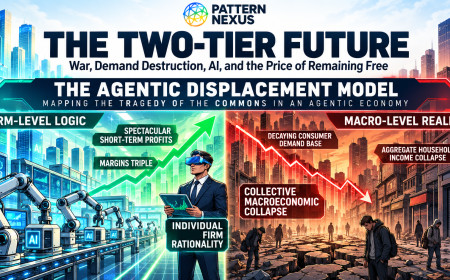 Article · related
The Two-Tier Future: War, Demand Destruction, AI, and the Price of Remaining Free
For years, I followed pieces of a possible two-tier economic future, then moved away from believing they would come together. In September 2026, the Iran oil shock, Ukraine refinery attacks, demand destruction, long-rate pressure, AI, robotics and the ownership of physical infrastructure have forced me to put the entire argument into one place: who retains access to the real world if an increasingly automated economy makes ordinary people dependent on the systems they do not own?
Published Sep 25, 2026 Article · related
London Turns RAF Tankers Into a Red Sea Energy-Security Backstop
British Prime Minister Andy Burnham has approved limited defensive air-to-air refueling support for Saudi Arabia after Riyadh requested help countering intensified Houthi attacks. Reporting from AP, Reuters, The Guardian and Bloomberg says the mission is expected to involve one RAF Voyager for a time-limited deployment measured in weeks. The move links Yemen’s renewed escalation directly to oil-route security, allied burden-sharing and the cost-of-living politics of keeping maritime chokepoints open.
Published Sep 22, 2026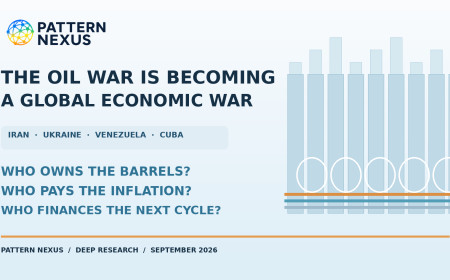 Article · related
The Oil War Is Becoming a Global Economic War
An extensive Pattern Nexus reconstruction linking the Iran/Hormuz disruption with Ukrainian refinery attacks, diesel shortages, Saudi pipeline damage, U.S. and Venezuelan supply, Cuba’s grid, the dollar system, Treasury financing, Fed tightening, public energy-stock disclosures and the next conditional liquidity cycle. Includes an auditable Pattern Nexus article timeline, four sourced charts and 36 primary/reporting references.
Published Sep 21, 2026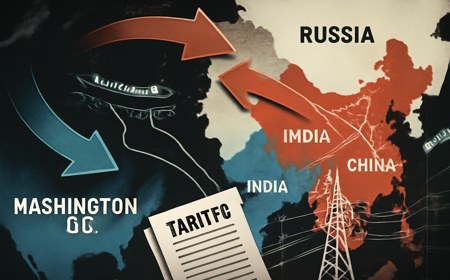 Article · related
Washington Turns Russian Oil Sanctions Into an India-China Tariff Lever
The U.S. House passed a sweeping Russia sanctions package in a 262-159 vote and sent it to President Donald Trump. The bill targets Russian officials, banks, sanctions-evasion networks and the shadow fleet, while authorizing duties on countries that buy Russian-origin crude oil or natural gas or facilitate evasion. India responded on September 17 that it would protect energy security, diversified sourcing, trade interests and the bilateral relationship.
Published Sep 17, 2026 Video · related
The Monetary Break — Audio-Video Edition
Episode 4 of the weekly Pattern Nexus audio-video series turns Part 4 of Cycles of Power into a shorter story about how silver redemption, the Nixon Shock, floating currencies, Eurodollars, oil shocks, petrodollar recycling, and offshore banking transformed the gold-linked dollar fortress into a global dollar web between 1968 and 1979.
Published Aug 30, 2026 Article · related
One System, Many Flags: Ukraine, Iran, North Korea and the Illusion of Separate Wars
The United States can arm Ukraine while temporarily easing pressure on Russian oil, convert stockpile transfers into new procurement, court North Korea while Pyongyang supplies Russia, and fight Iran while Russia and China-linked systems help Tehran. The contradictions resolve when the wars are mapped as one connected system of energy, munitions, intelligence, shipping, sanctions and leverage.
Published Aug 22, 2026 Article · related
Washington Turns Iran Sanctions Into a China Oil-Flow Loyalty Test
The U.S. and Iran traded warnings before a planned Monday sanctions announcement by Treasury Secretary Scott Bessent. Reuters, AP and Bloomberg report that Washington is preparing a wider secondary-sanctions push that could reach Iran’s remaining trading partners, including China, while Strait of Hormuz oil flows remain heavily constrained. The Pattern Nexus read: this is no longer just Iran policy; it is a wartime test of U.S. financial enforcement against energy flows that Asia still needs.
Published Aug 22, 2026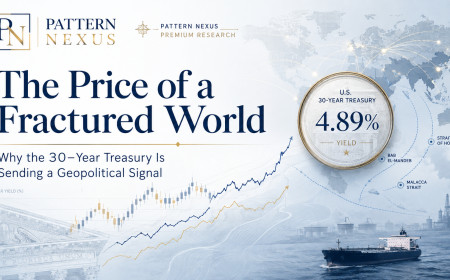 Article · related
The Price of a Fractured World: Why the 30-Year Treasury Is Sending a Geopolitical Signal
Something about the global system feels uncomfortable, and the last month of data suggests that feeling has a measurable foundation. The U.S. 30-year Treasury has pushed above 5.3%, real long-term yields are above 3%, the Strait of Hormuz remains severely constrained, U.S. missile inventories are being consumed across multiple theaters, Russia and Ukraine are attacking the commercial infrastructure of the Black Sea, China continues pressure around Taiwan and the South China Sea, new regional defense blocs are forming, tariffs are fragmenting trade, and governments and AI companies are simultaneously competing for enormous amounts of capital. This Pattern Nexus investigation asks whether the long end of the Treasury market is becoming one of the cleanest aggregate prices of a more fragmented world—and separates that thesis from the much weaker claim that the Treasury market itself is failing.
Published Aug 18, 2026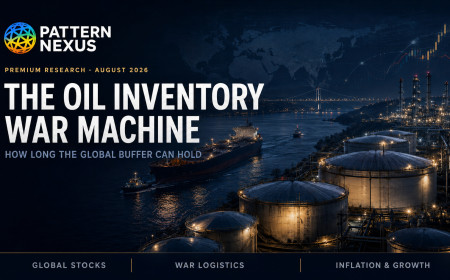 Article · related
The Oil Inventory War Machine: How Long the Global Buffer Can Hold
A full Pattern Nexus reconstruction of U.S. and global oil inventories from the 1970s through the 2026 war shock, including original regressions, depletion scenarios, strategic reserves, refinery constraints, inflation, growth, rates and the path forward. Meta keywords: oil inventory, global oil stocks, U.S. crude inventories, Strategic Petroleum Reserve, SPR, Strait of Hormuz, Iran war, oil shock, petroleum products, diesel inventories, refinery capacity, inflation, CPI, recession, Treasury yields, liquidity, war economy, energy security, Pattern Nexus
Published Aug 2, 2026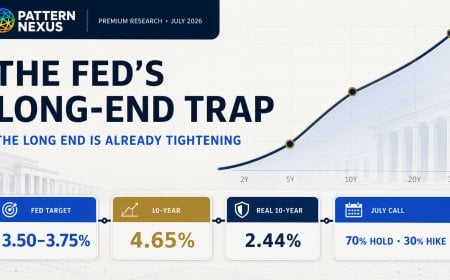 Article · related
The Fed’s Long-End Trap: Why a 4.65% 10-Year Is Already Doing the Tightening
A full July 2026 data reconstruction of the Federal Reserve’s next policy path, showing how a 4.65% nominal 10-year, 2.44% real 10-year, Treasury supply, oil risk and uneven liquidity conditions create a hawkish-hold trap.
Published Jul 27, 2026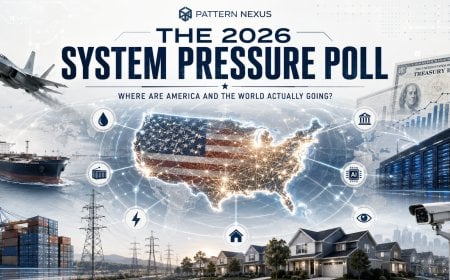 Poll · related
The 2026 System Pressure Poll: Where Are America and the World Actually Going?
This is not another left-versus-right approval poll. The Pattern Nexus System Pressure Poll examines the deeper structures shaping current events: war, energy, shipping corridors, debt, interest rates, tariffs, artificial intelligence, surveillance, housing, automation, institutional trust, and the emerging global order. The daily headlines are downstream. The objective is to identify which systems people believe are actually driving events—and where those systems are taking the United States and the rest of the world.
Published Jul 24, 2026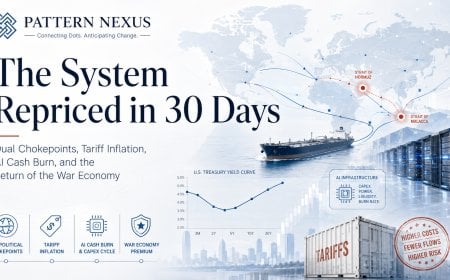 Article · related
The System Repriced in 30 Days: Dual Chokepoints, Tariff Inflation, AI Cash Burn, and the Return of the War Economy
In thirty days, the operating assumptions underneath the global system changed. Two maritime chokepoints came under pressure, the United States expanded war financing and rebuilt its tariff architecture, inflation moved back upstream, long-term yields repriced, AI infrastructure crossed into cash-burn territory, strategic minerals became permissioned leverage, and political command structures began cracking. This Pattern Nexus analysis maps those events as one connected system rather than separate headlines.
Published Jul 24, 2026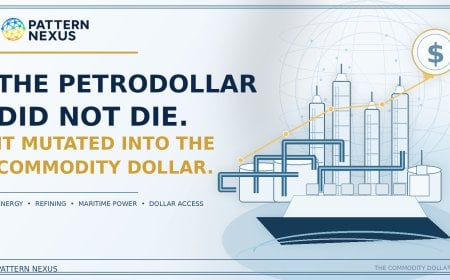 Article · related
The Petrodollar Did Not Die. It Mutated Into the Commodity Dollar
The old petrodollar was built around imported oil, dollar invoicing, military protection, and the recycling of global surpluses into American assets. The emerging commodity-dollar system is more direct: the United States produces record volumes of oil and gas, operates enormous refinery and export infrastructure, protects strategic waterways, controls critical financial rails, and can restrict access to global markets through sanctions, insurance, banking regulation, export controls, and maritime enforcement.
Published Jul 18, 2026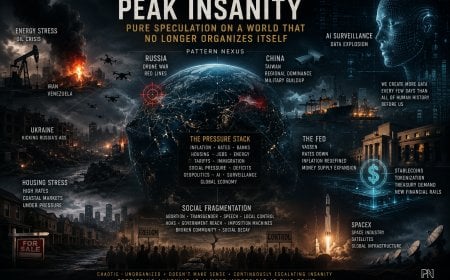 Article · related
Peak Insanity: Pure Speculation on a World That No Longer Organizes Itself
This is not a prediction article. It is not a clean thesis. It is a speculative Pattern Nexus thought-run through the pressure stack building across 2026: Venezuela, Iran, oil, banks, inflation, rates, Russia, Ukraine, China, AI, energy, surveillance, social fragmentation, and the possibility that the modern world has entered a period where the pattern itself is chaotic escalation.
Published Jun 19, 2026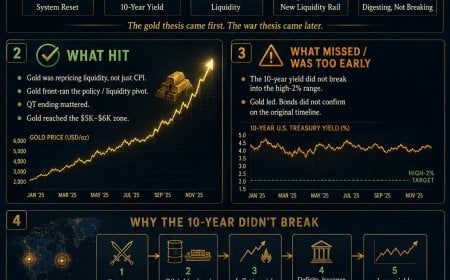 Article · related
Gold Was Right. The 10-Year Was Early. The War Premium Changed the Rate Path.
The original Pattern Nexus gold call hit the structural move: gold was not just trading inflation, it was repricing liquidity, policy failure, and the collateral stack. The miss was the 10-year yield. It did not break into the high-2% range because two wars changed the inflation, oil, shipping, deficit, and term-premium path after the gold call was already made.
Published Jun 14, 2026 Article · related
Hormuz Ceasefire Breaks Into Direct U.S.-Iran Strike Cycle
The United States launched strikes on Iranian targets near the Strait of Hormuz after the loss of a U.S. Army Apache helicopter, while Iran reported retaliatory attacks against U.S.-linked targets in Jordan and the Gulf. AP reported that the exchange again tested a two-month ceasefire, and Reuters-linked oil coverage showed crude rising as the flare-up renewed supply-risk concerns. The strategic signal is a maritime-energy choke point turning into a repeat escalation loop.
Published Jun 10, 2026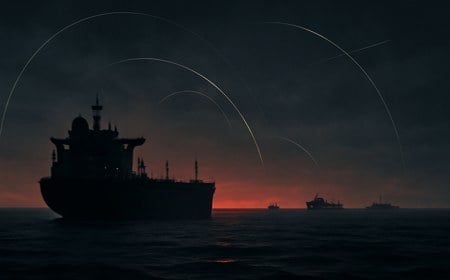 Article · related
Hormuz Ceasefire Frays Again as U.S. Downs Iranian Drones Near Shipping Lanes
U.S. forces shot down two Iranian drones near the Strait of Hormuz after CENTCOM said they threatened international maritime traffic, according to EFE, AFP via Arab News, AP and Xinhua. The incident followed a prior exchange in which U.S. forces downed Iranian drones, intercepted missiles aimed toward Gulf allies and struck Iranian coastal surveillance radar sites. The pattern keeps the world’s most important oil-shipping chokepoint under active military stress even if cargoes continue moving.
Published Jun 7, 2026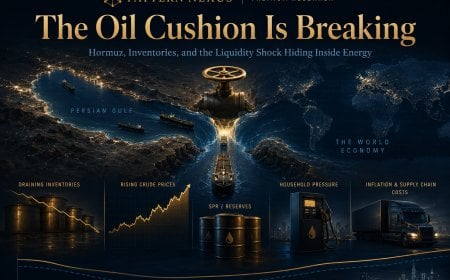 Article · related
The Oil Cushion Is Breaking: Hormuz, Inventories, and the Liquidity Shock Hiding Inside Energy
Oil Crisis, Strait of Hormuz, Hormuz, Energy Shock, Inflation, Brent Crude, WTI Crude, Strategic Petroleum Reserve, SPR, Oil Inventories, Global Oil Supply, Gasoline Prices, Diesel Prices, Refining, Crack Spreads, Federal Reserve, Liquidity, Recession Risk, Macro, Geopolitics, Pattern Nexus
Published Jun 1, 2026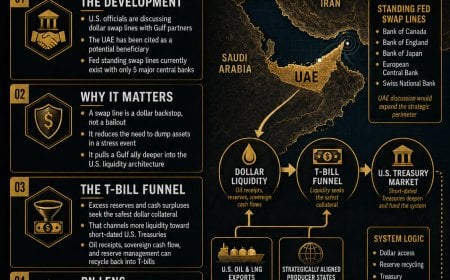 Article · related
UAE, Swap Lines, and the T-Bill Funnel: The New Oil Order Is Being Built Through Liquidity Rails
A Pattern Nexus analysis on the UAE leaving OPEC/OPEC+, U.S. dollar swap-line discussions, the T-bill funnel, and how oil, LNG, reserves, security, and Treasury demand are becoming one U.S.-anchored system chain.
Published May 1, 2026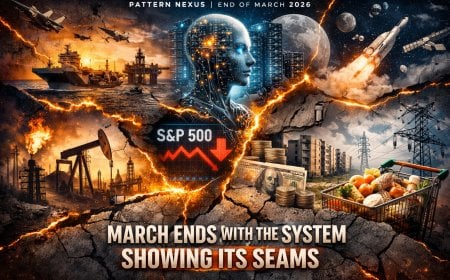 Article · related
March Ends With the System Showing Its Seams
A Pattern Nexus end-of-March 2026 master analysis on Hormuz, oil repricing, liquidity stress, inflation pressure, AI infrastructure, Moon Base acceleration, sovereignty, domestic pass-through, and why the system is showing its architecture again.
Published Mar 31, 2026Join Pattern Nexus for premium research, the archive, and ad-free reading.