

You’re offline. Open downloads
Risk
Automatically indexed from the existing article tag.
Theses, forecasts, models, and paths
No published research objects yet
This topic is ready for editors to connect a thesis, forecast, model, or research path.
Latest articles
 Article · related
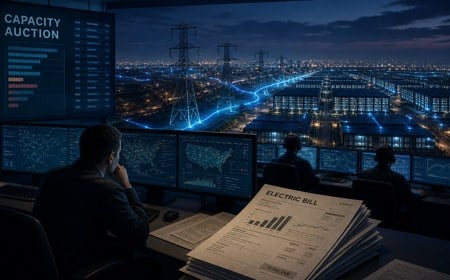
PJM Turns AI Load Forecasts Into a Capacity-Cost Stress Test
State ratepayer advocates asked PJM’s board to seek FERC approval to postpone the December 9-15, 2026 capacity auction for the 2029/2030 delivery year until forecast data-center load is removed and handled through a separate reliability backstop process. The request leans on PJM’s Independent Market Monitor, which warned that data-center load already raised capacity costs by $29.4 billion and could add another $5 billion to $10 billion in the upcoming auction. PJM says delaying the auction this close to execution could destabilize the market and raise reliability risk.
Published Nov 19, 2026 Article · related
Frankfurt Turns AI Data-Center Lending Into a Bank-Supervision Stress Test
ECB Banking Supervision Chair Claudia Buch said on November 19, 2026 that euro-zone banks’ direct data-center exposure is still small but growing quickly. Reuters reported that data centers account for about 1.2% to 1.3% of euro-zone banks’ corporate exposures and that 12 banks are materially exposed to AI-related private credit. The system signal is that AI infrastructure is becoming a supervisory credit-risk channel, not only an energy-demand or equity-valuation theme.
Published Nov 19, 2026 Article · related
Riyadh Turns a Houthi Strike on PIF Tower Into a Gulf Capital-Risk Test
Saudi Arabia’s coalition said on November 19, 2026, that it dealt with a Houthi missile threat toward Riyadh and was assessing debris and material damage. AP, Reuters, and AFP reported damage in Riyadh’s financial district, with Reuters and AFP identifying the affected skyscraper as the Public Investment Fund Tower. The incident reframes the conflict as a direct test of Saudi capital security, Vision 2030 credibility, and regional deterrence.
Published Nov 19, 2026 Article · related
Shenzhen Turns APEC’s AI-Trade Agenda Into a Great-Power Control Test
At the APEC summit in Shenzhen on November 19, 2026, Xi Jinping urged leaders to keep trade and technology development open while Donald Trump, Vladimir Putin and Xi prepared for high-stakes talks. Reuters, AP, APEC and AnewZ reporting show AI, chip controls, sanctions, energy disruption and macroeconomic risk converging around what was formally billed as an agenda of openness, innovation and cooperation.
Published Nov 19, 2026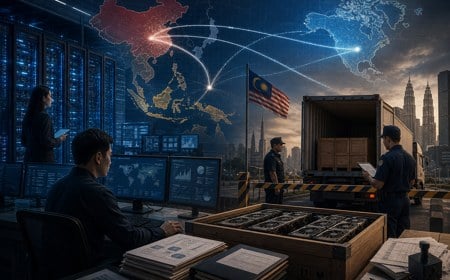 Article · related
Kuala Lumpur Turns U.S. AI-Chip Curbs Into a Data-Center Compliance Test
Malaysia’s trade minister said on November 18, 2026 that data-center operators using U.S.-origin GPUs must comply with new U.S. restrictions on advanced AI chips. The comments followed a BIS interim final rule that extends controls toward overseas data centers supplying significant compute to restricted users and adds license requirements for advanced chips bound for Malaysia and several other diversion-risk markets. The result is a shift from chip-shipment compliance to operating-level controls over data-center customers, remote access, GPU provenance and re-export risk.
Published Nov 18, 2026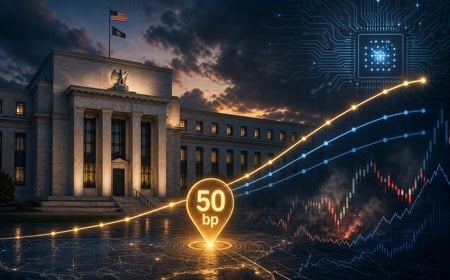 Article · related
Washington Turns Waller’s 50bp Warning Into an Inflation-Psychology Test
Federal Reserve Governor Christopher Waller said on November 18 that the Fed may need to act more aggressively against inflation, including a possible 50-basis-point move at the December 8-9 meeting or clearer communication that hikes will continue quickly into 2027. Reuters, Anadolu, Quartz, and NDTV Profit all reported the remarks from Waller’s CNBC appearance, while market coverage showed the comments landing into a fragile backdrop for futures, Treasury yields, and AI-linked risk appetite. The signal is not just hawkish Fed-speak; it is a repricing test for duration-heavy assets built around low discount rates.
Published Nov 18, 2026 Article · related
Houthis Turn a Bab el-Mandeb Withdrawal Into a Two-Chokepoint Energy Stress Test
Yemen’s southern forces said on November 15, 2026, that they were redeploying from Dhubab airport and the Bab el-Mandeb area toward Aden, with Reuters-syndicated reporting saying the move left Houthis in control of ground overlooking the strategic strait. Regional and conflict-tracking outlets reported the same repositioning, while AFP-backed context shows Houthi advances toward Aden after earlier government losses along the Red Sea coast. The Pattern Nexus read: Bab el-Mandeb is becoming a second pressure point alongside Hormuz, tightening risk around Gulf oil routing, Red Sea shipping, Saudi security and U.S.-Iran posture.
Published Nov 15, 2026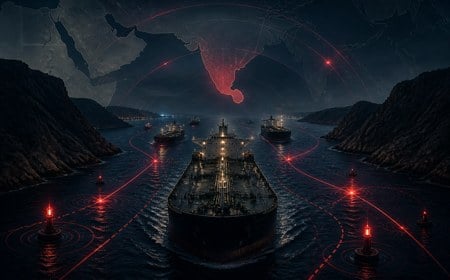 Article · related
UN Turns Hormuz Seafarer Deaths Into an Energy-Chokepoint Stress Signal
UN Assistant Secretary-General Khaled Khiari told the Security Council that at least 25 seafarers have been killed in and around the Strait of Hormuz since the war on Iran began in February. Reports differ slightly on the incident count, with Al Jazeera citing 136 IMO-tracked vessel-security incidents through November 11 and The National citing 134 confirmed incidents. The hard signal is not one mine claim, but the conversion of regional conflict into shipping risk, energy-market stress and supply-chain cost pressure.
Published Nov 15, 2026 Article · relatedFed Turns AI Data-Center Leverage Into a Financial-Stability Warning
The Fed’s latest Financial Stability Report says AI was the top-cited near-term risk among market contacts, with 87% naming it in the fall survey, up from 50% in the spring. The report also details more than $680 billion of advanced-computing debt issuance by October 2026, more than $1 trillion of not-yet-started lease obligations, and more than $2 trillion of guarantees and contract commitments tied to the data-center buildout. Pattern Nexus reads the report as a shift: AI infrastructure is now a macro-financial transmission channel, not just a technology investment cycle.
Published Nov 14, 2026 Article · related
Microsoft Turns a 365 Outage Into a Cloud-Dependency Stress Test
Microsoft said it was restoring Microsoft 365 services after a global outage affected Outlook, Teams, Copilot and Exchange-linked services across regions. Reports from AP, Reuters, The Guardian and Deutsche Welle connected the disruption to businesses, courts, police reporting, health services, government operations and Microsoft connectors used by OpenAI and Anthropic. The larger signal is concentration risk: when collaboration, identity, email and AI workflows are bundled into one cloud stack, a service incident becomes a public-resilience test.
Published Nov 13, 2026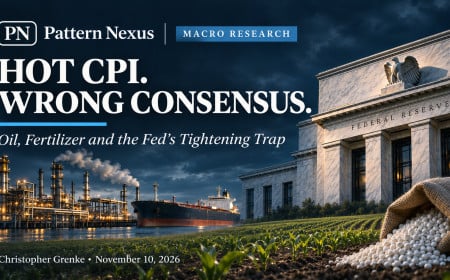 Article · related
Hot CPI, Wrong Consensus: The Inflation Pressure Pattern Nexus Saw Coming
October CPI exceeded consensus on both headline and core inflation. Eight earlier Pattern Nexus articles connect the oil and diesel shock, fertilizer risk, Fed tightening and refinancing pressure, with new Federal Reserve research and the November energy outlook.
Published Nov 10, 2026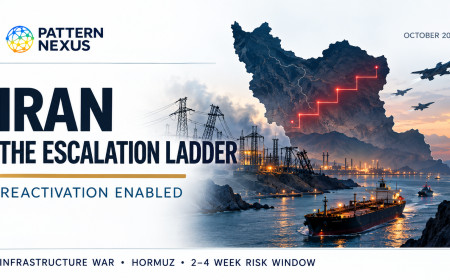 Article · related
Iran: Escalation Ladder — Reactivation Enabled
The Iran escalation ladder is active again. I examine the October strike risk, the infrastructure-war danger, rising tanker attacks alongside recovering exports, the Gulf defense response, financial isolation, current oil inventories and the Federal Reserve’s position. My working window is October 22–November 5. The article connects the latest evidence to the Pattern Nexus research trail from January through October.
Published Oct 8, 2026 Article · related
Washington Turns a Third Carrier Into an Iran-War Escalation Option
The United States is dispatching the USS Theodore Roosevelt carrier strike group and the Makin Island amphibious ready group toward the Middle East, according to multiple reports citing U.S. officials. The deployment could briefly put three U.S. aircraft carriers in the region, depending on timing, as President Donald Trump weighs further pressure or renewed strikes against Iran. The strategic signal is not just military: it lands in an energy system already strained by Hormuz disruption, low distillate inventories, and elevated oil-price risk.
Published Oct 2, 2026 Article · related
Fed Turns Stablecoin Issuance Into a Treasury-Backed Bank Rulebook
The Federal Reserve requested public comment on two GENIUS Act proposals that would establish a regulatory framework for Board-supervised payment stablecoin issuers. The package would require full backing with permissible reserve assets such as short-term Treasury bills and other high-quality liquid assets, add capital and risk-management standards, set reserve-custody rules, and create an application process for banks seeking to issue stablecoins through subsidiaries.
Published Sep 25, 2026 Article · related
Oracle Turns Project Jupiter Into an AI-Infrastructure Force-Majeure Test
Oracle issued a force-majeure notice tied to Project Jupiter, a New Mexico AI data-center campus being developed by Blue Owl-owned STACK Infrastructure to support OpenAI. Reuters reported the notice is reverberating through AI-infrastructure financing discussions, while other reports point to power delivery, gas-pipeline permitting, community opposition and energy-supply timing as the pressure points. The system read is that AI infrastructure risk is moving downstream from GPUs to enforceable megawatts, permits and project-finance documents.
Published Sep 25, 2026 Article · related
Bessent Turns AI Safety Into a U.S.-China Summit Control Channel
Treasury Secretary Scott Bessent told Axios that the U.S. is open to discussing shared AI risks with China ahead of the planned September 24 Trump-Xi summit. AP, Reuters, the Los Angeles Times, and Semafor all report that AI governance and safety are now expected to sit inside a broader U.S.-China negotiation frame that also includes trade, rare earths, advanced technology access, Taiwan, Iran, and defense ties. The likely outcome is not a binding AI treaty, but a new control channel for managing frontier-model risk inside strategic competition.
Published Sep 18, 2026 Article · relatedFed Just Hiked Into a 5% 10-Year: Why the Next Liquidity Cycle May Arrive Faster
The Federal Reserve just raised the federal-funds target to 3.75%–4.00% while the 10-year Treasury closed at 5.01%, the 30-year at 5.35%, and the real 30-year at 3.09%. Pattern Nexus correctly identified the September hike risk and the developing QE/liquidity cycle, but underestimated the Fed’s willingness to raise rates against an already enormous debt and refinancing burden. This report asks the question almost nobody asks after a rate decision: what does the hike eventually break? It connects the September decision to the $40-trillion-plus federal debt structure, more than $1 trillion of annual federal net interest expense, Treasury issuance, long-end buybacks, Federal Reserve reserve-management purchases, hedge-fund leverage, the Treasury basis trade, private credit, housing, commercial real estate, household cashflow and the 2019 repo-market precedent. The conclusion is not that the Fed has deliberately chosen to create a crash. It is that monetary architecture now allows the Fed to tighten the price of credit while separately protecting reserves and market plumbing. The hike therefore does not invalidate the Pattern Nexus QE thesis. If long rates remain near current levels, it accelerates the transmission mechanism that can eventually force the next phase of liquidity support.
Published Sep 17, 2026 Article · related
Larak Strike Turns Hormuz Into a Mine-War Energy Shock
U.S. forces struck two Iranian launchers on Larak Island near the Strait of Hormuz on August 30 after U.S. officials said IRGC personnel were preparing rockets carrying sea mines for the waterway. Iran claimed retaliatory strikes on bases hosting U.S. forces in Jordan, the UAE reported dealing with a drone from Iran over its territorial waters, and Brent crude moved back above $90 as traders repriced disruption risk. The immediate question is whether this remains a limited counter-mining action or becomes a broader contest over who can keep Hormuz usable.
Published Aug 31, 2026 Article · related
Federal Court Turns Anthropic’s Pentagon Blacklist Into an AI-War Powers Test
A U.S. District Court judge ruled for Anthropic after the Pentagon labeled the company a supply-chain risk over its refusal to permit unrestricted military uses of Claude. The decision found the government’s actions unlawful and framed the dispute as a constitutional, procurement, and AI-safety fight. The Pattern Nexus read: the ruling does not settle whether the military may demand more permissive AI systems, but it limits how national-security procurement tools can be used against vendors that publicly resist those demands.
Published Aug 28, 2026 Article · related
RUM Group Turns AI Compute Into a Penny-Warrant Financing Test
RUM Group disclosed a six-year GPU-services agreement with an unaffiliated U.S.-based cloud customer, tied to its Maysville, Georgia site that is still under development. The contract carries an approximately $13.7 billion three-tranche order value and is paired with a warrant for up to 50,808,408 Class A shares at $0.01 per share. The key Pattern Nexus signal is that AI compute demand is being converted into equity-linked financing and dilution risk before the underlying data-center capacity exists.
Published Aug 25, 2026 Article · related
Aave Turns Tokenized Junk Credit Into a Stablecoin Collateral Test
Securitize and Neuberger launched the Neuberger Securitize High Income Tokenized Fund, or HINC, on August 18, 2026, with exposure to high-yield bonds, CLOs, leveraged loans and related fixed-income assets across Avalanche, Ethereum, Solana and Sui. Separate reports say Securitize filed an Aave Horizon ARFC the same day to make HINC supply-only collateral, allowing approved holders to borrow USDC, GHO or RLUSD if governance, risk and implementation steps clear. The test is whether institutional tokenization can move beyond Treasury-like cash products without creating a new liquidation bottleneck.
Published Aug 21, 2026 Article · related
Iran Turns America’s Missile Stockpile Into a Two-Theater Deterrence Gap
Fresh reporting and defense analysis point to a widening U.S. magazine-depth problem. The Iran war has drawn heavily on long-range strike weapons and missile-defense interceptors, while replacement timelines for Tomahawk, THAAD and Patriot stocks are measured in years, not weeks. The strategic risk is that Russia and China do not need classified inventory data if they can observe which theaters are being stripped and how slowly the U.S. reloads.
Published Aug 8, 2026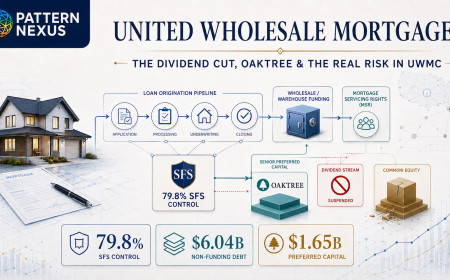 Article · related
United Wholesale Mortgage: The Dividend Cut, the Ishbia Structure, Oaktree, and the Real Risk in UWMC
I rebuilt the UWM panic from the ownership structure outward: who actually received the distributions, what the dividend suspension retains, why the $451.9 million quarterly loss does not describe the core origination business, what the $603.2 million failed-deal hedge did to equity, how the Oaktree preferred recapitalization changes the common stock, and what would actually have to happen for a bankruptcy thesis to become real.
Published Aug 8, 2026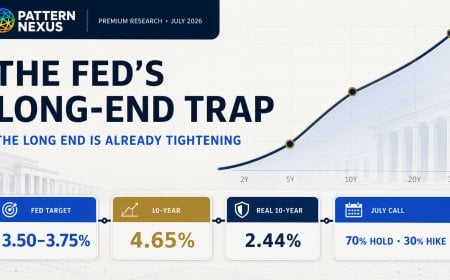 Article · related
The Fed’s Long-End Trap: Why a 4.65% 10-Year Is Already Doing the Tightening
A full July 2026 data reconstruction of the Federal Reserve’s next policy path, showing how a 4.65% nominal 10-year, 2.44% real 10-year, Treasury supply, oil risk and uneven liquidity conditions create a hawkish-hold trap.
Published Jul 27, 2026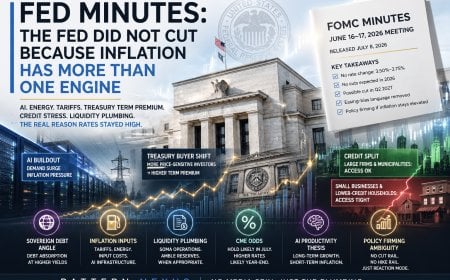 Article · related
Fed Minutes: The Cut Trade Broke Because Inflation Has More Than One Engine
The June 16–17 FOMC minutes, released July 8, show a Fed that held rates steady but removed the easy easing bias. The deeper signal is that inflation pressure is now coming from multiple rails at once: tariffs, Middle East energy shock risk, AI infrastructure demand, Treasury term premium, and uneven consumer credit stress.
Published Jul 8, 2026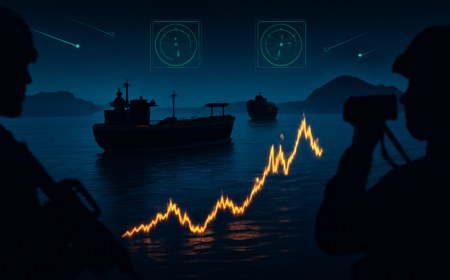 Article · related
Hormuz Ceasefire Breaks Into Direct U.S.-Iran Strike Cycle
The United States launched strikes on Iranian targets near the Strait of Hormuz after the loss of a U.S. Army Apache helicopter, while Iran reported retaliatory attacks against U.S.-linked targets in Jordan and the Gulf. AP reported that the exchange again tested a two-month ceasefire, and Reuters-linked oil coverage showed crude rising as the flare-up renewed supply-risk concerns. The strategic signal is a maritime-energy choke point turning into a repeat escalation loop.
Published Jun 10, 2026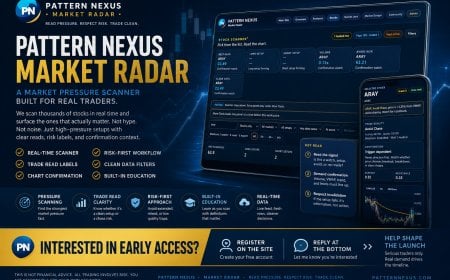 Article · related
Pattern Nexus Market Radar: What the Trading App Does, Why It Exists, and What Comes Next
Pattern Nexus Market Radar is being built as a scanner-first trading dashboard that helps users read market pressure before chasing a move. It does not promise magic signals. It organizes live market data, chart context, risk labels, confirmation checks, and watchlist logic into one guided workflow.
Published Jun 7, 2026 Article · related
OpenAI Builds the Blast Door Into the Agent Stack
OpenAI has made Lockdown Mode available as an opt-in advanced security setting for ChatGPT, with rollout details varying by account type and workspace. The feature limits or disables network-enabled capabilities such as live browsing, deep research, agent mode, file downloads, some web-derived image support, and certain connector actions to reduce prompt-injection-based data exfiltration risk. The Pattern Nexus read: the AI economy is shifting from model intelligence alone toward controlled runtime architecture, where egress, permissions, and side effects become core security primitives.
Published Jun 7, 2026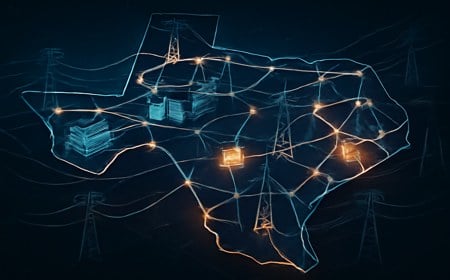 Article · related
AI Loads Fail the Texas Grid’s Ride-Through Test
Reuters reported on June 5, 2026 that several large data centers and crypto facilities seeking to connect to the Texas grid failed key voltage reliability tests. ERCOT’s May 21 assessment found eight planned large loads totaling about 3.9 GW, modeled within roughly 20 GW of large-load representation, and identified four trip groups that could exceed the 3,200 MW threshold while not meeting NOGRR282 voltage ride-through requirements. The signal is that AI-era power risk is no longer only about finding enough megawatts; it is also about whether those megawatts stay connected through ordinary grid faults.
Published Jun 7, 2026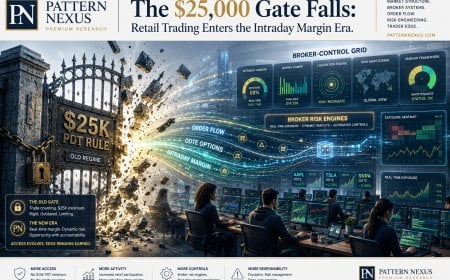 Article · related
The $25,000 Gate Falls: PDT Rule Changes, Retail Day Trading, and the New Intraday Margin Control System
The Pattern Day Trader rule is being replaced across brokers, removing the old $25,000 account minimum and day-trade counting system. But the real story is not simply “more freedom.” The old hard gate is being replaced by a live broker-controlled intraday margin system that changes who can trade, how small accounts behave, how brokers manage risk, and how retail order flow may move through the market.
Published Jun 3, 2026Join Pattern Nexus for premium research, the archive, and ad-free reading.