

You’re offline. Open downloads
♾️Systems & Patterns
Cross-disciplinary systems research connecting finance, physics, AI, and geopolitics to reveal the hidden architecture of power and feedback.
Theses, forecasts, models, and paths
No published research objects yet
This topic is ready for editors to connect a thesis, forecast, model, or research path.
Latest articles
 Article · primary
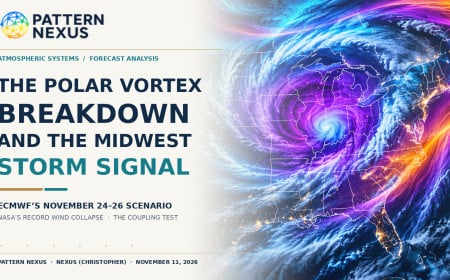
The Polar Vortex Is Breaking Down. Now ECMWF Is Modeling a Major Midwest Storm.
Nine consecutive date-matched Arctic wind records, a forecast 10-hPa reversal, and ECMWF maps depicting an extraordinary late-November Midwest upper low. Pattern Nexus compares the NASA observations, operational storm scenario, ensemble evidence, and NOAA's competing outlook.
Published Nov 11, 2026 Article · primary
The Polar Vortex Is Breaking Down in November — What the Actual Data Show
Eight consecutive record-low Arctic wind days, an exceptionally warm polar stratosphere and an early-November reversal forecast. What the measurements mean for winter weather.
Published Nov 10, 2026 Article · primary
The Great Lakes Were Not Empty: Underwater Stone Lines, Ancient Canoe Highways, Mound Cities, Lost Maps, and the Suppressed Edge of North American History
A Pattern Nexus deep dive into Great Lakes ancient sites, underwater stone structures, Lake Mendota’s canoe field, Cahokia, Aztalan, Old Copper networks, early Chicago maps, DuSable, fringe Egyptian claims, buried artifacts, and the bigger question: how much older and more connected was North America than the public story admits? A deep Pattern Nexus article on ancient Great Lakes archaeology, underwater stone lines, Lake Michigan Stonehenge, Lake Huron hunting structures, Lake Mendota canoes, Cahokia, Aztalan, Old Copper trade, early Chicago maps, DuSable, Egyptian artifact claims, and disputed alternative history.
Published Jun 20, 2026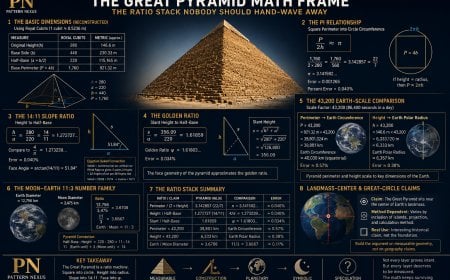 Article · primary
The Great Pyramid Math Frame: The Ratio Stack Nobody Should Hand-Wave Away
The Great Pyramid argument is strongest when the math comes first. Using the common reconstructed dimensions of 280 royal cubits high and 440 royal cubits per base side, the structure produces a repeatable ratio stack: 22/7 as a pi approximation, the 14:11 slope ratio, a golden-ratio face relationship, a 43,200 Earth-scale comparison, and the Moon-Earth 11:3 number family. This does not automatically prove every theory attached to the pyramid, but it does show why the geometry should not be casually dismissed.
Published Jun 18, 2026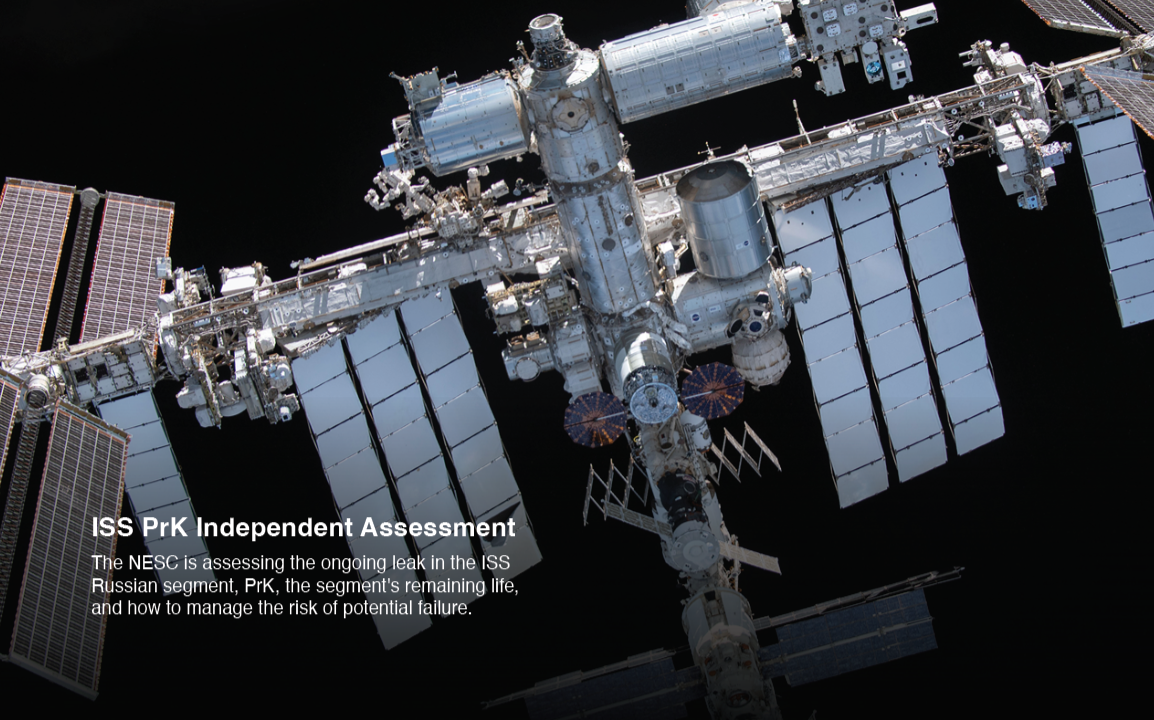 Article · primary
The ISS Is Leaking Again: Aging Hardware, Russian Segment Cracks, and the Closing Window Before Commercial Space Stations
The International Space Station air leak is not just a scary headline about astronauts in danger. It is a systems warning. The leak sits in the Russian PrK transfer tunnel attached to Zvezda, a small but strategically important passage tied to docking, pressure control, hatch isolation, and the larger countdown toward ISS retirement. NASA and Roscosmos can manage the immediate risk, but the deeper problem is structural: aging orbital infrastructure now has to survive long enough for commercial replacements, deorbit planning, crew rotation, cargo logistics, and international coordination to line up before 2030.
Published May 29, 2026 Article · primary
LifeLog Died. Facebook Launched. The Surveillance Internet Was Born.
DARPA’s LifeLog was publicly killed the same day Facebook launched. That does not automatically prove a covert handoff, but it does expose something larger: the post-9/11 state, Silicon Valley, venture capital, intelligence-linked technology, platform surveillance, PRISM, data brokers, Flock cameras, AI bots, and the dead internet shift all moved along the same structural rail. The story is not just whether DARPA built Facebook. The deeper story is how government surveillance incentives and commercial platform incentives converged into the same machine.
Published May 24, 2026 Article · primary
Spruce Pine Quartz: The Hidden Bottleneck Under Chips, AI, Solar, and the Modern World
Spruce Pine, North Carolina may be one of the most strategically important locations on Earth because its high-purity quartz sits underneath silicon wafers, semiconductor manufacturing, AI infrastructure, solar panels, optical fiber, and the modern digital control layer.
Published May 17, 2026 Article · avenue
Austin Turns Oracle’s Fully Funded OpenAI Buildout Into an AI-Capex Solvency Test
Oracle said on November 20, 2026, that it has secured all funding needed to fulfill its OpenAI infrastructure contract, including the vendor-financing structure previously outlined to investors. The statement followed a roughly $20 billion stock-and-notes financing announced earlier in November and documented in an SEC Form 8-K. The immediate signal is not just that Oracle has capital for this cycle, but that AI infrastructure is becoming a test of funding capacity, vendor credit, debt tolerance, and future free cash flow.
Published Nov 21, 2026 Article · avenue
Austin Turns Data-Center Moratorium Bills Into an AI-Grid Backlash Test
Texas has quickly moved from data-center recruitment engine to policy stress point for AI infrastructure. Prefiled bills for the 2027 legislative session target siting, grid-cost allocation, water reporting, cooling technology and tax incentives, with SB 296 proposing the most aggressive framework: a temporary moratorium and local-option elections for covered projects.
Published Nov 20, 2026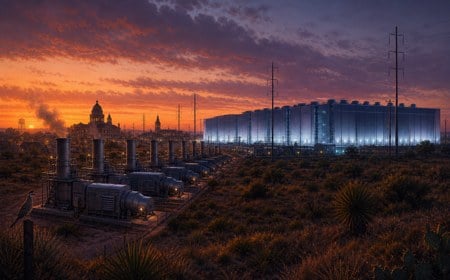 Article · avenue
Starbase Turns SpaceX’s Gas-Powered AI Campus Into a Behind-the-Meter Power Test
TCEQ authorized Space Exploration Technologies Corp.’s electric-generating-unit standard permit registration for the Boca Chica facility on November 16, 2026, covering 43 natural-gas-powered generators with 1,456.22 MW of listed generating capacity. Local and national reporting ties the power build to a proposed $24 billion super-compute/data-center and gas-plant project in Starbase, Texas. Cameron County commissioners then voted 3-2 to stop consideration of a county tax abatement, leaving SpaceX with state air authorization but a more contested local-incentive path.
Published Nov 20, 2026 Article · avenue
Sacramento Turns Nvidia’s China Subpoena Into an AI-Chip Disclosure Test
California’s Department of Justice served Nvidia with an investigative subpoena on November 19, 2026, seeking information on whether advanced chips or confidential information may have gone to China and whether the company misled investors or the public. The move reframes the Nvidia-China controversy as a state securities and corporate-governance issue, not only a federal export-control fight. The next pressure points are document production, congressional interviews, Nvidia’s board response and any signs that state disclosure enforcement becomes a new front in AI-chip governance.
Published Nov 19, 2026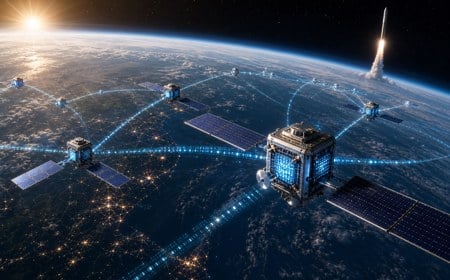 Article · avenue
Mountain View Turns Project Suncatcher’s New Glenn Booking Into an Orbital AI-Power Test
Google and Blue Origin confirmed a launch-services agreement for Project Suncatcher, with New Glenn targeted for a dedicated heavy-lift mission in Q1 2029. The satellites are planned to carry Google TPUs and roughly rack-scale compute capacity into sun-synchronous orbit. The system read is that AI infrastructure competition is widening from chips, data centers and grids into launch economics, orbital power, radiation hardening and thermal design.
Published Nov 19, 2026 Article · avenue
Loudoun Turns Data Center Alley’s Pause Into an AI-Grid Bottleneck Test
Loudoun County, Virginia, said its Board of Supervisors voted on November 17, 2026, to pause action on legislative data-center and electrical-substation applications for up to 12 months, retroactive to September 15. The county says the move could affect 33 active legislative applications while leaving administrative reviews, new submissions and several exceptions in place. The decision turns Data Center Alley into a test case for how AI compute growth is increasingly constrained by local permitting, substations, transmission planning and ratepayer politics.
Published Nov 19, 2026 Article · avenue
Shenzhen Turns APEC’s AI-Trade Agenda Into a Great-Power Control Test
At the APEC summit in Shenzhen on November 19, 2026, Xi Jinping urged leaders to keep trade and technology development open while Donald Trump, Vladimir Putin and Xi prepared for high-stakes talks. Reuters, AP, APEC and AnewZ reporting show AI, chip controls, sanctions, energy disruption and macroeconomic risk converging around what was formally billed as an agenda of openness, innovation and cooperation.
Published Nov 19, 2026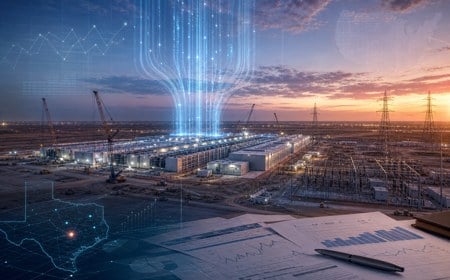 Article · avenue
Odessa Turns ChronoScale’s $7.5B AI Campus Into a Frontier-Compute Financing Test
ChronoScale announced definitive agreements with STN for a 50/50 Odessa, Texas AI data-center development partnership tied to a first deployment for a frontier AI lab. The company says the first phase carries up to $7.5 billion of expected total contract value over six years and is supported by up to $750 million of financing. The setup shifts the AI infrastructure story from chips alone to campus development, capital structure, HSR clearance, megawatt economics and delivery timing.
Published Nov 18, 2026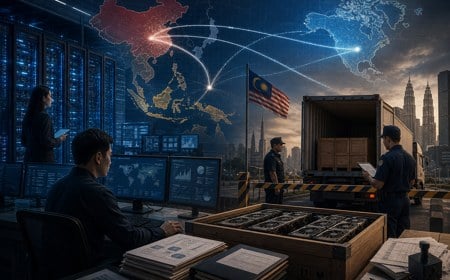 Article · avenue
Kuala Lumpur Turns U.S. AI-Chip Curbs Into a Data-Center Compliance Test
Malaysia’s trade minister said on November 18, 2026 that data-center operators using U.S.-origin GPUs must comply with new U.S. restrictions on advanced AI chips. The comments followed a BIS interim final rule that extends controls toward overseas data centers supplying significant compute to restricted users and adds license requirements for advanced chips bound for Malaysia and several other diversion-risk markets. The result is a shift from chip-shipment compliance to operating-level controls over data-center customers, remote access, GPU provenance and re-export risk.
Published Nov 18, 2026 Article · avenue
BNY Turns an AI-Negotiated Treasury Trade Into a Market-Microstructure Control Test
BNY said it and Microsoft completed an industry-first pilot negotiation of a U.S. Treasury bill trade using AI agents and BNY’s Agentic Negotiation Protocol. Bloomberg reported that the agents agreed on price before human traders approved the transaction, while Microsoft’s Ignite coverage also referenced the first agentic-negotiation U.S. Treasury trade. The test points to a new control problem for market infrastructure: how to let authorized agents negotiate without letting them execute outside institutional guardrails.
Published Nov 17, 2026 Article · avenue
America Turns a Data-Center Construction Drop Into an AI Buildout Bottleneck Test
Cleanview says U.S. developers began construction on 8.4 GW of data-center capacity across 65 buildings in Q3 2026, down 28% from 11.7 GW across 96 buildings in Q2. OPIS and Axios both reported the slowdown, with Axios and Cleanview pointing to political and permitting pressure as a key variable for the next phase of the AI buildout. The signal is not that AI demand has cracked; it is that physical deployment may be shifting from a GPU-constrained story to a power, permitting and local-consent story.
Published Nov 17, 2026 Article · avenue
Anthropic Turns a $60B IPO Into an AI-Capital-Markets Stress Test
Anthropic is pressing ahead with a potentially $60 billion-plus IPO as AI-linked equities wobble and investors question the cost of frontier-model scale. Offering and index documents point to 825 million Class A shares at an expected $70 to $78 range, with pricing expected November 18, first Nasdaq trading anticipated November 19 and a concurrent $26 billion private placement tied to major AI infrastructure counterparties. The listing is a live referendum on whether public capital will keep funding the AI industrial flywheel.
Published Nov 17, 2026 Article · avenue
Paris Turns Genesis AI’s $500M Round Into a Physical-AI Deployment Test
Genesis AI said on November 17, 2026 that it raised a $500 million Series A at a $3.5 billion post-money valuation, co-led by Premji Invest, Khosla Ventures and Eclipse. Reuters reported that the company is prioritizing industrial use cases and a U.S. supply-chain buildout, while TechCrunch’s facility visit highlighted the gap between a compelling dexterity demo and durable, repeatable automation. The Pattern Nexus read: physical AI is becoming a full-stack capex race, and reliability is the bottleneck.
Published Nov 17, 2026 Article · avenue
Nvidia Turns Rubin HPC Into a Scientific-AI Compute Roadmap Test
Nvidia announced Rubin HPC at SC26 on November 16, 2026, positioning the Vera Rubin-family GPU for simulation, data processing, science, engineering and analytics workloads. The company disclosed more than 50,000 CUDA cores, sparse-data acceleration, seventh-generation NVLink and expected 2028 availability. Independent technical coverage framed the move as a renewed push into HPC while noting that memory, power, pricing and full precision-performance details remain open.
Published Nov 17, 2026 Article · avenue
OpenAI Turns TensorWave’s 457MW AMD Deal Into a Non-Nvidia Compute-Scale Test
TensorWave announced on November 16, 2026, that it will provide OpenAI with 457MW of dedicated AI infrastructure powered by AMD Instinct MI455X GPUs. The deal is framed as part of OpenAI’s previously announced AMD partnership and as TensorWave’s largest deployment contract to date. The system read is that OpenAI is testing whether an AMD-focused neocloud can deliver frontier-scale capacity outside the dominant Nvidia-hyperscaler channel.
Published Nov 16, 2026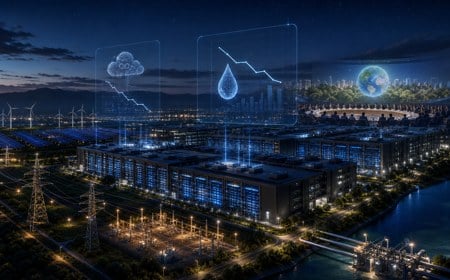 Article · avenue
Antalya Turns AI Data-Center Emissions Into a Climate-Disclosure Test
The COP31 Presidency and the International Telecommunication Union officially launched the voluntary Antalya Artificial Intelligence Pledge on November 16, 2026, asking governments, companies and institutions to align AI growth with cleaner power, efficiency, lifecycle standards and environmental reporting. The launch arrived alongside Associated Press reporting on a Harvard/Nature Sustainability study estimating that 403 large U.S. data centers produced about 25.7 million metric tons of CO2 from May 2024 to April 2025. The result is a new test of whether AI’s physical footprint becomes measurable infrastructure governance or remains largely voluntary climate branding.
Published Nov 16, 2026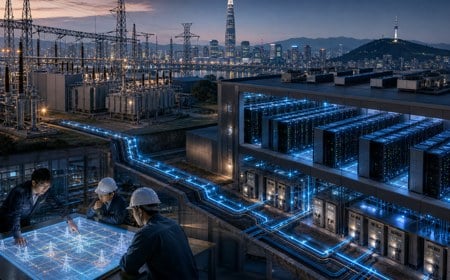 Article · avenue
Seoul Turns SKT-Hyosung Into an AI Power-Equipment Supply Test
SK Telecom and Hyosung Heavy Industries signed a strategic partnership MOU on November 16, 2026, to support gigawatt-class AI data-center construction in South Korea. The agreement covers stable supply of core 345kV substation equipment, advance coordination on long-lead power gear, joint review and demonstrations of 800V DC distribution, and cooperation on operations, maintenance and future AI data-center business development. The larger signal is that AI scale-out is becoming a power-equipment and grid-delivery problem as much as a chip-procurement problem.
Published Nov 16, 2026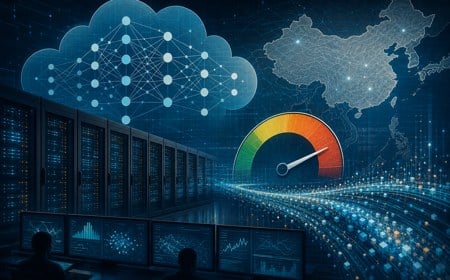 Article · avenue
Alibaba Turns Qwen4-Max Into a China Model-Cost Pressure Test
Alibaba’s Qwen team introduced Qwen4-Max on November 16, positioning it as the first model in the Qwen4 family and a flagship for long-context, multimodal and agentic work. Reports from TechNode, The Next Web and Neural Brew corroborate the launch, the closed-weight status of the flagship, lower per-token API pricing versus Qwen3.8-Max and Alibaba’s plan to release smaller Qwen4 models with open weights.
Published Nov 16, 2026 Article · avenue
Bessent Turns Nvidia’s CEO Search Into an AI-Chip Export-Control Governance Test
Treasury Secretary Scott Bessent publicly urged Nvidia’s board to look outside the company for its next CEO and demanded answers on export-control compliance. The comments followed Nvidia’s November 12 CEO-transition filing and fresh AP reporting that Megaspeed says Alice Huang left the company in 2025 while outside lawyers conduct an internal probe. The verified facts do not establish wrongdoing by Nvidia, Jensen Huang, Alice Huang or Megaspeed; they show Washington is turning alleged AI-chip diversion into a governance and disclosure test.
Published Nov 15, 2026 Article · avenue
Canberra Turns a Manila Defense Pact Into a South China Sea Interoperability Rail
Australia and the Philippines are scheduled to sign a Defense Cooperation Arrangement in Manila on November 15, 2026, with reports saying it will expand access, information sharing, maritime awareness, training, planning, interoperability, and defense infrastructure cooperation. The timing, alongside the ASEAN summit and expected Quad activity, makes the Philippines a live test bed for allied maritime deterrence architecture in the South China Sea. The key question is whether this becomes a practical operating network, not simply another diplomatic document.
Published Nov 14, 2026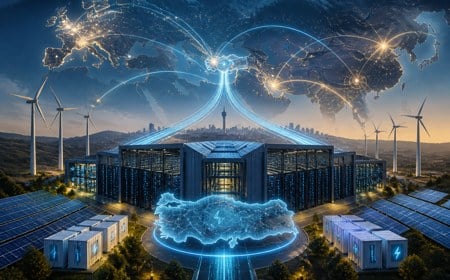 Article · avenue
Ankara Turns Renewable Finance Into an AI Data-Center Sovereignty Rail
The Asian Development Bank said on October 22, 2026 that it signed a $75 million loan with Rönesans Holding to support renewable energy, battery storage by 2029 and a hybrid-renewable hyperscale data center in Türkiye. The financing follows Rönesans and Digital Realty’s Ankara data-center push, with the first phase planned for more than 22 MW of IT capacity by 2028. The pattern is larger than one campus: Türkiye is trying to convert geography, clean power and state incentives into sovereign AI and cloud infrastructure.
Published Oct 24, 2026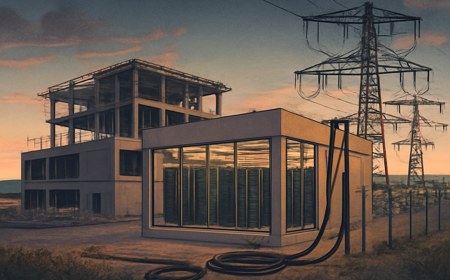 Article · avenue
Microsoft Turns Nscale’s Essex AI Campus Into a Grid-Delay Stress Test
Microsoft has pulled out of its planned role at Nscale’s Loughton, Essex AI data-center project, according to Reuters, the Guardian and BBC-backed reporting. The project had been announced in 2025 as a major UK AI supercomputer site for Azure services, with 50MW of initial AI capacity, scalability to 90MW and 23,040 Nvidia GB300 GPUs. Reports tie the reversal to power-supply delays that could push adequate grid connection into the 2030s, while Nscale says it remains committed to the site and that other Microsoft work is unaffected.
Published Oct 19, 2026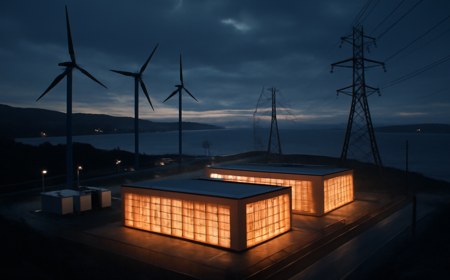 Article · avenue
Anthropic Turns Nova Scotia Wind Into a 420-Megawatt Claude Compute Rail
EverWind announced more than C$10 billion in planned private investment for a Point Tupper data-centre campus and Nova Scotia wind projects on October 16, 2026. Reuters identified the frontier AI tenant as Anthropic, while Canadian Press and Global News reported a long-term lease, a 95-megawatt first phase in late 2027, a 325-megawatt expansion, and 420 megawatts at full buildout. The project ties Claude-scale compute demand to local power, water, ratepayer, and data-sovereignty politics.
Published Oct 18, 2026Join Pattern Nexus for premium research, the archive, and ad-free reading.