

AI data centers
Automatically indexed from the existing article tag.
Theses, forecasts, models, and paths
No published research objects yet
This topic is ready for editors to connect a thesis, forecast, model, or research path.
Latest articles
 Article · related
Google Turns PJM Nuclear Uprates Into a 3.6-Gigawatt AI-Grid Power Rail
Google and Constellation announced a long-term PJM power package on October 6, 2026, centered on 890 MW of new nuclear capacity from uprates at existing reactors and 2,700 MW of additional supply. The structure matters because it links AI data-center growth to new firm capacity, demand flexibility, and AI-assisted grid operations rather than treating clean power as a certificate-only procurement exercise.
Published Oct 7, 2026 Article · related
Senate Turns Permitting Reform Into an AI-Grid Cost Allocation Deal
Senate energy and environment leaders introduced the Bipartisan American Affordability and Jobs Act on September 30, 2026, a permitting package aimed at faster federal reviews for energy, transmission, and infrastructure projects. The bill would strengthen FERC transmission-siting authority and require data centers to pay associated transmission costs instead of shifting those costs to households and smaller businesses. A Senate vote is not expected until after the November 3 midterm elections.
Published Oct 1, 2026 Article · related
Oracle Turns Project Jupiter Into an AI-Infrastructure Force-Majeure Test
Oracle issued a force-majeure notice tied to Project Jupiter, a New Mexico AI data-center campus being developed by Blue Owl-owned STACK Infrastructure to support OpenAI. Reuters reported the notice is reverberating through AI-infrastructure financing discussions, while other reports point to power delivery, gas-pipeline permitting, community opposition and energy-supply timing as the pressure points. The system read is that AI infrastructure risk is moving downstream from GPUs to enforceable megawatts, permits and project-finance documents.
Published Sep 25, 2026 Article · related
Seoul Turns Texas Gas Power Into an AI-Compute Alliance Rail
South Korea has identified a Texas gas-fired power project as the first investment under its $350 billion U.S. package, according to Yonhap, KBS, Kyunghyang and Reuters reporting. The project is tied to rising Texas electricity demand from AI data centers and semiconductor facilities, while Seoul is also discussing U.S. nuclear and Alaska LNG follow-ons. The system read: tariff diplomacy is being converted into firm-power infrastructure for the AI industrial stack.
Published Sep 23, 2026 Article · related
Goolsbee Turns AI Data Centers Into a Fed Reaction-Function Test
Chicago Fed President Austan Goolsbee said on September 21, 2026 that policymakers should watch whether AI data-center construction is spilling beyond its sector and pushing aggregate output above capacity. The significance is not that the Fed is targeting AI, but that AI capex is now being discussed as a possible demand shock with implications for inflation and interest-rate policy.
Published Sep 21, 2026 Article · related
Oregon Turns Data Centers Into a Quarter-Grid AI Infrastructure Test
A new ECOnorthwest and University of Virginia assessment, reported by Oregon outlets and presented to state advisers, puts Oregon data centers at about 23% of statewide retail electricity sales in 2025. The state is now treating the sector as a systemic planning challenge, with a Data Center Advisory Committee taking public comment through October 24, 2026 and POWER Act implementation shifting large-load grid costs toward data centers.
Published Sep 20, 2026 Article · related
Google and Nvidia Turn Flexible Load Into an AI-Data-Center Fast Lane
Google, Nvidia and Emerald AI have launched the AI Energy Management Alliance to promote flexible AI data centers that can adjust electricity demand in response to grid conditions. The coalition is pushing utilities, grid operators and regulators to treat verifiable flexibility as a reason to accelerate large-load interconnection. The Pattern Nexus read: AI compute demand is being converted from a fixed grid burden into a dispatchable power-market asset.
Published Sep 16, 2026 Article · related
EPA Turns AI Power Demand Into a Fossil-Baseload Deregulation Test
EPA Administrator Lee Zeldin signed a final partial repeal of the 2024 Carbon Pollution Standards for fossil-fuel power plants and paired it with a proposal to rescind remaining greenhouse-gas standards for the sector under Clean Air Act Section 111. EPA frames the action as an energy-abundance and cost-saving measure worth more than $300 billion, while major news reports say environmental groups expect legal challenges. The AI angle is not that EPA regulated AI directly, but that rising data-center and industrial load is becoming a justification for fossil-basaload deregulation.
Published Sep 15, 2026 Article · related
Vertiv Turns Microgrids Into an AI-Data-Center Time-to-Power Stack
Vertiv agreed to acquire UtilityInnovation Group for about $1.45 billion in cash at closing, with up to $1.15 billion more tied to EBITDA targets over 12- and 24-month periods. The deal adds microgrid controls, onsite generation and storage orchestration, microgrid switchgear and behind-the-meter design to Vertiv’s AI data-center infrastructure stack. The system signal is that time to power is becoming a strategic control point in the AI industrial buildout, not just a utility-procurement issue.
Published Sep 2, 2026 Article · related
OpenAI Turns Effingham County Into a 3.2-Gigawatt Ratepayer-Firewall Test
Residents protested outside an August 29 Effingham County work session as officials fielded questions about OpenAI’s Project Camellia. The dispute now centers on whether Georgia’s large-load framework can truly keep AI megacampus costs off ordinary ratepayers while managing water, grid-reliability and public-transparency concerns.
Published Aug 30, 2026 Article · related
California’s AI Data Center Fight Moves to the Utility Bill
California lawmakers reached a late-August compromise on data-center energy legislation as AI infrastructure growth collides with utility-bill politics. Official Aug. 28 amendments to SB 886 and AB 2383 show the core mechanism: CPUC tariffs and updated electric rules for large participating data-center customers, with cost-shift protections for nonparticipating ratepayers. The bills remain active, not enacted, and the next fight is how the CPUC would translate legislative guardrails into actual interconnection, generation, and demand-response rules.
Published Aug 30, 2026 Article · related
Washington Turns AI Data-Center Air Permits Into a Disclosure-Off Switch
EPA has proposed removing minimum federal public-participation requirements for minor New Source Review permits and leaving those choices to state and local air agencies. Advocates are now framing the rule as an AI data-center transparency fight because backup generators and onsite power sources can be permitted as minor or synthetic-minor sources. The policy question is no longer only how fast AI infrastructure can get power, but who gets to see and contest the air permits attached to that buildout.
Published Aug 26, 2026 Article · related
AI Data Centers Turn Into a Midterm Control Surface
AI data centers are moving from economic-development trophy to midterm liability. AP reported that President Donald Trump continues to champion data centers as strategic infrastructure while candidates in competitive races back away from the issue. Axios and The Washington Post separately show the backlash spreading across states and campaigns, making power, water and ratepayer protection a new control surface for AI industrial policy.
Published Aug 21, 2026 Article · related
PJM Turns AI Data Centers Into Interruptible Grid Load
PJM’s proposed Interim Resource Adequacy Service framework would treat some new 50 MW-plus data centers and other large loads as curtailable unless they secure qualifying capacity. The move follows a 6,831 MW capacity shortfall for the 2028/2029 delivery year and rising forecasts for large-load demand across PJM’s footprint. The system read: AI compute is being recast from passive load growth into a reliability obligation.
Published Aug 19, 2026 Article · related
Amazon Turns AI Compute Into a Private Gas-Grid Emissions Test
Amazon has confirmed that its planned Pecos County, Texas data center will use new on-site generation, while reporting and project documents point to a 7.65 GW gas-fired power platform with major permitted emissions. The larger signal is that hyperscalers are moving beyond power-purchase agreements into vertically integrated energy, permitting and behind-the-meter generation. That may accelerate AI compute deployment, but it also creates a parallel industrial power system with unresolved emissions, accountability and public-cost questions.
Published Aug 10, 2026 Article · related
AI Data Centers Hit the Consent Bottleneck
AI data-center buildout is moving from a power-and-capex story into a political-consent story. Local opposition has delayed or blocked projects, New York has imposed a statewide pause on large facilities, and developers now face a fourth bottleneck: permission to operate. The Pattern Nexus read is that ratepayer protection, water use, zoning legitimacy and community benefits are becoming financial variables in the AI industrial flywheel.
Published Aug 9, 2026 Article · related
Virginia Turns AI Data-Center Power Lines Into a User-Pays Tariff
Virginia’s State Corporation Commission ordered Dominion Energy to develop a tariff framework that assigns more transmission costs directly to data centers and other large-load customers when upgrades are built for them. The move follows Gov. Abigail Spanberger’s push for a cost-causation, or “but-for,” approach and is being framed by state officials as a ratepayer-protection measure. The deeper signal is that AI infrastructure is entering a new regulated-cost phase, where grid access, tariff design, and political tolerance may matter as much as GPUs and land.
Published Aug 7, 2026 Article · related
Texas Turns AI Data Centers Into a Grid-Admission Audit
Texas Gov. Greg Abbott directed PUCT and ERCOT on August 3, 2026 to conduct a comprehensive verification and audit of data centers advancing through ERCOT’s interconnection process before those projects move forward. The order lands amid roughly 474 gigawatts of large-load requests to connect to the Texas grid, with the governor’s office saying about 90% of new power requests are data centers. The move reframes AI-era data centers as strategic infrastructure applicants rather than ordinary load growth.
Published Aug 7, 2026 Article · related
Washington Turns xAI’s Gas Turbines Into a National-Security Compute Shield
The Justice Department moved to intervene in and dismiss an NAACP Clean Air Act citizen suit targeting gas turbines used to support xAI-linked AI data center operations in Mississippi. DOJ argues the facility’s power supply supports AI models important to the economy and military operations, while the NAACP and environmental counsel frame the case as a local air-pollution and accountability fight. The result is a larger precedent battle over whether AI compute infrastructure can be treated as strategic capacity that limits local and citizen enforcement.
Published Jun 17, 2026 Article · related
AI Data Centers Move the Power Plant Behind the Fence
Reuters reported that at least 57 off-grid U.S. power plants are proposed or under construction to serve individual data centers, totaling about 73,000 MW. Cleanview, The Washington Post and industry reporting show the same direction of travel: AI data-center developers are increasingly using behind-the-meter power to bypass grid queues. The result is a new fight over siting, emissions, reliability, public notice and who controls the next layer of AI infrastructure.
Published Jun 17, 2026 Article · related
AI Load Starts Breaking the Grid Operator, Not Just the Grid
Surging data-center demand is pushing PJM from a reliability problem into a governance problem. Bloomberg reporting carried by the Los Angeles Times says American Electric Power has threatened to leave PJM and federal officials are discussing structural changes, while Reuters reports PJM is weighing market reforms as data centers outstrip available energy supplies. FERC filings and market-monitor materials show data-center load has already added billions of dollars to PJM capacity-market costs.
Published Jun 7, 2026 Article · related
Google Builds the Power Plant Into the AI Factory
Google and Intersect Power announced construction of the Meitner Energy Center in Gray and Roberts Counties, Texas, pairing a new Google data center with dedicated new energy generation. Independent reporting says the project includes more than 1 gigawatt of wind, solar, and battery storage, with some on-site gas for firming and air cooling to limit water use. The strategic read: the AI bottleneck is shifting from chips alone to controllable energy access.
Published Jun 7, 2026 Article · related
AI Loads Fail the Texas Grid’s Ride-Through Test
Reuters reported on June 5, 2026 that several large data centers and crypto facilities seeking to connect to the Texas grid failed key voltage reliability tests. ERCOT’s May 21 assessment found eight planned large loads totaling about 3.9 GW, modeled within roughly 20 GW of large-load representation, and identified four trip groups that could exceed the 3,200 MW threshold while not meeting NOGRR282 voltage ride-through requirements. The signal is that AI-era power risk is no longer only about finding enough megawatts; it is also about whether those megawatts stay connected through ordinary grid faults.
Published Jun 7, 2026 Article · related
AI Data Centers Are an Inflation Engine: The Race to Build a Private Grid
AI isn’t just a software story anymore. It’s a power story—capacity, interconnect queues, local resistance, and a new wave of private generation that quietly rewires inflation and industrial policy.
Published Feb 17, 2026 Article · related
Google’s CO2 Battery Bet: Why AI Data Centers Are Pulling Long-Duration Storage Out of the Lab and Onto the Grid
Google and Energy Dome are scaling 10-hour CO2-based long-duration energy storage (20MW/200MWh-class) to close the renewables-to-AI reliability gap. Here’s the thermodynamics, the grid role, the economics, and what “LDES as infrastructure” really means.
Published Dec 31, 2025 Article · related
America’s New Map of Power: Mega-Regions, AI Data Centers, and the Re-Industrialization of the Midwest
Open the published research article.
Published Dec 19, 2025 Article · related
NextEra’s 30-Gigawatt Bet: AI Data Centers Just Forced a Utility Supercycle
NextEra Energy just committed to 15–30 GW of new power generation for U.S. data-center hubs by 2035—spanning gas, nuclear restarts, renewables, and hyperscaler-owned infrastructure. This deep Pattern Nexus breakdown explains what it means for utilities, AI, and the emerging U.S. industrial power supercycle.
Published Dec 8, 2025 Article · related
Copper in the AI-Industrial Era: Why the World Is Running Out of the Metal That Powers Everything
Copper has entered a new macro-industrial regime. AI data centers, global grid expansion, renewable infrastructure, collapsing ore grades, and a decade of underinvestment have fused into a structural deficit that will define the next decade. This is the deep technical and strategic picture as of November 2025.
Published Dec 3, 2025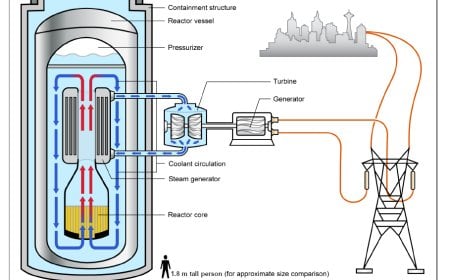 Article · related
Small Modular and Micro‑Reactors (SMRs) for AI and Data‑Centre Power: global technologies, companies and deployment outlook
Small modular and micro-reactors are being wired directly into the AI power stack. A full Pattern Nexus deep dive on SMR technologies, timelines, and who will actually power the next wave of data centres.
Published Nov 25, 2025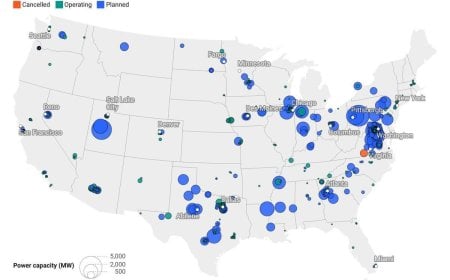 Article · related
America’s New Map of Power: Data Centers, Grid Shortfall, and the AI Industrial Build-Out
A single map of U.S. data centers reveals the real AI-industrial build-out: clustered power demand, a 40–50 GW grid shortfall, forced nuclear restarts, and a new liquidity regime that makes QE-style support inevitable.
Published Nov 13, 2025