

AI energy demand
Automatically indexed from the existing article tag.
Theses, forecasts, models, and paths
No published research objects yet
This topic is ready for editors to connect a thesis, forecast, model, or research path.
Latest articles
 Article · related
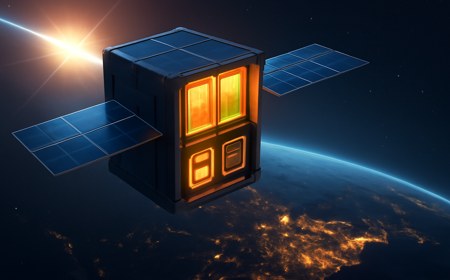
Google Turns Orbital TPUs Into an AI-Infrastructure Escape Hatch
SpaceX is targeting October 1, 2026, for the Transporter-18 rideshare from Vandenberg, with Project Suncatcher M1 listed in the deployment sequence as a Planet Labs-manifested payload. Google says the mission will gather in-orbit data on TPU behavior under launch stress, radiation, and thermal extremes. The larger signal is that AI infrastructure bottlenecks are beginning to push hyperscalers beyond terrestrial data-center assumptions and into space-power, launch-cadence, and orbital-network experiments.
Published Oct 1, 2026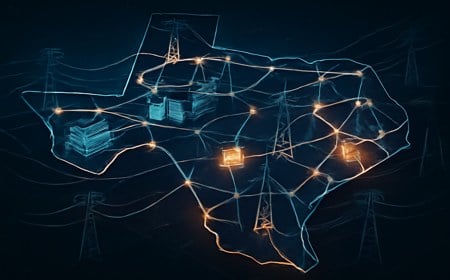 Article · related
AI Loads Fail the Texas Grid’s Ride-Through Test
Reuters reported on June 5, 2026 that several large data centers and crypto facilities seeking to connect to the Texas grid failed key voltage reliability tests. ERCOT’s May 21 assessment found eight planned large loads totaling about 3.9 GW, modeled within roughly 20 GW of large-load representation, and identified four trip groups that could exceed the 3,200 MW threshold while not meeting NOGRR282 voltage ride-through requirements. The signal is that AI-era power risk is no longer only about finding enough megawatts; it is also about whether those megawatts stay connected through ordinary grid faults.
Published Jun 7, 2026