

Balance Sheet
Automatically indexed from the existing article tag.
Theses, forecasts, models, and paths
No published research objects yet
This topic is ready for editors to connect a thesis, forecast, model, or research path.
Latest articles
 Article · related
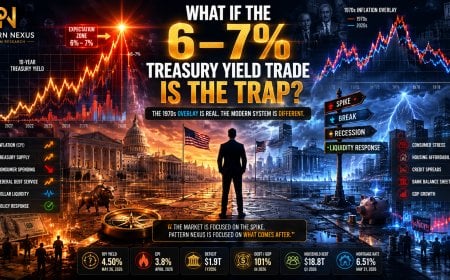
What If the 6–7% Treasury Yield Trade Is the Trap?
A lot of smart money is starting to position for a 1970s-style inflation repeat where the 10-year Treasury yield spikes toward 6% or 7%. The chart overlay looks convincing. Inflation today can be lined up against the 1970s if the data is shifted and framed the right way. But Pattern Nexus looks at the system constraint, not just the chart. The question is not whether yields can spike. They can. The question is whether the modern economy, the federal refinancing structure, the consumer balance sheet, and the dollar-based global liquidity system can actually survive a sustained 6–7% long-rate environment. This article argues that the more dangerous trade may be the obvious one: expecting the 1970s to repeat cleanly when the system may instead force a spike, break, recession, emergency response, and renewed liquidity cycle.
Published May 27, 2026 Article · related
The New Fed Chair Does Not Inherit an Economy. He Inherits the Permission Stack.
Kevin Warsh is not simply inheriting the Federal Reserve. He is inheriting the control layer where inflation, debt service, Treasury funding, energy shocks, AI infrastructure demand, repo plumbing, collateral stress, political pressure, and liquidity permission all collide. The public will debate whether the new Fed chair cuts, hikes, pauses, or changes the balance sheet. That is the surface story. The deeper Pattern Nexus story is that the Fed chair is now the public face of the permission stack. He helps decide where credit flows, where pain lands, which markets get oxygen, which sectors get squeezed, and what kind of crisis or cover event makes the next liquidity intervention politically acceptable. This is not a normal Fed transition. It is the next chapter in the liquidity-cover framework.
Published May 18, 2026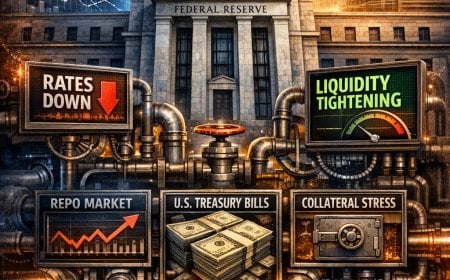 Article · related
Warsh’s Fed and the Balance-Sheet War: Why “Rates Down” Can Still Mean “Liquidity Tight”
A Pattern Nexus systems read on the incoming Fed regime debate: floor vs corridor, repo backstops, Treasury supply, and why the balance sheet is the real rate.
Published Feb 17, 2026 Article · related
The Wealth-Engine Differential: Hard Asset Preservation vs Leverage-Based Multiplication
A clean, numbers-first comparison of $500,000 allocated to gold versus the same $500,000 deployed into leveraged Midwest single-family rentals. The point isn’t which asset “wins” on price—it’s how wealth engines compound through cash flow, tax structure, and balance-sheet optionality.
Published Jan 9, 2026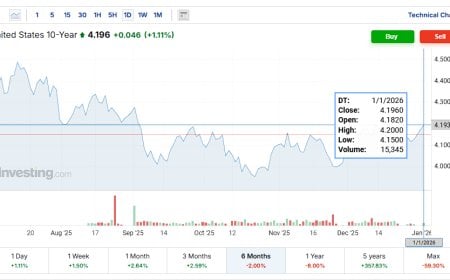 Article · related
The 10-Year Decoupling: Why Long Rates No Longer Follow Cuts
The U.S. 10-year Treasury is no longer responding to policy rate cuts. This article explains the structural decoupling between front-end easing and long-end yields, why this regime persists for months to years, and what conditions eventually force balance sheet expansion.
Published Jan 2, 2026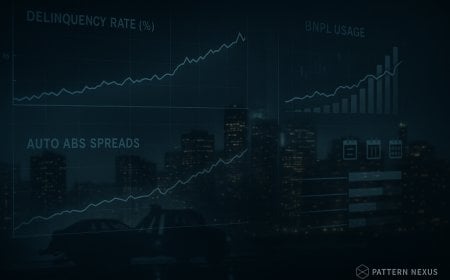 Article · related
Subprime Autos, Buy-Now-Pay-Later, and Bank Stress: Cracks at the Edge of the Consumer Balance Sheet
As of December 4, 2025, subprime auto borrowers and Buy-Now-Pay-Later users are showing rising strain. This Pattern Nexus deep dive maps where the real risk sits, how much of it flows back into banks, and whether these “buy more, pay more later” rails are the real source of bank stress.
Published Dec 4, 2025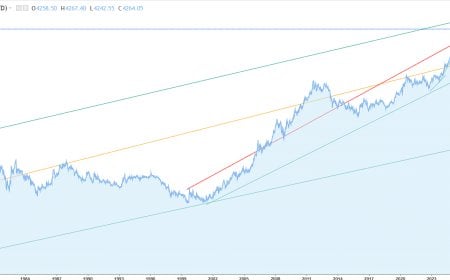 Article · related
Gold Didn’t Moon — It Locked Into a New Liquidity Rail
QT ends tomorrow and the Fed pivots to managing reserves with T-bills and MBS roll-off. Gold already snapped into a new liquidity rail, pricing faster debasement and rising bank stress.
Published Nov 30, 2025 Article · related
QT Ends, Liquidity Returns: Why 2026 Is Almost Certainly the Next Balance-Sheet Expansion Cycle
Quantitative Tightening ends December 1st, and the plumbing shows reserves are already near scarcity. This article explains why 2026 is shaping up to be the next major liquidity-injection cycle, driven by heavy Treasury issuance, reserve demand, and Fed policy shifts.
Published Nov 25, 2025