

cycle
Automatically indexed from the existing article tag.
Theses, forecasts, models, and paths
No published research objects yet
This topic is ready for editors to connect a thesis, forecast, model, or research path.
Latest articles
 Article · related
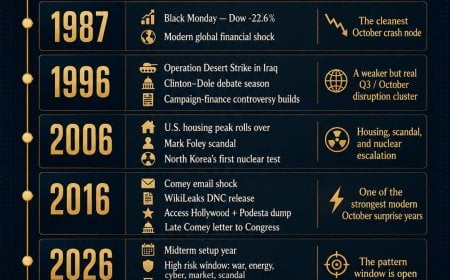
The Sixes Are Never Good: Q3, October Surprises, and the Pattern Window Opening in 2026
The number is not the mechanism. The window is. Across 1976, 1987, 1996, 2006, and 2016, major shocks kept clustering around Q3 and October: currency pressure, regime transition, market crashes, military strikes, housing rollover, political scandal, nuclear escalation, cyber leaks, and election-season institutional stress. This Pattern Nexus research piece maps the “sixes are never good” pattern as a late-cycle stress window, then applies the same framework to the open 2026 midterm year.
Published Jun 6, 2026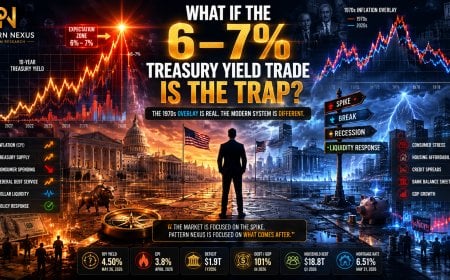 Article · related
What If the 6–7% Treasury Yield Trade Is the Trap?
A lot of smart money is starting to position for a 1970s-style inflation repeat where the 10-year Treasury yield spikes toward 6% or 7%. The chart overlay looks convincing. Inflation today can be lined up against the 1970s if the data is shifted and framed the right way. But Pattern Nexus looks at the system constraint, not just the chart. The question is not whether yields can spike. They can. The question is whether the modern economy, the federal refinancing structure, the consumer balance sheet, and the dollar-based global liquidity system can actually survive a sustained 6–7% long-rate environment. This article argues that the more dangerous trade may be the obvious one: expecting the 1970s to repeat cleanly when the system may instead force a spike, break, recession, emergency response, and renewed liquidity cycle.
Published May 27, 2026 Article · related
When Crime Becomes Content: The Influencer Economy and the Collapse of Social Deterrence
People are now filming themselves committing crimes, harassing strangers, faking public threats, humiliating the vulnerable, provoking foreign countries, and turning legal consequences into the next stage of the content cycle. This is not just stupidity. It is a structural failure. The attention economy has created a class of people who treat the real world like a stage, strangers like props, and punishment like branding. Jail and fines only work when people still fear shame, loss, or social exclusion. But what happens when the punishment itself becomes content?
Published May 25, 2026 Article · relatedJapan's Market Resurgence: Beyond the Bubble—The AI-Industrial Yen Boom
Japan's Nikkei has reclaimed bubble-era highs thanks to decent growth, cheap valuations, corporate reform and a weak yen. We unpack the drivers, systemic flows and what the surge says about the AI-industrial cycle.
Published Feb 26, 2026 Article · related
Auto Repos Are the New Foreclosures: The Household Stress Signal the Market Keeps Ignoring
Repossessions are rising, subprime delinquencies are hitting cycle highs, and loan terms keep stretching. This is the stealth foreclosure wave on wheels—and it maps cleanly to the next phase of the household credit cycle.
Published Feb 17, 2026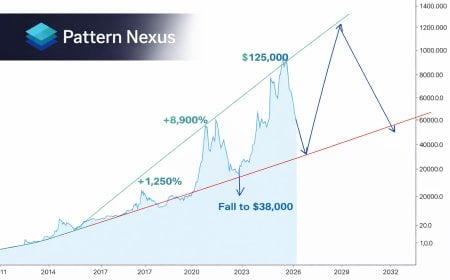 Article · related
Bitcoin’s Structural Halving Cycle: Energy, Miner Economics, and the $38K Reset
A Pattern Nexus structural breakdown of Bitcoin’s halving cycle, miner energy economics, difficulty adjustment, cycle-to-cycle drawdown math, and why a $38K reset can be mechanical—not catastrophic.
Published Feb 11, 2026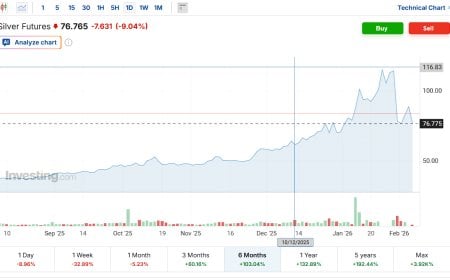 Article · related
Silver Just Proved the Point: Vertical Moves Change Risk Fast
As of 2/4/2026, silver has already done the full cycle: vertical blow-off into the ~$115–$120 zone, then a fast reset into the mid-$70s. This piece explains the mechanics: leverage, margin, volatility, and narrative velocity — and what to watch next without confusing thesis with trade.
Published Feb 4, 2026 Article · related
Housing QE by Proxy: How Weaponizing Fannie and Freddie’s Buffers Turns the GSEs into Political Liquidity Machines
Floating the idea of using Fannie Mae and Freddie Mac’s capital buffers to buy mortgages is more than a housing tweak. It’s an attempt to run QE through the GSEs instead of the Fed, turning housing finance into a political liquidity machine and removing the crash pad when the cycle turns.
Published Jan 8, 2026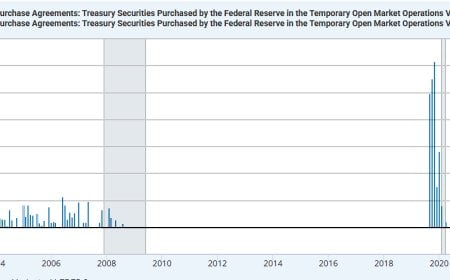 Article · related
The 10-Year Treasury Pattern and the Return of Repo Operations
The 10-Year Treasury has repeatedly stalled near long-cycle resistance while overnight repo operations have quietly returned after QT. This analysis examines how funding markets, balance-sheet capacity, and rate control interact beneath headline narratives.
Published Dec 29, 2025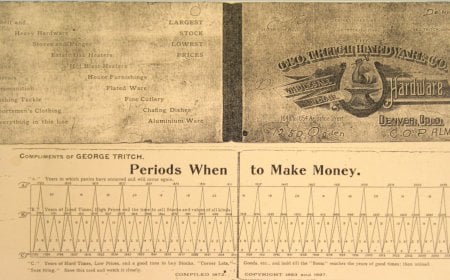 Article · related
Why a 150-Year-Old Market Chart Still Haunts Modern Finance
A deep Pattern Nexus breakdown of Samuel Benner’s 19th-century market cycle chart and why it still aligns with modern financial stress windows. This article explains the mechanics behind the “2026 crash chart,” why it appears accurate, what it gets wrong, and how to use it correctly as a risk-regime lens rather than a prediction tool.
Published Dec 21, 2025 Article · related
The Convergence: AI, Energy, and the Final Liquidity Regime (2020–2045?)
The last 150 years built an industrial machine, a dollar fortress, offshore dollar webs, a global leverage cycle, and a QE-driven digital dollar stack. Part 10 of the Pattern Nexus megaseries ties the arc together and maps where it’s likely heading next: an AI–energy industrial core, programmable dollars, hard-asset politics, and a final liquidity regime that decides who gets to adapt — and who gets left behind.
Published Dec 10, 2025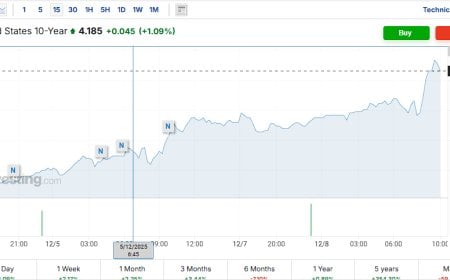 Article · related
GoGoGadget 10-Year: Why Yields Are Rising Into Rate Cuts
The U.S. 10-year just broke above the 4.15% zone even as futures price a near-certain Fed rate cut. This Pattern Nexus breakdown explains why long yields can rise into cuts, what the bond market is signaling about QT, term premium, and collateral stress, and how it fits the 2026 liquidity regime shift.
Published Dec 8, 2025