

Finance
Automatically indexed from the existing article tag.
Theses, forecasts, models, and paths
No published research objects yet
This topic is ready for editors to connect a thesis, forecast, model, or research path.
Latest articles
 Article · related
CoreWeave Turns AI Data-Center Debt Into a Credit-Market Stress Test
CoreWeave shares and bonds came under pressure this week as investors repriced the leveraged neocloud model behind the AI data-center buildout. Axios reported CoreWeave bond yields above 15%, while Bloomberg reported credit-default pricing implying more than 60% odds of default within five years. The company’s own June 30, 2026 filing shows $35.6 billion of total indebtedness and $103.7 billion of remaining performance obligations, making CoreWeave a live test of whether AI demand can convert into enough cash flow to finance depreciation-heavy infrastructure.
Published Oct 16, 2026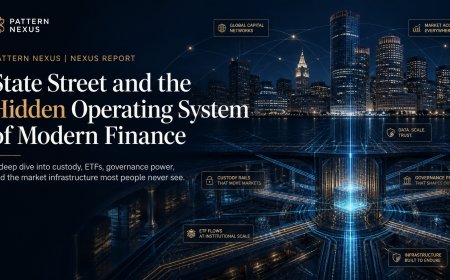 Article · related
State Street and the Hidden Operating System of Modern Finance
State Street is not just another bank. It is one of the hidden infrastructure layers of modern finance, sitting inside custody, ETFs, asset servicing, securities lending, proxy mechanics, institutional data, and the next stage of tokenized finance. This Pattern Nexus report breaks down how State Street became one of the most important financial institutions most people never think about.
Published May 3, 2026 Article · related
The Debt-Free Illusion: How Personal Finance Cults Preserve the Consumer Class and Block Mobility
“Debt-free” is sold as freedom, but in a financialized economy it often functions as compliance: a behavioral cage that blocks asset ownership, leverage literacy, and class mobility.
Published Jan 24, 2026 Article · related
Algorithmic Authority: Scoring Systems, Risk Models, and Invisible Veto Power
Algorithmic authority is the new governance layer. Scoring systems and risk models now decide eligibility, visibility, pricing, and access—executing soft enforcement through throttles, preemption, and invisible veto power across finance, platforms, and institutions.
Published Jan 12, 2026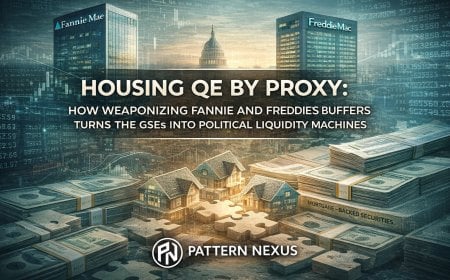 Article · related
Housing QE by Proxy: How Weaponizing Fannie and Freddie’s Buffers Turns the GSEs into Political Liquidity Machines
Floating the idea of using Fannie Mae and Freddie Mac’s capital buffers to buy mortgages is more than a housing tweak. It’s an attempt to run QE through the GSEs instead of the Fed, turning housing finance into a political liquidity machine and removing the crash pad when the cycle turns.
Published Jan 8, 2026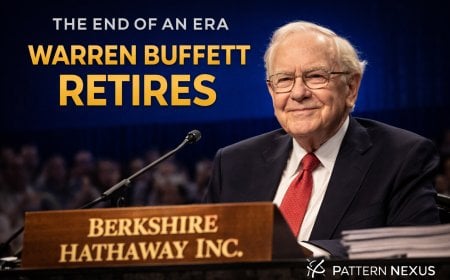 Article · related
Warren Buffett Retires: A Lifetime of Discipline, Compounding, and Stewardship
Warren Buffett’s retirement marks the end of the capital allocation era. This is not just a leadership change at Berkshire Hathaway, but the closing of a postwar investing regime built on patience, permanent capital, and time arbitrage.
Published Jan 1, 2026 Article · related
The Compliance Stack - ESG, AML, KYC, Sanctions, and Soft Enforcement
Compliance has become an enforcement layer. ESG, AML, KYC, sanctions, and risk frameworks now operate as soft law—shaping capital flows, access, and survival without votes, courts, or overt coercion.
Published Dec 31, 2025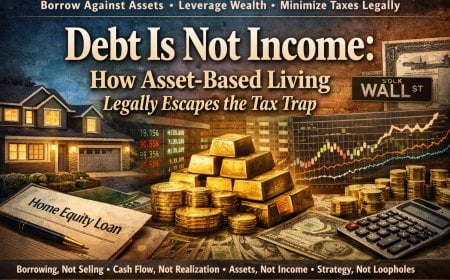 Article · related
Debt Is Not Income: How Asset-Based Living Legally Escapes the Tax Trap
The tax system taxes transactions, not wealth. Learn how borrowing against appreciated assets allows individuals to legally fund their lives without triggering income or capital gains taxes—and why this is a structural feature of modern finance, not a loophole.
Published Dec 25, 2025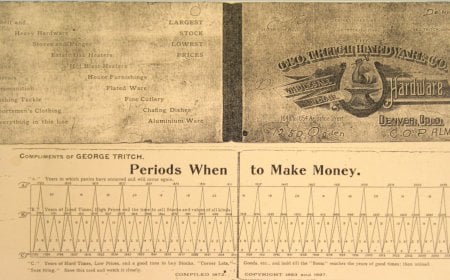 Article · related
Why a 150-Year-Old Market Chart Still Haunts Modern Finance
A deep Pattern Nexus breakdown of Samuel Benner’s 19th-century market cycle chart and why it still aligns with modern financial stress windows. This article explains the mechanics behind the “2026 crash chart,” why it appears accurate, what it gets wrong, and how to use it correctly as a risk-regime lens rather than a prediction tool.
Published Dec 21, 2025 Article · related
Standards as Weapons
Standards are not neutral. ISO frameworks, accounting rules, settlement norms, and governance protocols act as invisible weapons—embedding power into interoperability, compliance, and market access without legislation.
Published Dec 18, 2025 Article · related
Money as Software
An in-depth systems analysis of how money evolved from a sovereign instrument into programmable infrastructure, where payment rails, compliance stacks, and settlement systems now function as primary mechanisms of power and enforcement. Modern money is no longer neutral currency—it is software. Payment rails, compliance layers, settlement systems, and financial risk controls now function as invisible governance, enforcing outcomes without legislation.
Published Dec 16, 2025 Article · related
The Asian Liquidity Supercycle: How Deregulation, Dollar Flows, and the Tech Boom Rewired Global Finance (1994–2001)
Between 1994 and 2001, the world entered a new liquidity regime driven by capital account liberalization, dollar-denominated borrowing, export surpluses, and the explosive rise of technology markets. From the Tequila Crisis and Asian Financial Crisis to the dot-com bubble, this era created the modern global liquidity supercycle — and exposed its fault lines.
Published Dec 4, 2025 Article · related
AI Isn’t a Bubble — It’s a Monetary-Industrial Engine
The AI boom is not dot-com 2.0. It’s a monetary flywheel that turns equity into data centers, power infrastructure, collateral, and new credit — triggering a real-world industrial cycle unprecedented in modern finance.
Published Nov 3, 2025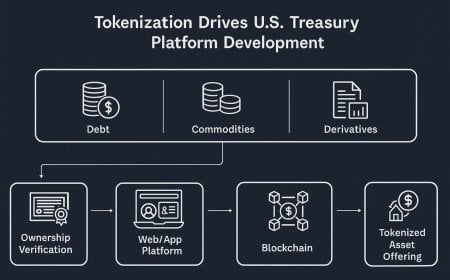 Article · related
The Dollar Isn’t Collapsing — It’s Evolving
The dollar isn’t dying — it’s upgrading. The U.S. converts liabilities into globally demanded collateral (Treasuries), backstopped by the world’s largest official gold reserve and increasingly distributed over programmable rails (stablecoins, tokenized T-bills, institutional blockchains). This essay explains how that liquidity system actually works, why “hard pegs” like a BRICS gold currency would choke elasticity, and how the next easing cycle may flow through digital conduits.
Published Oct 18, 2025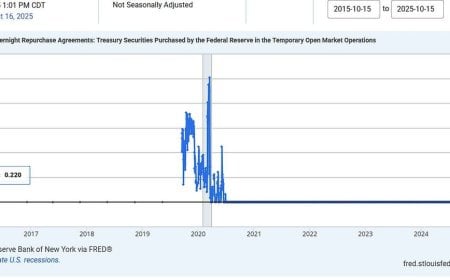 Article · related
The Calm Before the Liquidity Storm: QE 2026 and the Digital Evolution of Money
Federal Reserve Chair Jerome Powell’s recent comments on ending Quantitative Tightening signal that the liquidity cycle is turning again. With repo market stress quietly building, QE 2026 may arrive sooner than most expect. This time, the easing won’t just involve printed dollars — it will merge with the rise of tokenized assets, digital Treasuries, and programmable money.
Published Oct 17, 2025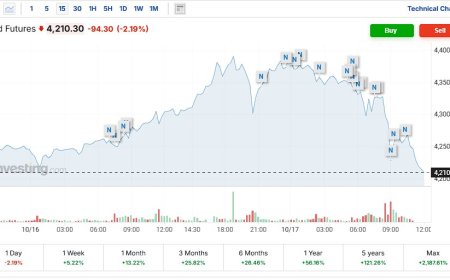 Article · related
Gold’s Rough Day Doesn’t Change the Bigger Picture: A Natural Correction in a Structural Bull Market
Gold is pulling back to $4,210 after its record-breaking rally above $4,400, but this retracement is part of the natural rhythm of the market. Behind the short-term volatility, the long-term structural forces driving gold higher — liquidity stress, repo tightening, QE speculation, and collateral repricing — remain firmly intact.
Published Oct 17, 2025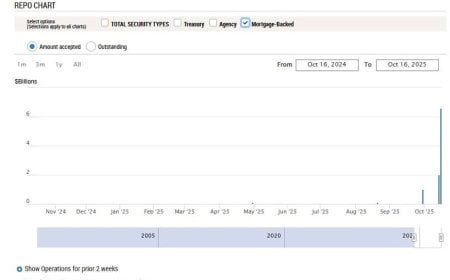 Article · related
🚨 The Fed Just Tapped the MBS Repo Valve — Why That Matters More Than People Think
The Federal Reserve quietly conducted nearly $9 billion in mortgage-backed repo operations after months of inactivity — signaling early liquidity strain in U.S. funding markets. Historically, this is how quantitative easing begins: the Fed provides collateral support before publicly announcing policy shifts. This article examines the data, the 2019 precedent, the QE connection, and what it could mean for 2026.
Published Oct 17, 2025