

financial plumbing
Automatically indexed from the existing article tag.
Theses, forecasts, models, and paths
No published research objects yet
This topic is ready for editors to connect a thesis, forecast, model, or research path.
Latest articles
 Article · related
The Silent Currency War: Containment, Collateral, and the 2030 Regime Window
The United States and China have entered a silent currency war layered on top of maritime containment, commodity dependencies, and financial plumbing. The next phase will determine whether the dollar system evolves, resets, or fragments into parallel rails.
Published Jan 13, 2026 Article · related
The Liquidity-Gated Economy: Why Central Banks Control Flow, Not Prosperity
A structural framework explaining modern economies as liquidity-gated systems where central banks regulate monetary flow between upstream credit creation and downstream prices, assets, and inflation.
Published Dec 30, 2025 Article · related
The Fiscal-Monetary Fusion: Pandemic Money, Inflation Whiplash, and the Militarized Liquidity Regime (2020–2025)
COVID didn’t just trigger stimulus — it fused fiscal and monetary policy into a single war machine. Between 2020 and 2025, governments and central banks ran coordinated mega-deficits, bought their own debt at scale, ignited the first real inflation shock of the QE era, and then slammed rates higher into a fragile, over-financialized system — all while AI, energy constraints, and a new cold war turned liquidity into an explicit weapon.
Published Dec 8, 2025 Article · related
The QE Decade: How Central Banks Took Over the World, Asset Prices Broke Free, and the Digital Dollar Foundations Were Laid (2008–2019)
After the 2008 crisis, the global system didn’t deleverage — it migrated. Between 2008 and 2019, QE, ZIRP, swap lines, and new regulations turned central banks into the core liquidity engine, inflated asset prices, hollowed out safe yields, and quietly laid the foundations for the digital dollar, stablecoins, and the AI–energy megacycle to come.
Published Dec 7, 2025 Article · related
The Housing Collateral Engine: How Shadow Banking, China, and the Fed Turned Mortgages Into Global Money (2001–2008)
After the dot-com crash, the world didn’t deleverage — it rewired. Between 2001 and 2008, China’s WTO entry, Asian reserve accumulation, low Fed rates, and an explosive securitization boom turned U.S. housing into the core collateral engine of the global dollar system. When that engine failed, shadow banking imploded and central banks crossed the Rubicon into unlimited liquidity.
Published Dec 6, 2025 Article · related
The Asian Liquidity Supercycle: How Deregulation, Dollar Flows, and the Tech Boom Rewired Global Finance (1994–2001)
Between 1994 and 2001, the world entered a new liquidity regime driven by capital account liberalization, dollar-denominated borrowing, export surpluses, and the explosive rise of technology markets. From the Tequila Crisis and Asian Financial Crisis to the dot-com bubble, this era created the modern global liquidity supercycle — and exposed its fault lines.
Published Dec 4, 2025 Article · related
The Leverage Machine: How Volcker, Deregulation, and Wall Street Turned Money Into Momentum (1979–1994)
After the 1970s inflation and the end of Bretton Woods, the global system didn’t normalize — it hardened and then financialized. Between 1979 and 1994, Volcker’s shock therapy, Reagan–Thatcher deregulation, junk bonds, LBOs, and market-based credit built a new regime where leverage, not wages, became the main growth engine.
Published Dec 3, 2025 Article · related
The Monetary Break: How Nixon, Silver, & the Eurodollar Rewired the Global System (1968–1979)
Between 1968 and 1979, the collapse of the gold window, the rise of the Eurodollar, and the Petrodollar shift transformed the global monetary system. Nixon’s 1971 shock, oil crises, offshore dollar expansion, and financial deregulation rewired the world’s liquidity architecture and created the modern dollar empire.
Published Dec 2, 2025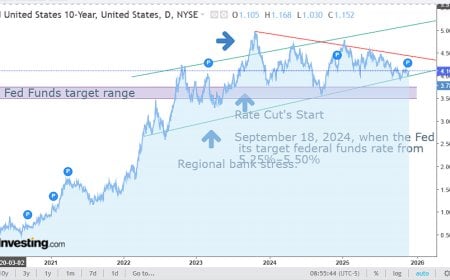 Article · related
The 10-Year Isn’t Misbehaving — It’s Warning the System Is Out of Liquidity
The U.S. 10-year yield is rising into rate cuts — not because the market is irrational, but because the financial system is operating on the liquidity floor. This article explains how regional bank failures, QT exhaustion, and the September 18, 2024 rate-cut pivot created the wedge pattern now signaling the next major regime shift.
Published Dec 2, 2025 Article · related
The First AI Age: How the 1870–1914 Industrial Supercycle Built the Modern World — And Why 2025–2035 Rhymes With It.
Between 1870 and 1914, steel, railroads, electricity, and global capital markets fused into the first true industrial supercycle. This era built the financial and energy architecture we still live inside today—and it looks uncannily like the AI–data-center–SMR boom now unfolding into 2025–2035.
Published Dec 1, 2025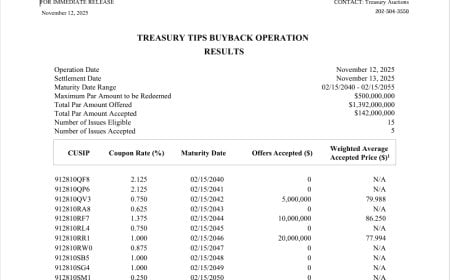 Article · related
Treasury Retires $142 Million in TIPS — Quiet Confirmation of the Buyback Era
The U.S. Treasury retired $142 million in TIPS on Nov 12, 2025 — a direct confirmation of the buyback-driven liquidity cycle we've been tracking. Here’s what the operation reveals about collateral stress, pre-QE interventions, and the evolving monetary plumbing.
Published Nov 12, 2025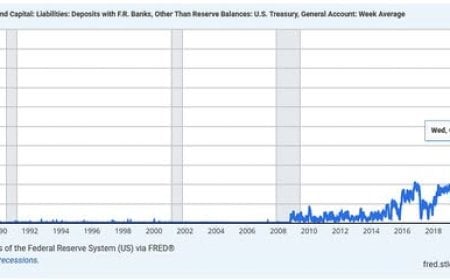 Article · related
The Silent War-Chest: Why the Fed & Treasury Are Hoarding Cash — And Preparing to Control Yields
Overnight repo usage jumps. The TGA surges toward $1T. Washington isn’t “saving.” It’s loading ammunition — to defend the bond market and seize control of yields when disorder hits.
Published Nov 5, 2025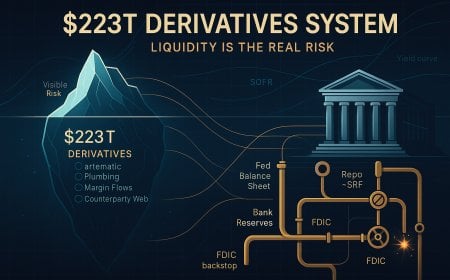 Article · related
$223T Derivatives System: The Hidden Liquidity Fragility Beneath U.S. Banking
The U.S. banking system sits on top of $223 trillion in derivatives — but the real risk isn’t the notional value. It’s liquidity. This deep-dive breaks down how margin calls, collateral chains, FDIC limits, repo plumbing, and Federal Reserve backstops tie together — and why liquidity shocks, not headlines, trigger systemic stress. Includes beginner-friendly breakdowns, research links, historical case studies, and charts.
Published Nov 2, 2025