

fiscal dominance
Automatically indexed from the existing article tag.
Theses, forecasts, models, and paths
No published research objects yet
This topic is ready for editors to connect a thesis, forecast, model, or research path.
Latest articles
 Video · related
The Convergence — Audio-Video Edition
The finale of the Pattern Nexus Cycles of Power audio-video series connects 150 years of industrial, monetary, computing, energy, and liquidity history to the emerging convergence of AI infrastructure, fiscal dominance, programmable dollars, hard-asset politics, and competing paths from 2030 to 2045.
Published Oct 12, 2026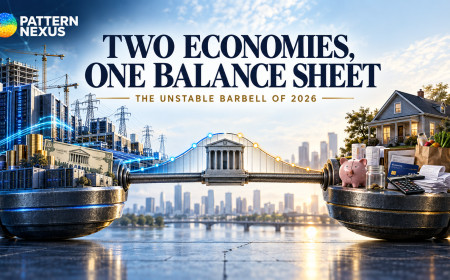 Article · related
Two Economies, One Balance Sheet: The Unstable Barbell of 2026
Reserve support has returned, but real long rates, fiscal supply, and an AI-energy capital wave are splitting the U.S. economy between capital strength and household fragility. This data-rich Pattern Nexus report maps the four feedback loops connecting Federal Reserve plumbing, Treasury duration, fiscal interest, housing lock-in, household credit, labor churn, AI infrastructure, power demand, dollar rails, and gold. It closes with four scenarios, a public-call audit, and a 90-day trigger dashboard.
Published Sep 9, 2026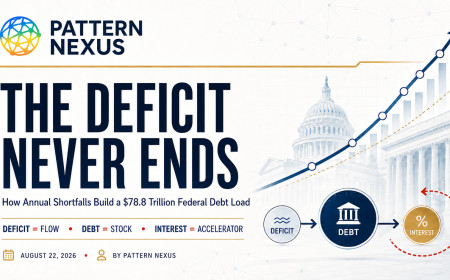 Article · related
The Deficit Never Ends: How Annual Shortfalls Build a $78.8 Trillion Federal Debt Load
Most people use “deficit” and “debt” as if they mean the same thing. They do not. This report uses two Pattern Nexus infographics and official CBO and Treasury data to map the annual federal deficit and total federal debt from 2020 through 2040, explain why interest creates a self-reinforcing feedback loop, and show why the 10-year and 30-year Treasury yields—not a political debt-clock slogan—are the market constraint that matters.
Published Aug 22, 2026 Article · related
The Convergence: AI, Energy, and the Final Liquidity Regime (2020–2045?)
The last 150 years built an industrial machine, a dollar fortress, offshore dollar webs, a global leverage cycle, and a QE-driven digital dollar stack. Part 10 of the Pattern Nexus megaseries ties the arc together and maps where it’s likely heading next: an AI–energy industrial core, programmable dollars, hard-asset politics, and a final liquidity regime that decides who gets to adapt — and who gets left behind.
Published Dec 10, 2025 Audio · related
Pattern Nexus Podcast Episode 1 — Mapping the Systems Beneath the World
The first-ever episode of the Pattern Nexus Podcast. Chris Grenke breaks down the world beneath the headlines — macro cycles, liquidity mechanics, AI industrialization, geopolitics, energy grids, and the evolution of Pattern Nexus. A deep overview of what the podcast will explore and why systems thinking is now essential.
Published Nov 24, 2025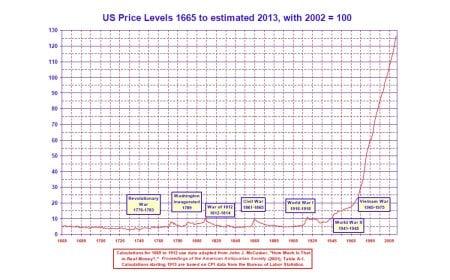 Article · related
From 1665 to QE Infinity: Answering a 2012 Inflation Question
In January 2012 I stared at a 350-year price chart and wondered what all the post-2008 “money printing” would do to inflation. More than a decade, a pandemic, and a historic rate shock later, this is the answer I wish I could have given my 2012 self.
Published Nov 22, 2025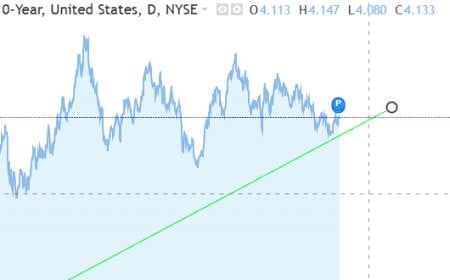 Article · related
The Gravity Zone: How the 10-Year Treasury Revealed the Real Neutral Rate
The 10-year Treasury has been oscillating around a hidden 3–4% neutral zone since 2022, revealing the true equilibrium rate the Fed keeps missing. This article breaks down why long rates refuse to fall, why the market no longer trusts traditional rate cuts, how the Treasury’s trillion-dollar TGA fits into the picture, and why quiet yield-curve management is becoming the new operating system of U.S. monetary policy.
Published Nov 18, 2025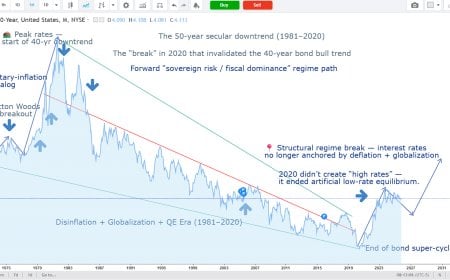 Article · related
The End of the 40-Year Bond Supercycle: Why Rates Didn’t Rise — The Regime Changed
The U.S. 10-year yield didn’t “go up” — the 40-year bond bull ended. This analysis shows how 2020 broke the secular disinflation regime and launched a sovereign-credit repricing cycle mirroring the 1970s.
Published Nov 3, 2025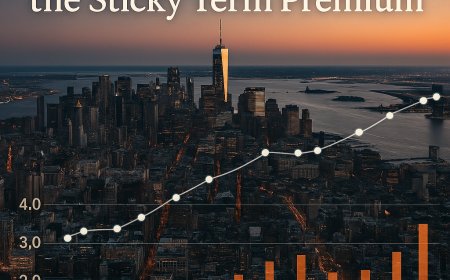 Article · related
Fiscal Dominance and the Sticky Term Premium: Why Long Rates Won’t Obey the Fed
Everyone is waiting for rate cuts to bring relief to mortgages, cap rates, and risk assets. But the long end of the curve doesn’t care what the policy rate does when fiscal dominance takes hold. This long-form explainer maps the mechanics behind sticky long rates: net Treasury supply, buyer base rotation, term premium re-pricing, and degraded market depth. If you want to understand why “cuts” may not mean “cheaper money” anymore, start here.
Published Oct 18, 2025