

IMF
Automatically indexed from the existing article tag.
Theses, forecasts, models, and paths
No published research objects yet
This topic is ready for editors to connect a thesis, forecast, model, or research path.
Latest articles
 Video · related
The Asian Liquidity Supercycle — Audio-Video Edition
Episode 6 of the weekly Pattern Nexus audio-video series turns Part 6 of Cycles of Power into a shorter story about how liberalized capital flows, dollar borrowing, currency pegs, the Asian Financial Crisis, Russia, LTCM, the dot-com boom, and China's WTO entry created the modern global liquidity supercycle between 1994 and 2001.
Published Sep 13, 2026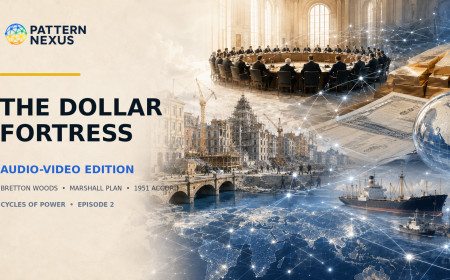 Video · related
The Dollar Fortress — Audio-Video Edition
Episode 2 of the Pattern Nexus Audio-Video series explains how Bretton Woods, the Marshall Plan, capital controls, the IMF, the World Bank, and the 1951 Treasury–Federal Reserve Accord forged the first dollar-liquidity regime between 1947 and 1953.
Published Aug 16, 2026 Article · related
Weeks Where Decades Happen: January 2026 Acceleration Log
January 2026 did not ease into the decade; it detonated into it. From Venezuela’s regime shock and the Greenland tariff crisis to Iran’s crackdown, Syria’s realignment, the UN High Seas Treaty, demographic shifts, IMF revisions, and industrial pivots, this is a log of weeks where decades happen.
Published Jan 19, 2026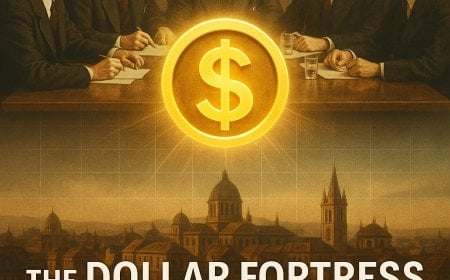 Article · related
The Dollar Fortress: How Bretton Woods, the Marshall Plan, and the 1951 Accord Forged the First Dollar Liquidity Regime (1947–1953)
After World War II, the Bretton Woods system, the Marshall Plan, and the 1951 Treasury–Fed Accord fused into a single architecture: the dollar anchored to gold, capital controls, and state-directed credit. Between 1947 and 1953, this “Dollar Fortress” quietly set the rules of global liquidity that still shape markets today.
Published Dec 2, 2025 Article · related
Tokenized Reserve Era: AI Industrial Dominance and the New Operating System of the World Economy (1980–2040)
IMF baselines through 2024 combined with S-curve tokenization, AI industrial concentration, demographic drag, and reserve plumbing reveal the most realistic map of global power through 2040 — a world where programmable dollars and compute-shielded AI industry become the new operating system of the global economy.
Published Nov 8, 2025 Article · related
Oct 23, 2025 Market Roundup: Wall Street Gains, Gold Rebounds, Nikkei Slips
Wall Street rose on strong earnings and Trump–Xi optimism, gold rebounded after a sharp drop, and Japan’s Nikkei slipped on profit-taking. IMF raised growth outlook as global risks persist.
Published Oct 23, 2025 Article · related
High-Tech, High Complexity: How AI’s Rapid Rise Is Leaving Society Behind
AI is reshaping industries, economies, and everyday life faster than humans can comprehend — creating a world of dazzling innovation and dangerous complexity. AI’s explosive growth is transforming everything — work, money, creativity, and identity — at a pace humanity can barely follow. This in-depth analysis explores how automation, virtual life, and systemic complexity are outpacing our ability to adapt.
Published Oct 21, 2025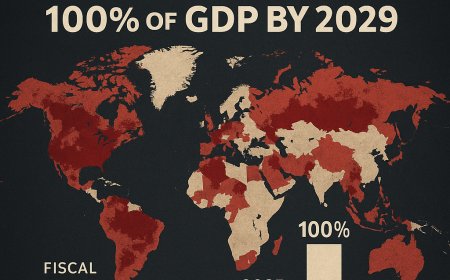 Article · related
🧭 IMF Warns Global Debt Could Exceed 100% of GDP by 2029
The IMF’s latest Fiscal Monitor warns that world public debt could climb beyond 100 percent of GDP by 2029 — a threshold unseen since the aftermath of World War II. Behind the numbers lies a structural problem: modern economies are addicted to debt-funded growth, and the world’s fiscal architecture is entering a critical phase.
Published Oct 18, 2025