

Inequality
Automatically indexed from the existing article tag.
Theses, forecasts, models, and paths
No published research objects yet
This topic is ready for editors to connect a thesis, forecast, model, or research path.
Latest articles
 Video · related
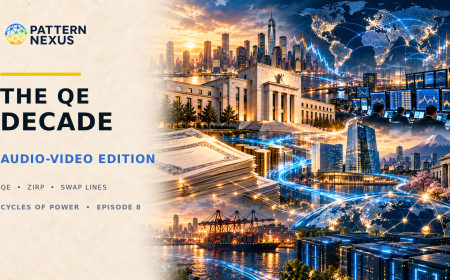
The QE Decade — Audio-Video Edition
Episode 8 of the weekly Pattern Nexus audio-video series turns Part 8 of Cycles of Power into a shorter story about how quantitative easing, zero interest rates, dollar swap lines, Basel III, safe-asset scarcity, and repeated central-bank intervention replaced private mortgage collateral with public balance sheets between 2008 and 2019—and laid the foundations for stablecoins, tokenized Treasuries, and the AI–energy buildout.
Published Sep 26, 2026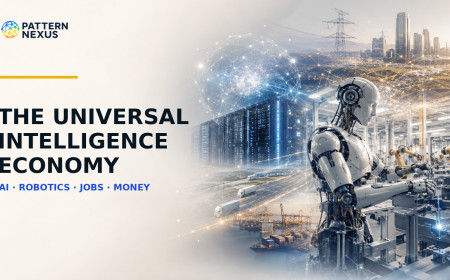 Article · related
The Universal Intelligence Economy: AI, Robotics, Jobs, Money, and the 2030–2035 Transition
AI companies are assembling a cognitive-and-physical labor system designed to outscale human work. This forecast maps the 6–18 month robotics crossover, three displacement paths, the break in wage-based demand, and the monetary architecture required if machine output replaces labor income.
Published Aug 10, 2026 Article · related
The K-Shaped Recovery: Why the Bottom Half Can’t Survive Without Subsidies
The K-shaped recovery has split America into two economies: a subsidized bottom that mathematically cannot survive on wages alone, and an asset-rich upper tier riding liquidity, asset inflation, and AI-driven growth. This deep dive walks through the real math of $40k–$60k households, why subsidies must expand, and what it means for landlords and policy.
Published Dec 9, 2025 Article · related
The QE Decade: How Central Banks Took Over the World, Asset Prices Broke Free, and the Digital Dollar Foundations Were Laid (2008–2019)
After the 2008 crisis, the global system didn’t deleverage — it migrated. Between 2008 and 2019, QE, ZIRP, swap lines, and new regulations turned central banks into the core liquidity engine, inflated asset prices, hollowed out safe yields, and quietly laid the foundations for the digital dollar, stablecoins, and the AI–energy megacycle to come.
Published Dec 7, 2025 Article · related
The Two- (or Three-) Speed Economy: Automation Is Fracturing Growth — Why MMT-Style Tools Become Inevitable
Inflation cools, rents slip, unemployment edges up—yet productivity rises. Automation is splitting the economy into winners and the automated-away. Here’s why the social contract must evolve, why millions of robots are coming online, and how MMT-style policy can stabilize the transition.
Published Nov 12, 2025 Article · related
High-Tech, High Complexity: How AI’s Rapid Rise Is Leaving Society Behind
AI is reshaping industries, economies, and everyday life faster than humans can comprehend — creating a world of dazzling innovation and dangerous complexity. AI’s explosive growth is transforming everything — work, money, creativity, and identity — at a pace humanity can barely follow. This in-depth analysis explores how automation, virtual life, and systemic complexity are outpacing our ability to adapt.
Published Oct 21, 2025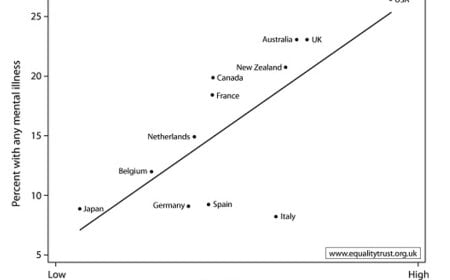 Article · related
Mind the Gap: How Economic Inequality Shapes Mental Health
Economic inequality isn’t just an income gap — it shapes human potential, mental health, and social stability. This post connects psychology, sociology, and policy to reveal the hidden costs of inequality.
Published Oct 19, 2025