

Liquidity Cycle
Automatically indexed from the existing article tag.
Theses, forecasts, models, and paths
No published research objects yet
This topic is ready for editors to connect a thesis, forecast, model, or research path.
Latest articles
 Article · related
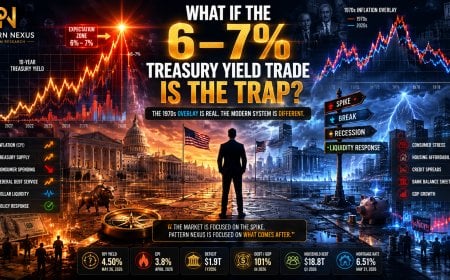
What If the 6–7% Treasury Yield Trade Is the Trap?
A lot of smart money is starting to position for a 1970s-style inflation repeat where the 10-year Treasury yield spikes toward 6% or 7%. The chart overlay looks convincing. Inflation today can be lined up against the 1970s if the data is shifted and framed the right way. But Pattern Nexus looks at the system constraint, not just the chart. The question is not whether yields can spike. They can. The question is whether the modern economy, the federal refinancing structure, the consumer balance sheet, and the dollar-based global liquidity system can actually survive a sustained 6–7% long-rate environment. This article argues that the more dangerous trade may be the obvious one: expecting the 1970s to repeat cleanly when the system may instead force a spike, break, recession, emergency response, and renewed liquidity cycle.
Published May 27, 2026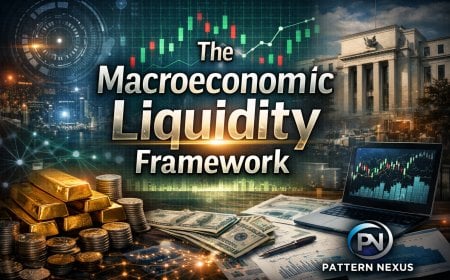 Article · related
Hard Assets Follow Liquidity: The LCI Framework White Paper (Master Equation, Full Method, Full Logic)
A complete, reproducible white paper of the Pattern Nexus liquidity framework: WALCL, inverted RRP and TGA, M2, PCA composite (LCI-PCA), phase map, tests, and falsification.
Published Jan 13, 2026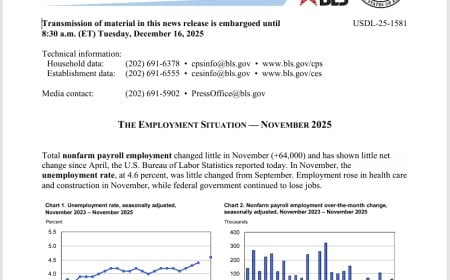 Article · related
Markets Catch Up to the Narrative: Jobs Noise, AI ROI Reality, and the Liquidity Repricing
A full cross-asset breakdown of December 16, 2025: the “noisy” delayed jobs report, a Fed that has already started cutting but won’t sprint, oil breaking below $60, and an AI complex forced to prove returns. This is not a headline day. It’s a regime day.
Published Dec 16, 2025 Article · related
ECB Financial-Stability Warning: Why Near-Zero CISS Is Dangerous
The ECB just issued a financial-stability warning while its systemic stress index (CISS) sits near zero. This report breaks down what the ECB really sees, how bank–nonbank linkages, dollar funding, stablecoins and sovereign risk fit together, and why this “calm” looks like the pre-fracture phase of the next global liquidity cycle.
Published Nov 29, 2025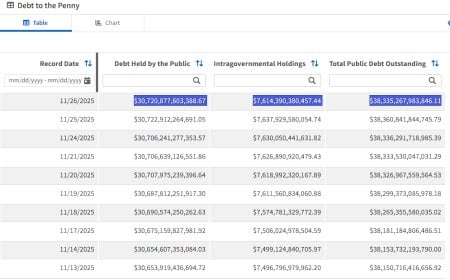 Article · related
The Overburdened Debt Economy: How a $1 Trillion Surge Tightens the Noose on Households, Businesses, and Growth
The U.S. added $1T in new debt in just 82 days. Here’s how rising federal, household, business, and state debts are overloading the economy and pushing rates higher.
Published Nov 29, 2025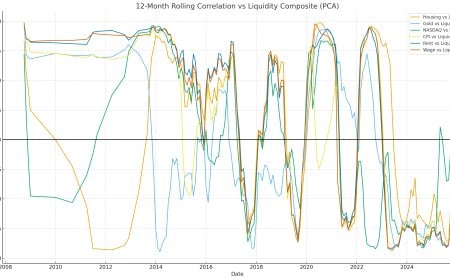 Article · related
Hard Assets Follow Liquidity, Not Inflation — A Full Data Reconstruction
Open the published research article.
Published Nov 28, 2025 Article · related
QT Ends, Liquidity Returns: Why 2026 Is Almost Certainly the Next Balance-Sheet Expansion Cycle
Quantitative Tightening ends December 1st, and the plumbing shows reserves are already near scarcity. This article explains why 2026 is shaping up to be the next major liquidity-injection cycle, driven by heavy Treasury issuance, reserve demand, and Fed policy shifts.
Published Nov 25, 2025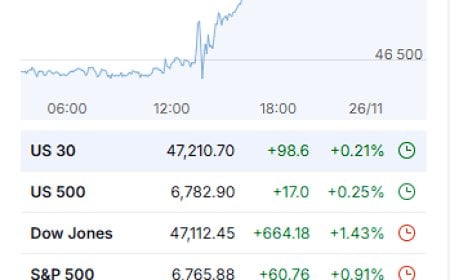 Article · related
Quick Market Wrap-Up: Fed Cut Bets Drive a Broad Risk-On Rally (Nov 25, 2025)
U.S. markets rallied on November 25, 2025, as traders priced in a December Fed cut. Equities gained, yields hovered near 4%, commodities firmed, and crypto cooled. Full Pattern Nexus analysis with charts, macro context, and daily PN Lens.
Published Nov 25, 2025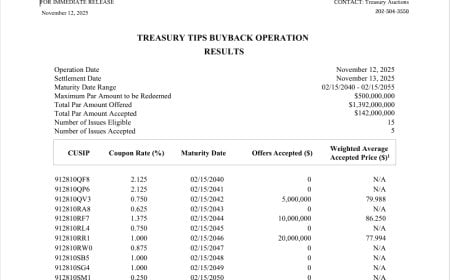 Article · related
Treasury Retires $142 Million in TIPS — Quiet Confirmation of the Buyback Era
The U.S. Treasury retired $142 million in TIPS on Nov 12, 2025 — a direct confirmation of the buyback-driven liquidity cycle we've been tracking. Here’s what the operation reveals about collateral stress, pre-QE interventions, and the evolving monetary plumbing.
Published Nov 12, 2025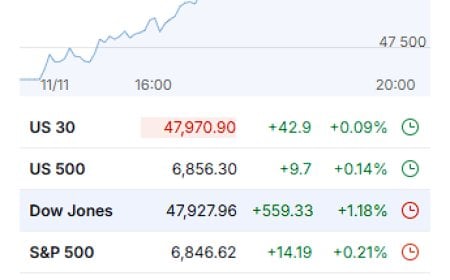 Article · related
Dow Hits Record as Long-End Anchors — Nov 11, 2025 Market Wrap
Dow Jones, S&P 500, Nasdaq, bonds, yield curve, dollar index, volatility, Treasury yields, liquidity cycle, market wrap, Pattern Nexus, November 2025, macro markets
Published Nov 11, 2025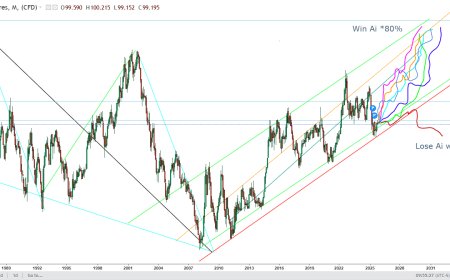 Article · related
ADP Weakness, Dollar Break: Labour → Liquidity → Repricing (Nov 11, 2025)
Open the published research article.
Published Nov 11, 2025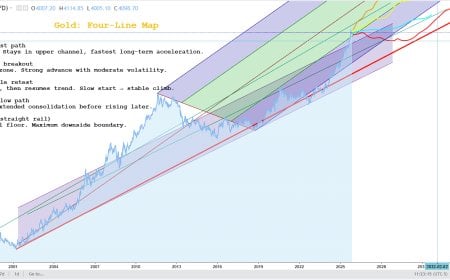 Article · related
Gold Surges as Senate Moves to Reopen Government — The Four-Line Map That Explains What Happens Next
Gold jumps as the Senate advances a government reopening bill, triggering liquidity pressure and renewed safe-haven demand. Our Four-Line Map breaks down what comes next.
Published Nov 10, 2025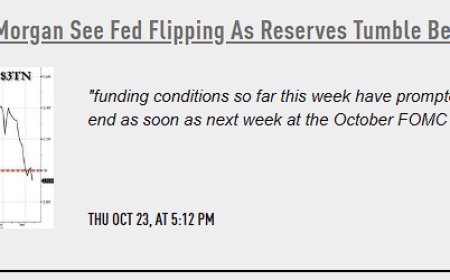 Article · related
QT Is Over: The System Just Crossed Its Reserve Floor
The liquidity cycle has flipped. QT exhausted the reserve buffer, pushing the system into structural limits the Fed can’t ignore. This isn’t a debate — it’s a regime shift. From banking reserves to tokenized collateral, here’s what comes next.
Published Oct 23, 2025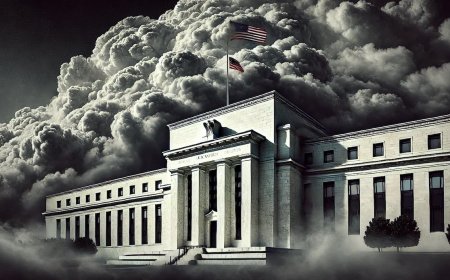 Article · related
The Calm Before the Liquidity Storm
After Powell’s quiet remarks in Philadelphia about ending Quantitative Tightening (QT), subtle tremors are building across the repo and collateral markets. The system is whispering before it screams — and all signs suggest the next liquidity cycle is approaching.
Published Oct 18, 2025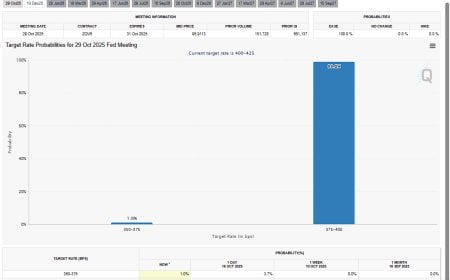 Article · related
Fed’s October Pivot: Liquidity Cycles, History, and the Digital Dollar Frontier
Markets now expect another 25 bps rate cut at the Fed’s Oct 28–29 meeting as unemployment rises and repo-market strains flicker. Powell signaled QT’s end is “coming into view,” Waller endorsed another cut, and Musalem said he could support one if inflation risks stay contained. This post connects those signals to the longer liquidity cycle and to where the next easing wave is headed: tokenized Treasuries, stablecoins, and programmable liquidity.
Published Oct 18, 2025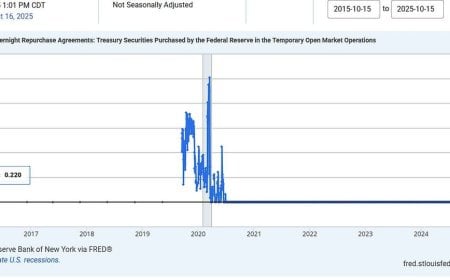 Article · related
The Calm Before the Liquidity Storm: QE 2026 and the Digital Evolution of Money
Federal Reserve Chair Jerome Powell’s recent comments on ending Quantitative Tightening signal that the liquidity cycle is turning again. With repo market stress quietly building, QE 2026 may arrive sooner than most expect. This time, the easing won’t just involve printed dollars — it will merge with the rise of tokenized assets, digital Treasuries, and programmable money.
Published Oct 17, 2025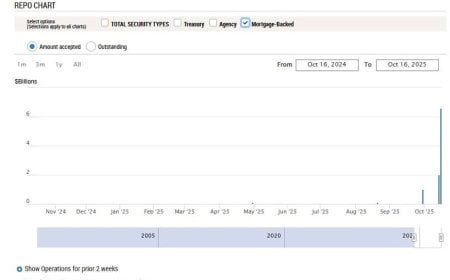 Article · related
🚨 The Fed Just Tapped the MBS Repo Valve — Why That Matters More Than People Think
The Federal Reserve quietly conducted nearly $9 billion in mortgage-backed repo operations after months of inactivity — signaling early liquidity strain in U.S. funding markets. Historically, this is how quantitative easing begins: the Fed provides collateral support before publicly announcing policy shifts. This article examines the data, the 2019 precedent, the QE connection, and what it could mean for 2026.
Published Oct 17, 2025