

Liquidity, QE/QT & Collateral (💧🏦)
System plumbing: RRP, TGA, reserves, collateral scarcity, QE/QT flows, and global liquidity mechanics.
Theses, forecasts, models, and paths
No published research objects yet
This topic is ready for editors to connect a thesis, forecast, model, or research path.
Latest articles
 Article · primary
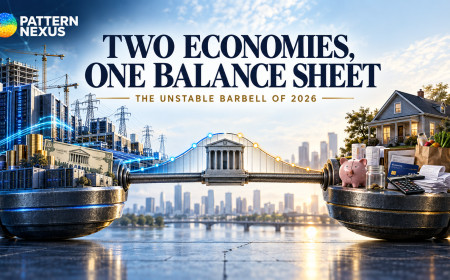
Two Economies, One Balance Sheet: The Unstable Barbell of 2026
Reserve support has returned, but real long rates, fiscal supply, and an AI-energy capital wave are splitting the U.S. economy between capital strength and household fragility. This data-rich Pattern Nexus report maps the four feedback loops connecting Federal Reserve plumbing, Treasury duration, fiscal interest, housing lock-in, household credit, labor churn, AI infrastructure, power demand, dollar rails, and gold. It closes with four scenarios, a public-call audit, and a 90-day trigger dashboard.
Published Sep 9, 2026 Article · primary
Treasury Turns Long-Bond Buybacks Into a Yield-Control Test
Treasury said it will raise maximum liquidity-support buybacks in the 10-to-20-year and 20-to-30-year nominal coupon sectors from $2 billion to at least $4 billion per operation beginning September 9, 2026. Follow-up reporting from AP, Reuters and Axios shows the market treated the move as an attempted long-end yield intervention, but the initial relief faded quickly. The Pattern Nexus read: this is not formal yield-curve control, but it is a live test of whether Treasury plumbing can absorb stress that monetary policy credibility and fiscal math are failing to contain.
Published Aug 22, 2026 Article · primary
Aave Turns Tokenized Junk Credit Into a Stablecoin Collateral Test
Securitize and Neuberger launched the Neuberger Securitize High Income Tokenized Fund, or HINC, on August 18, 2026, with exposure to high-yield bonds, CLOs, leveraged loans and related fixed-income assets across Avalanche, Ethereum, Solana and Sui. Separate reports say Securitize filed an Aave Horizon ARFC the same day to make HINC supply-only collateral, allowing approved holders to borrow USDC, GHO or RLUSD if governance, risk and implementation steps clear. The test is whether institutional tokenization can move beyond Treasury-like cash products without creating a new liquidation bottleneck.
Published Aug 21, 2026 Article · primary
The GENIUS Act and the Stablecoin State: How Private Dollars Become a Treasury Demand Engine
The GENIUS Act didn’t just “regulate crypto.” It formalized a new payments rail where private dollars can scale—and where reserve rules turn stablecoins into an indirect Treasury demand vector.
Published Feb 17, 2026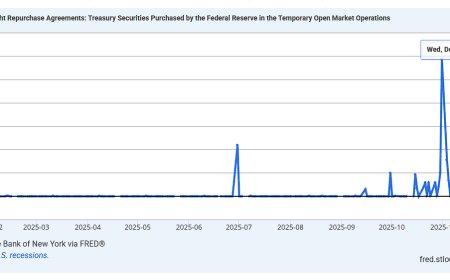 Article · primary
Repo Usage Is Expanding Again
Overnight repo operations have shifted from dormant to persistent over the past several weeks. This article documents the expansion in repo usage, what it signals about short-term funding conditions, and what to watch next — without overinterpretation.
Published Jan 2, 2026 Article · primary
Repo Is Back: Late-2025 Looks Like Late-2019
Open the published research article.
Published Dec 29, 2025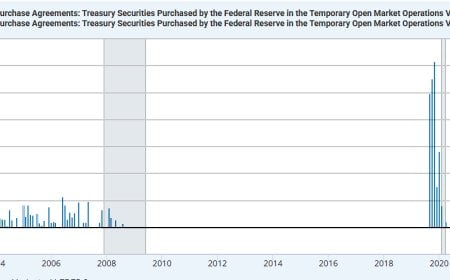 Article · primary
The 10-Year Treasury Pattern and the Return of Repo Operations
The 10-Year Treasury has repeatedly stalled near long-cycle resistance while overnight repo operations have quietly returned after QT. This analysis examines how funding markets, balance-sheet capacity, and rate control interact beneath headline narratives.
Published Dec 29, 2025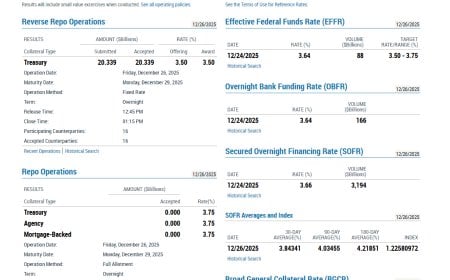 Article · primary
Orderly Stress: Why Repo Stability Is Masking Deeper Collateral Strain
Repo markets remain orderly even as settlement fails and benchmark collateral strain emerge. This analysis explains why stable SOFR, modest ON RRP and MBS repo usage, and limited Fed operations can coexist with deeper stress in collateral mobility and dealer balance sheets.
Published Dec 26, 2025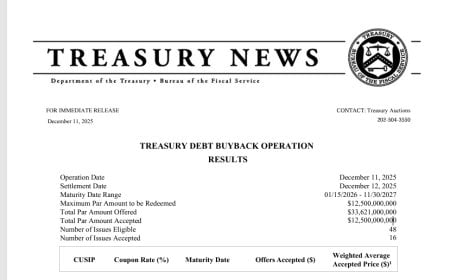 Article · primary
Treasury Buyback Confirms the New Liquidity Regime
Treasury retires $12.5B in debt in a single buyback operation, confirming the shift into a post-QT, Treasury-driven liquidity regime.
Published Dec 12, 2025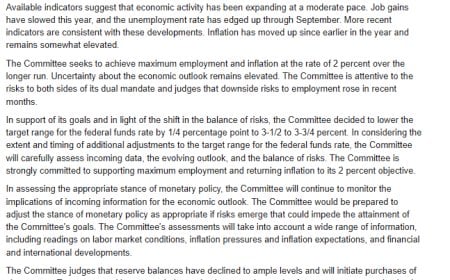 Article · primary
December 10, 2025: QT Ends, QE-Lite Begins
The Fed cut rates by 25 bps, acknowledged rising downside risks to employment, and quietly ended QT by initiating short-term Treasury purchases to maintain reserves, marking the start of a new liquidity regime.
Published Dec 10, 2025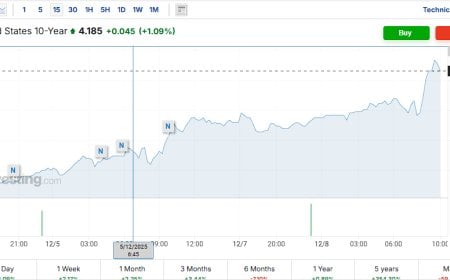 Article · primary
GoGoGadget 10-Year: Why Yields Are Rising Into Rate Cuts
The U.S. 10-year just broke above the 4.15% zone even as futures price a near-certain Fed rate cut. This Pattern Nexus breakdown explains why long yields can rise into cuts, what the bond market is signaling about QT, term premium, and collateral stress, and how it fits the 2026 liquidity regime shift.
Published Dec 8, 2025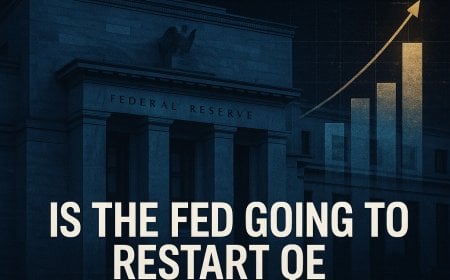 Article · primary
Did Jerome Powell Plan a $45 Billion T-Bill Buying Program? A Pattern Nexus Investigation
A fully sourced investigation into whether the Federal Reserve planned a $45B monthly Treasury-bill purchase program in December 2025. This Pattern Nexus breakdown differentiates analyst forecasts from official policy, clarifies what Reserve Management Purchases are, and examines whether this amounts to QE in function.
Published Dec 7, 2025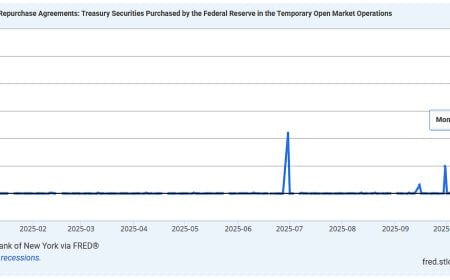 Article · primary
The Day QT Died and QE Began: December 1, 2025 — The Quiet Restart of the Liquidity Engine
QT officially ended on December 1, 2025 — but the real story happened in the plumbing. With the RRP buffer nearly gone, SOFR volumes exploding, and the Standing Repo Facility pulling in Treasuries, agencies, and MBS, the Fed quietly shifted from balance-sheet tightening to balance-sheet backfilling. This was the moment the liquidity regime flipped.
Published Dec 2, 2025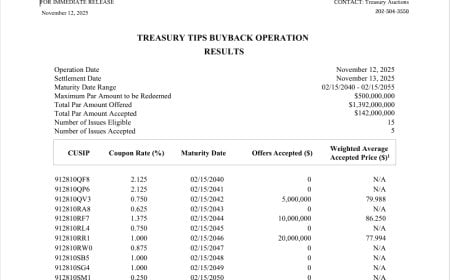 Article · primary
Treasury Retires $142 Million in TIPS — Quiet Confirmation of the Buyback Era
The U.S. Treasury retired $142 million in TIPS on Nov 12, 2025 — a direct confirmation of the buyback-driven liquidity cycle we've been tracking. Here’s what the operation reveals about collateral stress, pre-QE interventions, and the evolving monetary plumbing.
Published Nov 12, 2025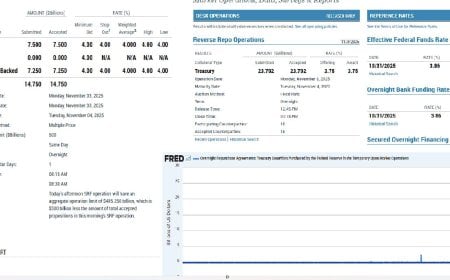 Article · primary
The Quiet Repo Surge: $14.75B SRF Tap + $30B Liquidity Pulse Signals the New Regime
In three trading days, the Fed silently pushed nearly $45B through the repo window — including a $14.75B SRF tap and a ~$30B overnight repo spike. This wasn’t panic. It was collateral lubrication for America’s reindustrialization cycle — compute, power, copper, grid. The new liquidity regime is here.
Published Nov 3, 2025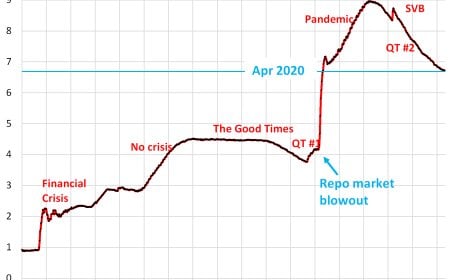 Article · primary
The Pivot Is Here: Rate Cuts, QT Ending, and the Setup for QE 2026 — The Melt-Up Phase Has Begun
The Federal Reserve cut rates to 3.75%–4.00% and scheduled the end of QT for December 1, 2025. Liquidity is turning, market plumbing is tight, and the setup for renewed balance-sheet expansion in 2026 is forming. This is the melt-up window — where asset holders move first, and inflation follows. Understand the cycle now to position for the next wave.
Published Oct 30, 2025 Article · primary
Fed Cuts Again, Tees Up the End of QT — Exactly as I Called It
The Federal Reserve just delivered its second rate cut of the year and signaled an end to Quantitative Tightening — confirming what I’ve been predicting for months. Here’s why this pivot was inevitable, what it means for liquidity, gold, crypto, and equities, and how it fits into the broader Pattern Nexus thesis on the “Everything Bubble.”
Published Oct 29, 2025 Article · primary
QT Is Over: The System Just Crossed Its Reserve Floor
The liquidity cycle has flipped. QT exhausted the reserve buffer, pushing the system into structural limits the Fed can’t ignore. This isn’t a debate — it’s a regime shift. From banking reserves to tokenized collateral, here’s what comes next.
Published Oct 23, 2025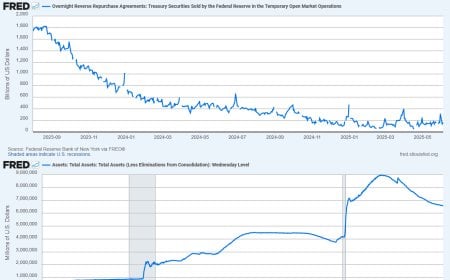 Article · primary
Era of Easy Money Ends – How Declining Liquidity Is Shaping Markets
Central banks are pulling back trillions in liquidity after years of easy money. We examine how this liquidity drain – in the US and globally – impacts stocks, the economy, and what it signals for the future.
Published Oct 22, 2025 Article · primary
The Calm Before the Liquidity Storm
After Powell’s quiet remarks in Philadelphia about ending Quantitative Tightening (QT), subtle tremors are building across the repo and collateral markets. The system is whispering before it screams — and all signs suggest the next liquidity cycle is approaching.
Published Oct 18, 2025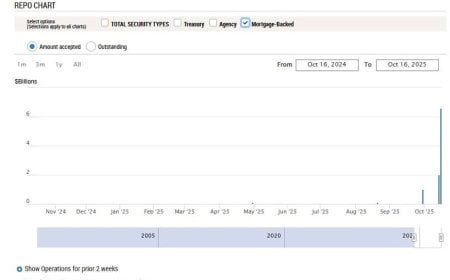 Article · primary
🚨 The Fed Just Tapped the MBS Repo Valve — Why That Matters More Than People Think
The Federal Reserve quietly conducted nearly $9 billion in mortgage-backed repo operations after months of inactivity — signaling early liquidity strain in U.S. funding markets. Historically, this is how quantitative easing begins: the Fed provides collateral support before publicly announcing policy shifts. This article examines the data, the 2019 precedent, the QE connection, and what it could mean for 2026.
Published Oct 17, 2025