

MacroEconomics
Automatically indexed from the existing article tag.
Theses, forecasts, models, and paths
No published research objects yet
This topic is ready for editors to connect a thesis, forecast, model, or research path.
Latest articles
 Article · related
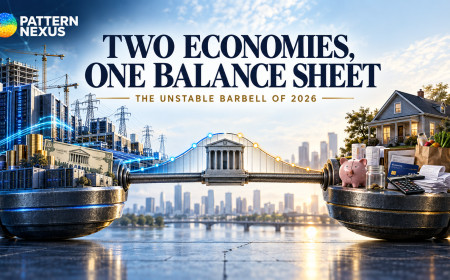
Two Economies, One Balance Sheet: The Unstable Barbell of 2026
Reserve support has returned, but real long rates, fiscal supply, and an AI-energy capital wave are splitting the U.S. economy between capital strength and household fragility. This data-rich Pattern Nexus report maps the four feedback loops connecting Federal Reserve plumbing, Treasury duration, fiscal interest, housing lock-in, household credit, labor churn, AI infrastructure, power demand, dollar rails, and gold. It closes with four scenarios, a public-call audit, and a 90-day trigger dashboard.
Published Sep 9, 2026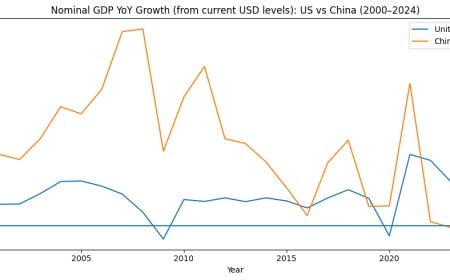 Article · related
Scale Is Destiny: Why China Didn’t Pass the U.S. — and Why That Matters
A data-driven breakdown of U.S. versus China economic growth from 2000–2024, showing why China failed to overtake the United States despite years of projections. Using GDP levels, growth rates, and scale mathematics, this report explains how demographics, housing collapse, trade regimes, and financial infrastructure reshaped the outcome — and why marginal U.S. growth now moves the global system.
Published Dec 24, 2025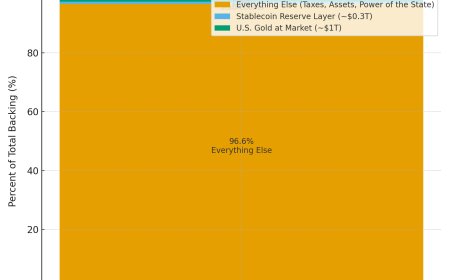 Article · related
The $42 Illusion: How the Market Repriced America’s Gold and Accidentally Revealed the Dollar’s Hidden Backing
Gold hit $4,400 in 2025—but the U.S. still prices its hoard at $42. This article breaks down the real backing of the dollar: gold, stablecoins, and power.
Published Nov 19, 2025 Article · related
The Next Recession: What Outperforms and Why (2026–2030 Analysis)
A deep institutional analysis of how the next recession will unfold, what sectors historically outperform, and how AI industrialization and tokenized rails shape 2026–2030.
Published Nov 10, 2025 Article · related
Humanity’s Next Operating System: AI, Divergence, and the 100-Year Transformation of Civilization
A deep-dive into the next 100 years of human evolution — AI acceleration, monetary expansion, tokenization, megacorporations, VR worlds, mind uploading, and the rise of interplanetary civilizations. The complete Pattern Nexus forecast (2025–2125).
Published Nov 7, 2025 Article · related
Unwinding the Yen Carry Trade: The $20 Trillion Question and the Coming Dollar Shockwave
The yen carry trade is the hidden leverage machine behind decades of global liquidity. Now, as Japan exits negative rates, up to $20 trillion in leveraged positions risk unwinding — triggering forced liquidations, global volatility, and a potential dollar spike driven by repatriation flows. This article explores how the unwind works, why it matters, and how dedollarization narratives collide with the coming dollar squeeze.
Published Nov 5, 2025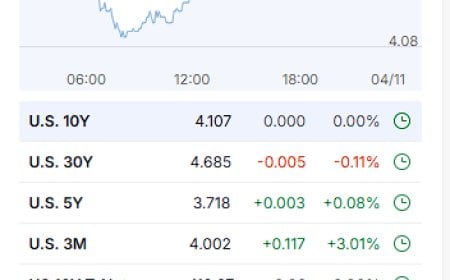 Article · related
Markets Navigate Volatility as Japan Bubble Fears Rise and U.S. Shutdown Threatens SNAP – Nov 3, 2025
Markets enter November balancing AI-driven optimism, rising bond yields, and weak breadth. Japan’s Nikkei echoes 1980s bubble risks while the U.S. shutdown threatens SNAP food benefits for 41M+ Americans if funding lapses into December.
Published Nov 3, 2025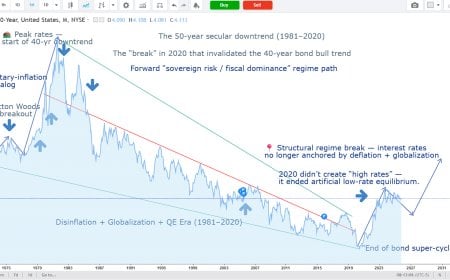 Article · related
The End of the 40-Year Bond Supercycle: Why Rates Didn’t Rise — The Regime Changed
The U.S. 10-year yield didn’t “go up” — the 40-year bond bull ended. This analysis shows how 2020 broke the secular disinflation regime and launched a sovereign-credit repricing cycle mirroring the 1970s.
Published Nov 3, 2025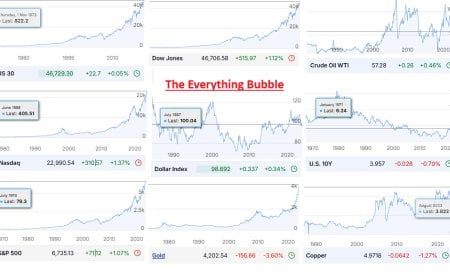 Article · related
The Everything Bubble: When Money Outruns Production
Since the 2000s, nearly every major asset has inflated together — stocks, commodities, yields, and metals. As money supply outruns real production, prices rise despite rising productivity. The “Everything Bubble” isn’t about growth — it’s about distortion.
Published Oct 21, 2025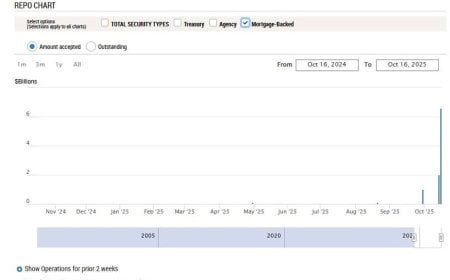 Article · related
🚨 The Fed Just Tapped the MBS Repo Valve — Why That Matters More Than People Think
The Federal Reserve quietly conducted nearly $9 billion in mortgage-backed repo operations after months of inactivity — signaling early liquidity strain in U.S. funding markets. Historically, this is how quantitative easing begins: the Fed provides collateral support before publicly announcing policy shifts. This article examines the data, the 2019 precedent, the QE connection, and what it could mean for 2026.
Published Oct 17, 2025