

Middle East & Energy Geopolitics (🛢️🔥)
Regional power balance, oil flows, chokepoints, alliances, and the energy-driven geopolitical realignments in the Middle East.
Theses, forecasts, models, and paths
No published research objects yet
This topic is ready for editors to connect a thesis, forecast, model, or research path.
Latest articles
 Article · primary
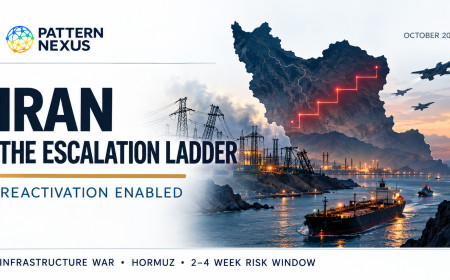
Iran: Escalation Ladder — Reactivation Enabled
The Iran escalation ladder is active again. I examine the October strike risk, the infrastructure-war danger, rising tanker attacks alongside recovering exports, the Gulf defense response, financial isolation, current oil inventories and the Federal Reserve’s position. My working window is October 22–November 5. The article connects the latest evidence to the Pattern Nexus research trail from January through October.
Published Oct 8, 2026 Article · primary
G7 Turns Emergency Diesel Stocks Into a No-Export-Ban Bargain
G7 leaders agreed on October 2, 2026 to coordinate an IEA-linked release of 100 million barrels of diesel and crude over four months, with a substantial diesel release in the first 20 days. The package followed U.S. pressure on Europe over emergency diesel inventories and included a pledge not to impose energy-export restrictions among G7 members. The move turns strategic stocks into a market-stabilization tool and an alliance-management mechanism.
Published Oct 3, 2026 Article · primary
Moldova Turns a 60-Day Emergency Into a Winter Energy-Security Firewall
Moldova’s parliament approved a nationwide 60-day state of emergency in the energy and hydrological sectors beginning September 26, 2026. The government says the measure is preventive, aimed at giving authorities faster tools before winter as drought, electricity-import dependence, fuel-market stress and regional-war risks overlap. The system signal is that Moldova is treating water, electricity, fuel and cross-border grid access as one integrated resilience stack.
Published Sep 27, 2026 Article · primary
Tehran Turns Hormuz Reopening Into a Seven-Day Energy-Security Bargain
Iranian Foreign Minister Abbas Araghchi says Tehran has sent Washington a seven-day roadmap through Qatar that would reopen the Strait of Hormuz and restart nuclear talks if U.S. conditions are met. AP, Al Jazeera, Reuters and The National reporting indicate the offer is tightly conditional, contains no near-term Iranian nuclear concession and is now colliding with Western efforts to build parallel maritime-security pressure at the UN.
Published Sep 26, 2026 Article · primary
London Turns RAF Tankers Into a Red Sea Energy-Security Backstop
British Prime Minister Andy Burnham has approved limited defensive air-to-air refueling support for Saudi Arabia after Riyadh requested help countering intensified Houthi attacks. Reporting from AP, Reuters, The Guardian and Bloomberg says the mission is expected to involve one RAF Voyager for a time-limited deployment measured in weeks. The move links Yemen’s renewed escalation directly to oil-route security, allied burden-sharing and the cost-of-living politics of keeping maritime chokepoints open.
Published Sep 22, 2026 Article · primary
Larak Strike Turns Hormuz Into a Mine-War Energy Shock
U.S. forces struck two Iranian launchers on Larak Island near the Strait of Hormuz on August 30 after U.S. officials said IRGC personnel were preparing rockets carrying sea mines for the waterway. Iran claimed retaliatory strikes on bases hosting U.S. forces in Jordan, the UAE reported dealing with a drone from Iran over its territorial waters, and Brent crude moved back above $90 as traders repriced disruption risk. The immediate question is whether this remains a limited counter-mining action or becomes a broader contest over who can keep Hormuz usable.
Published Aug 31, 2026 Article · primary
Washington Turns Iran Sanctions Into a China Oil-Flow Loyalty Test
The U.S. and Iran traded warnings before a planned Monday sanctions announcement by Treasury Secretary Scott Bessent. Reuters, AP and Bloomberg report that Washington is preparing a wider secondary-sanctions push that could reach Iran’s remaining trading partners, including China, while Strait of Hormuz oil flows remain heavily constrained. The Pattern Nexus read: this is no longer just Iran policy; it is a wartime test of U.S. financial enforcement against energy flows that Asia still needs.
Published Aug 22, 2026 Article · primary
Washington Turns the Hormuz Deadline Into an Oman Strike Threat
AP reported on August 17, 2026, that Trump again threatened Oman while Iran said it had reached an understanding with Muscat over a Strait of Hormuz transit route. A separate AP analysis said the 60-day U.S.-Iran deadline expired the same day with the sides still far apart over reopening Hormuz, lifting the U.S. blockade and defining Iran’s role. Reuters reported that Iran was threatening a more offensive posture in the strait if diplomacy failed, making the escalation a live maritime-control crisis rather than a routine diplomatic delay.
Published Aug 17, 2026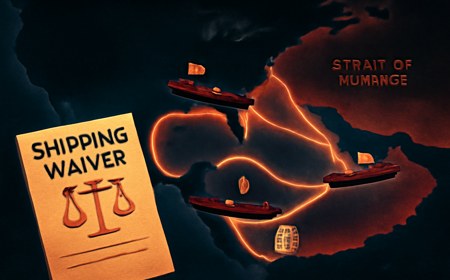 Article · primary
Washington Turns the Jones Act Waiver Into an Iran-War Fuel Bypass
President Trump extended a Jones Act waiver for another 90 days, with the new window taking effect on August 17, 2026, after the prior waiver period expired on August 16. The waiver allows foreign-flagged vessels to move covered energy and agricultural commodities between U.S. ports as the Iran war and Strait of Hormuz disruption keep pressure on fuel logistics. The policy is now a live energy-security workaround, but maritime-state lawmakers and domestic shipping advocates warn it could weaken the U.S.-flag fleet and shipbuilding base.
Published Aug 17, 2026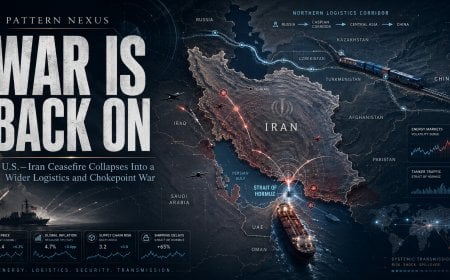 Article · primary
War Is Back On: The U.S.–Iran Ceasefire Has Collapsed Into a Wider Logistics and Chokepoint War
The United States is striking Iranian military, port, power, transportation, and logistics infrastructure. Iran is retaliating against the American Gulf basing network. Israel is ready to reenter. The conflict is evolving from a Hormuz chokepoint war into a wider campaign over Iran’s maritime and Eurasian connections.
Published Jul 9, 2026 Article · primary
The Iran Deal Hits Its First Control Failure Before Talks Begin
U.S.-Iran talks planned around June 19 at Switzerland’s Bürgenstock resort were postponed after Vice President JD Vance did not travel and Iranian officials also did not arrive as planned. Reporting from AP, Reuters and Axios tied the delay to both logistics and renewed fighting around Lebanon, while Swiss authorities had already prepared security and airspace restrictions for the meeting. The early breakdown shows that the interim deal’s implementation track depends on synchronized behavior across multiple theaters, not only on diplomatic intent.
Published Jun 20, 2026 Article · primary
Hormuz Ceasefire Breaks Into Direct U.S.-Iran Strike Cycle
The United States launched strikes on Iranian targets near the Strait of Hormuz after the loss of a U.S. Army Apache helicopter, while Iran reported retaliatory attacks against U.S.-linked targets in Jordan and the Gulf. AP reported that the exchange again tested a two-month ceasefire, and Reuters-linked oil coverage showed crude rising as the flare-up renewed supply-risk concerns. The strategic signal is a maritime-energy choke point turning into a repeat escalation loop.
Published Jun 10, 2026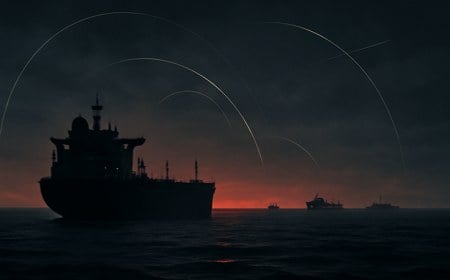 Article · primary
Hormuz Ceasefire Frays Again as U.S. Downs Iranian Drones Near Shipping Lanes
U.S. forces shot down two Iranian drones near the Strait of Hormuz after CENTCOM said they threatened international maritime traffic, according to EFE, AFP via Arab News, AP and Xinhua. The incident followed a prior exchange in which U.S. forces downed Iranian drones, intercepted missiles aimed toward Gulf allies and struck Iranian coastal surveillance radar sites. The pattern keeps the world’s most important oil-shipping chokepoint under active military stress even if cargoes continue moving.
Published Jun 7, 2026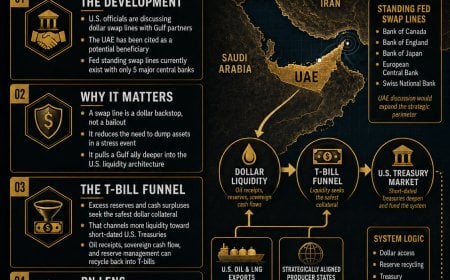 Article · primary
UAE, Swap Lines, and the T-Bill Funnel: The New Oil Order Is Being Built Through Liquidity Rails
A Pattern Nexus analysis on the UAE leaving OPEC/OPEC+, U.S. dollar swap-line discussions, the T-bill funnel, and how oil, LNG, reserves, security, and Treasury demand are becoming one U.S.-anchored system chain.
Published May 1, 2026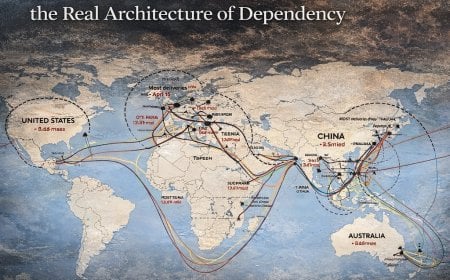 Article · primary
The Clock Starts at Hormuz: Oil Corridors, Timed Failure, and the Real Architecture of Dependency
the-clock-starts-at-hormuz-oil-corridors-timed-failure
Published Mar 29, 2026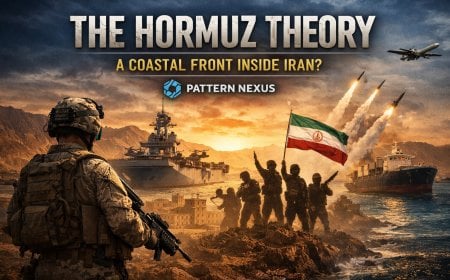 Article · primary
The Hormuz Theory: Could a Coastal Safe Zone Become the Front Edge of a Long War in Iran? -->
A Pattern Nexus scenario analysis on whether a fight to reopen the Strait of Hormuz could expand into a coastal safe-zone strategy, proxy warfare, and a much longer regime-pressure campaign inside Iran.
Published Mar 26, 2026 Article · primary
Middle East Force Posture Update: 82nd Airborne, Marine Lift, and the Iraq Drawdown
A Pattern Nexus breakdown of the last week’s Middle East force-posture changes: the 82nd Airborne preparing to move, Marine expeditionary forces already deploying, and NATO and Spain thinning advisory footprints out of Iraq.
Published Mar 25, 2026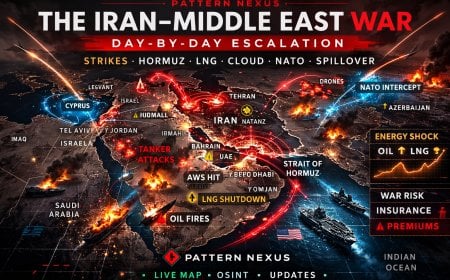 Article · primary
The Iran–Middle East War, Day by Day (Feb 28–Mar 5, 2026)
A Pattern Nexus day-by-day control-systems breakdown of the Iran–Middle East war: strikes, maritime hits, Hormuz disruption, energy shutdowns, cloud infrastructure attacks, evacuations, and NATO/EU posture shifts.
Published Mar 5, 2026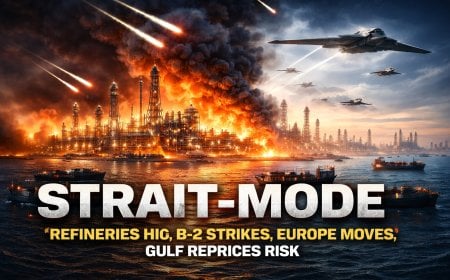 Article · primary
Strait-Mode: Refineries Hit, B-2 Strikes, Europe Moves, and the Gulf Reprices Risk — March 2, 2026
Ras Tanura shuts after a drone strike, Erbil sees secondary explosions, B-2s reportedly hit hardened Iranian missile facilities, Europe signals defensive entry, and Hormuz behaves "soft-closed" as insurers and shipowners freeze. Oil and gold rip higher because the pipes are now live targets.
Published Mar 2, 2026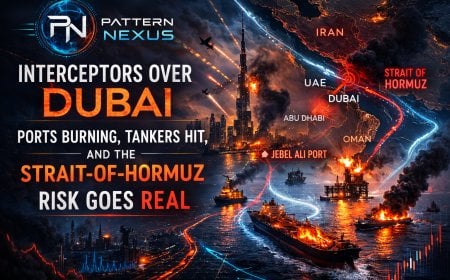 Article · primary
Interceptors Over Dubai: Ports Burning, Tankers Hit, and the Strait-of-Hormuz Risk Goes Real
Dubai and Abu Dhabi absorb debris impacts as Iranian retaliation widens. Tankers are hit, ports pause operations, ships anchor by the hundreds, and the Strait-of-Hormuz risk shifts from theory to live-fire reality.
Published Mar 1, 2026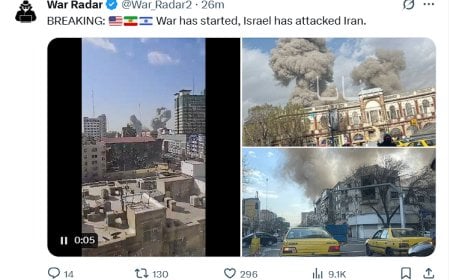 Article · primary
Israel Strikes Iran: Escalation Ladder
Israel says it launched a “pre-emptive” strike on Iran as explosions hit Tehran. Here’s the escalation ladder, the oil chokepoint risk, and the market plumbing
Published Feb 28, 2026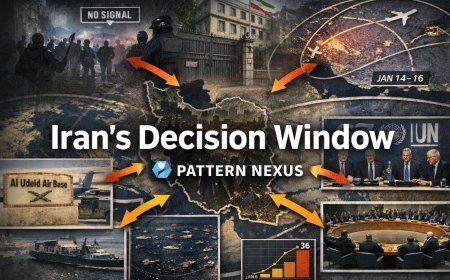 Article · primary
Iran’s Decision Window: Blackout, Embassy Pullbacks, Airspace Closures, and the Retaliation Math (Jan 14, 2026)
Iran’s crackdown under an information blackout is colliding with U.S. strategic ambiguity and regional force-protection moves. Embassy pullbacks, base posture shifts, airspace restrictions, and maritime behavior reveal a decision window: this is now a control-systems contest across bandwidth, basing, shipping, and deterrence signaling.
Published Jan 14, 2026 Article · primary
The Iran Decision Window: What the CBS Briefing Actually Signals
CBS reports Trump was briefed on military, cyber, and psychological options for Iran. That single line matters: it marks the opening of a decision window, changes the risk profile, and reshapes what to watch next.
Published Jan 12, 2026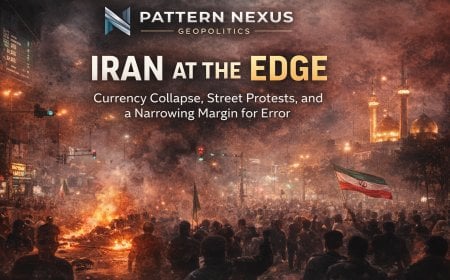 Article · primary
Iran at the Edge: Currency Collapse, Street Protests, and a Narrowing Margin for Error
Iran’s rial collapse has detonated nationwide protests, leadership churn, and a lethal-force risk spiral—now compounded by external signaling. A Pattern Nexus reconstruction of what’s verified, what’s not, and the outcomes that matter.
Published Jan 3, 2026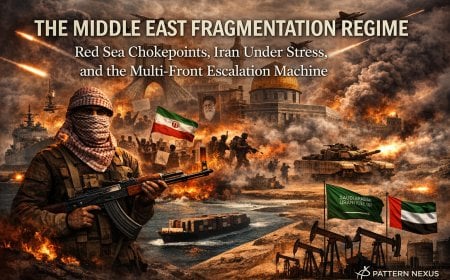 Article · primary
The Middle East Fragmentation Regime: Red Sea Chokepoints, Iran Stress, and the Multi-Front Escalation Machine
Over the last month, the Middle East has shifted into a fragmentation regime: Red Sea disruption remains a global trade lever, Iran is under acute internal stress, Israel’s conflict geometry stays multi-front, and Gulf alignment is no longer bloc-discipline. This Pattern Nexus framework maps the interacting theaters, the country-specific incentives, and the next 30–90 day escalation triggers.
Published Jan 2, 2026