

QE
Automatically indexed from the existing article tag.
Theses, forecasts, models, and paths
No published research objects yet
This topic is ready for editors to connect a thesis, forecast, model, or research path.
Latest articles
 Video · related
The QE Decade — Audio-Video Edition
Episode 8 of the weekly Pattern Nexus audio-video series turns Part 8 of Cycles of Power into a shorter story about how quantitative easing, zero interest rates, dollar swap lines, Basel III, safe-asset scarcity, and repeated central-bank intervention replaced private mortgage collateral with public balance sheets between 2008 and 2019—and laid the foundations for stablecoins, tokenized Treasuries, and the AI–energy buildout.
Published Sep 26, 2026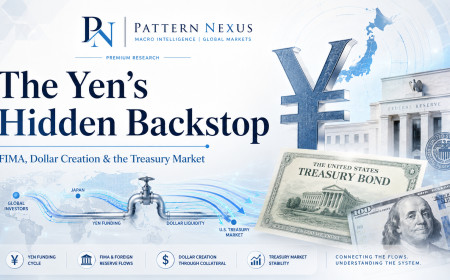 Article · related
The Yen's Hidden Backstop: FIMA, Dollar Creation and the Treasury Market
Japan's 2026 yen intervention was enormous, but Federal Reserve balance-sheet data show FIMA was not used to fund it. That may be the more important finding. FIMA sits behind the global dollar system as a mechanism allowing approved foreign monetary authorities to temporarily turn U.S. Treasury collateral into newly supplied dollars instead of selling those Treasuries into the market. This report examines what FIMA actually does, why it is a form of temporary central-bank dollar creation rather than QE, what Japan's reserve structure looks like, and why another serious yen crisis could migrate directly into U.S. Treasury-market plumbing.
Published Aug 19, 2026 Article · related
The New Fed Chair Does Not Inherit an Economy. He Inherits the Permission Stack.
Kevin Warsh is not simply inheriting the Federal Reserve. He is inheriting the control layer where inflation, debt service, Treasury funding, energy shocks, AI infrastructure demand, repo plumbing, collateral stress, political pressure, and liquidity permission all collide. The public will debate whether the new Fed chair cuts, hikes, pauses, or changes the balance sheet. That is the surface story. The deeper Pattern Nexus story is that the Fed chair is now the public face of the permission stack. He helps decide where credit flows, where pain lands, which markets get oxygen, which sectors get squeezed, and what kind of crisis or cover event makes the next liquidity intervention politically acceptable. This is not a normal Fed transition. It is the next chapter in the liquidity-cover framework.
Published May 18, 2026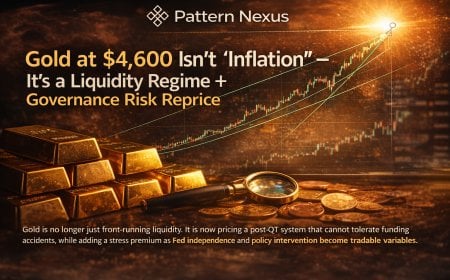 Article · related
Gold at $4,600 Isn’t “Inflation” — It’s a Liquidity Regime + Governance Risk Reprice
Open the published research article.
Published Jan 12, 2026 Article · related
Housing QE by Proxy: How Weaponizing Fannie and Freddie’s Buffers Turns the GSEs into Political Liquidity Machines
Floating the idea of using Fannie Mae and Freddie Mac’s capital buffers to buy mortgages is more than a housing tweak. It’s an attempt to run QE through the GSEs instead of the Fed, turning housing finance into a political liquidity machine and removing the crash pad when the cycle turns.
Published Jan 8, 2026 Article · related
The Financialization of Everything: A 2013 Wake-Up Post Rebuilt Through the Pattern Nexus Lens
A Pattern Nexus reconstruction of a 2013 blog post on long-run price levels, the Fed’s crisis interventions, dollar swap lines, and why “money printing” evolved into a durable control system rather than an immediate collapse.
Published Jan 4, 2026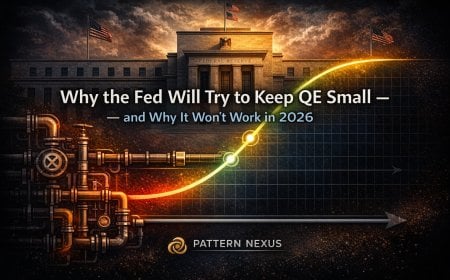 Article · related
Why the Fed Will Try to Keep QE Small — and Why It Won’t Work in 2026
The Fed will try to keep QE “light” in 2026 to protect inflation credibility and avoid backlash. But modern market plumbing is nonlinear: undersized liquidity fails fast, forcing escalation into real QE.
Published Dec 27, 2025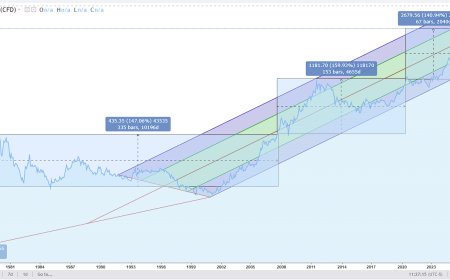 Article · related
Gold Isn’t Breaking Out — It’s Absorbing Policy Failure
Gold’s long-term rise is not a speculative breakout or inflation panic. It reflects repeated policy constraint, failed normalization, and the permanent reintroduction of liquidity to preserve funding stability. This report explains why gold has become system infrastructure inside the modern liquidity regime.
Published Dec 26, 2025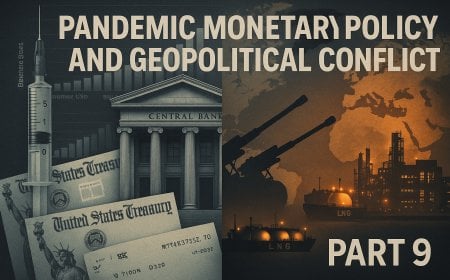 Article · related
The Fiscal-Monetary Fusion: Pandemic Money, Inflation Whiplash, and the Militarized Liquidity Regime (2020–2025)
COVID didn’t just trigger stimulus — it fused fiscal and monetary policy into a single war machine. Between 2020 and 2025, governments and central banks ran coordinated mega-deficits, bought their own debt at scale, ignited the first real inflation shock of the QE era, and then slammed rates higher into a fragile, over-financialized system — all while AI, energy constraints, and a new cold war turned liquidity into an explicit weapon.
Published Dec 8, 2025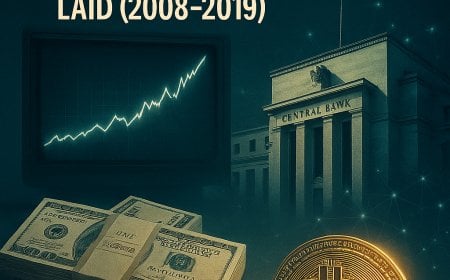 Article · related
The QE Decade: How Central Banks Took Over the World, Asset Prices Broke Free, and the Digital Dollar Foundations Were Laid (2008–2019)
After the 2008 crisis, the global system didn’t deleverage — it migrated. Between 2008 and 2019, QE, ZIRP, swap lines, and new regulations turned central banks into the core liquidity engine, inflated asset prices, hollowed out safe yields, and quietly laid the foundations for the digital dollar, stablecoins, and the AI–energy megacycle to come.
Published Dec 7, 2025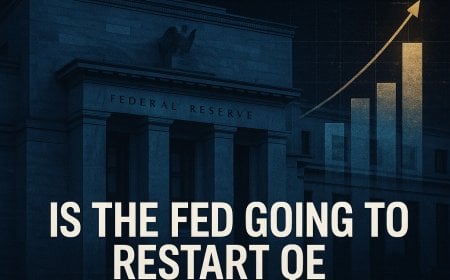 Article · related
Did Jerome Powell Plan a $45 Billion T-Bill Buying Program? A Pattern Nexus Investigation
A fully sourced investigation into whether the Federal Reserve planned a $45B monthly Treasury-bill purchase program in December 2025. This Pattern Nexus breakdown differentiates analyst forecasts from official policy, clarifies what Reserve Management Purchases are, and examines whether this amounts to QE in function.
Published Dec 7, 2025 Article · related
The Housing Collateral Engine: How Shadow Banking, China, and the Fed Turned Mortgages Into Global Money (2001–2008)
After the dot-com crash, the world didn’t deleverage — it rewired. Between 2001 and 2008, China’s WTO entry, Asian reserve accumulation, low Fed rates, and an explosive securitization boom turned U.S. housing into the core collateral engine of the global dollar system. When that engine failed, shadow banking imploded and central banks crossed the Rubicon into unlimited liquidity.
Published Dec 6, 2025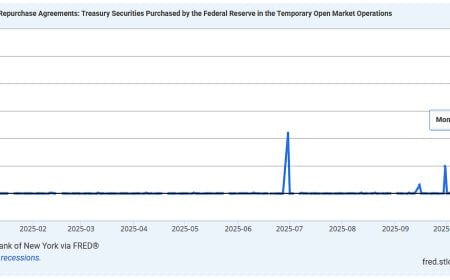 Article · related
The Day QT Died and QE Began: December 1, 2025 — The Quiet Restart of the Liquidity Engine
QT officially ended on December 1, 2025 — but the real story happened in the plumbing. With the RRP buffer nearly gone, SOFR volumes exploding, and the Standing Repo Facility pulling in Treasuries, agencies, and MBS, the Fed quietly shifted from balance-sheet tightening to balance-sheet backfilling. This was the moment the liquidity regime flipped.
Published Dec 2, 2025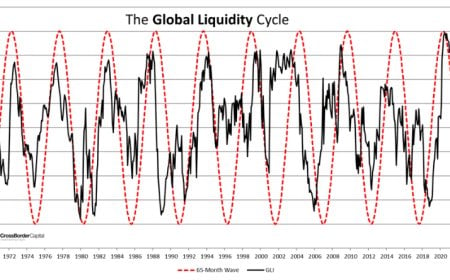 Article · related
Recessions Aren’t the Crisis — They’re the Trigger
Recessions are not the catastrophe — they’re the mechanical pivot that flips the modern dollar system from contraction back into liquidity expansion. A deep dive into why doom prophets misread the cycle, why 2026 is structurally important, and how the funding plumbing actually drives markets.
Published Nov 27, 2025 Article · related
QT Ends, Liquidity Returns: Why 2026 Is Almost Certainly the Next Balance-Sheet Expansion Cycle
Quantitative Tightening ends December 1st, and the plumbing shows reserves are already near scarcity. This article explains why 2026 is shaping up to be the next major liquidity-injection cycle, driven by heavy Treasury issuance, reserve demand, and Fed policy shifts.
Published Nov 25, 2025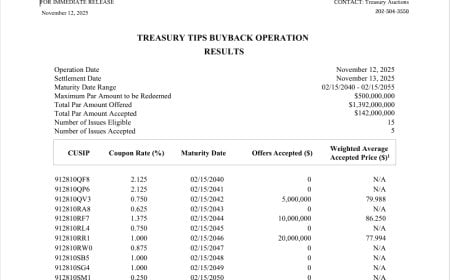 Article · related
Treasury Retires $142 Million in TIPS — Quiet Confirmation of the Buyback Era
The U.S. Treasury retired $142 million in TIPS on Nov 12, 2025 — a direct confirmation of the buyback-driven liquidity cycle we've been tracking. Here’s what the operation reveals about collateral stress, pre-QE interventions, and the evolving monetary plumbing.
Published Nov 12, 2025 Article · related
The Hidden Liquidity Crunch: Repo Stress, QT’s End, and the Dollar’s Trap
A systems-level map of the liquidity squeeze beneath the dollar: repo stress, falling reserves, structural deficits, and the QT halt—why the next policy turn likely means balance-sheet expansion, inflation risk, and a distributional regime shift.
Published Nov 12, 2025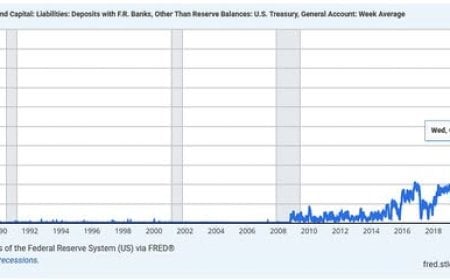 Article · related
The Silent War-Chest: Why the Fed & Treasury Are Hoarding Cash — And Preparing to Control Yields
Overnight repo usage jumps. The TGA surges toward $1T. Washington isn’t “saving.” It’s loading ammunition — to defend the bond market and seize control of yields when disorder hits.
Published Nov 5, 2025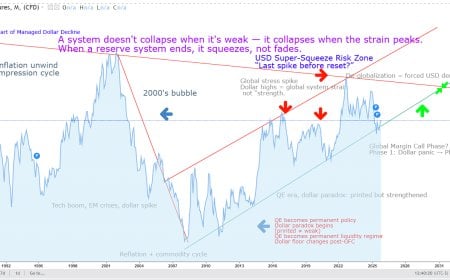 Article · related
The Dollar’s Last Stand: Why the System Squeezes Before It Breaks
The dollar doesn’t collapse when it’s weak — it spikes under maximum strain. This is the final squeeze phase of the global monetary system before transition. When reserve systems end, they don’t fade — they compress, surge, and then reset. Inside: charts, cycle mechanics, and how this ties into gold, housing, QE, sovereign debt, and de-globalization.
Published Nov 4, 2025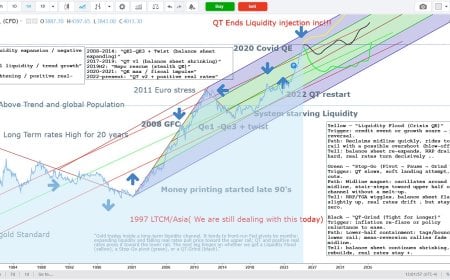 Article · related
Gold Didn’t Moon — It Front-Ran Liquidity (Again)
Gold didn’t spike randomly — it front-ran liquidity, real-rate pivots, and QT stress exactly like we’ve been discussing. Here’s the long-term channel, why it happened, and the three paths forward as the Fed hits its next liquidity decision point.
Published Nov 1, 2025 Article · related
The Reverse Repo Trap: How the Fed Quietly Controls Liquidity & Markets
A deep dive into the Federal Reserve’s overnight reverse repo facility — why trillions parked at the Fed aren't “normal,” how it secretly tightens liquidity, affects Treasury auctions, impacts markets, and signals systemic fragility. Everyone sees the headlines — few see the plumbing.
Published Oct 31, 2025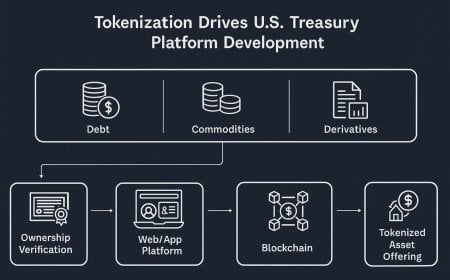 Article · related
The Dollar Isn’t Collapsing — It’s Evolving
The dollar isn’t dying — it’s upgrading. The U.S. converts liabilities into globally demanded collateral (Treasuries), backstopped by the world’s largest official gold reserve and increasingly distributed over programmable rails (stablecoins, tokenized T-bills, institutional blockchains). This essay explains how that liquidity system actually works, why “hard pegs” like a BRICS gold currency would choke elasticity, and how the next easing cycle may flow through digital conduits.
Published Oct 18, 2025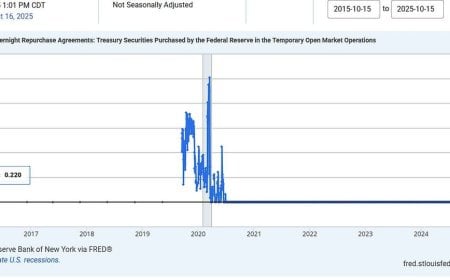 Article · related
The Calm Before the Liquidity Storm: QE 2026 and the Digital Evolution of Money
Federal Reserve Chair Jerome Powell’s recent comments on ending Quantitative Tightening signal that the liquidity cycle is turning again. With repo market stress quietly building, QE 2026 may arrive sooner than most expect. This time, the easing won’t just involve printed dollars — it will merge with the rise of tokenized assets, digital Treasuries, and programmable money.
Published Oct 17, 2025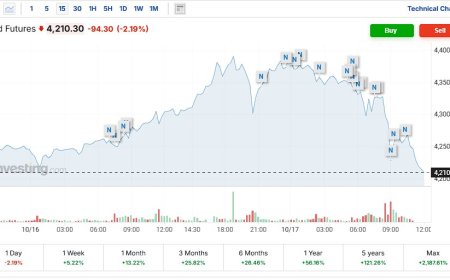 Article · related
Gold’s Rough Day Doesn’t Change the Bigger Picture: A Natural Correction in a Structural Bull Market
Gold is pulling back to $4,210 after its record-breaking rally above $4,400, but this retracement is part of the natural rhythm of the market. Behind the short-term volatility, the long-term structural forces driving gold higher — liquidity stress, repo tightening, QE speculation, and collateral repricing — remain firmly intact.
Published Oct 17, 2025 Article · related
The Liquidity Crunch Nobody’s Talking About: How Repo Stress, Bank Failures, and a “False Surplus” Are Fueling Gold’s Breakout
A hidden liquidity crisis is forming under the surface of global markets. Repo markets are flashing stress, regional banks are reporting fraud-related losses, and gold is breaking all-time highs. This analysis connects the dots — showing how the system is quietly rebalancing through emergency liquidity, fiscal illusion, and a global flight to hard collateral.
Published Oct 17, 2025