

Quantitative Easing
Automatically indexed from the existing article tag.
Theses, forecasts, models, and paths
No published research objects yet
This topic is ready for editors to connect a thesis, forecast, model, or research path.
Latest articles
 Video · related
The Fiscal-Monetary Fusion — Audio-Video Edition
Episode 9 of the weekly Pattern Nexus audio-video series turns Part 9 of Cycles of Power into a shorter story about how pandemic stimulus fused fiscal and monetary policy, inflation forced a violent rate reversal, bank stress produced a new collateral-protection template, and sanctions, AI infrastructure, stablecoins, and tokenized Treasuries transformed liquidity into both operating system and geopolitical weapon between 2020 and 2025.
Published Oct 5, 2026 Video · related
The QE Decade — Audio-Video Edition
Episode 8 of the weekly Pattern Nexus audio-video series turns Part 8 of Cycles of Power into a shorter story about how quantitative easing, zero interest rates, dollar swap lines, Basel III, safe-asset scarcity, and repeated central-bank intervention replaced private mortgage collateral with public balance sheets between 2008 and 2019—and laid the foundations for stablecoins, tokenized Treasuries, and the AI–energy buildout.
Published Sep 26, 2026 Article · related
Fed Just Hiked Into a 5% 10-Year: Why the Next Liquidity Cycle May Arrive Faster
The Federal Reserve just raised the federal-funds target to 3.75%–4.00% while the 10-year Treasury closed at 5.01%, the 30-year at 5.35%, and the real 30-year at 3.09%. Pattern Nexus correctly identified the September hike risk and the developing QE/liquidity cycle, but underestimated the Fed’s willingness to raise rates against an already enormous debt and refinancing burden. This report asks the question almost nobody asks after a rate decision: what does the hike eventually break? It connects the September decision to the $40-trillion-plus federal debt structure, more than $1 trillion of annual federal net interest expense, Treasury issuance, long-end buybacks, Federal Reserve reserve-management purchases, hedge-fund leverage, the Treasury basis trade, private credit, housing, commercial real estate, household cashflow and the 2019 repo-market precedent. The conclusion is not that the Fed has deliberately chosen to create a crash. It is that monetary architecture now allows the Fed to tighten the price of credit while separately protecting reserves and market plumbing. The hike therefore does not invalidate the Pattern Nexus QE thesis. If long rates remain near current levels, it accelerates the transmission mechanism that can eventually force the next phase of liquidity support.
Published Sep 17, 2026 Article · related
QE 2026, Phase Two: When the Long End Forces Duration Control
The Fed already ended QT and expanded Treasury holdings through bill-focused reserve-management purchases, but that repaired the reserve layer without suppressing the long end. With the 10-year Treasury at 4.95%, the 30-year at 5.37%, real long yields near the Pattern Nexus red zone, Treasury doubling long-end buybacks, and August CPI limiting conventional easing, this report calculates the probability that QE 2026 moves into a second phase. It maps the likely program, the names it may use, the dates when it could expand, and the exact yield, reserve, auction, repo, leverage, and credit conditions that could force direct duration absorption.
Published Sep 11, 2026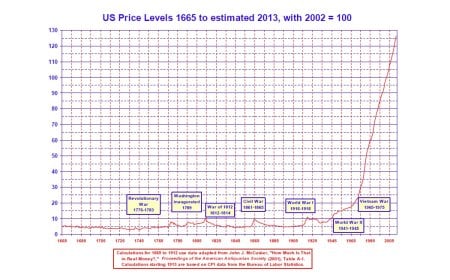 Article · related
From 1665 to QE Infinity: Answering a 2012 Inflation Question
In January 2012 I stared at a 350-year price chart and wondered what all the post-2008 “money printing” would do to inflation. More than a decade, a pandemic, and a historic rate shock later, this is the answer I wish I could have given my 2012 self.
Published Nov 22, 2025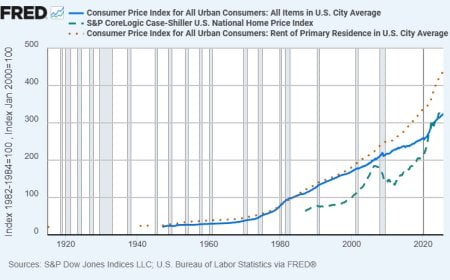 Article · related
How the Fed Quietly Stole 30% of Your Future (And How They’ll Use Stablecoins to Do It Again)
From 2020 to 2022, the Federal Reserve silently transferred 30–40% of your future purchasing power to asset owners via balance-sheet expansion, housing inflation, and the Cantillon effect. The next round of this game will run through stablecoins, CBDCs, and the Argentina playbook—bypassing governments and locking entire generations into asset feudalism.
Published Nov 15, 2025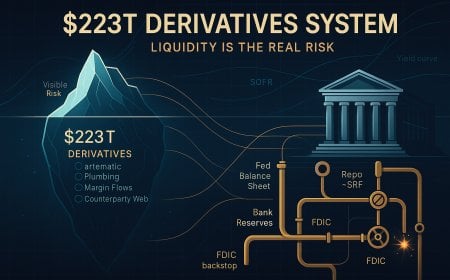 Article · related
$223T Derivatives System: The Hidden Liquidity Fragility Beneath U.S. Banking
The U.S. banking system sits on top of $223 trillion in derivatives — but the real risk isn’t the notional value. It’s liquidity. This deep-dive breaks down how margin calls, collateral chains, FDIC limits, repo plumbing, and Federal Reserve backstops tie together — and why liquidity shocks, not headlines, trigger systemic stress. Includes beginner-friendly breakdowns, research links, historical case studies, and charts.
Published Nov 2, 2025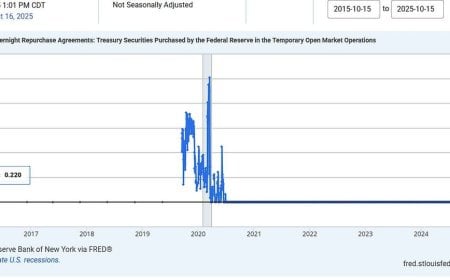 Article · related
The Calm Before the Liquidity Storm: QE 2026 and the Digital Evolution of Money
Federal Reserve Chair Jerome Powell’s recent comments on ending Quantitative Tightening signal that the liquidity cycle is turning again. With repo market stress quietly building, QE 2026 may arrive sooner than most expect. This time, the easing won’t just involve printed dollars — it will merge with the rise of tokenized assets, digital Treasuries, and programmable money.
Published Oct 17, 2025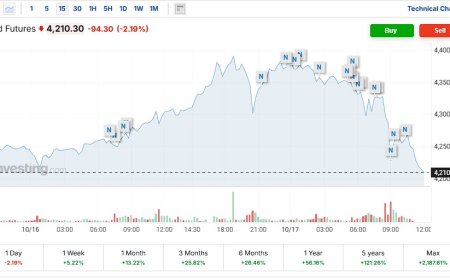 Article · related
Gold’s Rough Day Doesn’t Change the Bigger Picture: A Natural Correction in a Structural Bull Market
Gold is pulling back to $4,210 after its record-breaking rally above $4,400, but this retracement is part of the natural rhythm of the market. Behind the short-term volatility, the long-term structural forces driving gold higher — liquidity stress, repo tightening, QE speculation, and collateral repricing — remain firmly intact.
Published Oct 17, 2025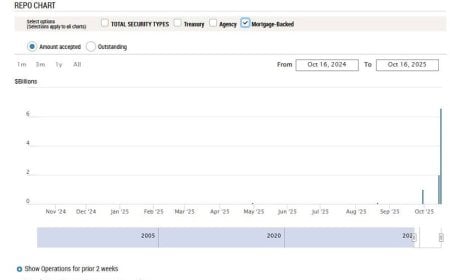 Article · related
🚨 The Fed Just Tapped the MBS Repo Valve — Why That Matters More Than People Think
The Federal Reserve quietly conducted nearly $9 billion in mortgage-backed repo operations after months of inactivity — signaling early liquidity strain in U.S. funding markets. Historically, this is how quantitative easing begins: the Fed provides collateral support before publicly announcing policy shifts. This article examines the data, the 2019 precedent, the QE connection, and what it could mean for 2026.
Published Oct 17, 2025