

ratepayer protection
Automatically indexed from the existing article tag.
Theses, forecasts, models, and paths
No published research objects yet
This topic is ready for editors to connect a thesis, forecast, model, or research path.
Latest articles
 Article · related
Senate Turns Permitting Reform Into an AI-Grid Cost Allocation Deal
Senate energy and environment leaders introduced the Bipartisan American Affordability and Jobs Act on September 30, 2026, a permitting package aimed at faster federal reviews for energy, transmission, and infrastructure projects. The bill would strengthen FERC transmission-siting authority and require data centers to pay associated transmission costs instead of shifting those costs to households and smaller businesses. A Senate vote is not expected until after the November 3 midterm elections.
Published Oct 1, 2026 Article · related
Texas Turns Data-Center Permits Into a Grid-Audit Gate
On September 21, 2026, Governor Greg Abbott directed the Texas Commission on Environmental Quality to halt permits sought by data centers until ERCOT completes its audit. The order broadens Texas’s data-center slowdown from grid connections into environmental and water approvals, making AI infrastructure growth conditional on state findings about reliability, water use, local impacts, ownership, tax incentives, and who pays for supporting infrastructure.
Published Sep 22, 2026 Article · related
Oregon Turns Data Centers Into a Quarter-Grid AI Infrastructure Test
A new ECOnorthwest and University of Virginia assessment, reported by Oregon outlets and presented to state advisers, puts Oregon data centers at about 23% of statewide retail electricity sales in 2025. The state is now treating the sector as a systemic planning challenge, with a Data Center Advisory Committee taking public comment through October 24, 2026 and POWER Act implementation shifting large-load grid costs toward data centers.
Published Sep 20, 2026 Article · related
California’s AI Data Center Fight Moves to the Utility Bill
California lawmakers reached a late-August compromise on data-center energy legislation as AI infrastructure growth collides with utility-bill politics. Official Aug. 28 amendments to SB 886 and AB 2383 show the core mechanism: CPUC tariffs and updated electric rules for large participating data-center customers, with cost-shift protections for nonparticipating ratepayers. The bills remain active, not enacted, and the next fight is how the CPUC would translate legislative guardrails into actual interconnection, generation, and demand-response rules.
Published Aug 30, 2026 Article · related
AI Data Centers Turn Into a Midterm Control Surface
AI data centers are moving from economic-development trophy to midterm liability. AP reported that President Donald Trump continues to champion data centers as strategic infrastructure while candidates in competitive races back away from the issue. Axios and The Washington Post separately show the backlash spreading across states and campaigns, making power, water and ratepayer protection a new control surface for AI industrial policy.
Published Aug 21, 2026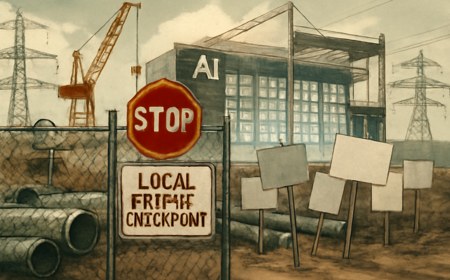 Article · related
AI Data Centers Hit the Consent Bottleneck
AI data-center buildout is moving from a power-and-capex story into a political-consent story. Local opposition has delayed or blocked projects, New York has imposed a statewide pause on large facilities, and developers now face a fourth bottleneck: permission to operate. The Pattern Nexus read is that ratepayer protection, water use, zoning legitimacy and community benefits are becoming financial variables in the AI industrial flywheel.
Published Aug 9, 2026 Article · related
Virginia Turns AI Data-Center Power Lines Into a User-Pays Tariff
Virginia’s State Corporation Commission ordered Dominion Energy to develop a tariff framework that assigns more transmission costs directly to data centers and other large-load customers when upgrades are built for them. The move follows Gov. Abigail Spanberger’s push for a cost-causation, or “but-for,” approach and is being framed by state officials as a ratepayer-protection measure. The deeper signal is that AI infrastructure is entering a new regulated-cost phase, where grid access, tariff design, and political tolerance may matter as much as GPUs and land.
Published Aug 7, 2026