

space infrastructure
Automatically indexed from the existing article tag.
Theses, forecasts, models, and paths
No published research objects yet
This topic is ready for editors to connect a thesis, forecast, model, or research path.
Latest articles
 Article · related
The World I’ve Been Mapping Is Taking Shape
I connect the developments now taking shape across AI infrastructure, private power, critical minerals, the Iran energy shock, digital dollars, machine commerce, robotics and productive ownership. The article explains the mechanisms for readers joining the discussion now, carries the research into September and October, and connects the later housing, Greenland, space, neural-computing and polar-vortex work. Includes links to 46 earlier Pattern Nexus articles, 53 numbered external sources, a practical watch list and six reader questions.
Published Oct 5, 2026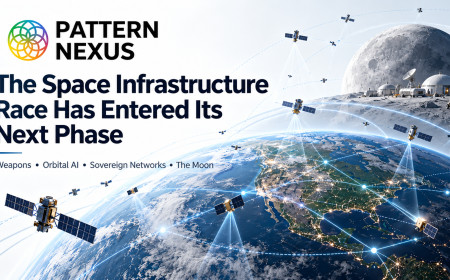 Article · related
The Space Infrastructure Race Has Entered Its Next Phase: Weapons, Orbital AI, Sovereign Networks, and the Moon
From September 4–23, space infrastructure accelerated on almost every front. Isar Aerospace reached orbit from continental Europe. India positioned EOS-05 for geosynchronous imaging. Stoke raised $1 billion toward fully reusable launch. China launched four rockets in roughly 45 hours and put a spacecraft with 5G, AI, and planned 100-Gbps optical communications into orbit. Europe allocated major IRIS² and OneWeb production contracts while Planet expanded satellite manufacturing in Germany. The U.S. acknowledged on-orbit space-control weapons, practiced multi-orbit maneuver operations, and funded new target-tracking architectures; Britain created a space-effects squadron. NASA and ESA delivered new lunar, planetary, and Earth-observation science while commercial downmass and crew-transport contracts extended the orbital logistics chain. The Pattern Nexus conclusion: space is becoming an industrial, computational, and contested operating system, and continuity is its critical threshold.
Published Sep 23, 2026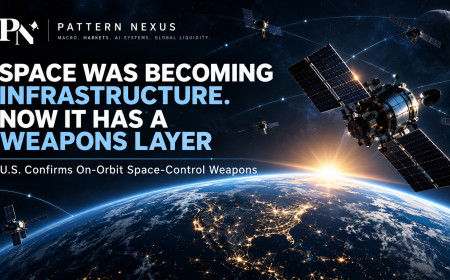 Article · related
Space Was Becoming Infrastructure. Now It Has a Weapons Layer: The U.S. Confirms On-Orbit Space-Control Weapons
For the first time, the United States has publicly acknowledged that it operates "on-orbit space control weapons." The hardware remains classified, but the surrounding architecture is not: Space Force doctrine already defines orbital warfare, electromagnetic warfare, cyber operations, reversible denial, degradation and destruction as parts of space control; ground-based counterspace systems are already operational; and China, Russia and other states are developing the same wider capability stack. This Pattern Nexus report separates what is confirmed from what remains unknown, explains the Outer Space Treaty, maps the counterspace technology families, and ties the disclosure directly into earlier Pattern Nexus work on space infrastructure, "Launch. Control. Network.", cislunar logistics, and Control Stack 2.0. The central thesis: space becoming infrastructure was phase one; infrastructure becoming an explicitly armed control layer is phase two.
Published Sep 15, 2026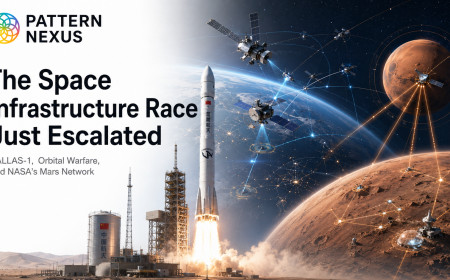 Article · related
The Space Infrastructure Race Just Escalated: PALLAS-1, Orbital Warfare, and NASA’s Mars Network
Three developments in the first days of September 2026 pushed the space-infrastructure thesis forward again. China’s Galactic Energy successfully launched PALLAS-1, a reusable medium-lift rocket designed for repeated flights and constellation deployment. Reuters documented a rapidly advancing U.S.-China contest around maneuverable satellites, autonomous pursuit, refueling, jamming, and spacecraft capable of approaching or interfering with other satellites. At the same time, NASA awarded Blue Origin up to roughly $700 million to build a dedicated Mars Telecommunications Network intended to provide high-bandwidth communications and navigation services at Mars by 2030. These are not separate stories. They show the space economy dividing into three increasingly mature layers: cheaper access, contested orbital control, and permanent interplanetary infrastructure.
Published Sep 3, 2026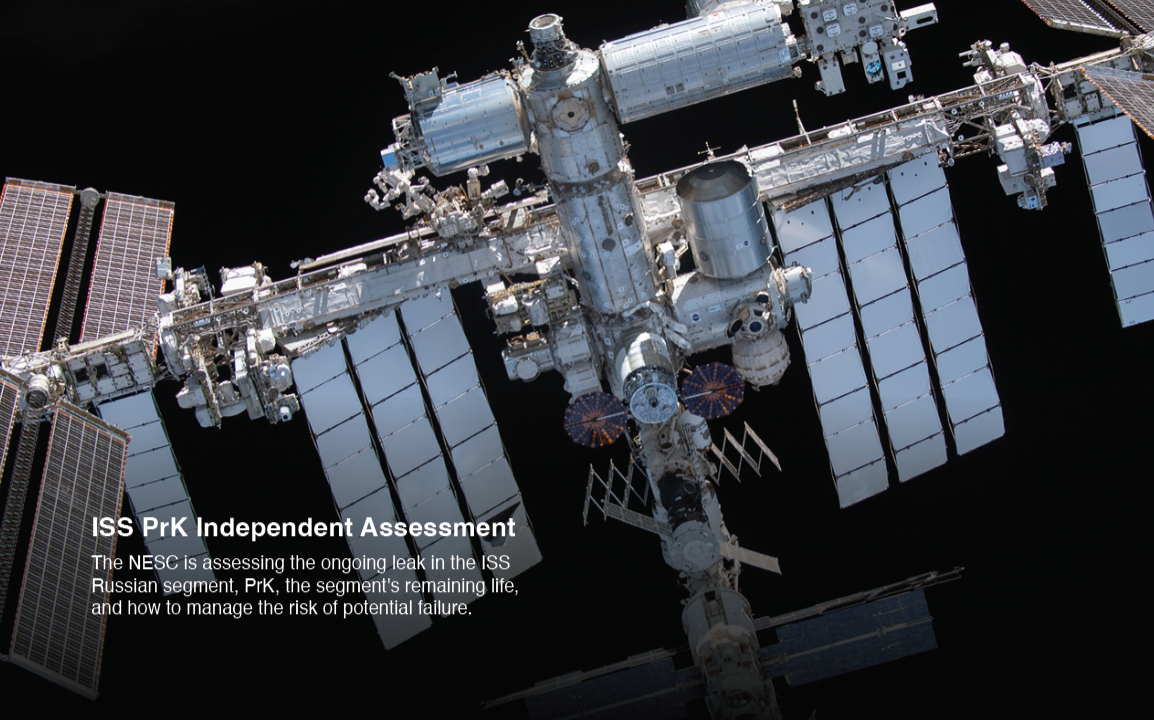 Article · related
The ISS Is Leaking Again: Aging Hardware, Russian Segment Cracks, and the Closing Window Before Commercial Space Stations
The International Space Station air leak is not just a scary headline about astronauts in danger. It is a systems warning. The leak sits in the Russian PrK transfer tunnel attached to Zvezda, a small but strategically important passage tied to docking, pressure control, hatch isolation, and the larger countdown toward ISS retirement. NASA and Roscosmos can manage the immediate risk, but the deeper problem is structural: aging orbital infrastructure now has to survive long enough for commercial replacements, deorbit planning, crew rotation, cargo logistics, and international coordination to line up before 2030.
Published May 29, 2026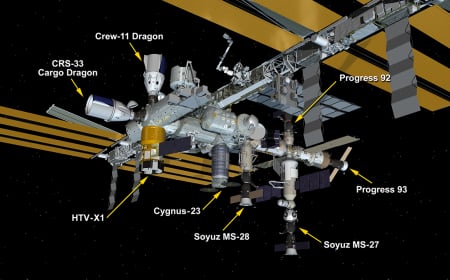 Article · related
Parking Full in Orbit: The Day the ISS Used All Eight Docking Ports
For the first time in history, the International Space Station reached full capacity with eight spacecraft docked simultaneously. A milestone in orbital logistics that signals the next era of human spaceflight."
Published Dec 2, 2025