

Strait of Hormuz
Automatically indexed from the existing article tag.
Theses, forecasts, models, and paths
No published research objects yet
This topic is ready for editors to connect a thesis, forecast, model, or research path.
Latest articles
 Article · related
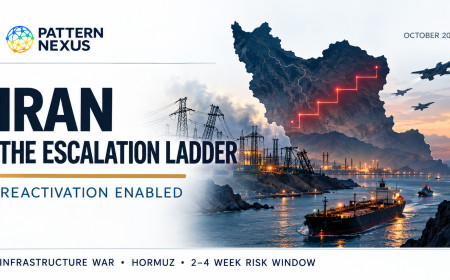
Iran: Escalation Ladder — Reactivation Enabled
The Iran escalation ladder is active again. I examine the October strike risk, the infrastructure-war danger, rising tanker attacks alongside recovering exports, the Gulf defense response, financial isolation, current oil inventories and the Federal Reserve’s position. My working window is October 22–November 5. The article connects the latest evidence to the Pattern Nexus research trail from January through October.
Published Oct 8, 2026 Article · related
The World I’ve Been Mapping Is Taking Shape
I connect the developments now taking shape across AI infrastructure, private power, critical minerals, the Iran energy shock, digital dollars, machine commerce, robotics and productive ownership. The article explains the mechanisms for readers joining the discussion now, carries the research into September and October, and connects the later housing, Greenland, space, neural-computing and polar-vortex work. Includes links to 46 earlier Pattern Nexus articles, 53 numbered external sources, a practical watch list and six reader questions.
Published Oct 5, 2026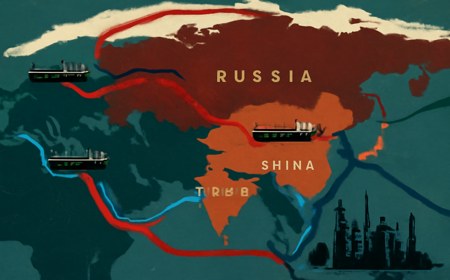 Article · related
Beijing Turns Russian Crude Into an India Energy-Security Squeeze
Indian refiners expect Russian crude supply to tighten further in October and November as reduced Russian exports and stronger Chinese demand force them toward costlier substitutes. Kpler-cited September data show Russian crude still led India’s slate at about 1.74 million to 1.75 million barrels per day, but that was the lowest since April, while Iraq and Saudi Arabia volumes rose to offset part of the drop.
Published Sep 28, 2026 Article · related
Tehran Turns Hormuz Reopening Into a Seven-Day Energy-Security Bargain
Iranian Foreign Minister Abbas Araghchi says Tehran has sent Washington a seven-day roadmap through Qatar that would reopen the Strait of Hormuz and restart nuclear talks if U.S. conditions are met. AP, Al Jazeera, Reuters and The National reporting indicate the offer is tightly conditional, contains no near-term Iranian nuclear concession and is now colliding with Western efforts to build parallel maritime-security pressure at the UN.
Published Sep 26, 2026 Article · related
The Oil War Is Becoming a Global Economic War
An extensive Pattern Nexus reconstruction linking the Iran/Hormuz disruption with Ukrainian refinery attacks, diesel shortages, Saudi pipeline damage, U.S. and Venezuelan supply, Cuba’s grid, the dollar system, Treasury financing, Fed tightening, public energy-stock disclosures and the next conditional liquidity cycle. Includes an auditable Pattern Nexus article timeline, four sourced charts and 36 primary/reporting references.
Published Sep 21, 2026 Article · related
Larak Strike Turns Hormuz Into a Mine-War Energy Shock
U.S. forces struck two Iranian launchers on Larak Island near the Strait of Hormuz on August 30 after U.S. officials said IRGC personnel were preparing rockets carrying sea mines for the waterway. Iran claimed retaliatory strikes on bases hosting U.S. forces in Jordan, the UAE reported dealing with a drone from Iran over its territorial waters, and Brent crude moved back above $90 as traders repriced disruption risk. The immediate question is whether this remains a limited counter-mining action or becomes a broader contest over who can keep Hormuz usable.
Published Aug 31, 2026 Article · related
One System, Many Flags: Ukraine, Iran, North Korea and the Illusion of Separate Wars
The United States can arm Ukraine while temporarily easing pressure on Russian oil, convert stockpile transfers into new procurement, court North Korea while Pyongyang supplies Russia, and fight Iran while Russia and China-linked systems help Tehran. The contradictions resolve when the wars are mapped as one connected system of energy, munitions, intelligence, shipping, sanctions and leverage.
Published Aug 22, 2026 Article · related
Washington Turns Iran Sanctions Into a China Oil-Flow Loyalty Test
The U.S. and Iran traded warnings before a planned Monday sanctions announcement by Treasury Secretary Scott Bessent. Reuters, AP and Bloomberg report that Washington is preparing a wider secondary-sanctions push that could reach Iran’s remaining trading partners, including China, while Strait of Hormuz oil flows remain heavily constrained. The Pattern Nexus read: this is no longer just Iran policy; it is a wartime test of U.S. financial enforcement against energy flows that Asia still needs.
Published Aug 22, 2026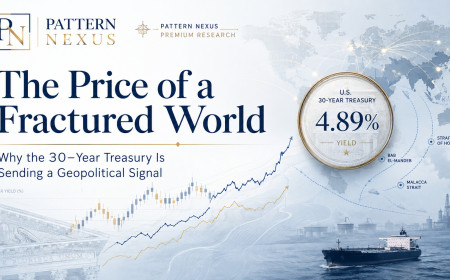 Article · related
The Price of a Fractured World: Why the 30-Year Treasury Is Sending a Geopolitical Signal
Something about the global system feels uncomfortable, and the last month of data suggests that feeling has a measurable foundation. The U.S. 30-year Treasury has pushed above 5.3%, real long-term yields are above 3%, the Strait of Hormuz remains severely constrained, U.S. missile inventories are being consumed across multiple theaters, Russia and Ukraine are attacking the commercial infrastructure of the Black Sea, China continues pressure around Taiwan and the South China Sea, new regional defense blocs are forming, tariffs are fragmenting trade, and governments and AI companies are simultaneously competing for enormous amounts of capital. This Pattern Nexus investigation asks whether the long end of the Treasury market is becoming one of the cleanest aggregate prices of a more fragmented world—and separates that thesis from the much weaker claim that the Treasury market itself is failing.
Published Aug 18, 2026 Article · related
Washington Turns the Hormuz Deadline Into an Oman Strike Threat
AP reported on August 17, 2026, that Trump again threatened Oman while Iran said it had reached an understanding with Muscat over a Strait of Hormuz transit route. A separate AP analysis said the 60-day U.S.-Iran deadline expired the same day with the sides still far apart over reopening Hormuz, lifting the U.S. blockade and defining Iran’s role. Reuters reported that Iran was threatening a more offensive posture in the strait if diplomacy failed, making the escalation a live maritime-control crisis rather than a routine diplomatic delay.
Published Aug 17, 2026 Article · related
Washington Turns the Jones Act Waiver Into an Iran-War Fuel Bypass
President Trump extended a Jones Act waiver for another 90 days, with the new window taking effect on August 17, 2026, after the prior waiver period expired on August 16. The waiver allows foreign-flagged vessels to move covered energy and agricultural commodities between U.S. ports as the Iran war and Strait of Hormuz disruption keep pressure on fuel logistics. The policy is now a live energy-security workaround, but maritime-state lawmakers and domestic shipping advocates warn it could weaken the U.S.-flag fleet and shipbuilding base.
Published Aug 17, 2026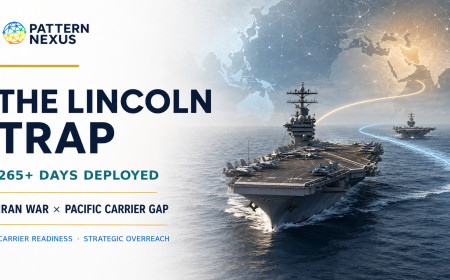 Article · related
The Lincoln Trap: 265+ Days Deployed, an Indefinite Iran War, and a Carrier Gap in the Pacific
USS Abraham Lincoln was supposed to return home in May. More than 265 deployment days later, the Navy is pulling USS George Washington—the only forward-deployed U.S. carrier in the Pacific—west to relieve it. The rotation exposes the real limit of American carrier readiness: eleven hulls do not equal eleven available carriers, and an open-ended Iran mission is transferring the readiness gap from the Middle East to the Pacific.
Published Aug 14, 2026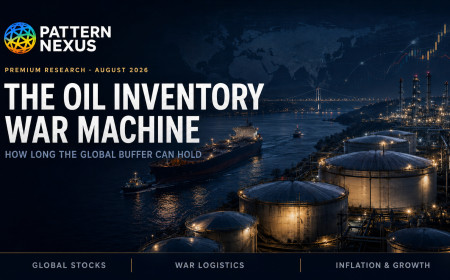 Article · related
The Oil Inventory War Machine: How Long the Global Buffer Can Hold
A full Pattern Nexus reconstruction of U.S. and global oil inventories from the 1970s through the 2026 war shock, including original regressions, depletion scenarios, strategic reserves, refinery constraints, inflation, growth, rates and the path forward. Meta keywords: oil inventory, global oil stocks, U.S. crude inventories, Strategic Petroleum Reserve, SPR, Strait of Hormuz, Iran war, oil shock, petroleum products, diesel inventories, refinery capacity, inflation, CPI, recession, Treasury yields, liquidity, war economy, energy security, Pattern Nexus
Published Aug 2, 2026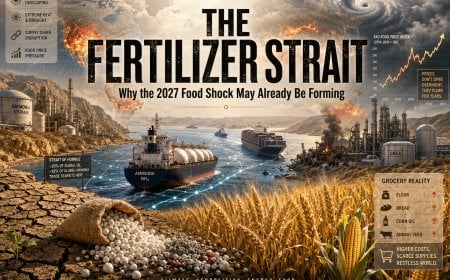 Article · related
The Fertilizer Strait: Why the 2027 Food Shock May Already Be Forming
Fertilizer prices, Persian Gulf disruption, a potentially historic El Niño, expanding drought risks, weak currencies, and fragile food-import systems are converging ahead of the 2027 growing cycle. This extended Pattern Nexus analysis examines more than 50 years of population, grain production, fertilizer, energy, climate, inventory, and food-price data to determine whether the world is approaching another major food-inflation and political-instability cycle.
Published Jul 24, 2026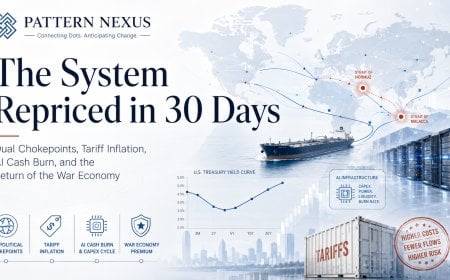 Article · related
The System Repriced in 30 Days: Dual Chokepoints, Tariff Inflation, AI Cash Burn, and the Return of the War Economy
In thirty days, the operating assumptions underneath the global system changed. Two maritime chokepoints came under pressure, the United States expanded war financing and rebuilt its tariff architecture, inflation moved back upstream, long-term yields repriced, AI infrastructure crossed into cash-burn territory, strategic minerals became permissioned leverage, and political command structures began cracking. This Pattern Nexus analysis maps those events as one connected system rather than separate headlines.
Published Jul 24, 2026 Article · related
The Petrodollar Did Not Die. It Mutated Into the Commodity Dollar
The old petrodollar was built around imported oil, dollar invoicing, military protection, and the recycling of global surpluses into American assets. The emerging commodity-dollar system is more direct: the United States produces record volumes of oil and gas, operates enormous refinery and export infrastructure, protects strategic waterways, controls critical financial rails, and can restrict access to global markets through sanctions, insurance, banking regulation, export controls, and maritime enforcement.
Published Jul 18, 2026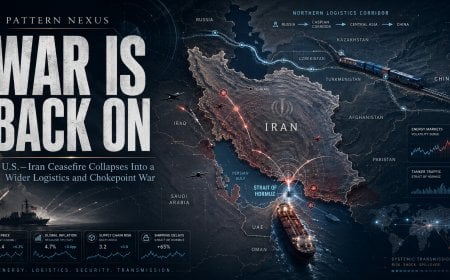 Article · related
War Is Back On: The U.S.–Iran Ceasefire Has Collapsed Into a Wider Logistics and Chokepoint War
The United States is striking Iranian military, port, power, transportation, and logistics infrastructure. Iran is retaliating against the American Gulf basing network. Israel is ready to reenter. The conflict is evolving from a Hormuz chokepoint war into a wider campaign over Iran’s maritime and Eurasian connections.
Published Jul 9, 2026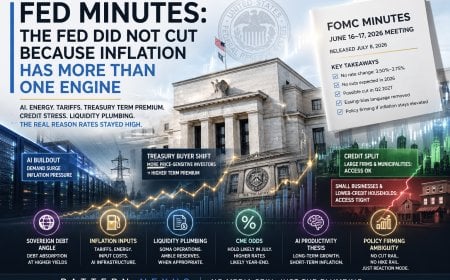 Article · related
Fed Minutes: The Cut Trade Broke Because Inflation Has More Than One Engine
The June 16–17 FOMC minutes, released July 8, show a Fed that held rates steady but removed the easy easing bias. The deeper signal is that inflation pressure is now coming from multiple rails at once: tariffs, Middle East energy shock risk, AI infrastructure demand, Treasury term premium, and uneven consumer credit stress.
Published Jul 8, 2026 Article · related
The Iran Deal Hits Its First Control Failure Before Talks Begin
U.S.-Iran talks planned around June 19 at Switzerland’s Bürgenstock resort were postponed after Vice President JD Vance did not travel and Iranian officials also did not arrive as planned. Reporting from AP, Reuters and Axios tied the delay to both logistics and renewed fighting around Lebanon, while Swiss authorities had already prepared security and airspace restrictions for the meeting. The early breakdown shows that the interim deal’s implementation track depends on synchronized behavior across multiple theaters, not only on diplomatic intent.
Published Jun 20, 2026 Article · related
Hormuz Ceasefire Breaks Into Direct U.S.-Iran Strike Cycle
The United States launched strikes on Iranian targets near the Strait of Hormuz after the loss of a U.S. Army Apache helicopter, while Iran reported retaliatory attacks against U.S.-linked targets in Jordan and the Gulf. AP reported that the exchange again tested a two-month ceasefire, and Reuters-linked oil coverage showed crude rising as the flare-up renewed supply-risk concerns. The strategic signal is a maritime-energy choke point turning into a repeat escalation loop.
Published Jun 10, 2026 Article · related
Hormuz Ceasefire Frays Again as U.S. Downs Iranian Drones Near Shipping Lanes
U.S. forces shot down two Iranian drones near the Strait of Hormuz after CENTCOM said they threatened international maritime traffic, according to EFE, AFP via Arab News, AP and Xinhua. The incident followed a prior exchange in which U.S. forces downed Iranian drones, intercepted missiles aimed toward Gulf allies and struck Iranian coastal surveillance radar sites. The pattern keeps the world’s most important oil-shipping chokepoint under active military stress even if cargoes continue moving.
Published Jun 7, 2026 Article · related
The Oil Cushion Is Breaking: Hormuz, Inventories, and the Liquidity Shock Hiding Inside Energy
Oil Crisis, Strait of Hormuz, Hormuz, Energy Shock, Inflation, Brent Crude, WTI Crude, Strategic Petroleum Reserve, SPR, Oil Inventories, Global Oil Supply, Gasoline Prices, Diesel Prices, Refining, Crack Spreads, Federal Reserve, Liquidity, Recession Risk, Macro, Geopolitics, Pattern Nexus
Published Jun 1, 2026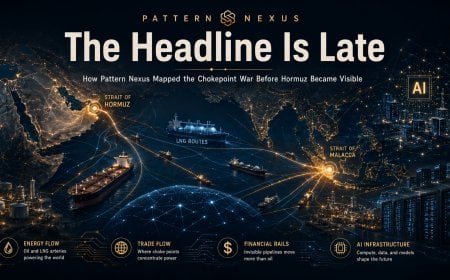 Article · related
The Headline Is Late: How Pattern Nexus Mapped the Chokepoint War Before Hormuz Became Visible
The Iran-Hormuz crisis did not create the Pattern Nexus framework. It exposed it. For months, Pattern Nexus had already been mapping the deeper system beneath the headlines: liquidity plumbing, QT, reverse repo, QE 2026, AI power demand, stablecoin rails, Treasury collateral, Western Hemisphere force posture, energy chokepoints, China’s routing vulnerability, and the shift from globalization to permission. This long-form analysis uses the video transcript as an alignment test, then ties it back into the Pattern Nexus archive to show the real timeline: the headline arrived late because the structure moved first.
Published May 7, 2026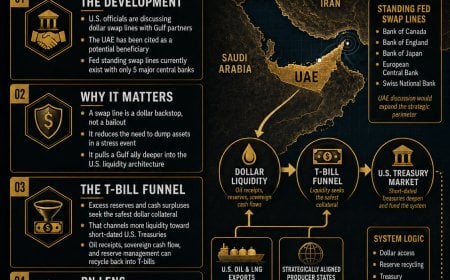 Article · related
UAE, Swap Lines, and the T-Bill Funnel: The New Oil Order Is Being Built Through Liquidity Rails
A Pattern Nexus analysis on the UAE leaving OPEC/OPEC+, U.S. dollar swap-line discussions, the T-bill funnel, and how oil, LNG, reserves, security, and Treasury demand are becoming one U.S.-anchored system chain.
Published May 1, 2026 Article · related
The Hormuz Theory: Could a Coastal Safe Zone Become the Front Edge of a Long War in Iran? -->
A Pattern Nexus scenario analysis on whether a fight to reopen the Strait of Hormuz could expand into a coastal safe-zone strategy, proxy warfare, and a much longer regime-pressure campaign inside Iran.
Published Mar 26, 2026 Article · related
Wall Street Trap and Strait of Hormuz Risk: Markets, Oil, and Macro Pressure
Three videos breaking down Wall Street stress, Strait of Hormuz risk, oil shock pressure, shipping disruption, and the broader macro consequences for markets and supply chains.
Published Mar 16, 2026 Article · related
Mar 12, 2026 Market Wrap (Late Print): DXY 100, Brent 100+, VIX 27, and Why I’m Watching SPY for Another Flush
The “index optics” crowd can keep coping. Today the plumbing talked: VIX +12%, Brent back over $100, DXY camped at 100, and yields still elevated. Add a war-risk premium plus private credit stress and you get a tape that’s not done. Here’s the full systems read using my screenshots + the Mar 12 news flow.
Published Mar 12, 2026