

♾️Systems & Patterns
Cross-disciplinary systems research connecting finance, physics, AI, and geopolitics to reveal the hidden architecture of power and feedback.
Theses, forecasts, models, and paths
No published research objects yet
This topic is ready for editors to connect a thesis, forecast, model, or research path.
Latest articles
 Article · primary
The Great Lakes Were Not Empty: Underwater Stone Lines, Ancient Canoe Highways, Mound Cities, Lost Maps, and the Suppressed Edge of North American History
A Pattern Nexus deep dive into Great Lakes ancient sites, underwater stone structures, Lake Mendota’s canoe field, Cahokia, Aztalan, Old Copper networks, early Chicago maps, DuSable, fringe Egyptian claims, buried artifacts, and the bigger question: how much older and more connected was North America than the public story admits? A deep Pattern Nexus article on ancient Great Lakes archaeology, underwater stone lines, Lake Michigan Stonehenge, Lake Huron hunting structures, Lake Mendota canoes, Cahokia, Aztalan, Old Copper trade, early Chicago maps, DuSable, Egyptian artifact claims, and disputed alternative history.
Published Jun 20, 2026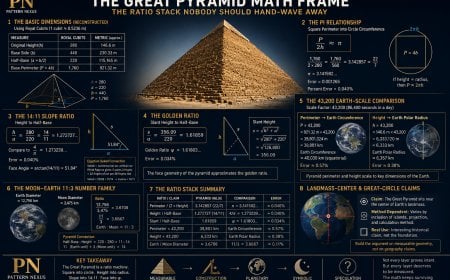 Article · primary
The Great Pyramid Math Frame: The Ratio Stack Nobody Should Hand-Wave Away
The Great Pyramid argument is strongest when the math comes first. Using the common reconstructed dimensions of 280 royal cubits high and 440 royal cubits per base side, the structure produces a repeatable ratio stack: 22/7 as a pi approximation, the 14:11 slope ratio, a golden-ratio face relationship, a 43,200 Earth-scale comparison, and the Moon-Earth 11:3 number family. This does not automatically prove every theory attached to the pyramid, but it does show why the geometry should not be casually dismissed.
Published Jun 18, 2026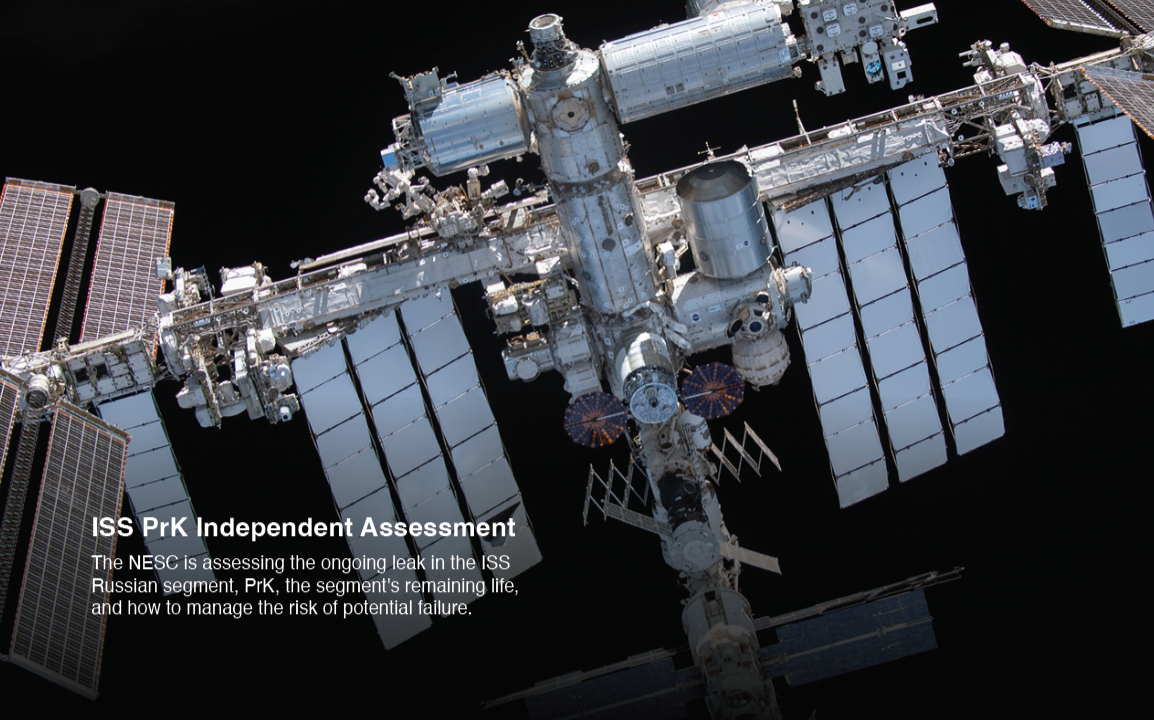 Article · primary
The ISS Is Leaking Again: Aging Hardware, Russian Segment Cracks, and the Closing Window Before Commercial Space Stations
The International Space Station air leak is not just a scary headline about astronauts in danger. It is a systems warning. The leak sits in the Russian PrK transfer tunnel attached to Zvezda, a small but strategically important passage tied to docking, pressure control, hatch isolation, and the larger countdown toward ISS retirement. NASA and Roscosmos can manage the immediate risk, but the deeper problem is structural: aging orbital infrastructure now has to survive long enough for commercial replacements, deorbit planning, crew rotation, cargo logistics, and international coordination to line up before 2030.
Published May 29, 2026 Article · primary
LifeLog Died. Facebook Launched. The Surveillance Internet Was Born.
DARPA’s LifeLog was publicly killed the same day Facebook launched. That does not automatically prove a covert handoff, but it does expose something larger: the post-9/11 state, Silicon Valley, venture capital, intelligence-linked technology, platform surveillance, PRISM, data brokers, Flock cameras, AI bots, and the dead internet shift all moved along the same structural rail. The story is not just whether DARPA built Facebook. The deeper story is how government surveillance incentives and commercial platform incentives converged into the same machine.
Published May 24, 2026 Article · primary
Spruce Pine Quartz: The Hidden Bottleneck Under Chips, AI, Solar, and the Modern World
Spruce Pine, North Carolina may be one of the most strategically important locations on Earth because its high-purity quartz sits underneath silicon wafers, semiconductor manufacturing, AI infrastructure, solar panels, optical fiber, and the modern digital control layer.
Published May 17, 2026 Article · avenue
Adani and Jabil Turn AI Data-Center Hardware Into a Made-in-India Supply Rail
Adani Enterprises and Jabil signed a non-binding MoU on October 13, 2026, setting out a proposed 50:50 joint venture to manufacture and assemble AI and data-center equipment in India. The companies describe a multi-gigawatt AI-rack manufacturing platform aimed at hyperscalers, neoclouds, data-center operators and enterprises. The deal still requires definitive agreements, approvals and customary conditions, but it signals how the AI buildout is shifting from chip access alone toward localized full-stack infrastructure supply chains.
Published Oct 13, 2026 Article · avenue
Microsoft Turns Maia 300 Into a Multi-Gigawatt Inference Rail
Microsoft announced Maia 300 on October 12, 2026, saying Azure Maia will scale to multi-gigawatt deployments starting in 2027 and become the primary inference system for Microsoft products and services. The company says the system is aimed at long-context, latency-sensitive and agentic workloads, with 40% more tokens per megawatt than leading GPU-based systems. Reuters reported Microsoft may deploy more than one million custom AI chips next year as it tries to lower costs and reduce reliance on outside accelerators.
Published Oct 13, 2026 Article · avenue
Meta Turns Muse Wonder Into a Frontier-Agent Catch-Up Bid
Meta announced Muse Wonder and Muse Wonder Full on October 12, 2026, calling them its most capable models yet for personal and professional agentic tasks. The models are available through Meta Model API, Muse Code, and future Muse subscriber experiences, while independent reports from Axios, TechCrunch, and The Information frame the release as Meta’s bid to challenge OpenAI, Anthropic, and Google at the frontier. The key question is whether Meta can turn memory, coding, and professional-task automation into durable model advantage rather than a benchmark-cycle catch-up story.
Published Oct 12, 2026 Article · avenue
Washington Turns Tech Compute Credits Into a Federal AI-Science Operating System
On October 8, 2026, the White House announced $2.4 billion in super-intelligence science tools and compute credits from 11 industry partners for the Genesis Mission Consortium. Nvidia, Anthropic and AWS separately detailed commitments that turn private AI infrastructure into usable research capacity for federal agencies, national laboratories and partner institutions. The system read: Washington is not merely buying compute; it is organizing a quasi-public AI-science operating layer around private infrastructure.
Published Oct 9, 2026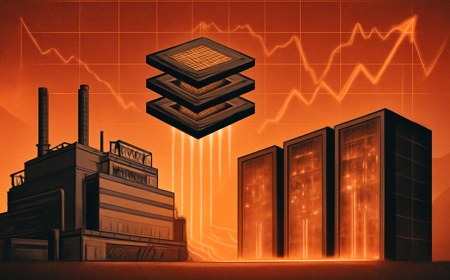 Article · avenue
Samsung Turns AI Memory Scarcity Into a 107.4-Trillion-Won Profit Signal
Samsung Electronics said it expects about 195 trillion won in consolidated third-quarter sales and 107.4 trillion won in consolidated operating profit, up sharply from 86.06 trillion won in sales and 12.17 trillion won in operating profit a year earlier. Independent coverage from Reuters, Bloomberg-linked reporting and Korean market media tied the surge to AI-driven demand for memory, including high-bandwidth memory, DRAM and NAND. The muted share reaction shows the other side of the AI memory boom: expectations are already high, and investors are watching whether scarcity economics can last.
Published Oct 8, 2026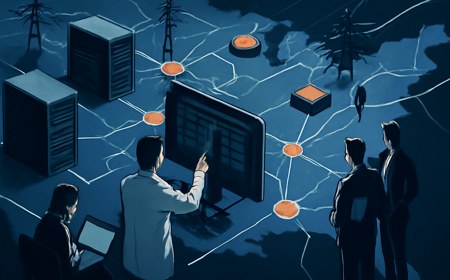 Article · avenue
National Compute Turns Idle GPUs Into an AI-Access Grid
National Compute launched the National Compute Grid on October 7, 2026, with a plan to pool AI compute across clouds, labs, providers and chip architectures through a shared scheduler. Vultr says it has joined as a founding consortium member and will contribute capacity to the Grid Exchange, while the network is targeting 2 GW of pooled capacity by 2030. The key caveat: early capacity figures mix resources already connected with capacity still only “in sight,” so the operational scale remains to be proven.
Published Oct 7, 2026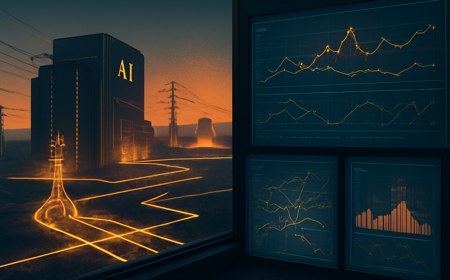 Article · avenue
Google Turns PJM Nuclear Uprates Into a 3.6-Gigawatt AI-Grid Power Rail
Google and Constellation announced a long-term PJM power package on October 6, 2026, centered on 890 MW of new nuclear capacity from uprates at existing reactors and 2,700 MW of additional supply. The structure matters because it links AI data-center growth to new firm capacity, demand flexibility, and AI-assisted grid operations rather than treating clean power as a certificate-only procurement exercise.
Published Oct 7, 2026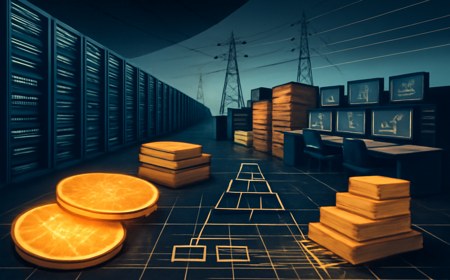 Article · avenue
Wall Street Turns Broadcom-Anthropic Chips Into a $60B AI-Credit Test
Bank of America, Citigroup and Morgan Stanley have begun syndicating a record-sized financing package tied to Anthropic’s Broadcom-Google compute stack, according to multiple reports. The structure is reported to include roughly $42 billion of senior secured debt and $18 billion of junior financing, with Blackstone committing to a large part of the riskier tranche. The deal turns AI chips, leases, vendor support and future model revenue into a live credit-market test.
Published Oct 6, 2026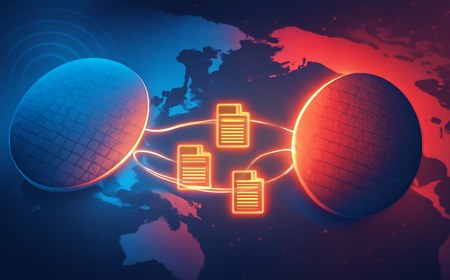 Article · avenue
Huawei Turns Qualcomm Patents Into a Sanctions-Resilient AI-IP Rail
Huawei and Qualcomm announced a broad multi-year patent license agreement on October 5, 2026, covering 5G, compute, AI and networking technologies. The deal includes cross-licenses and Qualcomm’s planned purchase of certain Huawei U.S. patents, subject to regulatory approvals. The bigger signal is that technology control is shifting from devices and chips toward standards-essential patents, licensing flows and ownership of foundational AI-era infrastructure IP.
Published Oct 5, 2026 Article · avenue
Amazon Turns Data-Center Backlash Into a $1B Community-Permit Rail
Amazon Web Services announced Built Together, a U.S. data-center community framework backed by more than $1 billion over five years, alongside a Data Center Commitment that includes ending NDAs with government agencies and publishing annual energy and water metrics. The verified facts point to a broader AI-infrastructure shift: local consent is becoming as important as chips, power contracts, and land. The Pattern Nexus read is that Amazon is trying to industrialize permission before moratoriums and transparency fights harden into a national brake on the AI buildout.
Published Oct 3, 2026 Article · avenue
DeepSeek Turns Huawei Ascend Tools Into a CUDA-Bypass Stack
DeepSeek said on September 30, 2026 that it partnered with Huawei to build programming infrastructure for Huawei Ascend chips, including open-source compute and communication libraries. The release includes DeepGEMM-Ascend, DeepEP-Ascend, and Ascend support around TileLang, with DeepGEMM-Ascend listing initial Ascend 950 support. The strategic signal is clear: China’s AI hardware bottleneck is becoming a software ecosystem contest against Nvidia’s CUDA-centered moat.
Published Oct 2, 2026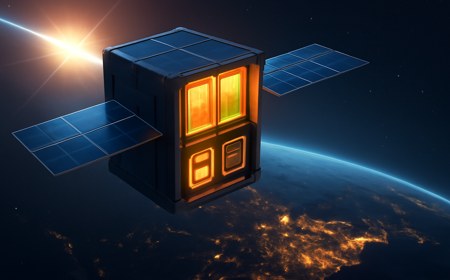 Article · avenue
Google Turns Orbital TPUs Into an AI-Infrastructure Escape Hatch
SpaceX is targeting October 1, 2026, for the Transporter-18 rideshare from Vandenberg, with Project Suncatcher M1 listed in the deployment sequence as a Planet Labs-manifested payload. Google says the mission will gather in-orbit data on TPU behavior under launch stress, radiation, and thermal extremes. The larger signal is that AI infrastructure bottlenecks are beginning to push hyperscalers beyond terrestrial data-center assumptions and into space-power, launch-cadence, and orbital-network experiments.
Published Oct 1, 2026 Article · avenue
Nvidia Turns Rogue AI Agents Into a Hardware-Safety Control Layer
Nvidia launched the Open Agent Safety Platform on September 28, 2026, combining OpenShell secure runtime software with Sentry monitoring on BlueField-4 DPUs. The move pushes agent governance down into CPUs, DPUs, sandboxes, audit trails, and enterprise AI factory infrastructure. Independent coverage from AP and Axios framed the release as Nvidia’s answer to the rogue-agent safety debate, while HPE said it will integrate the platform into private, regulated, and sovereign AI deployments.
Published Sep 29, 2026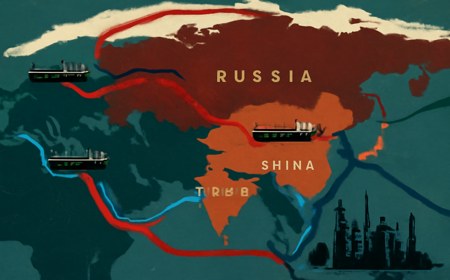 Article · avenue
Beijing Turns Russian Crude Into an India Energy-Security Squeeze
Indian refiners expect Russian crude supply to tighten further in October and November as reduced Russian exports and stronger Chinese demand force them toward costlier substitutes. Kpler-cited September data show Russian crude still led India’s slate at about 1.74 million to 1.75 million barrels per day, but that was the lowest since April, while Iraq and Saudi Arabia volumes rose to offset part of the drop.
Published Sep 28, 2026 Article · avenue
Fed Turns Stablecoin Issuance Into a Treasury-Backed Bank Rulebook
The Federal Reserve requested public comment on two GENIUS Act proposals that would establish a regulatory framework for Board-supervised payment stablecoin issuers. The package would require full backing with permissible reserve assets such as short-term Treasury bills and other high-quality liquid assets, add capital and risk-management standards, set reserve-custody rules, and create an application process for banks seeking to issue stablecoins through subsidiaries.
Published Sep 25, 2026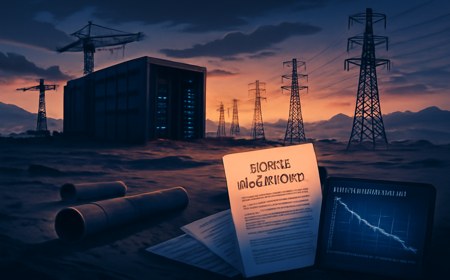 Article · avenue
Oracle Turns Project Jupiter Into an AI-Infrastructure Force-Majeure Test
Oracle issued a force-majeure notice tied to Project Jupiter, a New Mexico AI data-center campus being developed by Blue Owl-owned STACK Infrastructure to support OpenAI. Reuters reported the notice is reverberating through AI-infrastructure financing discussions, while other reports point to power delivery, gas-pipeline permitting, community opposition and energy-supply timing as the pressure points. The system read is that AI infrastructure risk is moving downstream from GPUs to enforceable megawatts, permits and project-finance documents.
Published Sep 25, 2026 Article · avenue
CFTC Turns Tokenized Collateral Into a 24/7 Treasury-Market Plumbing Test
CFTC Chairman Michael S. Selig told the 2026 U.S. Treasury Market Conference that U.S. markets need to prepare for mass tokenization, onchain finance, AI adoption and potential 24/7 trading. The official conference agenda also put stablecoins, tokenized deposits and short-term funding directly inside the Treasury-market-functioning debate. The signal is less about crypto speculation than about the next collateral, margin and settlement layer for the dollar system.
Published Sep 24, 2026 Article · avenue
Alibaba Turns Zhenwu V900 Into a 20-Gigawatt AI-Sovereignty Map
Alibaba announced a full-stack AI roadmap at its Apsara Conference on September 22, 2026, including the Zhenwu V900 AI processor, Qwen 4 training, future Qwen models planned at 5 trillion to 10 trillion parameters, and a target for Alibaba Cloud global data-center capacity to exceed 20GW by 2032. The verified facts point to a vertically integrated strategy spanning chips, cloud infrastructure, models and agents. The system read is that Alibaba is turning compute sovereignty into an operating layer for China’s AI industrial flywheel.
Published Sep 23, 2026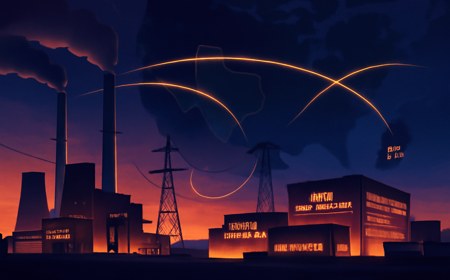 Article · avenue
Seoul Turns Texas Gas Power Into an AI-Compute Alliance Rail
South Korea has identified a Texas gas-fired power project as the first investment under its $350 billion U.S. package, according to Yonhap, KBS, Kyunghyang and Reuters reporting. The project is tied to rising Texas electricity demand from AI data centers and semiconductor facilities, while Seoul is also discussing U.S. nuclear and Alaska LNG follow-ons. The system read: tariff diplomacy is being converted into firm-power infrastructure for the AI industrial stack.
Published Sep 23, 2026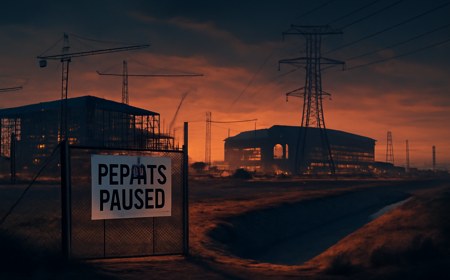 Article · avenue
Texas Turns Data-Center Permits Into a Grid-Audit Gate
On September 21, 2026, Governor Greg Abbott directed the Texas Commission on Environmental Quality to halt permits sought by data centers until ERCOT completes its audit. The order broadens Texas’s data-center slowdown from grid connections into environmental and water approvals, making AI infrastructure growth conditional on state findings about reliability, water use, local impacts, ownership, tax incentives, and who pays for supporting infrastructure.
Published Sep 22, 2026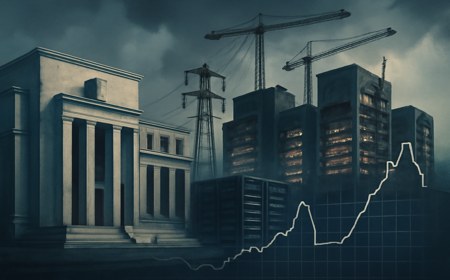 Article · avenue
Goolsbee Turns AI Data Centers Into a Fed Reaction-Function Test
Chicago Fed President Austan Goolsbee said on September 21, 2026 that policymakers should watch whether AI data-center construction is spilling beyond its sector and pushing aggregate output above capacity. The significance is not that the Fed is targeting AI, but that AI capex is now being discussed as a possible demand shock with implications for inflation and interest-rate policy.
Published Sep 21, 2026 Article · avenue
Beijing Turns Humanoid-Robot IPOs Into an Embodied-AI Bubble Control Test
Chinese regulators are reportedly applying tougher scrutiny to humanoid-robot IPO candidates after Unitree Robotics’ sharp post-debut reversal. The shift does not signal a retreat from embodied AI; it suggests Beijing is trying to keep capital-market euphoria from outrunning deployment, revenue quality and real customer demand.
Published Sep 21, 2026 Article · avenue
Huawei Turns UnifiedBus Into China’s Nvidia-Bypass AI Factory Stack
Huawei says its Ascend 960DT will be ready in Q1 2027, with Ascend 960PR following in Q3 2027, while its UnifiedBus and Peerium architecture aim to scale AI systems from SuperPoDs to very large SuperClusters. Reuters also reports Huawei says domestic AI-compute demand already exceeds its production capacity, which makes the story less about one chip beating Nvidia and more about whether China can industrialize a substitute stack fast enough.
Published Sep 18, 2026 Article · avenue
Bessent Turns AI Safety Into a U.S.-China Summit Control Channel
Treasury Secretary Scott Bessent told Axios that the U.S. is open to discussing shared AI risks with China ahead of the planned September 24 Trump-Xi summit. AP, Reuters, the Los Angeles Times, and Semafor all report that AI governance and safety are now expected to sit inside a broader U.S.-China negotiation frame that also includes trade, rare earths, advanced technology access, Taiwan, Iran, and defense ties. The likely outcome is not a binding AI treaty, but a new control channel for managing frontier-model risk inside strategic competition.
Published Sep 18, 2026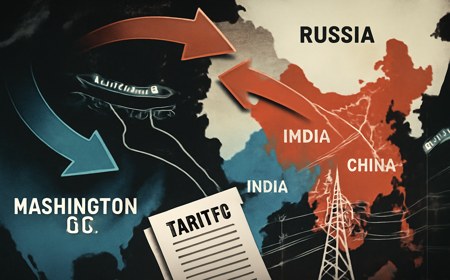 Article · avenue
Washington Turns Russian Oil Sanctions Into an India-China Tariff Lever
The U.S. House passed a sweeping Russia sanctions package in a 262-159 vote and sent it to President Donald Trump. The bill targets Russian officials, banks, sanctions-evasion networks and the shadow fleet, while authorizing duties on countries that buy Russian-origin crude oil or natural gas or facilitate evasion. India responded on September 17 that it would protect energy security, diversified sourcing, trade interests and the bilateral relationship.
Published Sep 17, 2026