

Treasury
Automatically indexed from the existing article tag.
Theses, forecasts, models, and paths
No published research objects yet
This topic is ready for editors to connect a thesis, forecast, model, or research path.
Latest articles
 Article · related
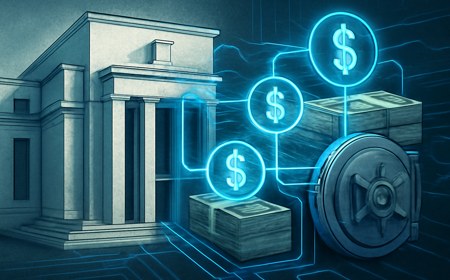
Fed Turns Stablecoin Issuance Into a Treasury-Backed Bank Rulebook
The Federal Reserve requested public comment on two GENIUS Act proposals that would establish a regulatory framework for Board-supervised payment stablecoin issuers. The package would require full backing with permissible reserve assets such as short-term Treasury bills and other high-quality liquid assets, add capital and risk-management standards, set reserve-custody rules, and create an application process for banks seeking to issue stablecoins through subsidiaries.
Published Sep 25, 2026 Article · related
CFTC Turns Tokenized Collateral Into a 24/7 Treasury-Market Plumbing Test
CFTC Chairman Michael S. Selig told the 2026 U.S. Treasury Market Conference that U.S. markets need to prepare for mass tokenization, onchain finance, AI adoption and potential 24/7 trading. The official conference agenda also put stablecoins, tokenized deposits and short-term funding directly inside the Treasury-market-functioning debate. The signal is less about crypto speculation than about the next collateral, margin and settlement layer for the dollar system.
Published Sep 24, 2026 Article · related
Bessent Turns AI Safety Into a U.S.-China Summit Control Channel
Treasury Secretary Scott Bessent told Axios that the U.S. is open to discussing shared AI risks with China ahead of the planned September 24 Trump-Xi summit. AP, Reuters, the Los Angeles Times, and Semafor all report that AI governance and safety are now expected to sit inside a broader U.S.-China negotiation frame that also includes trade, rare earths, advanced technology access, Taiwan, Iran, and defense ties. The likely outcome is not a binding AI treaty, but a new control channel for managing frontier-model risk inside strategic competition.
Published Sep 18, 2026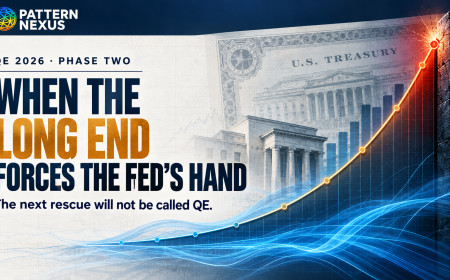 Article · related
QE 2026, Phase Two: When the Long End Forces Duration Control
The Fed already ended QT and expanded Treasury holdings through bill-focused reserve-management purchases, but that repaired the reserve layer without suppressing the long end. With the 10-year Treasury at 4.95%, the 30-year at 5.37%, real long yields near the Pattern Nexus red zone, Treasury doubling long-end buybacks, and August CPI limiting conventional easing, this report calculates the probability that QE 2026 moves into a second phase. It maps the likely program, the names it may use, the dates when it could expand, and the exact yield, reserve, auction, repo, leverage, and credit conditions that could force direct duration absorption.
Published Sep 11, 2026 Article · related
Warsh Turns Jackson Hole Into a Rate-Hike Liquidity Shock
Kevin Warsh’s Jackson Hole speech gave markets a hawkish Fed signal, with AP reporting a jump in the two-year Treasury yield after the remarks. Warsh tied the policy debate to persistent inflation, strong AI-related investment, and a less guidance-heavy central bank communication regime. Pattern Nexus reads the speech as a liquidity-regime shift: inflation credibility now sits above market comfort.
Published Aug 28, 2026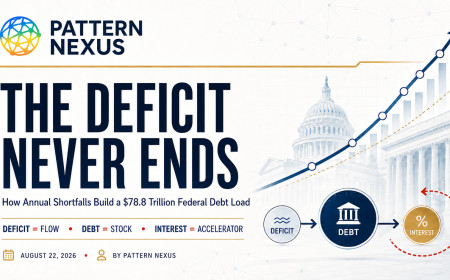 Article · related
The Deficit Never Ends: How Annual Shortfalls Build a $78.8 Trillion Federal Debt Load
Most people use “deficit” and “debt” as if they mean the same thing. They do not. This report uses two Pattern Nexus infographics and official CBO and Treasury data to map the annual federal deficit and total federal debt from 2020 through 2040, explain why interest creates a self-reinforcing feedback loop, and show why the 10-year and 30-year Treasury yields—not a political debt-clock slogan—are the market constraint that matters.
Published Aug 22, 2026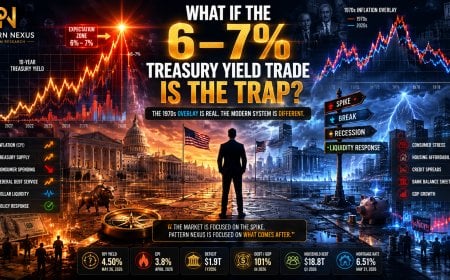 Article · related
What If the 6–7% Treasury Yield Trade Is the Trap?
A lot of smart money is starting to position for a 1970s-style inflation repeat where the 10-year Treasury yield spikes toward 6% or 7%. The chart overlay looks convincing. Inflation today can be lined up against the 1970s if the data is shifted and framed the right way. But Pattern Nexus looks at the system constraint, not just the chart. The question is not whether yields can spike. They can. The question is whether the modern economy, the federal refinancing structure, the consumer balance sheet, and the dollar-based global liquidity system can actually survive a sustained 6–7% long-rate environment. This article argues that the more dangerous trade may be the obvious one: expecting the 1970s to repeat cleanly when the system may instead force a spike, break, recession, emergency response, and renewed liquidity cycle.
Published May 27, 2026 Article · related
The New Fed Chair Does Not Inherit an Economy. He Inherits the Permission Stack.
Kevin Warsh is not simply inheriting the Federal Reserve. He is inheriting the control layer where inflation, debt service, Treasury funding, energy shocks, AI infrastructure demand, repo plumbing, collateral stress, political pressure, and liquidity permission all collide. The public will debate whether the new Fed chair cuts, hikes, pauses, or changes the balance sheet. That is the surface story. The deeper Pattern Nexus story is that the Fed chair is now the public face of the permission stack. He helps decide where credit flows, where pain lands, which markets get oxygen, which sectors get squeezed, and what kind of crisis or cover event makes the next liquidity intervention politically acceptable. This is not a normal Fed transition. It is the next chapter in the liquidity-cover framework.
Published May 18, 2026 Article · related
The Headline Is Late: How Pattern Nexus Mapped the Chokepoint War Before Hormuz Became Visible
The Iran-Hormuz crisis did not create the Pattern Nexus framework. It exposed it. For months, Pattern Nexus had already been mapping the deeper system beneath the headlines: liquidity plumbing, QT, reverse repo, QE 2026, AI power demand, stablecoin rails, Treasury collateral, Western Hemisphere force posture, energy chokepoints, China’s routing vulnerability, and the shift from globalization to permission. This long-form analysis uses the video transcript as an alignment test, then ties it back into the Pattern Nexus archive to show the real timeline: the headline arrived late because the structure moved first.
Published May 7, 2026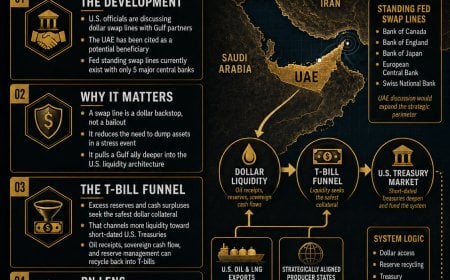 Article · related
UAE, Swap Lines, and the T-Bill Funnel: The New Oil Order Is Being Built Through Liquidity Rails
A Pattern Nexus analysis on the UAE leaving OPEC/OPEC+, U.S. dollar swap-line discussions, the T-bill funnel, and how oil, LNG, reserves, security, and Treasury demand are becoming one U.S.-anchored system chain.
Published May 1, 2026 Article · related
The GENIUS Act and the Stablecoin State: How Private Dollars Become a Treasury Demand Engine
The GENIUS Act didn’t just “regulate crypto.” It formalized a new payments rail where private dollars can scale—and where reserve rules turn stablecoins into an indirect Treasury demand vector.
Published Feb 17, 2026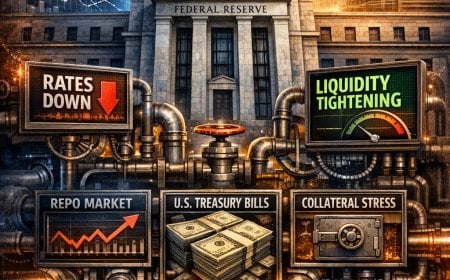 Article · related
Warsh’s Fed and the Balance-Sheet War: Why “Rates Down” Can Still Mean “Liquidity Tight”
A Pattern Nexus systems read on the incoming Fed regime debate: floor vs corridor, repo backstops, Treasury supply, and why the balance sheet is the real rate.
Published Feb 17, 2026 Article · related
Week Ahead: The Reaction-Function Week (Fed Holds, Mega-Cap Earnings, Treasury Supply) — Jan 26–30, 2026
The Fed is expected to hold, but the week is not calm. Markets trade language, auctions, and mega-cap guidance while shutdown-delayed data drops (trade balance, factory orders, wholesale inventories, PPI). A Pattern Nexus preview of the catalysts, mechanics, and scenarios for Jan 26–30, 2026.
Published Jan 26, 2026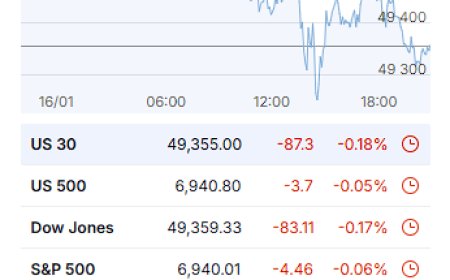 Article · related
Market Wrap – January 16, 2025: CPI Relief Cools, Yields Slide, Oil Loses the Security Premium
U.S. stocks dipped after Wednesday’s CPI-fueled surge as investors parsed earnings and fresh data. Treasury yields eased after Waller comments, gold climbed, oil settled lower as Red Sea risk premium faded, and the dollar softened versus the yen ahead of the inauguration.
Published Jan 16, 2026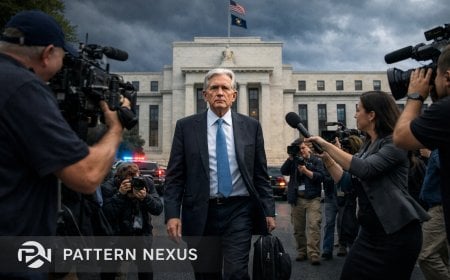 Article · related
The Powell Subpoena and the Liquidity Regime Transition
A subpoena against Powell over his Senate testimony signals institutional pressure toward rate suppression and liquidity convergence between Treasury, Fed, and industrial policy.
Published Jan 11, 2026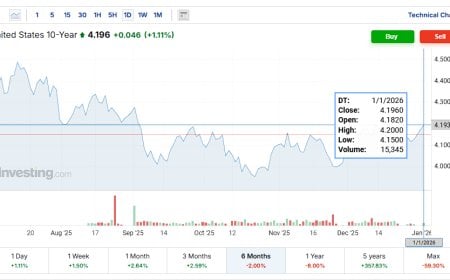 Article · related
The 10-Year Decoupling: Why Long Rates No Longer Follow Cuts
The U.S. 10-year Treasury is no longer responding to policy rate cuts. This article explains the structural decoupling between front-end easing and long-end yields, why this regime persists for months to years, and what conditions eventually force balance sheet expansion.
Published Jan 2, 2026 Article · related
Stablecoins Are the New Treasury Bid: The Quiet Construction of a Private CBDC Rail
Stablecoins are not a crypto sideshow. They are being shaped into regulated dollar settlement instruments backed by U.S. Treasuries, creating a private-sector CBDC rail without calling it a CBDC. This Pattern Nexus framework explains the mechanics, laws, flows, and endgame.
Published Jan 1, 2026 Article · related
Repo Is Back: Late-2025 Looks Like Late-2019
Open the published research article.
Published Dec 29, 2025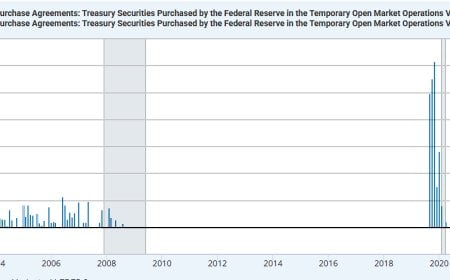 Article · related
The 10-Year Treasury Pattern and the Return of Repo Operations
The 10-Year Treasury has repeatedly stalled near long-cycle resistance while overnight repo operations have quietly returned after QT. This analysis examines how funding markets, balance-sheet capacity, and rate control interact beneath headline narratives.
Published Dec 29, 2025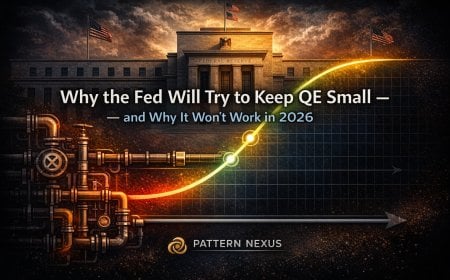 Article · related
Why the Fed Will Try to Keep QE Small — and Why It Won’t Work in 2026
The Fed will try to keep QE “light” in 2026 to protect inflation credibility and avoid backlash. But modern market plumbing is nonlinear: undersized liquidity fails fast, forcing escalation into real QE.
Published Dec 27, 2025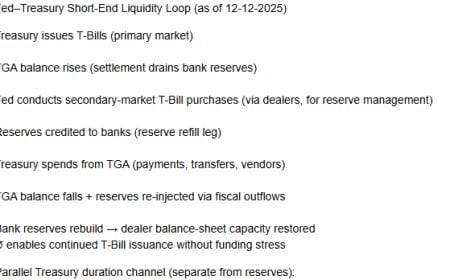 Article · related
The Short-End Liquidity Loop: How T-Bills Became a Permanent Monetary Conveyor Belt
A step-by-step, plumbing-accurate explanation of the Fed–Treasury–dealer short-end liquidity loop: T-bill issuance, secondary-market bill purchases, the TGA reserve drain and fiscal re-injection, and why this regime has no credible end state.
Published Dec 12, 2025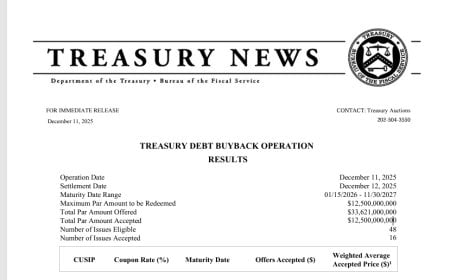 Article · related
Treasury Buyback Confirms the New Liquidity Regime
Treasury retires $12.5B in debt in a single buyback operation, confirming the shift into a post-QT, Treasury-driven liquidity regime.
Published Dec 12, 2025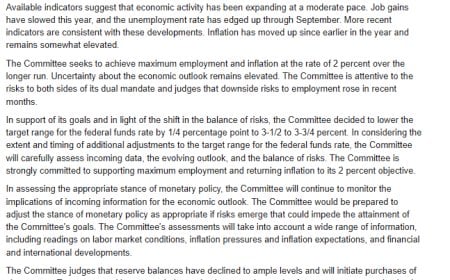 Article · related
December 10, 2025: QT Ends, QE-Lite Begins
The Fed cut rates by 25 bps, acknowledged rising downside risks to employment, and quietly ended QT by initiating short-term Treasury purchases to maintain reserves, marking the start of a new liquidity regime.
Published Dec 10, 2025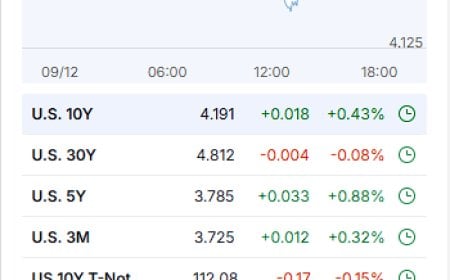 Article · related
Daily Market Wrap-Up – December 9, 2025
Markets pushed through a cautious session as the first full day of the Fed meeting began. Treasury yields climbed, equities wobbled, crypto rallied, and the structural stress in long-term rates continues to loom over risk assets.
Published Dec 9, 2025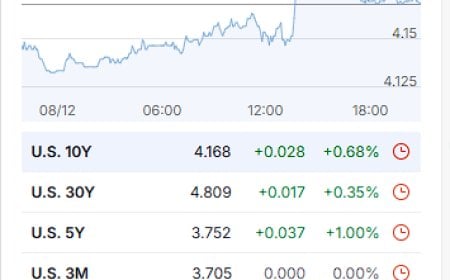 Article · related
Daily Market Wrap-Up – December 8, 2025
Daily cross-asset wrap for December 8, 2025. Equities faded into the close while the 10-year Treasury pushed higher toward 4.2% even as markets price in a near-certain Fed rate cut this week. Commodities softened, the dollar treaded water, and crypto stayed bid.
Published Dec 8, 2025 Article · related
Did Jerome Powell Plan a $45 Billion T-Bill Buying Program? A Pattern Nexus Investigation
A fully sourced investigation into whether the Federal Reserve planned a $45B monthly Treasury-bill purchase program in December 2025. This Pattern Nexus breakdown differentiates analyst forecasts from official policy, clarifies what Reserve Management Purchases are, and examines whether this amounts to QE in function.
Published Dec 7, 2025 Article · related
The New American Crypto Order: How Trump’s Executive Actions, Treasury Strategy, and Federal Reserve Alignment Are Rewiring the Dollar System
The United States has quietly shifted from restricting crypto to absorbing it. Trump’s Strategic Bitcoin Reserve, the Digital Asset Stockpile, the GENIUS Act, Treasury acquisition strategies, and Federal Reserve integration signal the construction of a sovereign digital asset regime designed to reinforce the Dollar Superstructure.
Published Dec 2, 2025 Article · related
The Dollar Fortress: How Bretton Woods, the Marshall Plan, and the 1951 Accord Forged the First Dollar Liquidity Regime (1947–1953)
After World War II, the Bretton Woods system, the Marshall Plan, and the 1951 Treasury–Fed Accord fused into a single architecture: the dollar anchored to gold, capital controls, and state-directed credit. Between 1947 and 1953, this “Dollar Fortress” quietly set the rules of global liquidity that still shape markets today.
Published Dec 2, 2025 Article · related
QT Ends, Liquidity Returns: Why 2026 Is Almost Certainly the Next Balance-Sheet Expansion Cycle
Quantitative Tightening ends December 1st, and the plumbing shows reserves are already near scarcity. This article explains why 2026 is shaping up to be the next major liquidity-injection cycle, driven by heavy Treasury issuance, reserve demand, and Fed policy shifts.
Published Nov 25, 2025 Article · related
Can the 10-Year Treasury Predict Recessions? A 40-Year Pattern Nexus Lens Analysis
A 40-year structural analysis of the US 10-Year Treasury futures market, showing how recessions consistently collide with long-term yield channels, why yield curve inversions continue to matter, and what today’s setup means for the next macro cycle. A full Pattern Nexus Lens breakdown.
Published Nov 20, 2025