

treasury issuance
Automatically indexed from the existing article tag.
Theses, forecasts, models, and paths
No published research objects yet
This topic is ready for editors to connect a thesis, forecast, model, or research path.
Latest articles
 Article · related
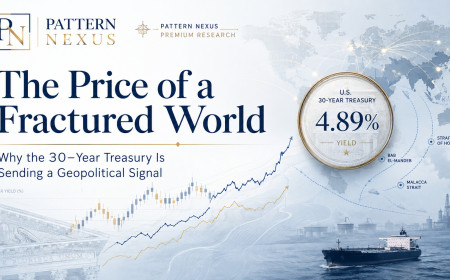
The Price of a Fractured World: Why the 30-Year Treasury Is Sending a Geopolitical Signal
Something about the global system feels uncomfortable, and the last month of data suggests that feeling has a measurable foundation. The U.S. 30-year Treasury has pushed above 5.3%, real long-term yields are above 3%, the Strait of Hormuz remains severely constrained, U.S. missile inventories are being consumed across multiple theaters, Russia and Ukraine are attacking the commercial infrastructure of the Black Sea, China continues pressure around Taiwan and the South China Sea, new regional defense blocs are forming, tariffs are fragmenting trade, and governments and AI companies are simultaneously competing for enormous amounts of capital. This Pattern Nexus investigation asks whether the long end of the Treasury market is becoming one of the cleanest aggregate prices of a more fragmented world—and separates that thesis from the much weaker claim that the Treasury market itself is failing.
Published Aug 18, 2026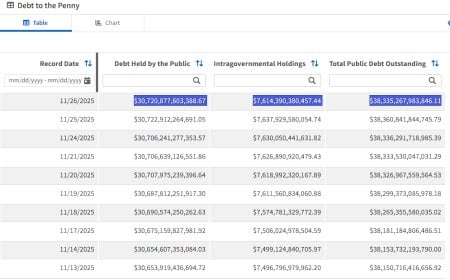 Article · related
The Overburdened Debt Economy: How a $1 Trillion Surge Tightens the Noose on Households, Businesses, and Growth
The U.S. added $1T in new debt in just 82 days. Here’s how rising federal, household, business, and state debts are overloading the economy and pushing rates higher.
Published Nov 29, 2025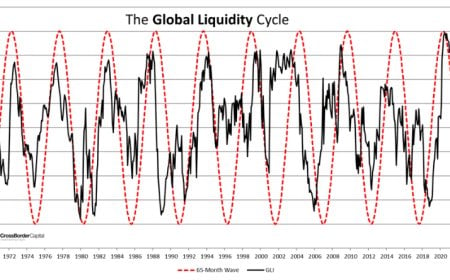 Article · related
Recessions Aren’t the Crisis — They’re the Trigger
Recessions are not the catastrophe — they’re the mechanical pivot that flips the modern dollar system from contraction back into liquidity expansion. A deep dive into why doom prophets misread the cycle, why 2026 is structurally important, and how the funding plumbing actually drives markets.
Published Nov 27, 2025 Article · related
QT Ends, Liquidity Returns: Why 2026 Is Almost Certainly the Next Balance-Sheet Expansion Cycle
Quantitative Tightening ends December 1st, and the plumbing shows reserves are already near scarcity. This article explains why 2026 is shaping up to be the next major liquidity-injection cycle, driven by heavy Treasury issuance, reserve demand, and Fed policy shifts.
Published Nov 25, 2025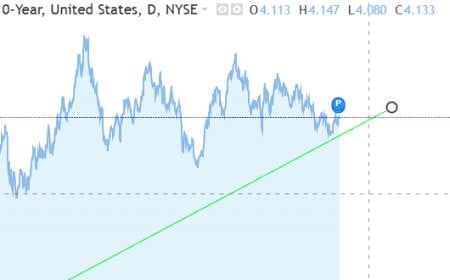 Article · related
The Gravity Zone: How the 10-Year Treasury Revealed the Real Neutral Rate
The 10-year Treasury has been oscillating around a hidden 3–4% neutral zone since 2022, revealing the true equilibrium rate the Fed keeps missing. This article breaks down why long rates refuse to fall, why the market no longer trusts traditional rate cuts, how the Treasury’s trillion-dollar TGA fits into the picture, and why quiet yield-curve management is becoming the new operating system of U.S. monetary policy.
Published Nov 18, 2025 Article · related
The Hidden Liquidity Crunch: Repo Stress, QT’s End, and the Dollar’s Trap
A systems-level map of the liquidity squeeze beneath the dollar: repo stress, falling reserves, structural deficits, and the QT halt—why the next policy turn likely means balance-sheet expansion, inflation risk, and a distributional regime shift.
Published Nov 12, 2025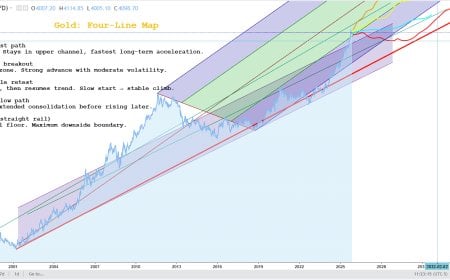 Article · related
Gold Surges as Senate Moves to Reopen Government — The Four-Line Map That Explains What Happens Next
Gold jumps as the Senate advances a government reopening bill, triggering liquidity pressure and renewed safe-haven demand. Our Four-Line Map breaks down what comes next.
Published Nov 10, 2025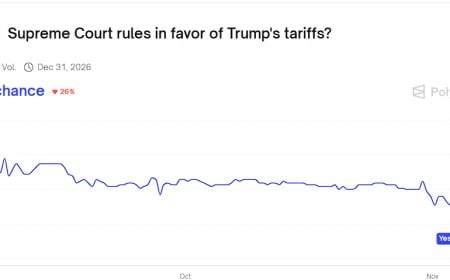 Article · related
The Supreme Court’s tariff case is an underpriced macro tail risk. A loss could trigger refunds, disrupt trade policy, and force a rapid White House pivot.
The Supreme Court’s challenge to the administration’s IEEPA tariffs is one of the most underpriced macro risks in markets right now. With prediction markets assigning barely a 25% chance of a pro-administration ruling, traders and policymakers are ignoring the possibility that billions in duties could be invalidated—or even refunded. This piece breaks down the legal stakes, the economic shock potential, the emergency fallback tools the White House could activate, and why this ruling could reshape pricing, Treasury issuance, and corporate planning over the next 1–2 quarters.
Published Nov 6, 2025