

treasury market
Automatically indexed from the existing article tag.
Theses, forecasts, models, and paths
No published research objects yet
This topic is ready for editors to connect a thesis, forecast, model, or research path.
Latest articles
 Article · related
CFTC Turns Tokenized Collateral Into a 24/7 Treasury-Market Plumbing Test
CFTC Chairman Michael S. Selig told the 2026 U.S. Treasury Market Conference that U.S. markets need to prepare for mass tokenization, onchain finance, AI adoption and potential 24/7 trading. The official conference agenda also put stablecoins, tokenized deposits and short-term funding directly inside the Treasury-market-functioning debate. The signal is less about crypto speculation than about the next collateral, margin and settlement layer for the dollar system.
Published Sep 24, 2026 Article · related
Fed Just Hiked Into a 5% 10-Year: Why the Next Liquidity Cycle May Arrive Faster
The Federal Reserve just raised the federal-funds target to 3.75%–4.00% while the 10-year Treasury closed at 5.01%, the 30-year at 5.35%, and the real 30-year at 3.09%. Pattern Nexus correctly identified the September hike risk and the developing QE/liquidity cycle, but underestimated the Fed’s willingness to raise rates against an already enormous debt and refinancing burden. This report asks the question almost nobody asks after a rate decision: what does the hike eventually break? It connects the September decision to the $40-trillion-plus federal debt structure, more than $1 trillion of annual federal net interest expense, Treasury issuance, long-end buybacks, Federal Reserve reserve-management purchases, hedge-fund leverage, the Treasury basis trade, private credit, housing, commercial real estate, household cashflow and the 2019 repo-market precedent. The conclusion is not that the Fed has deliberately chosen to create a crash. It is that monetary architecture now allows the Fed to tighten the price of credit while separately protecting reserves and market plumbing. The hike therefore does not invalidate the Pattern Nexus QE thesis. If long rates remain near current levels, it accelerates the transmission mechanism that can eventually force the next phase of liquidity support.
Published Sep 17, 2026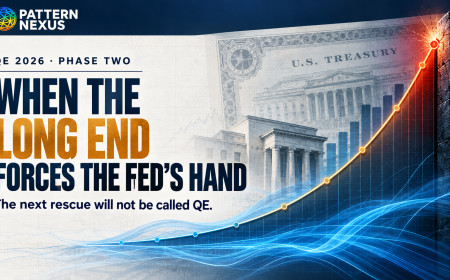 Article · related
QE 2026, Phase Two: When the Long End Forces Duration Control
The Fed already ended QT and expanded Treasury holdings through bill-focused reserve-management purchases, but that repaired the reserve layer without suppressing the long end. With the 10-year Treasury at 4.95%, the 30-year at 5.37%, real long yields near the Pattern Nexus red zone, Treasury doubling long-end buybacks, and August CPI limiting conventional easing, this report calculates the probability that QE 2026 moves into a second phase. It maps the likely program, the names it may use, the dates when it could expand, and the exact yield, reserve, auction, repo, leverage, and credit conditions that could force direct duration absorption.
Published Sep 11, 2026 Video · related
The Monetary Break — Audio-Video Edition
Episode 4 of the weekly Pattern Nexus audio-video series turns Part 4 of Cycles of Power into a shorter story about how silver redemption, the Nixon Shock, floating currencies, Eurodollars, oil shocks, petrodollar recycling, and offshore banking transformed the gold-linked dollar fortress into a global dollar web between 1968 and 1979.
Published Aug 30, 2026 Article · related
Treasury Turns Long-Bond Buybacks Into a Yield-Control Test
Treasury said it will raise maximum liquidity-support buybacks in the 10-to-20-year and 20-to-30-year nominal coupon sectors from $2 billion to at least $4 billion per operation beginning September 9, 2026. Follow-up reporting from AP, Reuters and Axios shows the market treated the move as an attempted long-end yield intervention, but the initial relief faded quickly. The Pattern Nexus read: this is not formal yield-curve control, but it is a live test of whether Treasury plumbing can absorb stress that monetary policy credibility and fiscal math are failing to contain.
Published Aug 22, 2026 Article · related
The Yen's Hidden Backstop: FIMA, Dollar Creation and the Treasury Market
Japan's 2026 yen intervention was enormous, but Federal Reserve balance-sheet data show FIMA was not used to fund it. That may be the more important finding. FIMA sits behind the global dollar system as a mechanism allowing approved foreign monetary authorities to temporarily turn U.S. Treasury collateral into newly supplied dollars instead of selling those Treasuries into the market. This report examines what FIMA actually does, why it is a form of temporary central-bank dollar creation rather than QE, what Japan's reserve structure looks like, and why another serious yen crisis could migrate directly into U.S. Treasury-market plumbing.
Published Aug 19, 2026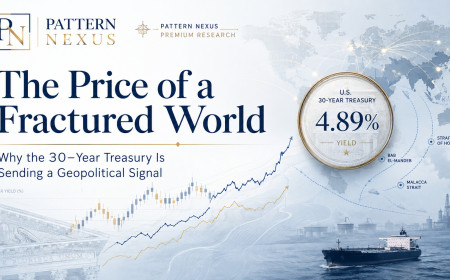 Article · related
The Price of a Fractured World: Why the 30-Year Treasury Is Sending a Geopolitical Signal
Something about the global system feels uncomfortable, and the last month of data suggests that feeling has a measurable foundation. The U.S. 30-year Treasury has pushed above 5.3%, real long-term yields are above 3%, the Strait of Hormuz remains severely constrained, U.S. missile inventories are being consumed across multiple theaters, Russia and Ukraine are attacking the commercial infrastructure of the Black Sea, China continues pressure around Taiwan and the South China Sea, new regional defense blocs are forming, tariffs are fragmenting trade, and governments and AI companies are simultaneously competing for enormous amounts of capital. This Pattern Nexus investigation asks whether the long end of the Treasury market is becoming one of the cleanest aggregate prices of a more fragmented world—and separates that thesis from the much weaker claim that the Treasury market itself is failing.
Published Aug 18, 2026 Article · related
The New Fed Chair Does Not Inherit an Economy. He Inherits the Permission Stack.
Kevin Warsh is not simply inheriting the Federal Reserve. He is inheriting the control layer where inflation, debt service, Treasury funding, energy shocks, AI infrastructure demand, repo plumbing, collateral stress, political pressure, and liquidity permission all collide. The public will debate whether the new Fed chair cuts, hikes, pauses, or changes the balance sheet. That is the surface story. The deeper Pattern Nexus story is that the Fed chair is now the public face of the permission stack. He helps decide where credit flows, where pain lands, which markets get oxygen, which sectors get squeezed, and what kind of crisis or cover event makes the next liquidity intervention politically acceptable. This is not a normal Fed transition. It is the next chapter in the liquidity-cover framework.
Published May 18, 2026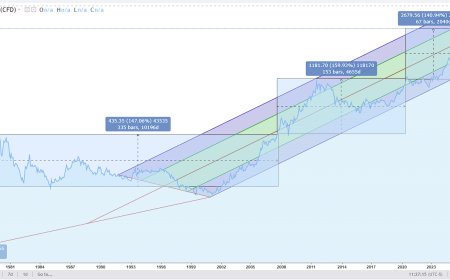 Article · related
Gold Isn’t Breaking Out — It’s Absorbing Policy Failure
Gold’s long-term rise is not a speculative breakout or inflation panic. It reflects repeated policy constraint, failed normalization, and the permanent reintroduction of liquidity to preserve funding stability. This report explains why gold has become system infrastructure inside the modern liquidity regime.
Published Dec 26, 2025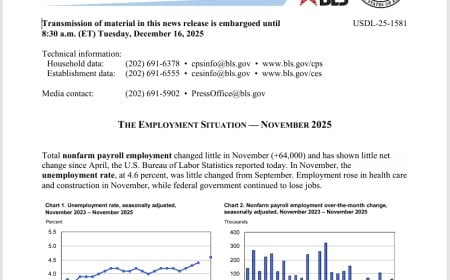 Article · related
Markets Catch Up to the Narrative: Jobs Noise, AI ROI Reality, and the Liquidity Repricing
A full cross-asset breakdown of December 16, 2025: the “noisy” delayed jobs report, a Fed that has already started cutting but won’t sprint, oil breaking below $60, and an AI complex forced to prove returns. This is not a headline day. It’s a regime day.
Published Dec 16, 2025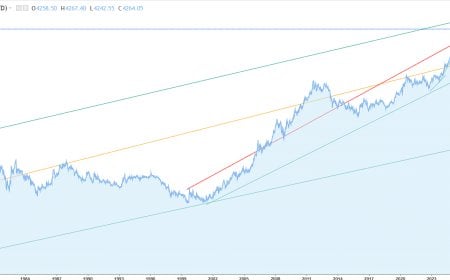 Article · related
Gold Didn’t Moon — It Locked Into a New Liquidity Rail
QT ends tomorrow and the Fed pivots to managing reserves with T-bills and MBS roll-off. Gold already snapped into a new liquidity rail, pricing faster debasement and rising bank stress.
Published Nov 30, 2025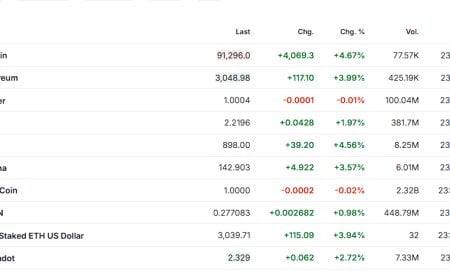 Article · related
Market Wrap – November 26, 2025: Thanksgiving Melt-Up as Yields Slip, AI Leads, and Crypto Goes Vertical
A full Thanksgiving-week market wrap for November 26, 2025: stocks drift higher, yields hover under 4%, oil stays soft, the AI mega-cap complex leads, micro-caps explode, and crypto rips into holiday liquidity. A Pattern Nexus analysis of the day’s full macro tape.
Published Nov 26, 2025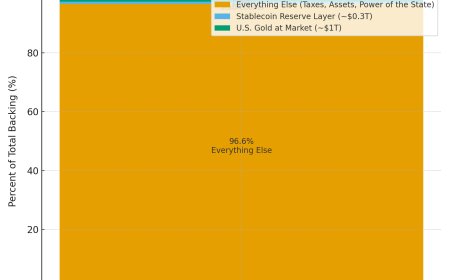 Article · related
The $42 Illusion: How the Market Repriced America’s Gold and Accidentally Revealed the Dollar’s Hidden Backing
Gold hit $4,400 in 2025—but the U.S. still prices its hoard at $42. This article breaks down the real backing of the dollar: gold, stablecoins, and power.
Published Nov 19, 2025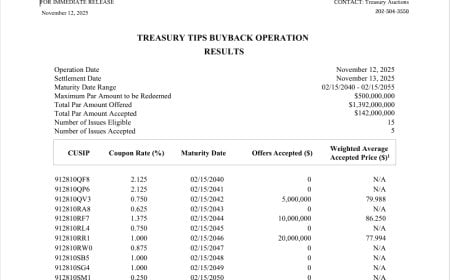 Article · related
Treasury Retires $142 Million in TIPS — Quiet Confirmation of the Buyback Era
The U.S. Treasury retired $142 million in TIPS on Nov 12, 2025 — a direct confirmation of the buyback-driven liquidity cycle we've been tracking. Here’s what the operation reveals about collateral stress, pre-QE interventions, and the evolving monetary plumbing.
Published Nov 12, 2025