

U.S. Navy
Automatically indexed from the existing article tag.
Theses, forecasts, models, and paths
No published research objects yet
This topic is ready for editors to connect a thesis, forecast, model, or research path.
Latest articles
 Article · related
Washington Turns a Third Carrier Into an Iran-War Escalation Option
The United States is dispatching the USS Theodore Roosevelt carrier strike group and the Makin Island amphibious ready group toward the Middle East, according to multiple reports citing U.S. officials. The deployment could briefly put three U.S. aircraft carriers in the region, depending on timing, as President Donald Trump weighs further pressure or renewed strikes against Iran. The strategic signal is not just military: it lands in an energy system already strained by Hormuz disruption, low distillate inventories, and elevated oil-price risk.
Published Oct 2, 2026 Article · related
The Lincoln Trap: 265+ Days Deployed, an Indefinite Iran War, and a Carrier Gap in the Pacific
USS Abraham Lincoln was supposed to return home in May. More than 265 deployment days later, the Navy is pulling USS George Washington—the only forward-deployed U.S. carrier in the Pacific—west to relieve it. The rotation exposes the real limit of American carrier readiness: eleven hulls do not equal eleven available carriers, and an open-ended Iran mission is transferring the readiness gap from the Middle East to the Pacific.
Published Aug 14, 2026 Article · related
Port Alpha vs the Shipyard Graveyard: How a Three-Year-Old Startup Is Trying to Rebuild the U.S. Navy With Autonomous Warships
The U.S. Navy is collapsing under delays, cost overruns, and a shrinking shipbuilding workforce. Programs slip years, budgets balloon, and the fleet flatlines while China’s shipyards pump out steel like an industrial firehose. Into that mess steps Saronic, a 2022 startup backed by hundreds of millions in venture capital, promising to build autonomous warships faster and cheaper from a new complex called Port Alpha. This isn’t just a cool drone story. It’s a quiet attempt to reboot American sea power through a startup shipyard.
Published Dec 3, 2025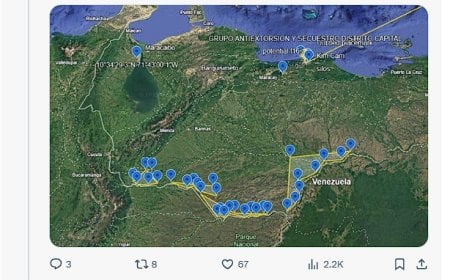 Article · related
The Venezuela Flashpoint: Why the U.S. Just Locked Down Airspace and Shifted the Caribbean Chessboard
The most in-depth analysis of the 2025 Venezuela escalation: FAA NOTAMs, airspace closure, U.S. naval buildup, covert operations, cartel-state networks, GPS interference, and the strategic implications heading into 2026.
Published Dec 1, 2025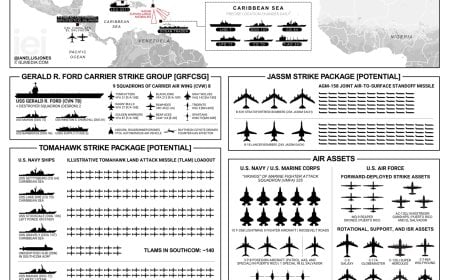 Article · related
Venezuela, SOUTHCOM, and the New Western Hemisphere Power Map (2025 Update) | Pattern Nexus
Updated 2025 force-posture analysis: why the Caribbean just became the most important theater of the 21st century. Carrier groups, JASSM bombers, Tomahawks, MEUs, ISR corridors — and what it signals for Venezuela, Guyana, and the next decade of hemispheric strategy.
Published Nov 9, 2025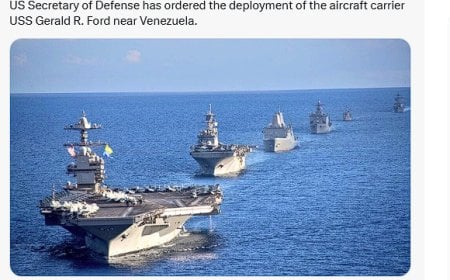 Article · related
Signal in the System: USS Gerald R. Ford Deployment and the Next Phase of U.S. Power Consolidation
The U.S. Navy’s Gerald R. Ford carrier deployment near Venezuela isn’t about drug interdiction — it’s the next signal in a global realignment. From digital money to military logistics, this move marks the convergence of economic, narrative, and kinetic power inside the Pattern Nexus system.
Published Oct 24, 2025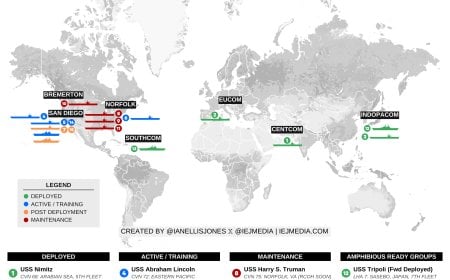 Article · related
Consolidating Power: The Global Carrier Pattern and the Caribbean Surge
U.S. carrier strike groups are on the move — from the Ford in the Mediterranean to the Iwo Jima Amphibious Ready Group now under SOUTHCOM in the Caribbean. The pattern points to global force consolidation and strategic readiness for simultaneous regional pressure events — not mere exercises. Consolidating Power, Carrier Strike Groups, U.S. Navy, SOUTHCOM, Iwo Jima ARG, Venezuela, Trump, Amphibious Assault, Global Deployment, Deterrence Strategy, Geopolitics, Military Buildup, U.S. Defense Posture, Pattern Nexus, Foreign Policy
Published Oct 23, 2025