

wealth inequality
Automatically indexed from the existing article tag.
Theses, forecasts, models, and paths
No published research objects yet
This topic is ready for editors to connect a thesis, forecast, model, or research path.
Latest articles
 Article · related
The Real Reason They Are Building Humanoid Robots: The End of Human Labor as the Foundation of the Economy
Humanoid robotics is not simply about building machines that walk, talk, and perform household chores. It is about creating a scalable physical labor force that can operate alongside artificial intelligence, transforming production, ownership, wages, consumer demand, and the monetary system. This analysis connects the robotics revolution to the wider Pattern Nexus framework: structural deflation, expanding liquidity, concentrated ownership, universal intelligence, programmable money, and the transition toward a post-labor economy.
Published Sep 21, 2026 Article · related
The Capital Ladder: Where $100 to $1 Trillion Places You in the Global and American Wealth System
A deep Pattern Nexus regression and data analysis mapping where net worth levels from $100 to $1 trillion place an individual within the global and American wealth distributions. The research separates actual net worth from liquidity, accessible credit, gross capital control, leverage, and daily capital-producing capacity. Where do you actually sit within the global wealth system—and how does that position change when we measure not only what you own, but how much capital you can access? This research maps wealth levels from $100, $500, and $1,000 through $1 million, $1 billion, $100 billion, and the theoretical $1 trillion threshold. Global and American wealth distributions are analyzed separately using regression models, percentile estimates, Federal Reserve household data, international wealth-distribution research, and 17 original charts and visualizations. The analysis distinguishes net worth from liquid wealth, available credit, collateral-backed borrowing capacity, and gross capital controlled. It then models how productive leverage can accelerate wealth growth, how destructive leverage can erase equity, and how much daily capital output different levels of wealth may generate. Net worth measures ownership. Liquidity measures deployability. Credit measures reach. Leverage amplifies the result. Capital efficiency determines whether that amplification creates wealth or debt.
Published Jul 10, 2026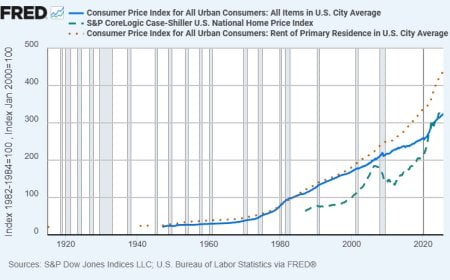 Article · related
How the Fed Quietly Stole 30% of Your Future (And How They’ll Use Stablecoins to Do It Again)
From 2020 to 2022, the Federal Reserve silently transferred 30–40% of your future purchasing power to asset owners via balance-sheet expansion, housing inflation, and the Cantillon effect. The next round of this game will run through stablecoins, CBDCs, and the Argentina playbook—bypassing governments and locking entire generations into asset feudalism.
Published Nov 15, 2025