

🏠 Wealth & Real Estate
Strategies and analysis on housing, equity cycles, and real-asset dynamics within shifting macro and demographic environments.
Theses, forecasts, models, and paths
No published research objects yet
This topic is ready for editors to connect a thesis, forecast, model, or research path.
Latest articles
 Article · primary
The Coastal Housing Repricing Map: Where the U.S. Housing Plateau Is Starting to Crack
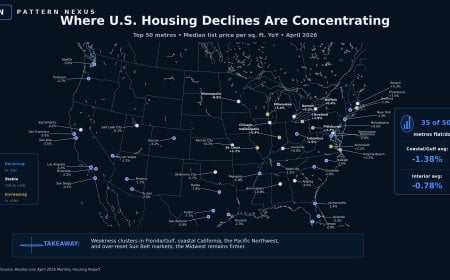
The U.S. housing market is not crashing everywhere. It is repricing where the affordability stack broke first: coastal price towers, insurance-stressed Florida and Gulf markets, high-rate West Coast metros, and over-reset Sun Belt cities where sellers are finally forced to meet buyers where they are. Realtor.com’s April 2026 top-50 metro data shows 35 of 50 major metros flat or down on median list price per square foot. Case-Shiller confirms the same slowdown through repeat-sales data. Pattern Nexus called this structure months ago: not a clean 2008-style collapse, but a fragmented housing plateau where geography, rates, insurance, taxes, liquidity, and cash-flow math decide which markets hold and which markets reprice.
Published May 26, 2026 Article · primary
The Unrealized Gains Trap: Property Taxes Are the Warning, Not the Excuse
A viral argument says if homeowners already pay property taxes on assessed value, then rich people should be taxed on unrealized stock gains too. But that logic misses the actual danger. Property tax is not a clean argument for expanding unrealized-gains taxation. It is the live demonstration of what happens when government turns paper value into a real recurring bill before cash exists. This Pattern Nexus research paper breaks down the difference between realization and assessment, the history of U.S. tax expansion, the income tax’s shift from narrow elite levy to mass withholding system, the AMT’s expansion problem, and why “it only starts with billionaires” is not a serious historical argument.
Published May 23, 2026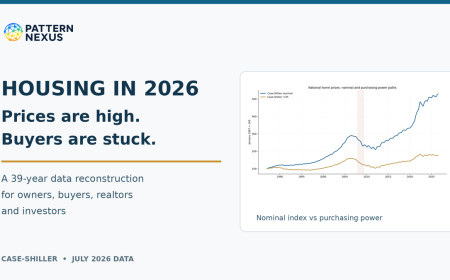 Video · avenue
Housing in 2026: Prices Are High, but the Market Is Barely Moving
The July Case-Shiller index reached another nominal high, but inflation, financing costs and weak sales tell a different story for the marginal buyer. Pattern Nexus reconstructs national prices from 1987, tests pre-2008 and 2019 inventory baselines, separates vacant homes for sale from rental vacancies, compares a 2019 and 2026 purchase payment, checks credit and construction, maps metro divergence and scores earlier PN housing claims. Includes 18 original charts and a practical guide for housing stakeholders.
Published Sep 30, 2026 Article · avenue
2026 Landlord Outlook: Cautious Optimism, Multifamily Strength, and the New Housing Map
A Pattern Nexus breakdown of Innago’s 2026 landlord survey showing cautious optimism, portfolio expansion plans, multifamily dominance, Midwest and South rotation, and rising AI adoption in rental ownership.
Published Mar 11, 2026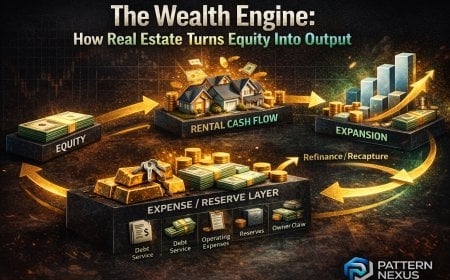 Article · avenue
The Wealth-Engine Differential: Hard Asset Preservation vs Leverage-Based Multiplication
A clean, numbers-first comparison of $500,000 allocated to gold versus the same $500,000 deployed into leveraged Midwest single-family rentals. The point isn’t which asset “wins” on price—it’s how wealth engines compound through cash flow, tax structure, and balance-sheet optionality.
Published Jan 9, 2026 Article · avenue
Housing Is the Target: The 2026 Mortgage-Rate Compression Play
Trump’s directive for Fannie and Freddie to buy $200B in mortgage bonds, alongside a still-easing rate backdrop, signals an explicit attempt to compress mortgage spreads and support housing. This framework maps the plumbing, the limits, and what would have to break for home prices to stop grinding higher.
Published Jan 8, 2026 Article · avenue
Housing QE by Proxy: How Weaponizing Fannie and Freddie’s Buffers Turns the GSEs into Political Liquidity Machines
Floating the idea of using Fannie Mae and Freddie Mac’s capital buffers to buy mortgages is more than a housing tweak. It’s an attempt to run QE through the GSEs instead of the Fed, turning housing finance into a political liquidity machine and removing the crash pad when the cycle turns.
Published Jan 8, 2026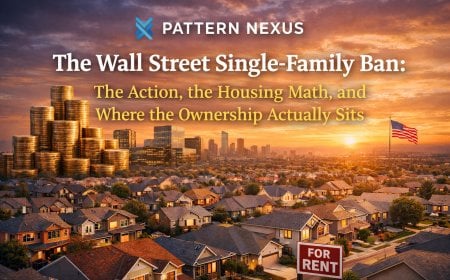 Article · avenue
The Wall Street Single-Family Ban: The Action, the Housing Math, and Where the Ownership Actually Sits
Trump says he will ban large institutional investors from buying single-family homes. Here’s the real housing inventory math, what share institutions actually control, where the concentration sits, and what would need to change for affordability to move.
Published Jan 7, 2026 Article · avenue
Pending Home Sales Confirm the Hard-Asset Rotation — Not a Housing “Surprise”
November pending home sales rose 3.3% month over month and 2.6% year over year, confirming a liquidity-driven rotation within hard assets. This analysis explains why housing strength can coincide with gold and silver weakness, and why “housing is overvalued” misunderstands credit, currency, and easing dynamics.
Published Dec 29, 2025 Article · avenue
Debt Is Not Income: How Asset-Based Living Legally Escapes the Tax Trap
The tax system taxes transactions, not wealth. Learn how borrowing against appreciated assets allows individuals to legally fund their lives without triggering income or capital gains taxes—and why this is a structural feature of modern finance, not a loophole.
Published Dec 25, 2025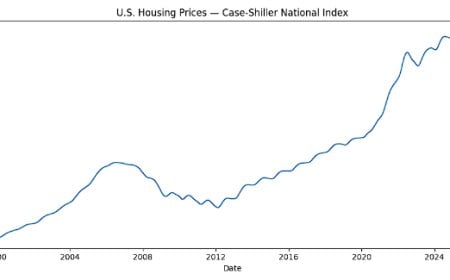 Article · avenue
Gold Didn’t Just Reprice — It Quietly Cut Housing in Half
Gold’s 2025 repricing didn’t happen in isolation. Measured in gold, U.S. housing has quietly lost 40–50% of its value without a nominal crash. This article breaks down the hard-asset divergence, why it can’t persist, and how housing may reprice despite poor affordability.
Published Dec 22, 2025 Article · avenue
Building a Scalable Real Estate Portfolio: The Cash-Flow Formula, DSCR Lending, and the Operating System That Gets You From 1 Property to 10
A real-world, systems-based blueprint for building a rental portfolio without relying on hype or appreciation narratives. Covers deal math, DSCR loans, reserves, tenant operations, vendor stacks, communications, money flows, and how to scale from one unit to ten while maintaining control.
Published Dec 17, 2025 Article · avenue
The K-Shaped Recovery: Why the Bottom Half Can’t Survive Without Subsidies
The K-shaped recovery has split America into two economies: a subsidized bottom that mathematically cannot survive on wages alone, and an asset-rich upper tier riding liquidity, asset inflation, and AI-driven growth. This deep dive walks through the real math of $40k–$60k households, why subsidies must expand, and what it means for landlords and policy.
Published Dec 9, 2025 Article · avenue
Half-Century Mortgages and Fantasy Car Loans: How Ultra-Long Debt Turns Households Into Cashflow Collateral
The Trump administration’s 50-year mortgage proposal, paired with viral rumors of 15-year car loans, is being sold as “affordability.” In reality, ultra-long debt structures double the interest burden, trap low-income households in lifetime payments, and weaponize credit against an already fragile workforce.
Published Dec 5, 2025 Article · avenue
NAR’s 2026 Housing Boom Fantasy: Why a 14% Rebound Requires a Liquidity Intervention
The National Association of Realtors is projecting a 14% rebound in existing-home sales for 2026 — but their forecast depends on a fragile monetary backdrop, a controlled collapse in mortgage rates, and a hidden liquidity intervention. This Pattern Nexus deep dive breaks down the real mechanics behind the “housing comeback” narrative.
Published Dec 1, 2025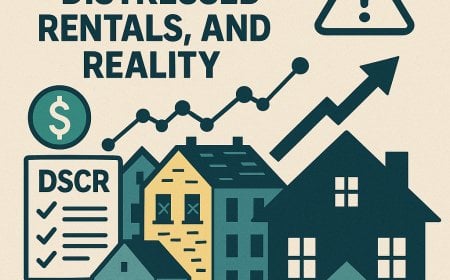 Article · avenue
DSCR Loans, Distressed Rentals, and Reality: A Field Guide for Small Investors
A deep, non-sugarcoated Pattern Nexus field guide explaining how small investors can use DSCR loans, distressed rentals, and targeted rehabs to scale a real-estate portfolio—and every major risk that can destroy the strategy if executed poorly.
Published Nov 27, 2025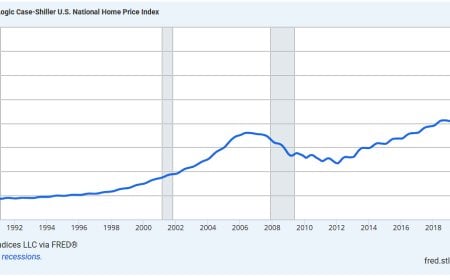 Article · avenue
The Quiet Crisis: Rising Foreclosures, Falling Rents, and the Stress Building Beneath the U.S. Housing Market
Foreclosures are quietly rising, rents are softening, and household budgets are breaking. A deep Pattern Nexus analysis of October 2025 foreclosure data, tenant stress, and the Great Housing Plateau.
Published Nov 17, 2025 Article · avenue
The Lock-In Economy: Why America’s Housing Market Remains Frozen
The Lock-In Economy: Why America’s Housing Market Remains Frozen (2025) Meta Description: Rates above 7 percent created a lock-in freeze as homeowners cling to ultra-low mortgages. Here’s how it distorts supply, demand, demographics, and policy—and what could finally break it.
Published Oct 29, 2025 Article · avenue
🚫 The 1% Down Payment Trap: Why “Affordable Homeownership” Isn’t What It Seems
Rocket Mortgage’s “1% down payment” program sounds like an opportunity—but it’s actually a financial trap. Here’s why ultra-low down payments create long-term risk, negative equity, and constant expenses that drain real wealth.
Published Oct 28, 2025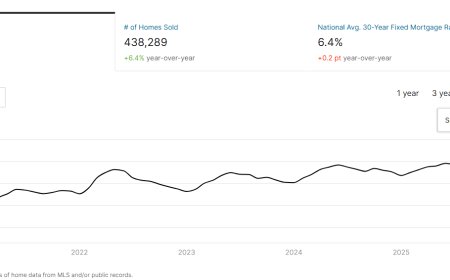 Article · avenue
October 2025: Housing, Wealth & the Interest Rate Reversal
Housing Affordability and Wealth Trends – October 2025, An in-depth look at how falling interest rates, easing inflation, and a shifting rental market are impacting real estate and wealth distribution in October 2025.
Published Oct 21, 2025 Article · avenue
The Illusion of Ownership: How Leverage and Liquidity Redefined the Middle Class
For decades, the idea of homeownership was synonymous with security. But after 2008, that dream quietly shifted from ownership to leverage — from building roots to building returns. This analysis explores how central banks, institutional capital, and modern lending turned the middle class from owners into participants in a liquidity machine, and what that means for those still trying to build lasting wealth.
Published Oct 18, 2025 Article · avenue
🏠 The Great Housing Plateau: Why the American Dream Is No Longer a Ladder
The housing market was once a ladder — a path from one stage of life to the next. Now, for most people, it’s a plateau. The combination of high rates, tight credit, and structural scarcity has transformed homes from symbols of progress into instruments of leverage. But for those who understand the system, real estate remains one of the last tangible ways to grow wealth in a world where everything else is digitized and abstracted.
Published Oct 18, 2025