
The Weight of Time: On Building Something That Lasts
Legacy isn’t about memory — it’s about momentum. In an age obsessed with immediacy, this essay explores the deeper architecture of endurance: how systems, people, and civilizations preserve meaning through adaptability. Drawing from philosophy, science, and lived experience, it examines how we build for permanence in a world designed for change.
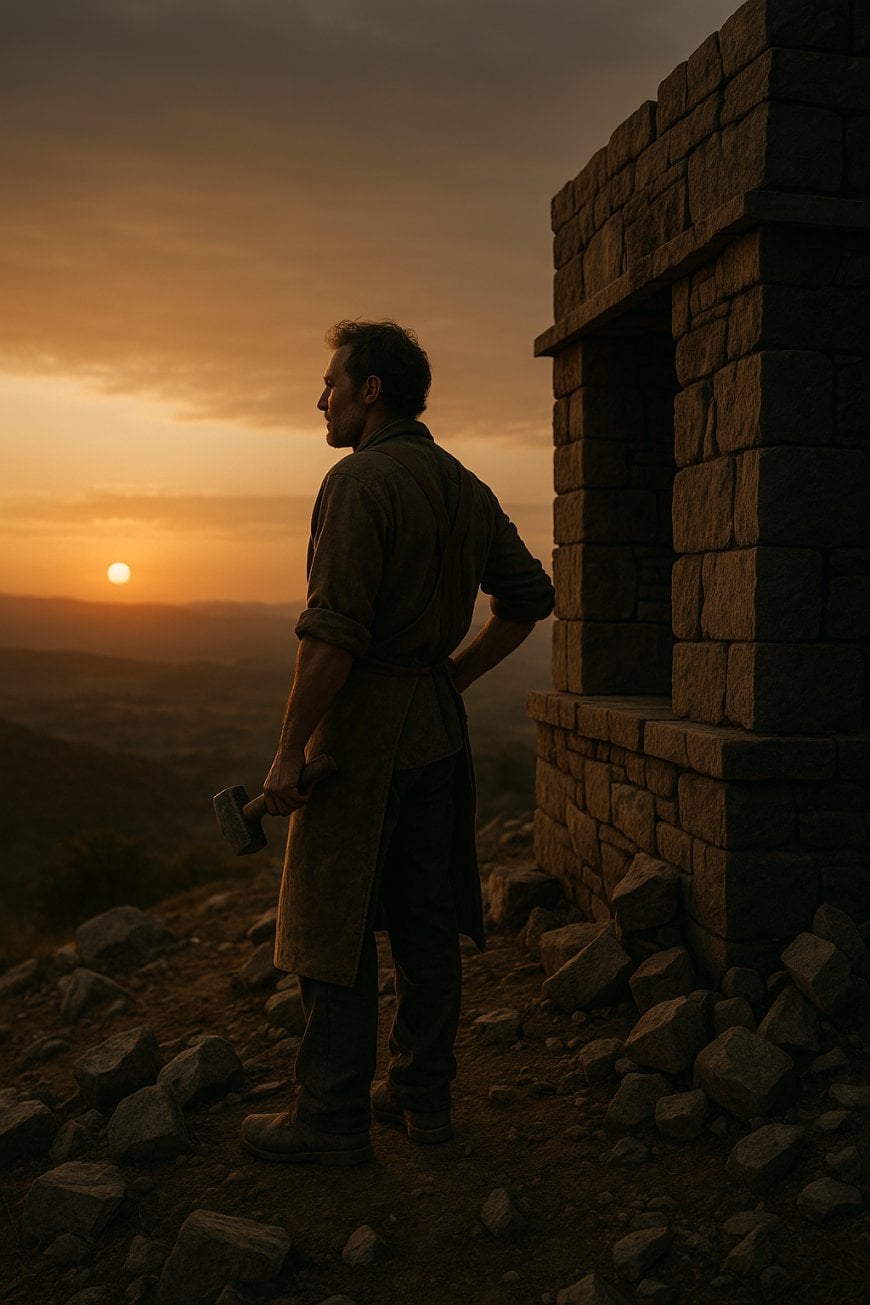
The Weight of Time: On Building Something That Lasts
There’s a moment in every creator’s life — somewhere between exhaustion and quiet victory — when you realize you’re not building for yourself anymore. You’re building for continuity. For the ones who will never know your name but will live in the structure of what you’ve made. That realization changes everything. The pursuit of wealth, power, or recognition fades. What remains is the question that keeps the soul awake: Will it last?
Legacy isn’t about memory. It’s about momentum. The kind that persists when you’re no longer there to push it. The older I get, the more I understand that every decision, every structure, every pattern of thought we leave behind becomes the soil in which someone else’s future grows. Time erodes everything — except meaning. Meaning is the only material that resists decay.
We often mistake legacy for monuments. For names on buildings or photos on mantels. But true legacy is quieter. It lives in the values we instill, the systems we design, and the stability we leave behind. A structure that endures — whether it’s a family, a business, or a philosophy — does so not because it was perfect, but because it was adaptable.
That’s what time teaches: permanence doesn’t come from resisting change, but from understanding it. Nothing truly survives unless it evolves. The same physics that govern galaxies govern empires, and the same entropy that breaks down stars works through human lives. To build something that lasts, you don’t fight entropy — you design with it in mind.
The Architecture of Continuity
When I look back at every structure I’ve built — physical, intellectual, or emotional — I see the same principle at work: strength through flexibility. The strongest materials aren’t rigid; they absorb stress. The same applies to systems. Families that endure through generations aren’t the ones without conflict, but the ones that can adapt to it. Businesses that outlast their founders aren’t those built on charisma, but on structure.
The universe itself is a masterclass in adaptability. Stars die to form heavier elements. Galaxies collide to birth new ones. The cosmos doesn’t cling to permanence — it reinvents itself endlessly. Legacy, in that sense, is an act of alignment with nature. It’s not about resisting impermanence. It’s about creating something that can reconfigure itself when you’re gone.
In Nature Physics, a 2023 paper on self-organizing systems noted that “the only systems that persist across temporal scales are those capable of dynamic equilibrium — the capacity to adapt structure without losing identity.” That’s true of atoms and empires alike. The same laws that hold a galaxy together hold a legacy together: gravity through relationship, coherence through balance.
Every generation inherits the unfinished work of the last. The goal isn’t to preserve it in amber, but to continue its motion — to carry the momentum forward with awareness. That’s why true builders think generationally. They design systems that don’t require them to exist. The highest form of intelligence is self-obsolescence — to build something so complete that it can outgrow you.
The Cost of Endurance
To build something that lasts demands sacrifice. Not of comfort or wealth, but of ego. Most people build to be seen; few build to be sustained. It’s easy to make noise. It’s hard to make structure. To think beyond your own lifetime requires detachment — the humility to know that legacy means surrendering ownership to time.
Every craftsman faces this paradox. The builder of cathedrals never lived to see the roof completed. The philosopher never saw their ideas reach their full influence. The reformer never saw the society they imagined. Legacy work is slow work. It’s the kind that trades applause for longevity.
That’s why the modern world struggles with the idea of legacy. We live in the age of immediacy — quarterly goals, viral content, and instant gratification. But things that last require time to mature. Trees that grow fast have soft wood. Oaks take decades, but they weather centuries.
I sometimes think the most powerful thing you can do for the future is to build something that will make sense long after you’re gone — not because it’s trendy, but because it’s true. Truth is the only investment that compounds forever.
Legacy as a System
Legacy is not a possession; it’s a feedback loop. You build something → it changes people → they continue it → it changes again. The system evolves beyond you, but its DNA carries your fingerprints. That’s why legacy can’t be designed through emotion alone. It requires structure, just as emotion requires vessel.
In Behavioral and Brain Sciences, researchers describe humans as “recursive architects” — organisms that design systems to preserve internal order across time. Legacy, therefore, isn’t accidental. It’s a biological impulse expressed through civilization. We build because entropy demands it. And the more aware we become of that, the more intentional our designs can be.
In my own life, I’ve learned that stability doesn’t come from control. It comes from rhythm. From understanding that every cycle of chaos eventually becomes the blueprint for order. If you can find beauty in the collapse, you can build forever.
Time as a Teacher
Time is both the enemy and the mentor of every builder. It destroys what’s shallow and strengthens what’s deep. The longer you endure, the more you realize that time isn’t trying to erase you — it’s trying to refine you. It strips away the unnecessary until only essence remains.
That’s the secret of every enduring thing: it learned to cooperate with decay. Stone smooths under weather. Metal hardens under stress. And people — the ones who grow — are the ones who stop fearing change and start shaping it.
A true legacy doesn’t fight time; it becomes timeless by flowing with it. That’s what the Stoics understood. Marcus Aurelius wrote, “What we do now echoes in eternity.” He wasn’t talking about fame. He meant resonance — the way an act done with clarity vibrates through the structure of reality.
The Continuum
Every system, every generation, every empire faces the same decision: evolve or erode. The builders who understand this become architects of the continuum. They don’t build walls; they build conduits. They know that permanence isn’t about preservation — it’s about participation in the ongoing process of renewal.
Legacy, then, isn’t something you leave. It’s something you enter into — a conversation with time. You don’t control how it’s remembered; you control how it’s constructed. And if it’s built on truth, adaptability, and compassion, it will outlive memory itself.
Because what we call “lasting” isn’t the structure we see — it’s the pattern it carries. And patterns, unlike people, never die.
Sources & References
- Nature Physics – Self-Organizing Systems and Dynamic Equilibrium (2023)
- Behavioral and Brain Sciences – Why Humans Build Systems (2024)
- Psychological Science – Temporal Resilience and Legacy Behavior (2024)
- Harvard Business Review – The Architecture of Enduring Organizations
- Frontiers in Psychology – Legacy Motivation and Meaning in Human Endeavor
#Legacy #Reflection #Endurance #Time #Philosophy #Systems #Continuity #PatternNexus
آپ کا ردعمل کیا ہے؟
 پسند کریں
0
پسند کریں
0
 نہ پسند
0
نہ پسند
0
 محبت
0
محبت
0
 مزاحیہ
0
مزاحیہ
0
 واہ
0
واہ
0
 اداس
0
اداس
0
 غصہ
0
غصہ
0

Founder of Pattern Nexus. I research markets, macro, geopolitics, AI, history, ancient systems, and the patterns most people overlook. I’m also building Market Radar, a trading scanner designed to read pressure, risk, confirmation, and setup quality before chasing a move. Pattern Nexus is where I connect the dots between data, history, technology, and the bigger system playing out around us.












تبصرے (0)