
Exponential Minds and Simulated Realities
Mind uploading, AI acceleration, quantum consciousness, and simulation theory are converging into a new reality. This 2050 forecast reveals what happens when digital minds meet programmable universes — and what it means for identity, ethics, and existence.
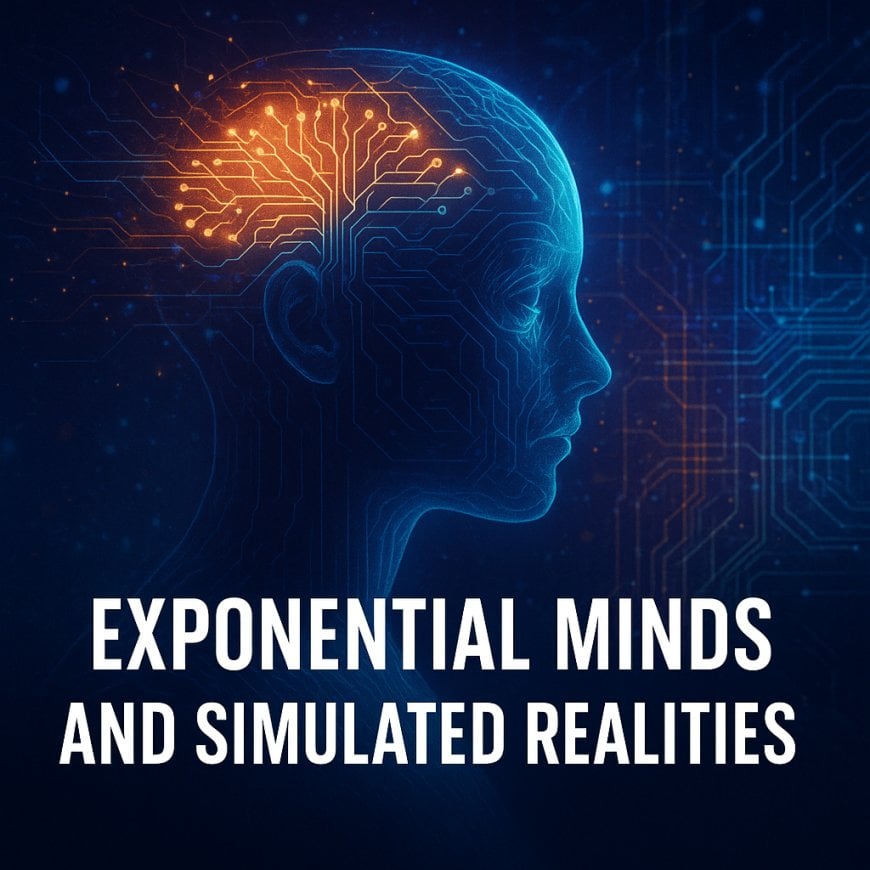
Exponential Minds and Simulated Realities: The Future of Consciousness by 2050
In the mid-2020s, two seemingly disparate frameworks are beginning to intertwine, promising to redefine the nature of mind and reality. One is exponential AI-driven neuroscience, aimed at mapping the human brain and achieving mind uploading within a few decades. The other is a speculative cosmology of quantum mechanics and simulation theory, which questions whether our universe itself might be an information-rich simulation shaped by observers. As we look toward 2050, these frameworks converge into a single provocative narrative: a future where human consciousness can be digitized and potentially duplicated, even as reality is understood as a malleable, multilayered simulation. This article charts that convergence from present trends to a mid-century vision, blending technical roadmaps with philosophical inquiry in a unified story about the fate of mind, identity, and reality in an era of accelerating technology.
Foundations in 2024: AI Acceleration and Quantum Insights
By late 2024, breakthroughs in artificial intelligence and computing hardware set the stage for unprecedented advances in neuroscience. Cutting-edge AI models like GPT-5, Google DeepMind’s Gemini, and Anthropic’s Claude 3.0 have pushed the boundaries of machine reasoning, multimodal understanding, and safe alignment. These models are not true general intelligences, but they exhibit emergent abilities in reasoning and problem-solving that turbocharge research workflows. In neuroscience, AI assists in tasks like analyzing brain scans and designing better brain–computer interfaces (BCIs), dramatically shortening discovery cycles. At the same time, quantum computing prototypes from IBM and Microsoft demonstrated error-corrected qubits, hinting at new computational paradigms for simulating complex systems. Specialized AI hardware (GPUs, TPUs) also leaped ahead, delivering order-of-magnitude performance gains and feeding the exponential curve of progress. Taken together, these trends suggest that the longstanding barriers to whole brain emulation might soon crumble under sheer computational might.
On the more theoretical front, 2024 also saw a resurgence of interest in the quantum nature of reality and simulation hypotheses. Quantum experiments continue to reinforce bizarre phenomena: particles behaving like waves until observed, entangled particles influencing each other instantly across space, and even “delayed choice” setups implying the future can influence the past. These findings challenge our classical understanding of time and causality. They lend credence to interpretations like the many-worlds theory, which posits a vast multiverse of parallel outcomes, and to the idea that consciousness (the observer) plays a key role in “collapsing” reality into one outcome. The simulation hypothesis – notably advanced by philosopher Nick Bostrom – gains new relevance from these insights. Bostrom’s argument holds that if any civilization reaches the capability to create countless high-fidelity conscious simulations, then statistically our own reality is likely one of those simulations As AI and quantum computing progress toward enabling such simulations, this argument inches from philosophy toward plausible scenario. In short, by 2024 the technical tools to digitize minds are emerging in parallel with scientific and philosophical frameworks that question the very fabric of reality. The stage is set for an extraordinary coalescence.
2025–2030: Laying the Groundwork for Digital Minds
The second half of the 2020s is marked by foundational breakthroughs in mapping and emulating brains – steps essential for eventual mind uploading. Researchers focus on solving three grand challenges: (1) obtaining a complete high-resolution map of a brain’s neural connections (the connectome), (2) creating computational models that simulate the brain’s dynamic activity, and (3) providing a substrate (virtual or robotic) where the simulated mind can “live”. Progress in each area accelerates thanks to AI and nanotechnology:
-
Advanced Brain Imaging: Labs develop nanoscopic probes and high-speed scanners capable of recording neural circuitry at near-synapse resolution. By 2027, AI-designed nanorobots can travel through brain vasculature, mapping neurons and synapses non-invasively in animal models. Connectomics moves from a painstaking manual task to an automated AI-driven pipeline, slicing analysis times from months to days. Early successes include the first complete wiring diagrams of tiny organisms (e.g. fruit flies, roundworms) and substantial portions of mouse and rat brains. These achievements validate the feasibility of mapping larger brains and provide testbeds for simulation.
-
Prototype Mind Simulations: With improved maps, attention turns to simulating neural activity. In the late 2020s, research teams leverage zettascale supercomputers (10^21 operations per second) and nascent quantum accelerators to run large-scale neural network models. Quantum processors help solve thorny problems like reconstructing missing synapses or modeling neurotransmitter dynamics by treating them as optimization and quantum chemistry tasks. By 2028, a few landmark demonstrations occur: simple animal brains are emulated in silico with high fidelity – a virtual fruit fly seamlessly mimics the behavior of its biological counterpart, reacting to stimuli in a simulation just as a real fly would. Around the same time, neuroscience visionaries announce partial “uploads” of mammalian brains: for example, a mouse brain simulation that reproduces some motor functions and learned behaviors of the living mouse. These are early and imperfect, but they lay critical groundwork for eventual human brain emulation.
-
Brain–Computer Interfaces (BCI) and Memory Preservation: In parallel, the 2025–2030 period sees rapid improvements in BCIs driven by both big tech and start-ups. Elon Musk’s Neuralink and its competitors conduct human trials implanting microelectrodes that can read and stimulate neurons with unprecedented precision. By the late 2020s, BCI prosthetics allow some paralyzed patients to control computer cursors or robotic limbs directly with thought, and early memory prosthesis experiments show potential for restoring simple memories by writing into the hippocampus. These achievements not only have therapeutic value but also build the toolkit for mind uploading. A noteworthy development is the concept of “memory backups.” A small number of volunteers begin undergoing high-resolution hippocampal scans to archive episodic memories in digital form. Though far from a full mind upload, this idea of preserving one’s core memories foreshadows a future in which a person’s entire mental state might be saved and restored. Society at large grows aware of these efforts; tech media in 2028 report on the first “digital mind files” of individuals, sparking public fascination and debate about digital immortality.
Challenges and Ethics (2025–30): These early strides come with significant challenges. Medical ethicists and governments grapple with how to regulate invasive neurotech and high-stakes experiments on consciousness. By 2025, the EU and other regions have updated laws to provide strict oversight of human trials in AI neurotechnology. Questions of personal identity and data privacy loom large as brains are scanned and digitized – if your neural data is stored on a server, how do we protect that you? Ensuring data integrity and encryption for “mind files” becomes a paramount concern. There is also a growing recognition of the biological complexity of the human mind. Early simulations struggle to model glial cells, neuromodulators, and the ever-changing synaptic strengths that underlie learning. Some neuroscientists argue that classical computing might never capture these subtleties fully, raising the possibility that quantum processes (such as those posited in the Orch-OR theory of consciousness) are at play in the brain. This debate sets the stage for a deeper synergy between neuroscience and quantum physics in the 2030s. Still, by 2030 the trajectory is set: brain digitization is no longer science fiction but an active multidisciplinary enterprise. Researchers and philosophers alike sense that the coming decade will bring partial human uploads – and with them, a host of new dilemmas.
2030–2040: Scaling Up – Early Human Uploads and Quantum Leaps
Entering the 2030s, efforts toward mind uploading shift from proof-of-concept to scaling and refinement, now increasingly centered on human brains. At the same time, advances in quantum computing and theory begin to directly inform how scientists and philosophers think about consciousness and reality.
Human Brain Mapping and Trials: By the early 2030s, noninvasive brain imaging reaches astounding resolution. AI-guided nano-robots and next-generation MRI machines can map a living human brain down to the level of synapses, albeit slowly and in sections. Large-scale projects launch to create a comprehensive “atlas of the human connectome,” crowdsourcing brain data worldwide and using multi-agent AI to stitch together universal maps of brain circuitry. With these tools, the first partial human mind uploads are attempted around the mid-2030s. In medical trials, terminally ill volunteers consent to extensive brain scans – some post-mortem, others through high-density BCI electrodes in life – aiming to reconstruct aspects of their mind in software. It converses with the patient’s family, demonstrating familiar quirks and memories – arguably a first step toward digital resurrection.
In these early human uploads, virtual reality (VR) serves as the testing ground. Researchers “host” the uploaded neural models in simplified virtual environments to see how they perform. Imagine a rudimentary digital apartment where an uploaded mind wakes up, interacts with virtual objects, and communicates via text or speech. By 2035, a few tech pioneers announce that their digital copies can recognize loved ones (through photos or voice) and perform tasks like composing emails in the person’s style. However, skepticism remains high. Are these truly conscious beings or just sophisticated chatbots echoing the original person’s data? Philosophers point out that even if the functional behaviors match, we cannot be sure the subjective awareness (the qualia) has transferred. This debate – whether a simulation can truly be the person or just imitate them – intensifies throughout the 2030s, with no consensus. It does, however, prompt rigorous research. Neuroscientists begin collaborating with physicists to test if uploaded minds exhibit signs of consciousness, such as observing whether they demonstrate the same unpredictable creativity as biological brains or even whether they produce quantum-like effects (an outlandish idea, but some propose using quantum random number tests to see if an upload can “collapse a waveform” via observation in a quantum VR simulation, as a proxy for consciousness).
Quantum Computing Maturity: The mid-2030s mark the dawn of practical quantum computing applications. By 2032, quantum computers routinely achieve hundreds of logical qubits with full error correction, and they excel at simulating complex quantum systems and solving massive optimization problems beyond the reach of classical supercomputers. This has direct impact on the mind uploading quest. Quantum algorithms are employed to analyze noisy or incomplete brain scan data, cleverly inferring missing synapses or neuron states by treating connectome reconstruction as a giant puzzle that quantum annealers can solve optimally. More intriguingly, quantum hardware begins to simulate aspects of the brain at a molecular level. Some theories (inspired by Roger Penrose and Stuart Hameroff’s work) suggest that microtubule structures in neurons might host quantum-coherent processes fundamental to consciousness. In 2036, a controversial experiment uses a quantum simulator to model microtubule dynamics inside a simulated neuron, probing whether quantum effects could influence neural firing. The results are inconclusive but spark debate about whether true mind uploading might require quantum as well as classical simulation. If consciousness indeed relies on quantum processes, then only a quantum computer or a hybrid quantum-classical platform might run an authentic digital mind. This possibility motivates projects to integrate quantum accelerators into brain emulation platforms by the late 2030s.
Cultural Shifts and Early Adopters: Society during this decade begins to seriously confront the prospects of digital persons. What was recently cyberpunk fiction becomes a real policy question: Is an uploaded mind a legal person or just data? In 2031, a special US Congressional committee debates this, prompted by the first instances of people bequeathing their “mind files” in wills. By 2035, at least one country (perhaps a tech-progressive nation like Estonia or South Korea) grants limited legal recognition to a digital proxy of a deceased person – allowing it to manage the person’s digital assets and continue running in a state-sponsored data center. These moves are tentative and controversial. Religious groups object that mind uploading “plays God” or that an upload is an soulless copy, not the true individual. Psychologists raise concerns about the grieving process if loved ones continue to interact with a digital simulation of the departed. Nonetheless, a transhumanist subculture enthusiastically embraces these developments. By the late 2030s, it’s not just the dying who seek to upload; some healthy individuals undergo partial scans to create “digital twins.” These digital twins are not fully conscious copies, but they serve as advanced personal assistants running on one’s cognitive data – scheduling appointments, making decisions in one’s style, and even engaging in basic conversation. The wealthy and powerful often employ such digital doppelgängers, raising the question of whether these shadows have any rights or if they are mere property.
Challenges (2030–40): The journey through the 2030s is not smooth. A major incident in 2033 involves an AI algorithm misinterpreting neural data during an upload attempt, resulting in a distorted, possibly suffering digital mind. This prompts the formation of international Ethical Oversight Boards that must approve human upload experiments and ensure humane treatment of digital minds. Safety becomes paramount: multi-agent AI systems that handle brain data must be aligned to avoid tampering or unintentionally inducing pain in simulations. Another growing concern is inequality – these early upload procedures are extremely expensive, available to a small elite. Observers warn of an “immortality gap” where the rich could achieve digital life extension while others cannot. This fuels calls for making the tech accessible or for governments to regulate it. On the technical side, scalability is a looming issue: storing and computing even a single human’s brain simulation requires immense resources. Although by 2030s we have zettaflop computers, a detailed real-time emulation of a human brain is still at the edge of possibility. Researchers push for further breakthroughs in hardware, including 3D computing architectures, photonic processors, and more efficient algorithms to handle brain-scale AI. Energy consumption, too, becomes a talking point – data centers running large simulations draw enormous power, clashing with society’s climate goals unless cleaner energy solutions keep pace.
Meanwhile, on the philosophical front, the 2030s witness a renaissance of ideas blending science and metaphysics. Concepts from quantum mechanics – like non-linear time and many-worlds – begin to be invoked in discussions about personal identity and free will in a world of digital minds. Thought experiments abound: if you fork your digital mind into two copies that then diverge, have you created parallel “worlds” of experience? Is each copy you, or only the original? Some thinkers argue this is effectively a man-made realization of the many-worlds interpretation – instead of nature splitting reality, humans are intentionally splitting their consciousness into multiple timelines. Free will debates are rekindled with new complexity: an upload could theoretically be paused, edited, or even merged with another mind’s data. Does this reduce an upload’s autonomy, or introduce degrees of freedom impossible in biological life? Such questions remain unresolved, but they press ever closer as technology advances toward the full realization of mind uploading in the 2040s.
2040–2050: Convergence – Emulated Minds and the Simulated Multiverse
By the 2040s, the once-separate threads of AI-driven mind uploading and the quantum/simulation worldview weave tightly together. This period sees full human brain emulations become reality and proliferate, while society adapts to living with digital people and perhaps even begins to consciously manipulate the layers of simulated realities.
Milestone – Whole Brain Emulation: Around the mid-2040s, research consortia and tech companies announce the achievement of near-complete human brain emulation. Using the refined connectome mapping techniques and colossal hybrid supercomputers (classical + quantum), they successfully simulate an entire human brain’s neural activity with high fidelity. One high-profile case might be the brain of a recently deceased AI pioneer or Nobel-winning neuroscientist – someone who, during life, arranged to have their brain vitrified or scanned at death. The resulting emulation, when “run” on a server, demonstrates memory and personality continuity verified by those who knew the person. It can carry on complex conversations, recognize people, even exhibit creativity reminiscent of the original mind. This is a watershed moment in technological history: human consciousness on a substrate independent of biology.
The immediate implications are profound. Some uploaded individuals (let’s call them “ems” as short for emulations) are “revived” in purely digital form, inhabiting rich virtual reality environments as their new world. Others choose to interface with the physical world through robotic bodies. Cyborg embodiment becomes feasible – an emulated mind can be downloaded into a humanoid robot equipped with advanced sensors and actuators, effectively giving it a physical presence. By 2045, you might have a conversation with a person who has no biological body at all – their mind runs in a server farm, but they experience standing before you via a robotic surrogate, complete with a lifelike face and even simulated touch feedback to make interactions natural.
Perhaps more commonly, uploads reside in tailored virtual worlds. Entire simulated cities or universes are created where thousands of digital minds live, work, and play. These VR environments range from hyper-realistic recreations of Earthly life (for those who want continuity) to fantastical realms with altered physics (for those who want to explore experiences impossible in base reality). Some uploads take on administrative roles – for instance, managing real-world financial markets or research projects entirely in cyberspace, at speeds far faster than real time. Others pursue more contemplative existences, indulging in art, science, or hedonistic simulations of paradise. The key is that by late 2040s, uploaded humans are no longer singular experiments; they are a small but growing part of the global population, giving rise to a true mixed society of biological and digital persons.
Simulation Layers and Multiverse Analogies: As these digital domains flourish, we witness the emergence of what one might call a simulation-layered society. Reality in 2050 is not monolithic – it is a constellation of interlinked realms:
-
Baseline Physical Reality: Where biological humans live and conventional matter exists. But even this reality is now suffused with augmented reality overlays and AI agents. Many people have neural implants that connect them to the digital world at will, blurring the line between offline and online existence.
-
Shared Virtual Worlds: Immersive universes where both uploaded minds and flesh-and-blood humans (via VR interfaces) interact. These worlds have economies, governments, and cultures of their own. By 2050, some virtual worlds are so longstanding and rich that “digital nations” form – communities of uploads perhaps petitioning for recognition as sovereign states in international law.
-
Private Simulations: Individuals (especially uploads) can create isolated simulation spaces – akin to personal dream worlds – to explore scenarios or simply live out multiple lives. For example, an uploaded mind could instantiate multiple copies of itself in different simulated environments to explore divergent paths, a phenomenon akin to personal many-worlds experimentation. An upload might fork into several versions to try out various careers or lifestyles for a simulated decade, then meet back and decide which path was most fulfilling. This ability to branch and converge life experiences has no precedent in human history; it forces a reexamination of identity. Do these forked selves have equal claim to being the original person? Merging memories from multiple forks can also be psychologically challenging – some may even choose to remain split as long-term separate beings if reintegration proves too difficult.
This multilayered reality strongly echoes the multiverse concepts from quantum physics. Each simulation or forked mind is like a new branch of reality. What’s different in 2050 is that humans have become the architects of pocket universes. With uploads and advanced AI, we actively create and navigate simulations at will. It’s common by 2050 to refer to certain virtual worlds as “constructed realities.” Philosophers draw parallels: just as the many-worlds interpretation says every quantum event spawns new universes, humanity now spawns new universes through computation, populated with conscious entities. The distinction between naturally occurring parallel worlds and artificially created ones starts to blur in a conceptual sense. Some even speculate: if we can do this, perhaps our own universe is just the 2050 version of someone else’s simulation lab. The simulation hypothesis becomes practically tangible – we are both the simulators and quite possibly the simulated. This intellectual shift is captured by what some call the “Simulacra Conjecture” of the 2040s: the idea that once a civilization reaches the ability to simulate conscious worlds, it nearly assures that its own world is a simulation, since many simulations will be created, vastly outnumbering base reality
Ethical and Legal Transformations: Society in the 2040s scrambles to adapt its norms and laws to these realities. Digital personhood becomes an urgent legal topic. By 2045, several major jurisdictions (perhaps the EU, and a few pioneering countries) have enacted laws granting basic rights to sentient software beings. These might include the right to own property (yes, an upload can have a bank account), the right to vote in certain local elections, anti-discrimination protections, and rules for fair treatment (e.g. it’s illegal to run an emulated mind at accelerated subjective speeds without consent, as that could be like forcing someone to live years in a day – a potential form of torture). The United Nations might even establish a charter on the rights of conscious AI and uploaded humans, codifying their status as persons, not property. Still, these rights are limited and uneven globally. Some countries ban mind uploading or refuse to recognize digital persons at all, leading to a kind of “consciousness travel” – people go to regions where they can legally upload or where their digital self will be recognized.
Ethical debates reach a fever pitch. Multiplicity becomes a contentious issue: is it moral or sane for one individual to create multiple copies of themselves? Do all copies share responsibility for each other’s actions? If one copy commits a crime, are the others accessories, or completely separate individuals under the law? There are no easy answers. Some argue for a new notion of family or clan to encompass one’s self-copies. Others argue each instance, once created, is an independent person with their own legal identity. The concept of selfhood stretches and twists in unprecedented ways.
Another challenge is resource allocation. Digital minds, especially when running in accelerated mode or in large numbers, consume vast computing resources and energy. By late 2040s, the world’s computing infrastructure dedicates significant capacity to hosting uploads and their simulations. Power-hungry server farms (hopefully mostly powered by fusion and renewables by then) support the blooming digital civilization. There’s a real concern about how many uploads society can sustain. Though computing power has grown exponentially, it’s not infinite. Debates rage about quotas or costs: should everyone have the right to upload and run indefinitely? If resources are limited, who gets priority? Some propose a sort of basic income (or basic computing) for digital citizens – guaranteeing each a minimal computational budget to exist, with additional capacity requiring fees or state support. Governments might intervene to prevent extreme inequalities where rich uploads could run at 1000x speed (experiencing far more life per real year) while poor uploads are relegated to slow, minimal processes.
Quantum and Consciousness Research Merges: The 2040s also bring a fascinating fusion of quantum physics and consciousness studies. With numerous uploads and AI beings around, researchers finally have an abundance of consciousnesses to experiment with (ethically, with consent). Some uploads volunteer to participate in physics experiments that probe the role of observers. For instance, an uploaded mind can be copied into two different simulations that observe entangled particles with opposite outcomes – essentially putting the same consciousness in two branches of a quantum experiment to see if there is any awareness of divergence. Such experiments are wildly futuristic, but they aim to address age-old questions: does consciousness have a special role in quantum mechanics? Can a mind exist in superposition? We might discover by 2050 subtle effects suggesting that consciousness and quantum reality are linked in ways we never understood – perhaps confirming (or refuting) theories that the mind is not just a classical computation but tied into the fabric of quantum processes. On the other hand, the success of purely classical brain emulations that behave normally would indicate that quantum processes in the brain were not crucial for consciousness (since the classical model can fully emulate the person). This would be a profound empirical answer to a long-standing mystery, effectively settling whether the brain is just a very complex machine or something fundamentally quantum-mystical.
By 2050, information theory emerges as the master key uniting these fields. It becomes clear that reality at every level – physical, biological, mental – can be understood as information. Quantum physics tells us particles and fields are information states; neuroscience shows thoughts and memories are information patterns in neurons (or bits in computers). The convergence of AI, quantum computing, and mind uploading highlights that the distinction between “matter” and “information” is increasingly blurred. We manipulate information to alter reality and to instantiate consciousness. This realization has a near-spiritual dimension for some: they view it as evidence that consciousness is a fundamental aspect of the universe, an idea hinted at by the observer-dependent nature of quantum mechanics. Others remain materialist, seeing it as confirmation that everything about us can be reduced to computable patterns.
The World in 2050: A Vision of Mind and Reality Transformed
Conceptual illustration of mind uploading – the process of transferring the contents of a human brain to a digital platform. By mid-century, such technology has moved from speculation to reality, raising hopes of digital immortality and new modes of existence.
As the year 2050 dawns, the world stands on the threshold of a post-biological civilization. Humanity, in a sense, is bifurcating: one branch anchored in organic bodies and another flourishing in silicon and light. Yet they are deeply intertwined. Here we paint a picture of daily life and overarching trends in this remarkable future:
-
Everyday Life and Work: For many people, life still revolves around familiar physical needs and social routines. However, the digital dimension permeates everything. Almost everyone uses brain–computer interfaces to some degree – whether through neural implants or noninvasive wearables – enabling seamless interaction with AI assistants and virtual environments. It’s common to “teleport” to work via mixed reality: a scientist might brainstorm in a virtual lab alongside uploaded colleagues, then attend a physical meeting for lunch. Artificial general intelligences have not arrived as omnipotent beings, but specialized AI systems combined with uploaded human minds run most advanced industries. A significant portion of the workforce might actually be digital minds employed in various enterprises – for instance, a company may have both human and uploaded executives, the latter perhaps running simulations to strategize business decisions in accelerated time.
-
Family and Relationships: The concept of family now often extends into virtual space. It’s possible for a person to have an uploaded spouse or parent. Some families choose to have a member upload to ensure they “live on” to support the family indefinitely (for example, an uploaded grandmother might continue to advise and converse with her grandchildren for decades). Romance and friendship transcend bodies – one could fall in love with an AI or an upload. There are even cases of “group marriages” where an individual’s several upload forks each marry a different person – a scenario that makes legal heads spin.
-
Health and Longevity: Biologically, people are living longer and healthier thanks to gene therapies and organ regeneration (the fruits of biotech research accelerated by AI). Reaching age 100 in good health is common for those who embrace these advances. But the ultimate longevity prize is digital – those who upload effectively sidestep biological death. Digital minds can still “die” if their data is erased or corrupted, but with robust backups and distributed computing, an upload’s lifespan can be made indefinite. Many people adopt a two-phase view of life: live biologically with richness of the flesh as long as possible, then transition to digital existence to explore a new chapter potentially lasting centuries. This has altered attitudes toward mortality and risk. Some religious and spiritual perspectives have evolved to accommodate uploading – seeing it either as an extension of life given by God’s will through technology, or conversely as a false promise that traps the soul. New religions even form around digital consciousness, with uploads worshipping the system they exist in or venerating the mystery of the “Great Simulator” if they believe reality is created by an outside intelligence.
-
Governance and Law: By 2050, major international agreements establish norms for this brave new world. There are treaties on digital personhood rights, so an upload traveling (virtually) from one country’s server to another’s is assured recognition and due process. The Simulated Environments Act of 2048 (hypothetical) might impose standards on large-scale virtual worlds regarding time dilation (to prevent extreme subjective time abuses) and require transparency if any AIs in those worlds are not fully autonomous but controlled (to protect inhabitants from deception). Law enforcement has had to adapt too: new forms of crime appear – e.g., mind hacking, where someone attempts to illicitly copy or alter an uploaded mind. There are also philosophical crimes: if a person forks into copies and one commits a crime then deletes itself, can the remaining copy be charged, or is that equivalent to the perpetrator’s death? Such puzzles keep legal theorists busy.
-
Economy and Inequality: The economy of 2050 is highly digital and automated. With so much productivity handled by AIs and uploaded consciousness working around the clock, there’s been a shift away from traditional jobs for biological humans. Universal Basic Income (UBI) or similar safety nets are common to support those whose work is less needed. Some humans focus on creative pursuits, artisan crafts, or simply leisure, while digital beings drive many enterprises at breakneck pace. Inequality takes on new dimensions: not just rich vs poor, but physical vs digital. Initially, uploading was extremely expensive, so most uploads are wealthy or sponsored by corporations. Over time, costs have fallen and governments have intervened to subsidize it (particularly as part of end-of-life healthcare, offering it as an option instead of expensive terminal care). Still, a significant divide exists between those who choose (or are able) to upload and those who remain fully biological. Some resentment brews, but also interdependence – biological humans rely on the innovations and guardianship of digital minds (some run entire infrastructure systems), and uploads rely on physical humans to maintain the power grids and data centers their lives depend on. This symbiosis is delicate; debates over priority in resource allocation are ongoing.
-
Scientific and Philosophical Outlook: Humanity’s self-understanding has transformed. The successful creation of digital minds validated the view that consciousness is substrate-independent, essentially a pattern of information. The once mystical notion of a “soul” is, for many, replaced by the concept of the mind as software that can be instantiated in different media. Yet, unanswered questions remain: uploaded minds behave like the original, but is the continuity of consciousness truly preserved or is it a copy that merely thinks it’s the original? Some philosophers contend that while uploading copies all your memories, the subjective stream of consciousness might not transfer – a copy awakens thinking it’s you, while you (the original) still die. This “continuity problem” keeps some people from uploading; they prefer biological longevity or cryonics to preserve the original substrate. Others are satisfied that if the copy is indistinguishable and carries on their aims, it doesn’t matter. Experiments in reversible uploading – where a brain is scanned but also preserved, and later the person is revived biologically to compare memories with their digital copy – have been attempted to test continuity, but they raise their own ethical quagmires and have not yielded a clear answer.
Finally, the integration of simulation theory into mainstream thought has given society a strange kind of humility. Now that we can create simulated worlds with conscious beings (for example, consider an uploaded parent who creates a simulated “child” AI to raise – effectively playing God in a small universe), we understand that our own reality could be one of countless simulations. The observer effect in quantum physics – the idea that observation can affect reality – gains a fresh metaphorical layer: as observers who can also be simulators, we sense that participation in reality is an active process. Some suggest that consciousness itself might be a fundamental frequency or pattern that spans across layers of reality. Meditators and scientists collaborate, using the tools of 2050 (neural lace, quantum sensors) to probe whether the mind can influence random quantum events, hoping to finally grasp if there is a truth to the age-old idea of mind over matter at the fundamental level. While a unified theory eludes us, one compelling perspective by 2050 is that information is the bedrock of existence – a view reinforced by quantum information theory and the very experience of uploading minds into digital code. In this view, physical reality, consciousness, and simulation are all manifestations of the same fundamental thing: bits of information interacting. The universe is a grand information process, and we have become both participants and manipulators in that cosmic computation.
Ethical and Existential Reflections
The journey toward 2050 forces us to confront timeless ethical and existential questions in new guises. What is the value of life and identity when one’s mind can be copied, edited, or shared across substrates? Some fear that individuality might lose meaning – if a person can create five copies of themselves to pursue different goals, does this cheapen the sanctity of the individual? Or does it, as others argue, enrich life by allowing a person to experience more and contribute more? Laws and cultural norms will need to evolve to handle scenarios like one individual effectively being a collective. Personal responsibility may be reconceived: uploaded “forks” might be expected to regularly synchronize memories to remain a single legal person, or else declare themselves independent entities with new identities.
There is also the question of sentient rights beyond humans. By 2050, humans have effectively created new intelligent species – advanced AIs and human-derived digital minds. Recognizing their rights is not merely an act of compassion but of self-preservation and justice. History provides cautionary tales of what happens when societies create classes of persons without rights. The movement for AI rights in the 2040s takes inspiration from civil rights and animal rights precedents, asserting that any being capable of subjective experience and suffering deserves moral consideration. This extends as well to beings within simulations. If a researcher runs an ancestor simulation – a full world simulation with billions of simulated people (a controversial but conceivable project by 2050) – do those people have any rights? An Ethics of Simulation emerges, suggesting guidelines like: avoid creating simulated minds unless necessary, ensure they have good quality of life, and do not subject them to cruel experiments. It is recognized that in playing gods of our mini-universes, we take on a grave responsibility echoing what we used to attribute to deities.
Human purpose and meaning undergo profound reexamination. Traditional views anchored meaning in physical life, social bonds, perhaps an afterlife promised by religion. Now that technology offers a form of engineered afterlife (digital continuation), and even the possibility to experience many lives in parallel, people struggle with what goals to pursue. Some respond by engaging in open-ended creativity – art, exploration, self-improvement – treating life as a canvas with far fewer limitations. Others fall into existential ennui or “simulation fatigue,” questioning if anything is real or if they themselves are just characters in some higher being’s simulation. Paradoxically, the simulation hypothesis, while seemingly undermining reality’s solidity, also encourages empathy and caution: “If we are in a simulation, perhaps we are being watched or judged by our simulators” – a thought oddly similar to traditional divine oversight. Alternatively, “if we might create countless simulations, perhaps every act of creation should be done with the care we’d want our creators to have shown to us.” In this way, some find a renewed moral framework: treating others (biological or digital) with dignity because at some level, they are us. The lines between self and other blur when minds can merge data or when one’s copy lives a different life – a literal demonstration of interconnectedness.
Lastly, there is the question of free will in an age of both advanced AI and perceived predestination of simulation. The integration of non-linear time concepts into technology (for example, algorithms that use retrocausal quantum effects to optimize – a speculative but discussed notion) challenges our linear experience of choice. If an AI can predict our decisions or if our upload can be paused and examined, where is our freedom? Some philosophers in 2050 argue that free will was always a kind of useful illusion, but now we see the machinery behind it. Others argue that higher-level free will still exists – a digital mind might be deterministic in code, but so complex that it effectively writes its own story and cannot be externally predicted in practice (similar to how chaotic systems are deterministic yet unpredictable). And if indeed all of reality is a program, perhaps free will is the “source code” of consciousness itself – the one thing that a simulation can’t take away from an entity that has emerged as truly sapient. These debates carry on, unresolved, but enriched by the concrete examples and experiments mid-century provides.
Conclusion: Embracing the Convergent Future
The period from 2025 to 2050 is likely to be remembered as a turning point in the story of mind and universe. In just a quarter-century, humanity moved from speculating about AI and the brain to co-existing with digital minds and engineering new realities. We have, in a sense, become the universe reflecting on itself – through our technologies, we hold up a mirror to the fundamental nature of consciousness and reality. The core frameworks we began with have come to fruition: exponential AI and neuroscience delivered the technical path to mind uploading, while quantum physics and simulation theory provided a profound context for understanding what it means to create and inhabit new realities.
This convergent narrative teaches us several humbling and inspiring lessons. First, consciousness proves to be more adaptable and robust than we imagined. It can transcend flesh, given the right substrate, suggesting that the essence of who we are lies in patterns of information and energy – not in the carbon molecules of our bodies. Second, reality is layered and participatory. The 20th-century notion of a single objective universe has given way to a 21st-century vision of multiversal richness – some layers naturally occurring, some crafted by intelligence. We’ve learned that by observing and measuring, we shape the world (quantum theory hinted this); now by simulating and uploading, we literally build worlds. This calls for great responsibility: like apprentice gods, we must cultivate wisdom to match our creative power.
It’s also evident that human evolution has taken a new turn. We are entering a post-biological, and in many respects post-human, era – not in the sense that humans vanish, but in that what it means to be human expands. We share the stage with our own creations and continuations. Our culture, laws, and values will need continuous refinement to navigate issues of fairness, identity, and meaning in this transformed landscape. Concepts like compassion and empathy will only grow in importance; when beings can exist in so many forms, only a deep ethical commitment to recognize sentience wherever it resides will prevent conflict or abuse. Encouragingly, by 2050 we see the beginnings of new ethical frameworks and philosophies (“digital humanism”, “multi-life ethics”) that aim to guide this pluralistic existence.
Looking beyond 2050, one cannot help but wonder what lies further ahead. The groundwork is laid for possibilities previously confined to either wild science fiction or spiritual mysticism: the merging of many minds into a super-mind, the uploading of entire societies, the exploration of deeper cosmological layers (perhaps contacting whatever baseline reality our simulation might have, if any). Some speak of a coming era where “Reality itself becomes programmable” – not just local simulations, but using our knowledge of physics to potentially tweak the base-level physical laws. While such notions remain speculative, the trajectory of exponential tech suggests that the only true limits we face are the laws of physics and the boundaries of our imagination and wisdom.
In summary, the convergence of advanced AI, neuroscience, quantum computing, and simulation theory by 2050 paints a picture of a world where mind is unshackled from biology and reality is malleable like never before. It is a world of unparalleled opportunity – to conquer disease and death, to expand consciousness, to create beauty in infinite varieties – but also a world of daunting challenges – to our sense of self, to social cohesion, and to ethical integrity. Standing at this precipice, we are called, as individuals and a civilization, to navigate with care and wonder. We must strive to ensure that as we upload minds and build new worlds, we do not lose sight of the values that make life worth living. In embracing both the scientific rigor and the speculative imagination (very much in the spirit of Pattern Nexus), we find a narrative that is cautiously optimistic: a future where humanity not only survives but transcends, becoming an active participant in the cosmic tapestry – perhaps even illuminating the next tier of reality beyond our own.
Ultimately, the story of 2025–2050 is one of mind – its resilience, its creativity, its desire for meaning – and how mind, armed with technology, can transform reality. As we upload our minds and explore simulated universes, we are, in a poetic twist, enacting the very patterns of creation and exploration that might underlie the cosmos itself. The distinction between creator and creature blurs. Our accelerating journey prompts us to ask, with both awe and urgency: what will we choose to become in this new era? The hope is that by 2050, we have begun to find answers by living them – crafting a future that honors both the brilliance of our science and the depth of our humanity, in a reality that is increasingly what we make of it.
📚 REFERENCES / SOURCES
-
Anthropic. (2024). Claude 3.0 model release notes. Retrieved from https://www.anthropic.com
-
Bostrom, N. (2003). Are you living in a computer simulation? Philosophical Quarterly, 53(211), 243–255. https://simulation-argument.com/simulation.pdf
-
Bubeck, S., et al. (2023). Sparks of artificial general intelligence: Early experiments with GPT-4. arXiv:2303.12712. https://arxiv.org/abs/2303.12712
-
European Commission. (2024). Revised EU AI Act: Policy brief on general-purpose AI. Retrieved from https://digital-strategy.ec.europa.eu/en/library/european-ai-act
-
Gates, B. (2023). The Age of AI Has Begun. GatesNotes. Retrieved from https://www.gatesnotes.com/The-Age-of-AI-Has-Begun
-
Google DeepMind. (2024). Gemini model overview and capabilities. Retrieved from https://www.deepmind.com
-
IBM. (2024). Prototype error-corrected quantum computing breakthroughs. Retrieved from https://research.ibm.com/blog/error-corrected-quantum
-
Koene, R. (2012). Feasible mind uploading & substrate-independent minds. Scientific American, 307(3), 52–55. https://www.scientificamerican.com/article/mind-uploading-brain-preservation
-
Microsoft. (2024). Advancements in quantum-classical hybrid HPC for large-scale AI simulations. Retrieved from https://www.microsoft.com/en-us/research
-
Microsoft Research. (2024). Multi-agent LLMs: Accelerating discovery across disciplines. Retrieved from https://www.microsoft.com/en-us/research/blog
-
Moravec, H. (1988). Mind Children: The Future of Robot and Human Intelligence. Cambridge, MA: Harvard University Press.
-
OpenAI. (2023). Planning for AGI and Beyond. Retrieved from https://openai.com/blog/planning-for-agi-and-beyond
-
OpenAI. (2024). GPT-5 Technical Report. Retrieved from https://openai.com/research/gpt-5
-
Penrose, R., & Hameroff, S. (1996). Orchestrated objective reduction (Orch-OR): A model for consciousness. https://www.quantumconsciousness.org
-
Wheeler, J. A. (1983). Law without law. In J. A. Wheeler & W. H. Zurek (Eds.), Quantum Theory and Measurement (pp. 182–213). Princeton University Press.
Hvad er din reaktion?
 Synes godt om
0
Synes godt om
0
 Dislike
0
Dislike
0
 Kærlighed
0
Kærlighed
0
 Sjov
0
Sjov
0
 Wow
0
Wow
0
 Trist
0
Trist
0
 Vred
0
Vred
0

Founder of Pattern Nexus. I research markets, macro, geopolitics, AI, history, ancient systems, and the patterns most people overlook. I’m also building Market Radar, a trading scanner designed to read pressure, risk, confirmation, and setup quality before chasing a move. Pattern Nexus is where I connect the dots between data, history, technology, and the bigger system playing out around us.













Kommentarer (0)