
🏠 The Great Housing Plateau: Why the American Dream Is No Longer a Ladder
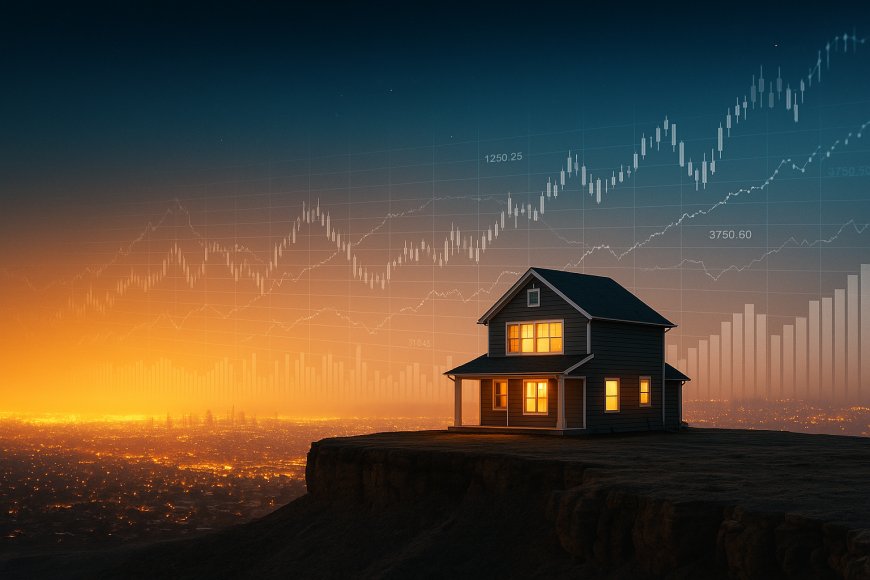
The housing market was once a ladder — a path from one stage of life to the next. Now, for most people, it’s a plateau. The combination of high rates, tight credit, and structural scarcity has transformed homes from symbols of progress into instruments of leverage. But for those who understand the system, real estate remains one of the last tangible ways to grow wealth in a world where everything else is digitized and abstracted.
The Psychological Shift: From Shelter to Strategy
There was a time when owning a home felt like an emotional milestone — a declaration that you’d made it. The mortgage was a rite of passage, not an algorithmic output. You saved, you signed, you celebrated. Your home wasn’t just an asset; it was the vessel of your story — the kitchen where your children grew up, the fence you built by hand, the porch where you drank coffee on quiet mornings and felt, if only for a second, that life had coherence.
Then something changed.
Around 2008, a generation learned that homes weren’t safe. They were derivatives — bundled, bet against, and sold. People lost not just their houses, but their faith. The dream turned brittle, and a kind of psychological scar remained. Those who lived through it still flinch when they hear the word leverage. But even as they rebuilt, the system was rewriting itself beneath them.
By 2020, housing had completed its transformation from shelter into strategy. It was no longer just about living somewhere — it was about positioning. The same asset that once symbolized stability had become a hedge against currency debasement, a vehicle for capital preservation, and in many cases, the only reliable store of value left in a world of vanishing yield.
For younger generations, the emotional contract was broken. Buying a home didn’t symbolize adulthood; it symbolized debt servitude. The joy of ownership was replaced with the anxiety of overvaluation, bidding wars, and forty-year mortgages. The psychological ladder became a static platform — you either got on early, or you were locked out.
This shift created two nations sharing one landscape:
those who own the plateau, and those who rent the view.
The generational divide in housing is not purely economic; it’s cultural. Boomers grew up in an era of compound opportunity. Their mortgages were denominated in a currency that inflated faster than their debt, meaning every year the real burden shrank. For them, time was an ally. For Millennials and Gen Z, it’s the opposite. Time increases the burden. Each year brings higher prices, tighter supply, and more institutional competition. Every delay becomes a penalty.
This inversion has deep psychological consequences. For decades, housing taught Americans how to think about progress. It provided a tangible sense of trajectory — the idea that you could start small and scale upward through discipline. Now, that linear story has collapsed. People don’t dream of climbing; they dream of holding on.
But the irony is that within this broken ladder lies the blueprint for building again — not through nostalgia, but through understanding.
To see it clearly, you have to step outside the cultural narrative and look at the structure beneath the story: the mechanics of liquidity, credit, and demand that govern everything from rent prices to retirement security. Because the truth is, the housing market isn’t rigged — it’s optimized. It does exactly what it was redesigned to do: preserve capital for those who already have it, and extract cash flow from those who don’t.
The system changed, but most people didn’t change their thinking.
The Structural Transformation: How Finance Rewired the Home
When private equity and Wall Street funds entered the housing market, they didn’t just buy properties — they rewrote the operating system. They saw what most people didn’t: that shelter could be securitized, scaled, and streamed like any other product.
In the years following the Great Financial Crisis, tens of thousands of distressed homes were scooped up by institutional investors. What had been individual mortgages scattered across communities became portfolios optimized for yield. That was the birth of the modern rental-asset class — a phenomenon that turned neighborhoods into spreadsheets.
For the average family, a house is a home. For a fund, it’s a yield curve.
That difference in perception reshaped everything.
Institutional buyers, armed with near-zero borrowing costs from the Fed’s quantitative easing era, could pay cash for properties and still achieve leverage through securitization. Once they owned the properties, they packaged the rent streams into bonds, selling slices of predictable cash flow to investors hungry for yield.
That’s how your neighbor’s rent became someone’s quarterly dividend.
To the outsider, it looks like greed. To the system, it’s efficiency. And that’s the uncomfortable truth — the financialization of housing wasn’t a moral decision; it was a structural inevitability. When interest rates fall to historic lows and liquidity floods the system, capital must find somewhere to go. Stocks saturate, bonds yield nothing, and tangible assets — like real estate — become the new safe haven.
From 2012 to 2022, institutional ownership of single-family homes in the U.S. grew from under 1% to over 6%, and in some metros, more than 20%. That shift didn’t just absorb inventory — it changed pricing behavior. Algorithms replaced appraisers. Markets began to move in unison, not through local dynamics but through macro capital flows. The spreadsheet replaced the neighborhood.
Yet even here lies opportunity for those who think differently.
The rise of institutional dominance forced smaller operators to become smarter, leaner, and more tactical.
It rewarded those who could see what big capital couldn’t — the micro-inefficiencies of human behavior, the hidden value in overlooked properties, the unrealized potential of design, location, and livability.
It was no longer enough to speculate on appreciation; you had to manufacture it.
The paradox of this new landscape is that scale creates blindness.
The bigger the player, the less it sees. And in those blind spots, individuals still thrive.
The Macro Mechanics: Liquidity, Credit, and the Pulse of Real Estate
Every economic story, at its core, is a liquidity story. And housing — more than any other sector — breathes in rhythm with it.
To most people, “liquidity” sounds abstract. It isn’t. Liquidity is simply the availability of money that can move. It’s the bloodstream of the financial system — the flow of credit, confidence, and cash that allows trade, debt, and investment to function. When liquidity expands, everything feels easy: credit flows, valuations rise, projects get funded, optimism spreads. When it contracts, the opposite happens — financing dries up, fear sets in, and prices deflate under their own weight.
Housing, however, amplifies this cycle because it exists at the intersection of human need and financial leverage. It is the most credit-sensitive asset class in existence, and therefore, the most directly responsive to monetary policy.
When the Federal Reserve tightens, mortgage rates climb, purchasing power falls, and transaction volume collapses. But when it loosens — when rates fall, or when the Fed resumes asset purchases — something deeper occurs: capital begins to pool in tangible stores of value. That’s why home prices rise long before the average person feels richer. The wealth effect begins at the top of the liquidity chain and cascades downward in slow motion.
Here’s how it actually works.
When the Fed buys bonds or mortgage-backed securities (MBS), it’s not “printing money” in the way people imagine. It’s swapping long-duration debt for short-term liquidity — effectively exchanging a promise for cash. That liquidity enters the system through banks, which now have more reserves and lower yields. In a normal market, those reserves should translate into cheaper lending and easier credit for consumers. But in practice, since 2008, the system has been too risk-averse to lend broadly. So where does that liquidity go?
It flows into assets.
Instead of trickling into wages or small business loans, the new liquidity flows into financial markets, into stocks, bonds, and real estate — wherever returns still exist. That’s why, during every major Fed easing cycle, asset prices inflate years before CPI inflation appears on paper. By the time the average consumer feels inflation at the grocery store, the wealthier class has already captured it in their balance sheets.
This is the silent front of the wealth divide.
Real estate doesn’t just reflect inflation — it preempts it. Housing prices rise as a reaction to credit expansion, not to grocery bills. When money becomes cheap, investors, funds, and homeowners rush to lock in fixed-rate debt. That demand raises asset values, which then feed back into the economy as “housing wealth.” People borrow against rising equity, spend more, and create the illusion of prosperity — until liquidity tightens again.
You can see this clearly in every modern cycle:
-
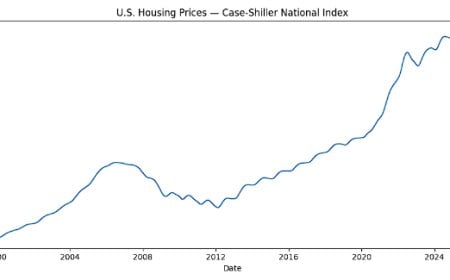
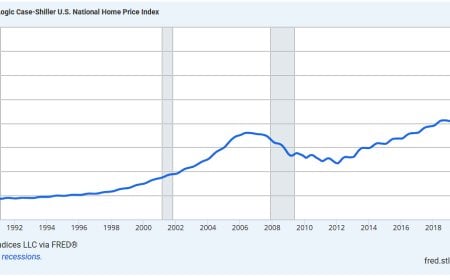
After the 2008 crash, the Fed’s balance sheet expanded from $900 billion to over $4.5 trillion by 2015. Mortgage rates collapsed from 6.4% to 3.5%. Home values — as measured by the Case-Shiller Index — rose over 45%.
-
Between 2020 and 2022, the Fed added another $5 trillion in liquidity. Rates hit record lows near 2.65%. Prices surged nearly 40% in two years.
-
Then in 2023–2025, QT (Quantitative Tightening) began — and transaction volume cratered 30–40% nationwide, even as prices barely budged, because supply locked up.
Every one of those waves tells the same story: when liquidity contracts, movement stops. When it expands, momentum returns.
But here’s the nuance most people miss — inflation isn’t the cause of high housing prices. It’s the symptom of liquidity that found a home.
When the Fed injects liquidity, it’s not instantly inflationary. The effect depends on where the money rests. If the liquidity parks in the banking system — in excess reserves, corporate balance sheets, or Treasuries — inflation stays dormant. But when that same liquidity migrates into real assets like housing, it converts from potential to kinetic. That’s when prices rise. And because housing cycles take years to build, the inflation lags. It’s not visible until it’s already embedded.
That’s why policymakers always react late — they see the CPI after the liquidity wave has already reshaped the asset landscape.
The inflation you feel in 2025 began in 2021.
The inflation of 2030 is already forming in the bond market today.
For those who understand this timing, real estate becomes less about “timing the market” and more about timing liquidity.
You don’t buy when headlines scream “housing boom” — you buy when credit tightens, because the next wave of easing is already inevitable.
It’s the liquidity pendulum that drives everything.
When the pendulum swings toward tightening, panic spreads. Investors hold cash, demand falls, and sellers capitulate. That’s the accumulation phase. Then, when policymakers finally relent and reopen the liquidity spigot — as they always do — prices surge again, not because value changed, but because the denominator of value (money itself) was diluted.
That’s why wealth builders focus on assets, not currency.
Money is the medium. Real estate is the memory.
Now consider this from a system’s perspective:
Every mortgage is a bet against time. You’re leveraging the future productivity of money against the permanence of an asset. Inflation, paradoxically, becomes your ally — it erodes the real cost of your debt while inflating the nominal value of your property. That’s the invisible engine of wealth creation that most people never see.
But it only works if you can hold through the cycle — through the tightening phase when everyone else panics, and into the expansion phase when liquidity returns. That’s why real wealth requires structure, discipline, and endurance.
If you study the timeline of every major monetary pivot — 2009, 2012, 2019, 2020 — they follow a rhythm:
-
Crisis. Liquidity evaporates, credit freezes, prices fall.
-
Intervention. The Fed cuts rates or restarts QE.
-
Reflation. Asset values rebound before wages.
-
Complacency. Markets stabilize, inflation data lags.
-
Overheat. Inflation rises, policymakers tighten again.
-
Repeat.
This loop isn’t an accident. It’s the architecture of the modern economy.
Debt demands expansion, and expansion demands liquidity. The Fed doesn’t control this system; it manages its tempo.
Real estate is the metronome of that tempo.
Every tightening cycle creates scarcity — supply freezes, sellers pull back. Every easing cycle ignites demand — buyers rush in, rates drop, equity compounds. The trick isn’t predicting the next phase — it’s surviving long enough to participate in it.
Because when the liquidity returns, it doesn’t distribute evenly. It flows through existing channels — banks, funds, asset holders — and only later seeps into wages, goods, and services. The middle class always feels it last because they don’t hold the reservoirs where the liquidity enters.
That’s why owning real estate is like owning a faucet. You’re not just buying land; you’re securing a valve at the intersection between credit and consumption. Every easing cycle will pass through you, one way or another.
Those who rent liquidity will always chase it. Those who own structure will always receive it.
The key lesson is this: inflation is not punishment — it’s payment.
It’s the system redistributing nominal value from savers to borrowers, from wage earners to asset owners, from those holding cash to those holding collateral.
That’s why in every inflationary decade, the gap between the asset class and the working class widens. It’s not because the rich “earn” more — it’s because their assets absorb inflation while everyone else experiences it.
For the disciplined, that realization changes everything. You stop fearing inflation and start designing around it. You understand that every tightening cycle is a setup for the next expansion — that liquidity doesn’t die, it relocates. You prepare for the dry seasons knowing that the flood always comes back, and when it does, it will raise the value of everything tethered to something real.
The Builder’s View: Manufacturing Wealth in the Real World
Economists describe real estate as a passive store of value. Builders know that’s not true. Wealth doesn’t just sit — it’s manufactured. Every wall fixed, every roof replaced, every lease renewed is a micro-transaction in a much larger ecosystem of value creation.
This is where the theory meets the noise. The dust. The invoices. The late-night calls.
The part of wealth that never shows up in charts.
To understand how real estate really works, you have to step beyond the spreadsheets and see the system for what it is: a living organism composed of thousands of moving parts — physical, financial, and psychological. It’s not just about owning property; it’s about orchestrating time, labor, and liquidity into structure.
From the outside, people see a property portfolio and imagine “passive income.” From the inside, there’s nothing passive about it. It’s constant adaptation — part logistics, part diplomacy, part engineering. You’re managing entropy as much as economics.
The Real Alchemy of Value
Most people assume value comes from market appreciation — prices rising on their own. But appreciation is often just the byproduct of liquidity. Real value comes from transformation.
Every time a builder takes a decaying property and turns it into something livable, they’re performing economic alchemy: converting inefficiency into functionality, and functionality into income. That process creates real, measurable GDP — it adds usable shelter to the system.
That’s the hidden layer of the housing market most macro analysts miss. The Fed may move liquidity, but builders move productivity. Without them, capital has nowhere to land.
This is why wealth in real estate compounds differently than in other fields. It’s not purely speculative — it’s iterative. Each improvement reinforces the asset’s utility, which stabilizes income, which increases value, which opens access to more credit. That’s the compounding loop: effort → improvement → stability → equity → reinvestment.
It’s slow, but it’s unstoppable.
The Invisible Work of Systems
On paper, a rental property looks simple — income in, expenses out. But the margins depend on the systems.
The difference between thriving and barely surviving often comes down to discipline in data: tracking maintenance cycles, anticipating failures before they happen, and building feedback loops between tenants, contractors, and financial records.
For small operators, this is where leverage is built — not through debt, but through information. A well-structured system turns chaos into order. It tells you when to refinance, when to hold, and when to exit. It reveals the patterns hidden in your own portfolio — which properties consume time, which generate stability, which tenants are long-term assets and which are short-term volatility.
Every successful investor eventually realizes that cash flow is just a metric; consistency is the product.
The Human Equation
Real estate looks like an asset business, but it’s actually a people business camouflaged in spreadsheets.
Tenants, neighbors, city inspectors, tradesmen, lenders — every relationship contributes to the structure’s long-term value. You can quantify rent, but you can’t quantify trust. And yet, it’s trust that determines continuity. A building with cooperative tenants and reliable vendors will outperform a higher-rent property with constant conflict.
That’s why real investors think in terms of stability ratios, not just ROI. A strong tenant who pays on time for five years adds more cumulative value than one who pays 10% higher rent but moves out annually. Continuity saves turnover costs, preserves condition, and builds predictability — which lenders value more than anything else.
It’s the same principle at every scale — from a duplex to a billion-dollar REIT. Predictable income is the most valuable commodity in the financial world. And the only way to achieve it consistently is through empathy, communication, and fairness.
You can’t automate integrity.
Maintenance as Investment
Maintenance isn’t a cost — it’s a hedge against entropy.
Every investor learns this lesson the hard way at least once: neglecting a small leak becomes a foundation repair. Ignoring a furnace tune-up becomes a winter emergency. The lesson is simple — deferred maintenance is compounding in reverse.
But maintenance also builds reputation, and reputation becomes an invisible asset. Tenants stay. Contractors prioritize you. Inspectors respect your diligence. Over years, that network of reliability turns into momentum — opportunities flow toward consistency because the market senses competence. That’s something algorithms can’t replicate.
The Psychology of Building
There’s also a mindset difference between speculators and builders. Speculators chase price movement. Builders chase improvement.
When markets fall, speculators panic. Builders get busy. Because the true builder understands that value is not destroyed by falling prices — it’s only deferred until the next liquidity cycle.
A downturn is simply a pause in recognition, not a destruction of reality. The structure is still there. The demand for shelter is still there. The intrinsic value of the work doesn’t vanish when sentiment changes. That’s why builders never truly lose — they simply wait for liquidity to catch up to reality.
The Scaling Paradox
As portfolios grow, the skill set shifts from doing to designing. You stop fixing walls and start fixing systems. Scaling is about reducing chaos, not increasing volume.
It’s tempting to think of expansion as adding doors, but the real goal is adding stability. Every additional property multiplies complexity — accounting, maintenance, legal exposure. The trick is to scale the structure before the size.
That means standardizing every repetitive process:
-
Maintenance schedules
-
Lease templates
-
Renovation protocols
-
Vendor relationships
-
Reporting and accounting cycles
Once those are institutionalized, growth accelerates naturally because the system sustains itself. That’s when a business transitions from self-employment to wealth creation.
Understanding Entropy
The builder’s enemy is entropy — not markets, not regulation, not tenants. It’s the universal tendency for things to fall apart. Every property drifts toward disorder unless acted upon by consistent force.
That’s why discipline matters more than intelligence. Intelligence can spot a deal, but discipline keeps it alive.
Entropy also applies to finances. Budgets drift, expenses creep, attention fades. The more successful an investor becomes, the more invisible the decay becomes — until a small inefficiency multiplies into a structural failure. True mastery comes from building feedback loops that catch entropy before it compounds.
The Moral Layer
There’s also an ethical dimension to building wealth through housing. Every property affects lives. Every renovation changes a block. Every eviction ripples through families. The decisions made for efficiency have moral weight.
That doesn’t mean you can’t be firm — it means being aware that your efficiency is someone else’s fragility. Great investors learn to balance the two — to be fair without being naïve, disciplined without being predatory. The best businesses grow from mutual stability, not exploitation.
Housing isn’t a zero-sum game. It’s a social ecosystem that rewards those who respect its complexity.
When you start to see real estate this way, the business transforms. It’s no longer about chasing ROI — it’s about cultivating systems that perpetuate stability. The wealth becomes secondary, almost inevitable, because it’s the side effect of competence and stewardship.
True wealth is not what you extract; it’s what you sustain.
The Wealth Flywheel: Turning Equity Into Momentum
Every investor eventually faces the same question:
How do you turn one successful deal into ten without gambling everything you’ve built?
That’s the essence of the wealth flywheel — the point where real estate stops being a transaction and becomes an ecosystem.
It’s not about chasing returns; it’s about designing a loop that feeds on its own efficiency.
The Law of Recycling
At the center of the flywheel is a deceptively simple rule: equity unused is equity decaying.
Each property generates two forms of return: cash flow and equity growth.
Cash flow sustains the system; equity fuels its expansion.
The mistake most investors make is treating equity like a trophy. They watch it appreciate on paper while inflation quietly eats its real value.
The disciplined operator treats equity as working capital.
When a property stabilizes — meaning rents are reliable and expenses predictable — it becomes collateral for the next move.
You refinance, extract a controlled amount of capital, and redeploy it into a new opportunity.
Done correctly, this isn’t debt addiction; it’s equity circulation.
You’re not consuming value — you’re cloning it.
The Four Phases of the Flywheel
Think of the wealth engine as four interlocking gears that spin at different speeds:
-
Acquisition → Creation.
Identify inefficiency — under-managed, under-loved assets.
Secure them below replacement cost or with unrealized potential. -
Optimization → Stabilization.
Apply capital and management skill. Renovate, systematize, and attract durable tenants.
Every solved problem increases Net Operating Income (NOI). -
Revaluation → Extraction.
Once NOI rises, the property’s appraised value rises too.
Use a cash-out refinance to extract part of the trapped equity while keeping the asset.
That liquidity becomes the seed for the next investment. -
Replication → Expansion.
Deploy the extracted capital into another asset and repeat.
Each cycle strengthens the portfolio’s cash flow and collateral base.
Each phase feeds the next, creating a compounding loop.
The key is timing — moving only when stability precedes leverage, never the reverse.
Why Leverage Is Not Risk — If It’s Cycled Correctly
People fear leverage because they misunderstand its relationship with liquidity.
Leverage isn’t dangerous; impatience is.
Debt only becomes risk when it matures faster than your income grows.
When used within disciplined parameters — conservative Loan-to-Value (LTV) ratios, long fixed rates, and strong reserves — leverage amplifies time.
It allows you to own tomorrow’s asset with today’s capital.
And because inflation steadily erodes the real cost of that debt, each passing year tilts the equation further in your favor.
In essence, debt is the system’s built-in arbitrage:
You borrow depreciating dollars to acquire appreciating assets.
As long as the cash flow supports the payments, time pays you.
Refinancing as Velocity, Not Escape
A refinance is not an exit; it’s a transfer of momentum.
When rates fall or equity rises, the builder doesn’t celebrate — they re-optimize.
You’re converting static value into kinetic opportunity.
The mistake many make is over-extracting — pulling too much, too soon.
The goal is not to drain equity; it’s to maintain balance between growth and stability.
Think of it as a heartbeat: expansion, contraction, rest.
Each pulse must leave the organism stronger than before.
Smart operators run stress tests:
-
Can the portfolio survive a 20% rent drop?
-
A 2-point rate increase?
-
A six-month vacancy shock?
If the answer is yes, the flywheel keeps turning safely, even in storms.
The Mathematics of Compounding
Imagine a single property generating $400 per month in free cash flow and appreciating at 4% annually.
At first glance, that looks small. But once you reinvest that equity every few years, the curve bends sharply.
At a modest 6% annual equity growth and 10-year refinancing cycles, each property’s available collateral doubles roughly every decade.
If that collateral seeds a new purchase every 3–5 years, the portfolio expands geometrically without new capital.
This is the quiet power of controlled compounding:
It doesn’t rely on market luck — it relies on mathematical inevitability.
Every stable asset becomes a gear; every refinance a rotation.
Cash Flow as the Fuel Reserve
Equity may grow the portfolio, but cash flow keeps it alive.
Cash flow is the margin of safety — the liquidity buffer that lets you ride out policy shocks, repairs, or rent lags.
In practice, disciplined investors treat cash flow as insurance, not income.
It accumulates until it can fund resilience — new roofs, new furnaces, new opportunities.
Only after the system is self-sustaining do you extract personal income.
That’s how builders stay solvent when speculators burn out.
Psychology of the Cycle
The hardest part of the flywheel isn’t math; it’s mindset.
Most people sabotage the process by reacting emotionally to cycles.
When markets tighten, they freeze; when they boom, they overextend.
Both behaviors interrupt compounding.
The disciplined investor practices temporal neutrality — detachment from short-term noise.
They understand that value creation happens in years, not months.
They don’t chase prices; they chase process.
This mental stillness is a competitive advantage.
It allows rational decisions when others are ruled by fear or greed.
Portfolio Ecosystem Dynamics
A mature portfolio behaves like an ecosystem:
Older assets generate stability; newer ones generate growth.
You use the former to subsidize the risk of the latter.
This cross-balancing creates internal liquidity — you can refinance one asset to strengthen another, diversify exposure, or hedge regional risk.
It’s a self-contained economy — a private central bank, where you control the interest rates and liquidity flows.
That’s when real estate transcends investment and becomes a system of wealth architecture.
The Invisible Return: Time Freedom
Beyond numbers, the ultimate yield of the flywheel is autonomy.
When the system sustains itself — rents covering debt, equity renewing capital — you reclaim time.
And time, once free from survival pressure, becomes the most productive asset of all.
That’s when builders start creating — designing new ventures, mentoring others, expanding into development, or simply living.
The portfolio keeps breathing, like an organism that learned to regulate itself.
This is where wealth becomes quiet.
It no longer announces itself in material excess — it manifests as space to think, to build, to choose.
Why the Flywheel Matters Now
In a world where digital wealth can evaporate in seconds, tangible systems like real estate are anchors.
They move slowly — sometimes painfully slowly — but they obey gravity and discipline.
Every rotation of the flywheel reinforces the same truth:
Wealth isn’t a moment; it’s a rhythm.
When you treat real estate as a system of recurring improvement rather than a series of bets, you begin to see money differently.
It stops being something you chase and becomes something that circulates through you.
That’s the quiet geometry of compounding.
Not luck. Not hype. Just motion — steady, deliberate, exponential.
The New Economy of Scarcity: Why Supply Will Never Catch Up
For most of American history, the housing market was elastic. Prices rose and fell, but builders could respond. A surge in demand led to a surge in supply; cities expanded outward, zoning permitted growth, and credit flowed to construction. The system self-balanced.
That elasticity is gone.
We now live in a structurally inelastic market — one where demand can collapse and prices still refuse to fall, because there simply isn’t enough product.
The Demographic Time Bomb
Every cycle begins and ends with people. Between 2008 and 2020, U.S. household formation slowed dramatically as Millennials postponed adulthood — delayed by student debt, low wages, and uncertainty. Builders cut output to match. When demand finally returned in 2020 and 2021, it slammed into a decade-long construction gap.
According to the National Association of Realtors, the U.S. remains 5.5 million homes short of equilibrium. That deficit compounds every year as population continues to grow while new construction fails to keep pace.
At the same time, Boomers aren’t downsizing. Longer life expectancy, lower mobility, and tax incentives encourage them to hold existing homes indefinitely. Each year, fewer properties recycle back into circulation.
So the basic math of supply and demand has inverted:
-
Household formation ↑
-
Housing starts ↓
-
Existing-home turnover ↓
-
Institutional retention ↑
The result is frozen liquidity in physical form.
Zoning and Regulation: The Invisible Ceiling
For decades, zoning was local politics. Now it’s macro-economics.
Single-family zoning covers about 75 percent of residential land in the U.S. Restrictive codes prevent density in precisely the places where demand is highest — coastal metros, inner suburbs, and job hubs.
Each new regulation — storm-water compliance, impact fees, green-building mandates — adds friction. Builders face permitting timelines measured in years, not months. The result: the cost of “permission” often exceeds the cost of materials.
Cities talk about affordability, but their frameworks institutionalize scarcity.
They want lower prices and higher tax revenue simultaneously — a contradiction that ensures neither goal is achieved.
So the supply problem isn’t temporary; it’s encoded in law.
The Cost Stack: Why Materials and Labor Can’t Go Back
Every 2×4, nail, and sheet of drywall carries a global story.
Lumber prices, once volatile but mean-reverting, now move in tandem with energy and shipping costs. The COVID-era supply shock never fully normalized; mills closed, truckers quit, ports clogged, and what returned was a leaner supply chain that charges scarcity premiums.
Meanwhile, construction labor has aged out. The median U.S. tradesperson is now over 42 years old, and fewer apprentices enter each year. Vocational programs declined while colleges pushed degrees disconnected from physical productivity.
That means every new project competes for the same finite pool of skilled labor — and labor knows it. Wages in construction are rising faster than most other sectors, yet builders still can’t fill crews.
Combine that with insurance inflation (property insurance up 30–40% since 2021) and financing costs (rates > 6%), and the result is simple: it’s now mathematically impossible to build “affordable housing” at scale without subsidies.
The new-build break-even price floor keeps drifting upward — and it never drifts back down.
Institutional Hoarding and Financial Gravity
When interest rates rise, logic says investors should sell.
Instead, they hold tighter.
Large portfolios financed with fixed-rate debt have no incentive to liquidate — their cost of capital is locked near 3%. Selling would mean replacing cheap debt with expensive debt. So inventory stays trapped.
Simultaneously, global capital continues to hunt yield in hard assets. Pension funds, sovereign wealth funds, and REITs now treat single-family housing like infrastructure — a long-term inflation hedge. That structural demand creates a price floor regardless of local economics.
Even if regional demand softens, international capital absorbs the slack. The home has become an international commodity, priced in global liquidity, not local wages.
That’s why affordability metrics keep deteriorating: income is national, but pricing is global.
The Liquidity Hierarchy
Liquidity doesn’t disappear; it changes form.
When central banks tighten, capital migrates from risk assets (stocks, startups) into collateral assets (real estate, Treasuries, commodities).
Because housing can generate yield and serve as collateral, it sits at the apex of the hierarchy.
This means even during recessions, institutional capital defends property values to protect collateral chains. The same dynamic that caused foreclosures in 2008 now prevents them in 2025: no one wants to trigger price discovery.
So the floor is sticky by design.
The Myth of Reversion
People keep waiting for a “return to normal.” But normal is gone.
There will be corrections — local, temporal, psychological — but not structural collapses of the kind seen in 2008.
Why? Because the balance sheet of the system itself changed.
Post-2008 lending reforms forced banks to hold more equity, reduced speculative construction lending, and shifted risk to long-term investors. Housing debt is now mostly fixed and seasoned — not the adjustable subprime bombs of old.
So prices don’t collapse; they compress — stagnating while wages and inflation slowly catch up. The illusion of affordability will come not from falling prices but from rising nominal incomes.
That’s how systemic inflation resets the narrative without ever truly lowering costs.
The Psychology of Permanence
Scarcity also rewires behavior.
People adapt by accepting less space, longer commutes, or permanent renting.
But beneath that adaptation lies quiet resentment — a cultural fatigue that erodes the optimism once tied to ownership.
Owning a home used to represent possibility. Now it represents survival.
That psychological pivot transforms the entire economy: consumption patterns shift toward essentials, family formation slows, and political discourse polarizes around inequality.
Yet within that tension lies opportunity for the adaptive.
When a system reaches equilibrium at scarcity, efficiency becomes the new edge. Investors who can deliver quality, stability, and dignity at scale become indispensable.
The Emergence of Micro-Empires
The paradox of institutional dominance is that it creates micro-opportunities for the agile.
As large funds centralize, they leave behind local inefficiencies — outdated management, unresponsive maintenance, or neglect of smaller markets.
That’s where individuals and small operators thrive: in the gaps between algorithms and empathy.
By combining professional systems with human touch — understanding local culture, building real relationships — they carve moats the giants can’t cross.
These micro-empires don’t compete on scale; they compete on resilience.
Scarcity as Wealth’s New Foundation
In classical economics, scarcity was a flaw to be solved.
In modern finance, it’s the mechanism of value.
Every constraint — zoning, materials, demographics, labor — acts as an invisible asset for those who already own. It protects pricing power.
The fewer homes that can be built, the more valuable existing ones become.
This isn’t conspiracy; it’s structural physics.
Scarcity is no longer a market failure — it’s the market’s backbone.
What It Means for Wealth Builders
For disciplined investors, scarcity changes strategy:
-
Focus on durability rather than speculation.
-
Prioritize quality of tenant and location over chasing yield.
-
Treat maintenance as capital preservation, not expense.
-
Leverage fixed debt to own the plateau, not chase the peaks.
The next generation of wealth will be built not through volume, but through resilience within constraint.
Those who master scarcity — who can deliver value despite friction — will inherit the system.
Wealth as a System: The Architecture of Endurance
We live in a world obsessed with outcomes. Net worth, cash flow, revenue — metrics that measure the surface, not the structure.
But beneath every enduring empire, every lasting portfolio, there is something more fundamental than money: systemic thought.
Wealth, in its purest form, isn’t a sum. It’s a feedback loop between resources, decisions, and discipline — a living system that learns, adapts, and compounds.
That’s the true secret of the builders who endure. They don’t chase opportunity; they engineer inevitability.
The Shift From Linear to Cyclical Thinking
The average person views wealth linearly: work → earn → save → spend.
The investor sees it cyclically: capital → allocation → return → reinvestment → expansion → reflection → refinement → capital again.
The linear mind seeks stability; the cyclical mind seeks rhythm.
The linear thinker asks, “How much can I make?”
The cyclical thinker asks, “How long can I sustain motion?”
And that difference explains almost everything.
Linear wealth dies when its environment changes — inflation, recession, disruption.
Cyclical wealth adapts, because it doesn’t depend on constancy; it depends on feedback.
Real estate, when mastered, becomes the physical manifestation of cyclical wealth.
Every property is a node, every tenant interaction a feedback loop, every market cycle a calibration point.
It’s not a collection of assets — it’s an organism that breathes with you.
The Principle of the Closed System
A true wealth system behaves like an ecosystem — mostly closed, partially open.
That means it sustains itself internally but remains permeable to new opportunity and innovation.
If every dollar of your income has to be earned again next month, you’re living in an open system — energy constantly leaking.
But when your capital produces new capital without constant input, you’ve created closure.
In practice, this looks like:
-
Rents paying mortgages
-
Mortgages paying equity
-
Equity funding renovations
-
Renovations increasing rents
-
Rents increasing NOI
-
NOI increasing valuation
-
Valuation creating refinance potential
-
Refinance feeding new acquisition
That’s structural circulation.
The system no longer depends on external luck. It sustains itself.
This is the distinction between self-employment and autonomous enterprise.
The Entropy of Wealth
Every system decays without maintenance — including financial ones.
Entropy applies as much to capital as to matter.
You can see it in businesses that stop innovating, portfolios that stop auditing, investors who stop learning.
Wealth, left alone, decays into complacency.
That’s why systems must evolve faster than the environment.
The investors who thrive aren’t those who make the biggest bets — they’re the ones who build internal renewal mechanisms.
They constantly:
-
Review assumptions
-
Audit systems
-
Automate routine decisions
-
Document processes
-
Replace themselves where possible
That’s not control; that’s designed adaptability.
Feedback Loops: The Core of Intelligence
In nature, intelligence emerges from feedback — not foresight.
A system learns by sensing changes and adjusting behavior.
Wealth works the same way.
You don’t predict the economy; you feel its rhythm through your own data — rent collection, repair costs, demand shifts, lending conditions.
The faster your feedback loops, the more antifragile your system becomes.
This is where data and discipline intersect.
Numbers mean nothing without interpretation.
Interpretation means nothing without action.
Action means nothing without iteration.
Every property, every tenant, every lender is a signal.
The intelligent investor listens to those signals, modifies behavior, and lets the system self-correct.
That’s how complexity stays stable — through responsiveness, not rigidity.
The Four Subsystems of Wealth
Every enduring wealth structure has four interdependent components:
-
Capital System — The financial engine.
-
How money moves: acquisitions, financing, reinvestment.
-
Rules: conservative leverage, cash reserves, compound reinvestment.
-
-
Operational System — The execution engine.
-
How the business runs: vendors, maintenance, leasing, communication.
-
Rules: redundancy, reliability, reputation.
-
-
Cognitive System — The mental engine.
-
How decisions are made: perception, bias control, emotional regulation.
-
Rules: detachment, long-term vision, curiosity.
-
-
Ethical System — The human engine.
-
How values are upheld: fairness, transparency, community stability.
-
Rules: alignment, empathy, stewardship.
-
Remove any one of these, and the system collapses.
When they operate in harmony, the feedback between them amplifies all the others.
Time as the Fifth Dimension
Most people think of wealth in two dimensions: money and property.
The real builders operate in five: money, property, time, trust, and knowledge.
Time is the invisible multiplier.
Every decision compounds through time — positively or negatively.
You don’t see it daily, but it accumulates relentlessly.
Trust and knowledge determine whether that compounding accelerates or decays.
When people trust your word, money moves faster.
When you understand the system, opportunity flows toward you.
That’s why reputation is a form of liquidity.
And why education — self-education — is a form of leverage.
The wealthiest people on earth all understand this: time and information are the only assets that compound faster than capital.
The Role of Emotion in Systems Thinking
Emotion isn’t the enemy of wealth — it’s its governor.
Fear slows the flywheel; greed over-revs it.
Discipline isn’t emotionless; it’s emotionally aware.
Every major decision — to buy, to sell, to refinance — comes down to emotional timing as much as market timing.
You can survive being wrong on numbers. You can’t survive being wrong on temperament.
This is why stoicism appears again and again in the psychology of successful investors.
Not because they don’t feel, but because they know how to feel without reacting.
Wealth vs. Prosperity
There’s a difference between being wealthy and being prosperous.
Wealth is control over capital. Prosperity is control over time and emotion.
Wealth is measurable; prosperity is experiential.
And paradoxically, the latter sustains the former.
When you operate from fear, you make reactive decisions.
When you operate from confidence grounded in competence, your system expands naturally.
The ultimate form of wealth is not accumulation — it’s freedom from compulsion.
To act, not react. To build, not scramble.
The Recursive Principle: Wealth Creates Mind, Mind Creates Wealth
As wealth systems mature, something subtle happens: they start shaping the person who built them.
Process becomes philosophy. Philosophy becomes identity.
You begin to think in feedback loops in every part of life.
You notice how relationships compound or decay.
How health mirrors maintenance.
How curiosity keeps systems alive.
You start seeing wealth not as something you have, but something you are part of.
It moves through you — not as ownership, but as stewardship.
That’s when you stop fearing loss.
Because you realize the system that built it can rebuild it.
That’s the moment of true independence — when resilience replaces security.
Wealth as Stewardship
The final evolution of systems thinking is realizing that the goal isn’t just to accumulate — it’s to maintain coherence.
To create something that outlives you.
That’s what legacy really means: systems that continue to create stability and opportunity long after your direct involvement ends.
In that sense, wealth is ecological.
It’s not about domination, but balance — between self-interest and contribution, efficiency and humanity, growth and rest.
Real estate happens to be the medium, but the message is timeless:
Stability is the rarest form of value.
And those who learn to build it — in finances, in families, in communities — create something far more enduring than profit.
They create continuity.
The Future of the Dream: Ownership in the Age of Liquidity
The American Dream was never really about the house. It was about the idea behind it — the belief that through effort, discipline, and time, anyone could build permanence in a world of change. The house was just the proof of that idea — four walls around a promise.
That dream isn’t dead. It’s just evolving.
We’ve entered an age where ownership no longer looks like possession — it looks like participation.
And that shift, while subtle, will define the next century of wealth.
The Transition From Physical to Digital Collateral
Money used to be metal. Then it became paper. Then code.
Now, it’s becoming representation.
In the next decade, almost everything of value — homes, cars, stocks, commodities, even art — will exist simultaneously as physical reality and digital reference. Every property title, every loan, every rent payment will eventually live on programmable infrastructure.
This transformation won’t replace ownership; it will amplify accountability.
Each transaction will carry its own history, its own proof of integrity. Capital will flow faster, but so will scrutiny.
That’s both liberating and dangerous.
Because the same system that enables efficiency can also enable control.
The builders of the future — those who understand liquidity, technology, and psychology — will need to navigate this duality: freedom through precision, sovereignty through transparency.
Tokenization and the End of Geographic Wealth
For the first time in history, geography no longer defines opportunity.
Through tokenization and fractional ownership, assets can be divided, traded, and accessed globally.
Someone in Kenya will own 0.01% of a building in Chicago.
Someone in Texas will hold yield from a logistics hub in Singapore.
Capital will flow borderlessly, 24/7, under smart contracts instead of lawyers.
The consequence? Capital will become omnipresent — and competition will become planetary.
The advantage will no longer come from location alone, but from insight — from understanding what systems will attract liquidity before it arrives.
That’s where thinkers, not speculators, will dominate.
Because in a world where everyone can own, only those who understand why ownership matters will preserve meaning.
The Return of Tangibility
Paradoxically, the more digital the economy becomes, the more valuable the tangible will be.
In a world of infinite tokens, the physical becomes sacred.
The same way vinyl records returned in the age of streaming, physical property will gain cultural gravity in the age of tokenization.
People crave something they can touch — something with texture, mass, and memory.
That’s why real estate will remain the cornerstone of human wealth: it anchors digital abstraction to physical existence.
It’s the interface between algorithm and life.
The walls still matter, because inside them, people still live.
The New Definition of Ownership
The next evolution of ownership will be functional, not formal.
You may not “own” a car, but you’ll control access to one.
You may not “own” a building outright, but you’ll hold rights to its yield, its energy, its data.
Ownership will fragment into layers: utility, governance, profit, and identity.
That fragmentation will create both opportunity and confusion.
It will allow unprecedented access — but also new hierarchies of control.
Those who design and interpret these new ownership systems will hold disproportionate influence.
The future landlord may not collect rent; they may manage access.
The future tenant may not pay in dollars; they may contribute in energy, computation, or data.
The definition of “value” itself is evolving — from what something is to what it does.
The Liquidity Paradox
As everything becomes tradable, liquidity will become infinite — and therefore, meaningless.
When every asset is fractional and every market open 24/7, the scarcity will shift from capital to attention and conviction.
The problem won’t be accessing opportunity; it will be maintaining focus long enough to capture it.
This is where philosophy reenters finance.
In a liquid world, conviction becomes the new constraint — and therefore, the new store of value.
The person who can think long-term amid infinite noise will wield disproportionate power.
Housing as Civilization’s Backbone
Despite all the abstraction, one truth remains: housing is civilization’s skeleton.
You can digitize title, automate leases, tokenize rent — but the structure still needs to stand.
People still need warmth, privacy, and stability.
That’s why housing will remain the most sensitive barometer of social health.
When homes are stable, societies are stable.
When shelter becomes speculation, cultures fracture.
The housing market isn’t just an investment arena; it’s a moral mirror.
How we treat shelter reflects how we value continuity — and each other.
Builders who understand this — who balance profit with dignity — will inherit more than wealth. They’ll inherit trust.
And trust, in an age of automation, will be the most valuable currency left.
The Quiet Revolution: Decentralized Stability
The next great movement in housing may not come from government or corporations — it may come from networks of small, independent operators creating localized ecosystems of stability.
Imagine thousands of small builders, investors, and property managers connected through decentralized infrastructure — each one autonomous, but collectively forming a distributed housing economy that’s resilient, transparent, and human-scaled.
That’s the counterweight to global abstraction: local sovereignty powered by global tools.
Technology won’t erase individuality; it will amplify it — for those who understand how to use it.
The Moral Dimension of Wealth
The deeper you go into systems thinking, the more you realize wealth isn’t just engineering — it’s ethics at scale.
Because every efficient system eventually faces the question: efficient for whom?
Automation without compassion leads to dystopia.
Liquidity without conscience leads to collapse.
Wealth without stewardship leads to decay.
The builders of the next era will be judged not by how much they control, but by how much coherence they create.
By how their systems affect the lives within them.
That’s what will separate the next generation of empire builders from the last: understanding that sustainability isn’t political — it’s structural.
The systems that endure will be those aligned with human reality.
The New Dream
The future version of the American Dream won’t be about escaping labor or owning more — it will be about designing systems that allow freedom through stability.
A world where value is not hoarded but circulated.
Where the measure of success isn’t consumption, but contribution.
In this version of the Dream, the house returns to its original role — not as a speculative asset, but as a foundation for continuity.
A node in a network of interdependent builders maintaining civilization’s infrastructure one wall, one roof, one relationship at a time.
That is the future of wealth: intelligent stewardship, distributed creation, timeless principles expressed through modern tools.
The Closing Loop
If there’s one truth that endures across all cycles — from bricks to bytes, from liquidity to labor — it’s this:
Stability is the rarest form of freedom.
Money will evolve. Markets will digitize. But the desire for something lasting — something that holds its shape through time — will never vanish.
That desire is why people still build.
In every generation, there will be those who look at decay and decide to repair it, who look at disorder and design structure.
They are the quiet architects of continuity.
And as long as they exist — as long as someone, somewhere, believes that permanence can still be built — the Dream isn’t gone.
It’s just waiting for the next builder to pick up the blueprint.
📚 Comprehensive Resource List
These sources align directly with the topics and data cited throughout The Great Housing Plateau — covering liquidity cycles, Federal Reserve policy, demographics, construction constraints, and macroeconomic behavior. They provide empirical grounding for the trends, correlations, and conclusions presented in the analysis.
🏦 Federal Reserve & Monetary Policy
- Federal Reserve Economic Data (FRED): Case-Shiller U.S. National Home Price Index
- FRED: 30-Year Fixed-Rate Mortgage Average in the United States
- Federal Reserve: Balance Sheet Data (Total Assets)
- BIS: Global Liquidity Indicators
- Brookings Institution: How the Fed Will End Quantitative Tightening
🏠 Housing & Affordability
- National Association of Realtors (NAR): Housing Shortage and Affordability Reports
- Redfin Data Center: Housing Market Tracker
- Realtor.com Research: Housing Supply and Pricing Trends
- Harvard Joint Center for Housing Studies: State of the Nation’s Housing 2024
- U.S. Census Bureau: Housing Vacancies and Homeownership Data
👷 Demographics & Labor
- U.S. Bureau of Labor Statistics (BLS): Employment in Construction
- NAHB: Skilled Labor Shortages in Construction
- Pew Research: Generational Housing Trends
🌐 Macro-Financial & Structural
- IMF Fiscal Monitor 2024: Global Debt and Fiscal Stability
- BlackRock: Tokenized Treasury ETF (BUIDL) Launch Report
- BIS: Project Guardian & Project Mariana (Cross-Border Tokenized Settlement)
- OECD: Housing Market Dynamics and Policy (2024)
🏗️ Insurance, Materials, and Supply Chain
- FEMA & NOAA: U.S. Property Insurance Cost Index
- U.S. Department of Commerce: Construction Cost Index
- Home Builders Institute (HBI): The Construction Labor Market Report 2025
These resources collectively verify the macro patterns, policy correlations, and behavioral dynamics detailed throughout The Great Housing Plateau. Each citation reinforces that this narrative is built not on conjecture, but on quantifiable economic foundations — connecting liquidity cycles, structural imbalances, and demographic pressures across the modern housing economy.
What's Your Reaction?
 Like
0
Like
0
 Dislike
0
Dislike
0
 Love
0
Love
0
 Funny
0
Funny
0
 Wow
0
Wow
0
 Sad
0
Sad
0
 Angry
0
Angry
0

Founder of Pattern Nexus. I research markets, macro, geopolitics, AI, history, ancient systems, and the patterns most people overlook. I’m also building Market Radar, a trading scanner designed to read pressure, risk, confirmation, and setup quality before chasing a move. Pattern Nexus is where I connect the dots between data, history, technology, and the bigger system playing out around us.














Comments (0)