
Fed’s October Pivot: Liquidity Cycles, History, and the Digital Dollar Frontier
Markets now expect another 25 bps rate cut at the Fed’s Oct 28–29 meeting as unemployment rises and repo-market strains flicker. Powell signaled QT’s end is “coming into view,” Waller endorsed another cut, and Musalem said he could support one if inflation risks stay contained. This post connects those signals to the longer liquidity cycle and to where the next easing wave is headed: tokenized Treasuries, stablecoins, and programmable liquidity.
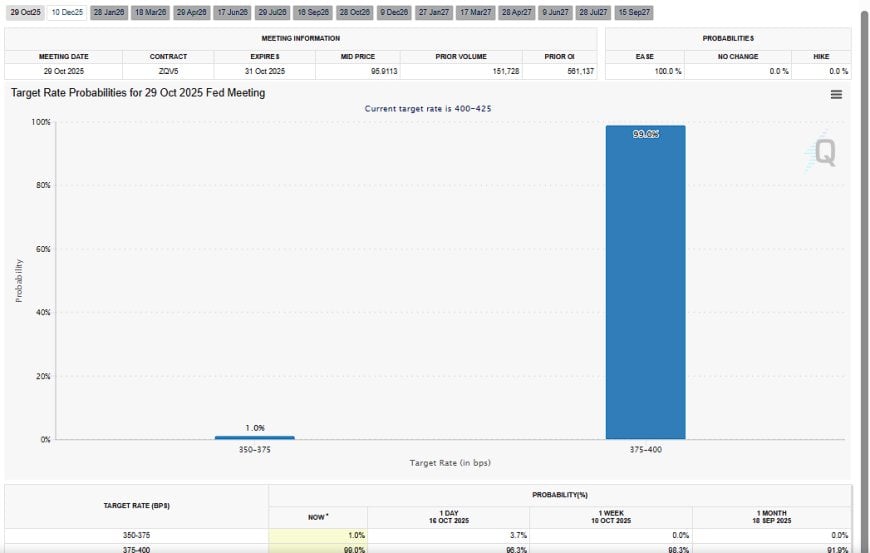
- Policy: Market-implied odds favor a 25 bps cut on Oct 28–29; Powell: QT end “coming into view.”
- Labor: Unemployment ~4.3%; Aug NFP +22k, June negative after revisions.
- Inflation expectations: UMich long-run ~2.8–3.0%; 5y TIPS BE ~2.2–2.3% (anchored).
- Plumbing: GC repo firmed; SRF mid-month draws; RRP nearly drained; bank reserves trending lower.
Rising Job-Market Risks vs. Anchored Expectations
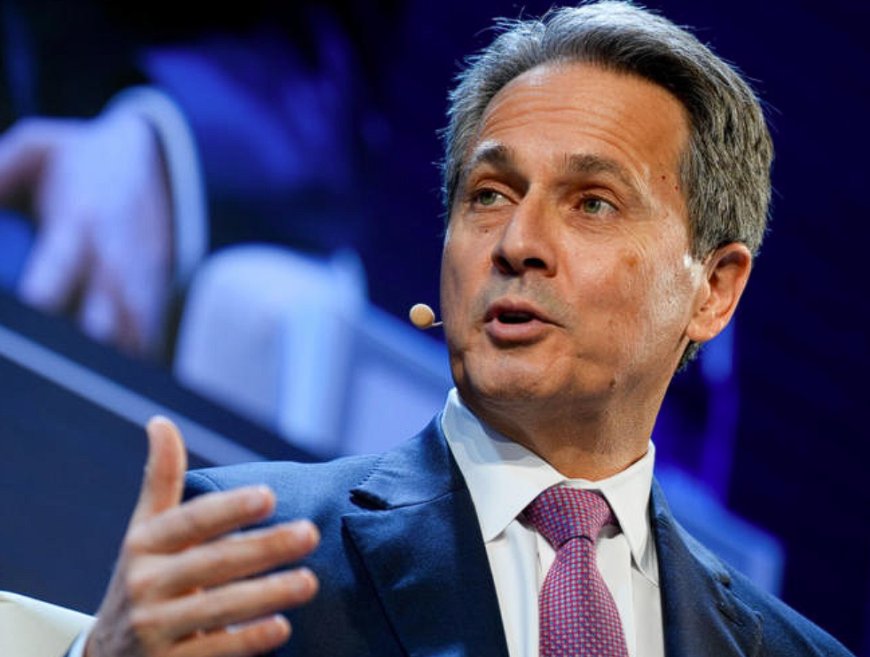
The Fed is pivoting for the simplest reason: employment momentum has faded while inflation expectations remain anchored. August payrolls were just 22,000, June turned negative on revision, and the jobless rate has risen to ~4.3%—a near four-year high. Governor Christopher Waller publicly endorsed another 25 bps cut, while Alberto Musalem said he could support a cut if risks to employment rise and expectations stay moored.
Under the hood, the labor market’s “stall speed” shows up in multiple places:
- Diffusion index: Fewer industries are adding jobs; breadth of hiring is narrowing.
- Weekly claims: A slow grind higher from cycle lows, consistent with late-cycle softening.
- Hours worked: Flat to down—often the first margin firms cut before layoffs accelerate.
- Wage growth: Cooling toward 3–3.5% y/y—no longer inconsistent with 2% inflation over time.
That backdrop lets the FOMC lean into employment without abandoning the inflation fight, especially with long-run expectations (UMich, SPF, TIPS breakevens) holding near 2–3%.
Tariffs: One-Off Level Shift, Not a Spiral
Tariffs have lifted the average applied U.S. tariff to the highest since 1934. That’s a supply-side tax: it pushes up some prices (import-heavy categories) even as demand cools. Policymakers are choosing to “look through” much of this—treating it as a one-time level shift rather than a persistent inflation impulse—while watching expectations like a hawk. The probability path the Fed is trying to avoid is tariff shock → wages chase headline CPI → expectations unanchor. So far, that chain hasn’t formed.
Plumbing Check: Repo, SRF, RRP, and Reserves
The visible economy whispers through the funding markets. Lately, those whispers got louder.
- GC repo firming: General collateral prints rose above the policy corridor on non-quarter-end dates as Treasury settlements drained cash.
- SRF taps: Mid-month usage jumped—largest non-window-dressing draws since 2020—signaling banks preferred the Fed’s backstop to scarce private cash.
- RRP near empty: The giant reverse-repo facility that absorbed pandemic excess is nearly drained; subsequent funding needs now pull directly on bank reserves.
- Reserves trending lower: As QT continues and RRP empties, reserve balances fall toward “min-ample.” That’s where small shocks create big swings in repo.
- FRED RPONTSYD: Overnight Repos, Treasuries Purchased (OMO).
- NY Fed SOFR/TGCR: secured & general collateral reference rates.
- Fed H.4.1: RRP balance, reserve balances, SOMA holdings, QT caps.
Powell’s wording—“QT’s end may be coming into view”—is classic pre-pivot language. In 2019, similar repo tightness forced an overnight reversal from reserve scarcity to ad-hoc repos, then asset purchases. The pattern rhymes: tighten → cracks → plumbing relief → policy ease.
Every QT Ends in QE: Historical Parallels
| Episode | What Broke | Immediate Fix | Policy Follow-Through |
|---|---|---|---|
| 2008–09 | Interbank trust, collateral values, broker-dealer funding | TSLF, PDCF, AMLF, massive repos | QE1, QE2, QE3 |
| 2019 | Reserve scarcity → repo rates spiked >10% | Overnight/term repos | “Not QE” T-bill buying → de facto QE4 |
| 2022 (UK) | LDI gilt margin calls at pension funds | BoE emergency gilt purchases | QT paused/recalibrated |
| 2023 US regional banks | HTM losses, uninsured deposits flight | BTFP, systemic backstops | Slower QT path; later pivot sequence begins |
The lesson across cycles: reserve scarcity + collateral frictions = policy reversal. The mechanism changes, the logic doesn’t.
How the Next QE Differs: Digital Rails
The coming easing wave won’t just buy bonds—it will exploit programmable liquidity. Three rails are already live or in pilots:
- Tokenized Treasuries: BlackRock’s BUIDL and similar products offer T-bill exposure with on-chain settlement, instant NAV, and automated distributions. These act like “QE-friendly pipes” when the Fed needs transmission speed.
- Permissioned settlement networks: JPM’s Onyx and Broadridge’s DLR show intraday repo on tokenized collateral—shortening collateral reuse loops and boosting velocity when the system needs cash now.
- BIS Project Guardian / Mariana: Central-bank pilots for cross-border tokenized FX/UST/commodities—plumbing for coordinated easing that can settle 24/7 with audit trails.
Add in the GENIUS Act (U.S. stablecoin framework): fully-backed USD coins steer global savings into T-bills by design. Each digital dollar minted = another unit of demand for U.S. collateral. In a downturn, that automatic bid helps cushion funding stress.
Risks to Watch
- Speed cuts both ways: Tokenized collateral can unwind fast. Liquidity events could propagate at “internet speed.”
- Concentration: If stablecoin reserves cluster in bills/O/N RRPs, sudden shifts may amplify front-end rate volatility.
- Jurisdictional seams: Differing rules across the U.S., EU, and Asia can fragment liquidity unless standards converge.
Labor, Tariffs, Plumbing → The Policy Map
Put it together and the Fed’s decision tree looks like this:
- Cut 25 bps now (jobs wobbling, expectations anchored).
- Signal QT’s end as reserves near the “ample” floor; keep SRF ready.
- Pivot to balance-sheet add if repo frictions persist—initially via bills/short coupons (classic), then increasingly through digital conduits as rails mature.
The destination doesn’t change: when liquidity tightens too far, the system pushes back. Every QT ends the same way—with more liquidity. The frontier is that, next time, it will move on rails built for speed and traceability.
Further Reading & Data
- Reuters – Waller backs October 25 bps cut; calls tariff impact “modest.”
- Reuters – Musalem: would support a rate cut if labor-market risks rise and inflation expectations stay anchored.
- Reuters – Powell: QT’s end “may be coming into view.”
- Reuters – U.S. unemployment at four-year high; labor market hits stall speed.
- FRED – RPONTSYD: Overnight Repos, Treasuries Purchased (OMO data series).
- NY Fed – SOFR & TGCR indicative rates dashboard.
- Federal Reserve – H.4.1 statistical release (reserves, RRP, QT caps).
- Bank of England – 2022 LDI pension-fund gilt crisis intervention.
- BlackRock BUIDL – Tokenized U.S. Treasury fund details.
- JPM Onyx – Institutional blockchain settlement network (DLR & intraday repo).
- BIS Innovation Hub – Project Guardian & Mariana cross-border tokenization pilots.
- Morgan Stanley – “Modernizing Financial Infrastructure” (stablecoin market outlook).
- State Street Global Advisors – GENIUS Act explained: U.S. stablecoin regulation.
- Congressional Research Service – GENIUS Act reserve-requirement summary (2025).
- Brookings Institution – “What’s up with stablecoins after the GENIUS Act?” panel event.
#FederalReserve #LiquidityCycle #RateCut #RepoMarket #QT #QE #Stablecoins #Tokenization #DigitalDollar #MacroFinance
Hvad er din reaktion?
 Synes godt om
0
Synes godt om
0
 Dislike
0
Dislike
0
 Kærlighed
0
Kærlighed
0
 Sjov
0
Sjov
0
 Wow
0
Wow
0
 Trist
0
Trist
0
 Vred
0
Vred
0

Founder of Pattern Nexus. I research markets, macro, geopolitics, AI, history, ancient systems, and the patterns most people overlook. I’m also building Market Radar, a trading scanner designed to read pressure, risk, confirmation, and setup quality before chasing a move. Pattern Nexus is where I connect the dots between data, history, technology, and the bigger system playing out around us.















Kommentarer (0)