
Market Wrap: Gold +6%, Silver +10%, Fed Holds — Jan 28, 2026
Jan 28, 2026: The Fed held rates at 3.50–3.75% and the dollar firmed, yet gold ripped to ~5,423 (+5.90%) and silver to ~116.6 (+10.01%). Equities chopped around the 7,000 S&P level, yields rose, oil popped on storm-driven supply fears, and microcaps stayed in full volatility mode. Includes receipts + my delayed daily scalp recap (educational only).
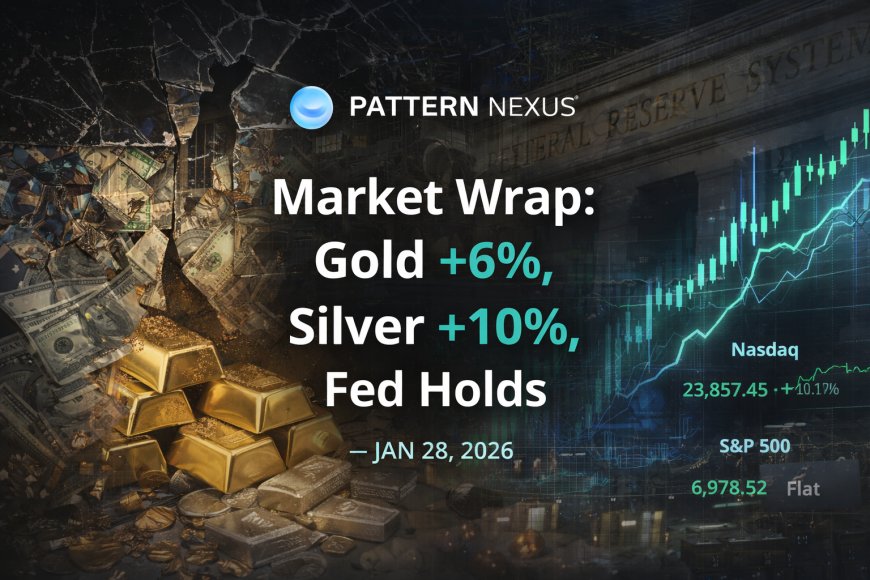

Fed held and USD firmed, yet gold still ripped. That’s the regime: credibility + constraint > simplistic inverse correlations.
Silver +10% on top of an already-parabolic tape is a volatility warning. Expect wicks, halts, and violent mean-reversion attempts.
Oil moved on the physical layer: storm disruption + supply uncertainty. Real-world constraints still punch through the financial wrapper.
Gold Just Repriced the System
The Day’s Drivers
Jan 28 was one of those sessions where the market gives you a loud signal if you’re willing to look at the whole stack: policy decision, FX reaction, cross-asset positioning, and then the physical layer (energy/supply) punching through the narrative layer.
Fed held — but the message was “data dependence, inflation still elevated”
The Fed left rates unchanged at 3.50%–3.75%. The key takeaway wasn’t just “no cut” — it was the tone: inflation still elevated, job market stabilizing, and no clean timeline for cuts. Reuters framed it as a hold with internal division (10–2) and an emphasis on waiting for data. If you were hoping for a clean dovish handoff, you didn’t get it.
A hold doesn’t mean “nothing happened.” It means the market now has to price the path with less guidance: how sticky is inflation, how stable is labor, and how political does the next chair transition get.
Dollar caught a bid after the decision (EUR down, USDJPY up)
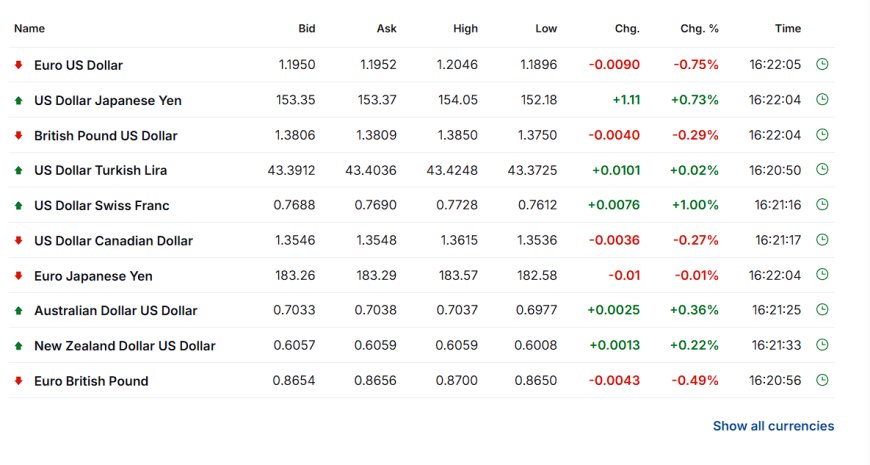
After the Fed held, the dollar firmed. Reuters specifically highlighted USD strength versus euro and yen after the statement. That matches FX snapshot: EURUSD 1.1950 (-0.75%) and USDJPY 153.35 (+0.73%) at capture time. This is the part people miss: the USD can bounce on “less dovish than hoped,” even if the broader regime still has credibility questions.
Gold and silver went vertical anyway
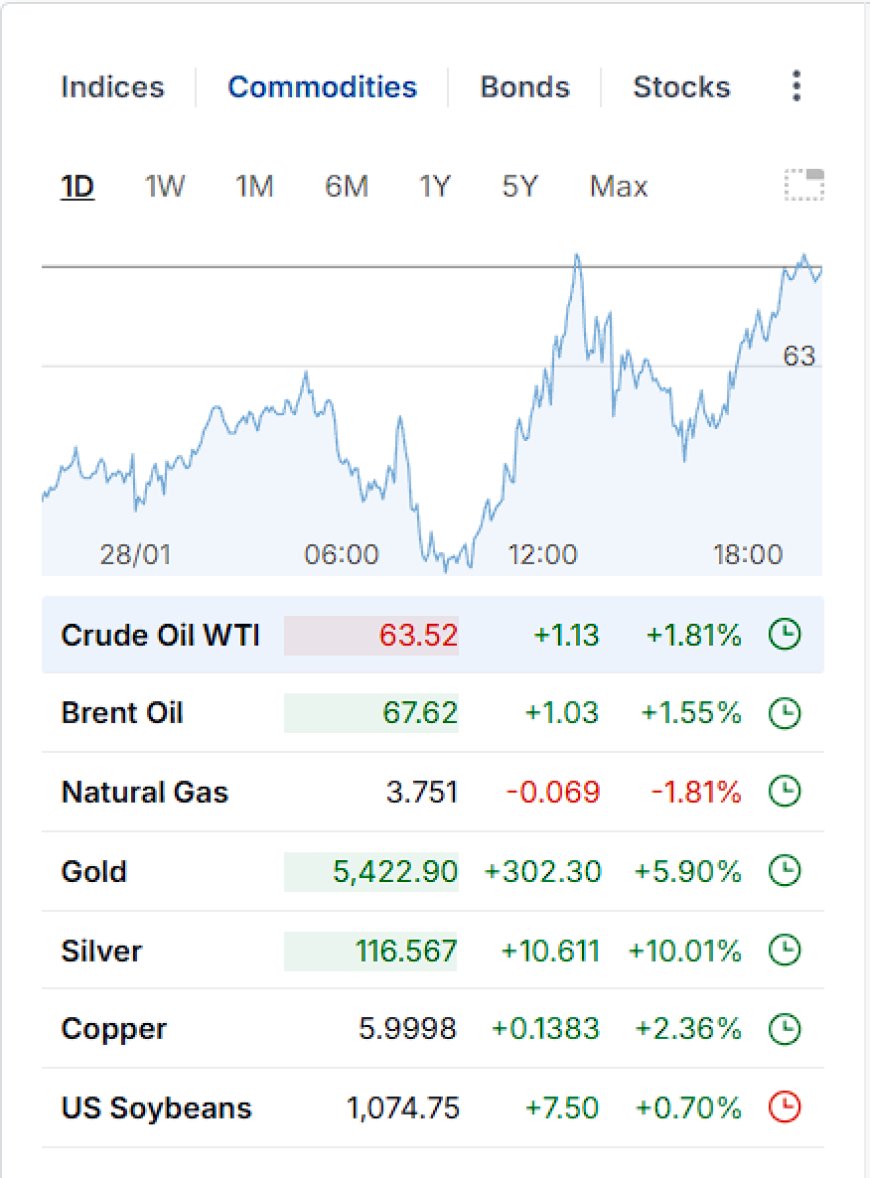
Here’s the core anomaly that isn’t an anomaly anymore: even with the dollar firming and yields rising, metals ripped. commodities panel showed Gold 5,422.90 (+5.90%) and Silver 116.567 (+10.01%). Oil was up, copper was up, and nat gas was down — a mixed physical tape underneath a screaming precious-metals tape.
Reuters’ Jan 28 gold coverage framed the rally as continuing past $5,200 with the dollar at multi-year lows earlier in the session, driven by geopolitical tension, “tangible asset” demand, and Fed/policy speculation. That’s the mainstream label. Mechanistically, it’s the same thing I keep saying: when the rule-set feels noisy, the market bids “cleaner claims,” regardless of which wrapper people prefer.
Because markets aren’t one mind. One pool is repricing policy-path and funding. Another pool is repricing credibility and long-horizon dilution risk. Different constraints, same day.
Equities: chop near 7,000 and a semis-led tape
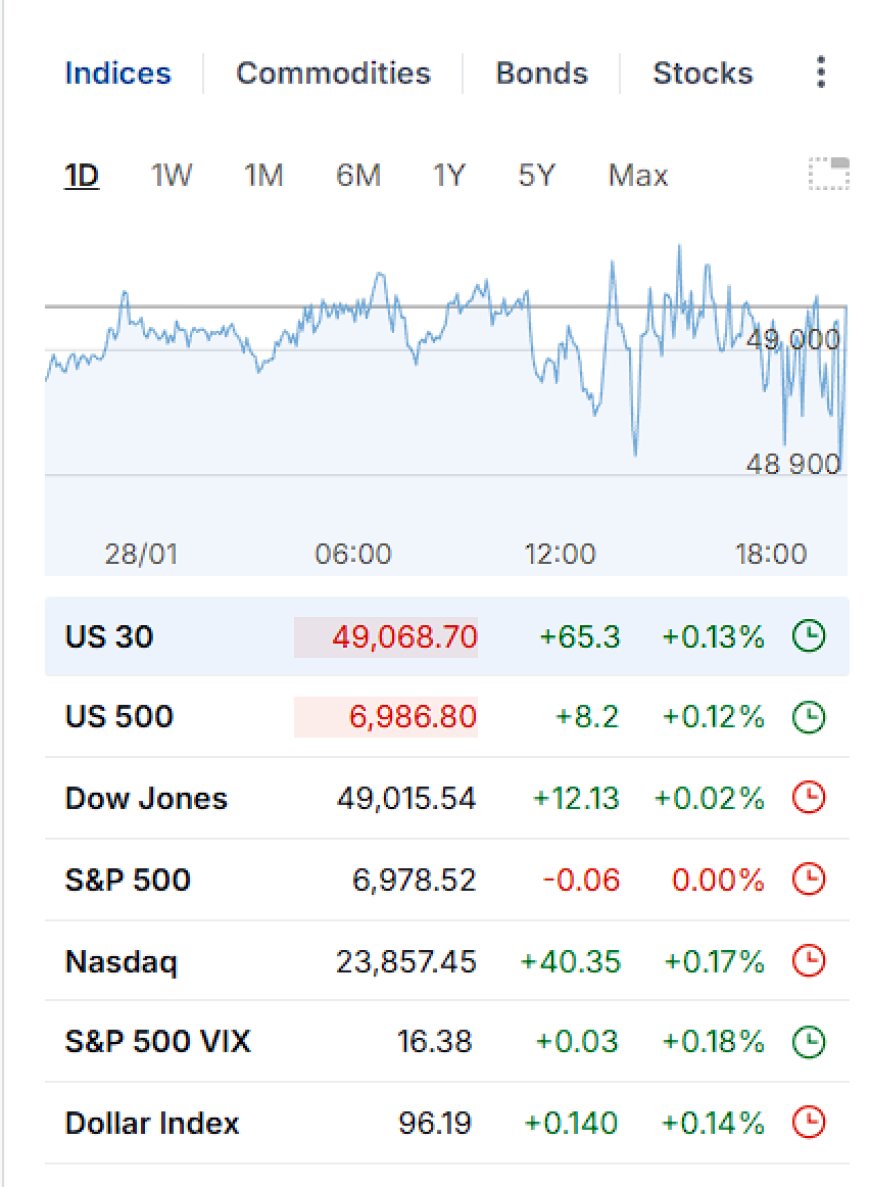
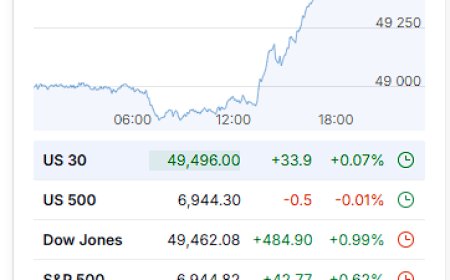
Reuters reported the S&P 500 crossed 7,000 intraday as markets braced for Big Tech earnings and the Fed decision. Your indices panel at capture time shows the “after” reality: S&P ~6,978.52 (flat), Nasdaq +0.17%, US 500 +0.12%, with the Dow barely green. That’s how this market behaves now: headline highs + intraday chop + close near flat while leadership concentrates in specific names.
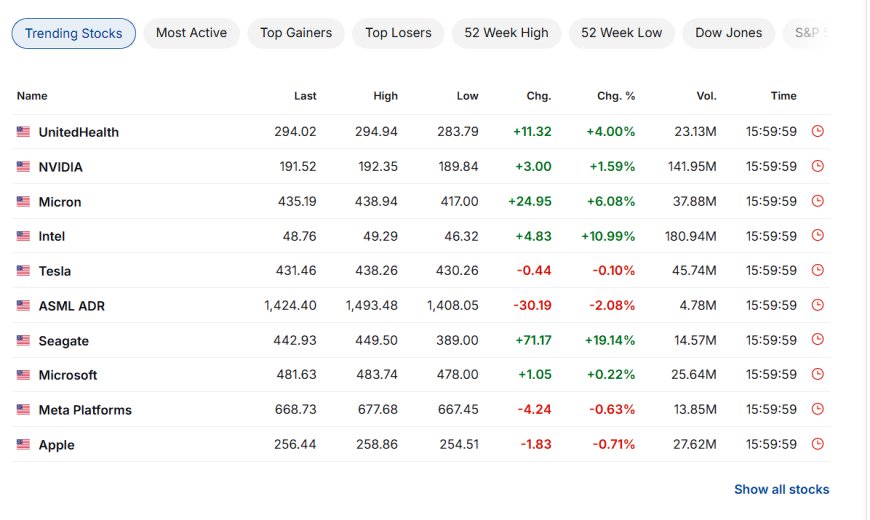
trending stocks list fits Reuters’ framing: semis and AI-adjacent names were bid (Intel up big, Micron up big, Nvidia green), and Seagate printed a massive move. The index was the wrapper. The leadership was the message.
Oil: winter storm disruption + supply uncertainty
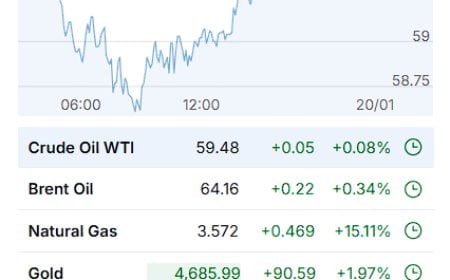
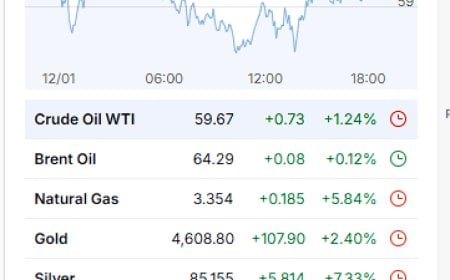
Reuters’ Jan 28 oil story emphasized lingering U.S. supply worries after a winter storm (output impacts, export disruption) plus Kazakhstan/Tengiz issues and Middle East tension adding a risk premium. panel printed WTI 63.52 (+1.81%) and Brent 67.62 (+1.55%). That’s the physical layer reminding everyone that “macro” still bottoms out in barrels, pipelines, and power.
Rates: higher yields, still no “panic bid”
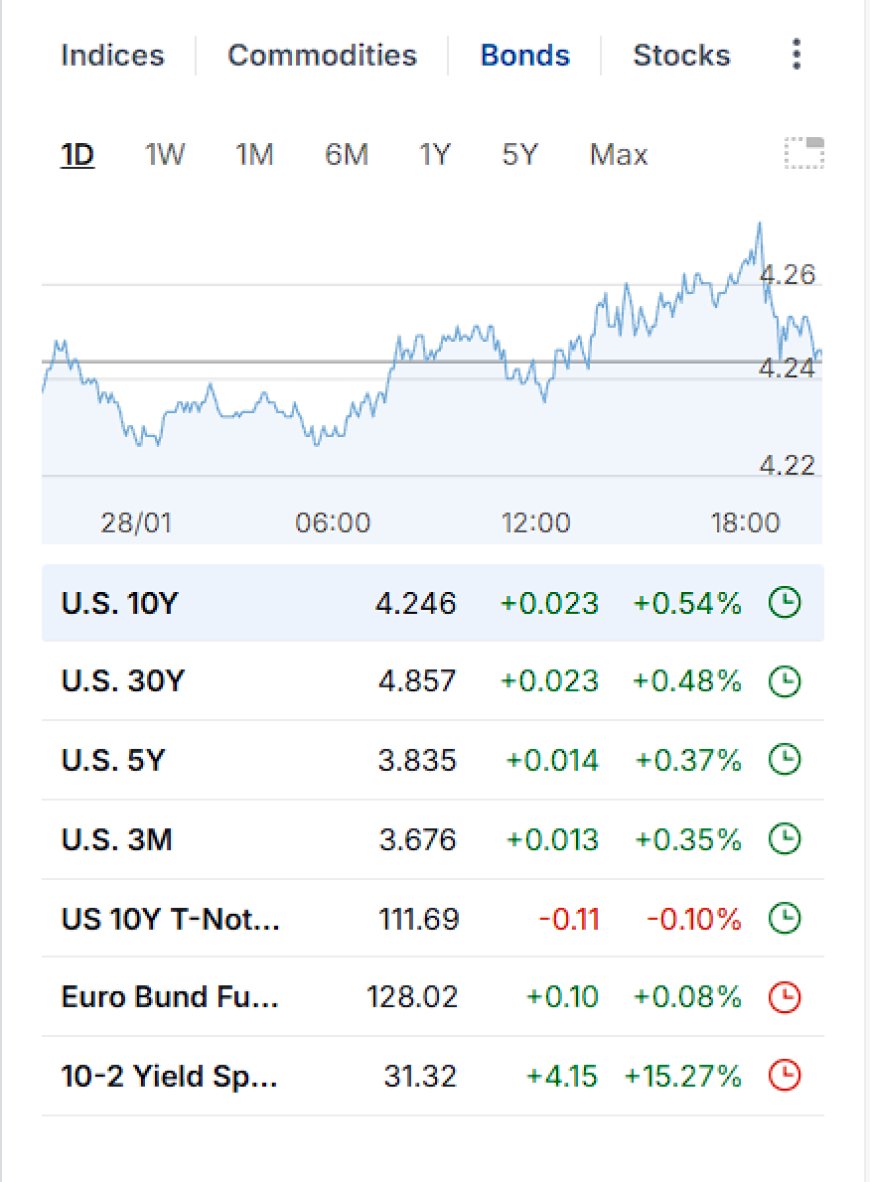
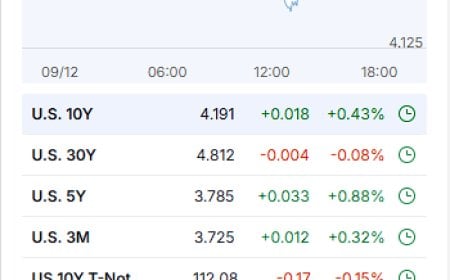
bonds panel shows 10Y 4.246 (+0.54%) and 30Y 4.857 (+0.48%). That’s not a flight-to-safety day. It’s a repricing day. The market absorbed the Fed hold with a slightly firmer dollar and higher yields — while metals still screamed. Again: multiple pipes.
Wider tape: the control-system headlines that fed the bid for “clean claims”
Today wasn’t just a “Fed day.” It was a full-stack day: funding headlines, war-premium headlines, governance headlines, and big-tech capital-market headlines all hitting the tape at once. You can pretend those things are “separate,” but price doesn’t.
Government funding: shutdown risk concentrates around DHS/ICE
Multiple outlets framed a looming partial government shutdown risk tied to the Homeland Security/ICE fight and the structure of appropriations. Whether a shutdown happens or not, this matters because it’s a real-time signal about institutional friction and enforcement politics becoming “budget objects.” If you want to understand why the market prefers assets perceived as outside the political stack, read those headlines and then look back at gold’s candle.
Middle East risk premium: Iran warnings + force posture headlines
Trump publicly warned Iran to negotiate a nuclear deal and signaled escalation risk. Reuters reported the language explicitly (“far worse”) alongside deployment framing. That headline sits right on top of oil’s “storm-disruption” story: the physical layer (barrels) plus the security layer (threat posture) is how you get a stubborn risk premium even when macro narratives try to compress it.
Gaza governance: demilitarization + weapons buyback + a managed transition stack
Reuters also reported the U.S. telling the UN Security Council that Gaza demilitarization could include an internationally funded weapons buyback and reintegration program, alongside a broader plan (monitors, transition admin, stabilization force). That’s not just “war news.” That’s a governance architecture story, and those are the stories that change risk horizons. Markets tend to price the idea of “managed outcomes” long before they price the details.
Ukraine: energy infrastructure targeted during a deep freeze
Reuters described Ukrainians facing tough weeks as Russia targets the power sector during subzero temperatures. This is the base layer again: energy systems, heating, transmission, logistics. When you watch energy infrastructure become a deliberate target, the idea that “money is the only thing that matters” stops being a theory and becomes a joke.
Tech/capital markets: SpaceX IPO chatter + Amazon layoffs
Two different “future-of-capital” signals hit today: Reuters reported SpaceX weighing a June IPO at a massive valuation (FT-sourced), and AP reported Amazon cutting ~16,000 corporate roles while explicitly leaning harder into AI-driven efficiency. One is a funding-cycle signal (risk appetite for mega-scale issuance). The other is a labor-cycle signal (AI as a management lever). Both feed the same meta-trade: the system tries to grow its “claims” faster than it grows its base layer, and then you wonder why metals keep catching bids.
Diplomacy optics: UK PM in Beijing, China pitching itself as the “reliable partner”
Al Jazeera highlighted Keir Starmer visiting Beijing and the framing of China positioning as a reliable partner amid shifting U.S. posture. You don’t have to agree with the spin to understand why it matters: alliance optics and interoperability zones feed directly into currency expectations and long-horizon capital routing.
Because markets are not pricing “one thing.” They price a stack: policy path, institutional stability, security risk, energy constraints, and the capital-market cycle. Jan 28 was a clean example: USD can firm on Fed language, yields can rise, and metals can still go vertical because credibility + constraint is the underlying variable.
Scoreboard + Receipts (Screenshots)
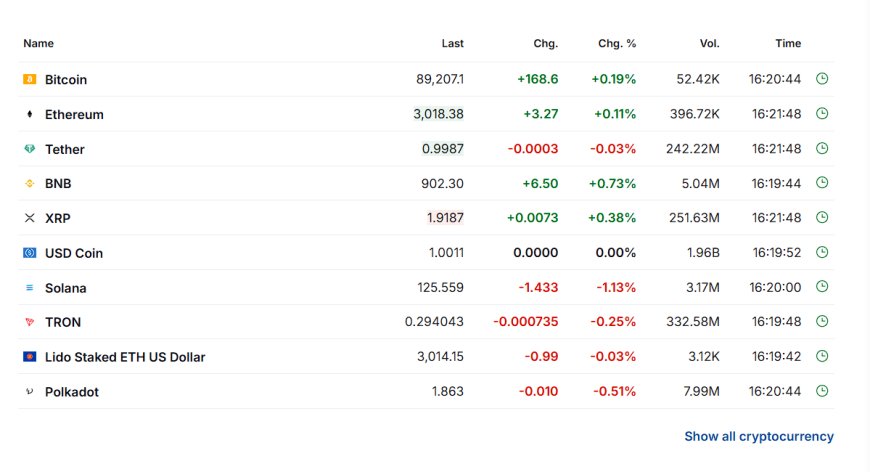
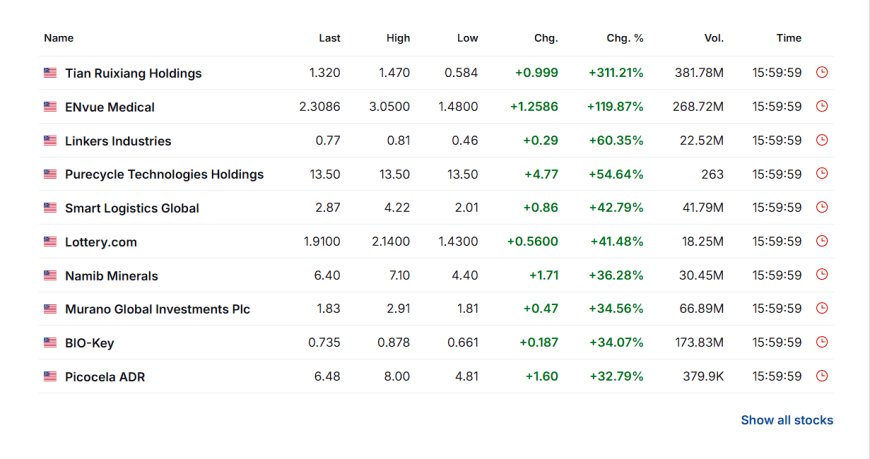
Below are the receipts captured on Jan 28. Replace each placeholder URL with the PatternNexus uploaded image URL for the corresponding screenshot.
Runners, Repricing, and the Daily Scalp Recap
People ask me questions about trading, so I’ll say it plainly: I’m not doing advanced quant wizardry. I’m showing the most basic version possible — open the app, spend 15–20 minutes, pick a trade, execute, exit. Standardized chart. Simple risk. That’s it.
Yes, you can scale anything. People love to say: “If you can do it with a small account, you can do it with $100,000 and make $2,000 in half an hour every day.” That’s the seductive thought. It’s also where people blow themselves up. The scaling isn’t the hard part — the risk is. The market will punish overconfidence faster than it rewards cleverness.
Not financial advice. Educational only. I’m sharing my own trades after the fact for transparency and process — what I saw, how I managed risk, and why I exited. This is not a recommendation to buy or sell anything, not a signal service, and not a solicitation. Markets involve risk, and results can vary. Do your own research.
Runners, Repricing, and the Daily Scalp Recap
What I’m doing with these scalps, so I’m going to make this painfully clear: I’m not running some advanced “quant” strategy. I’m doing the most basic version possible. Open the app. Spend 15–20 minutes. Pick one runner. Execute. Manage risk. Exit. Then I post it later as receipts.
And today I did it twice.
What I’m looking for (the setup)
This is the filter. I’m not scanning 500 charts. I’m looking for a specific behavior pattern because it repeats in these microcap runners:
- Step 1: Find something that already spiked early in the day — usually 100%+ gainers. I want a name that the market already chose as a “runner.”
- Step 2: Wait for the retreat. I’m looking for price to pull back toward the longer moving average line (the “bottom” EMA on my chart settings — depending on the template it may be a 20/50-style anchor).
- Step 3: I want a clean bounce off that line and then a stabilization zone — the stock fights a band in the middle of its intraday range instead of instantly collapsing.
- Step 4: Once it compresses and holds that zone, I’m looking for the next push — not because I “know” it will break out, but because the structure says the next move is likely to be violent one way or the other.
I’m not trying to predict the whole day. I’m trying to capture a small piece of the “bounce → stabilize → attempt breakout” sequence after an early spike, with defined risk. If it doesn’t hold the zone, I’m out.
How I manage risk (the rules)
This is where most people blow up. They think the magic is the entry. It’s not. The magic is not getting greedy and not taking 10 coin-flips in a row.
- Fewer trades = fewer chances to be wrong. Every additional trade is another roll of the dice. If you do this 10 times in a day, the odds of handing back gains (or worse) go up fast.
- I’m not hunting home runs. I’m aiming for a small controlled extraction. If it runs, great. If it doesn’t, I’m done.
- I trail stops up the moving averages. I “chase” the stop loss up as the trade moves in my favor (tightening risk). If it hits, it hits. That’s the cost of playing defense.
- No ego. Small win is a win. I don’t need the top tick.
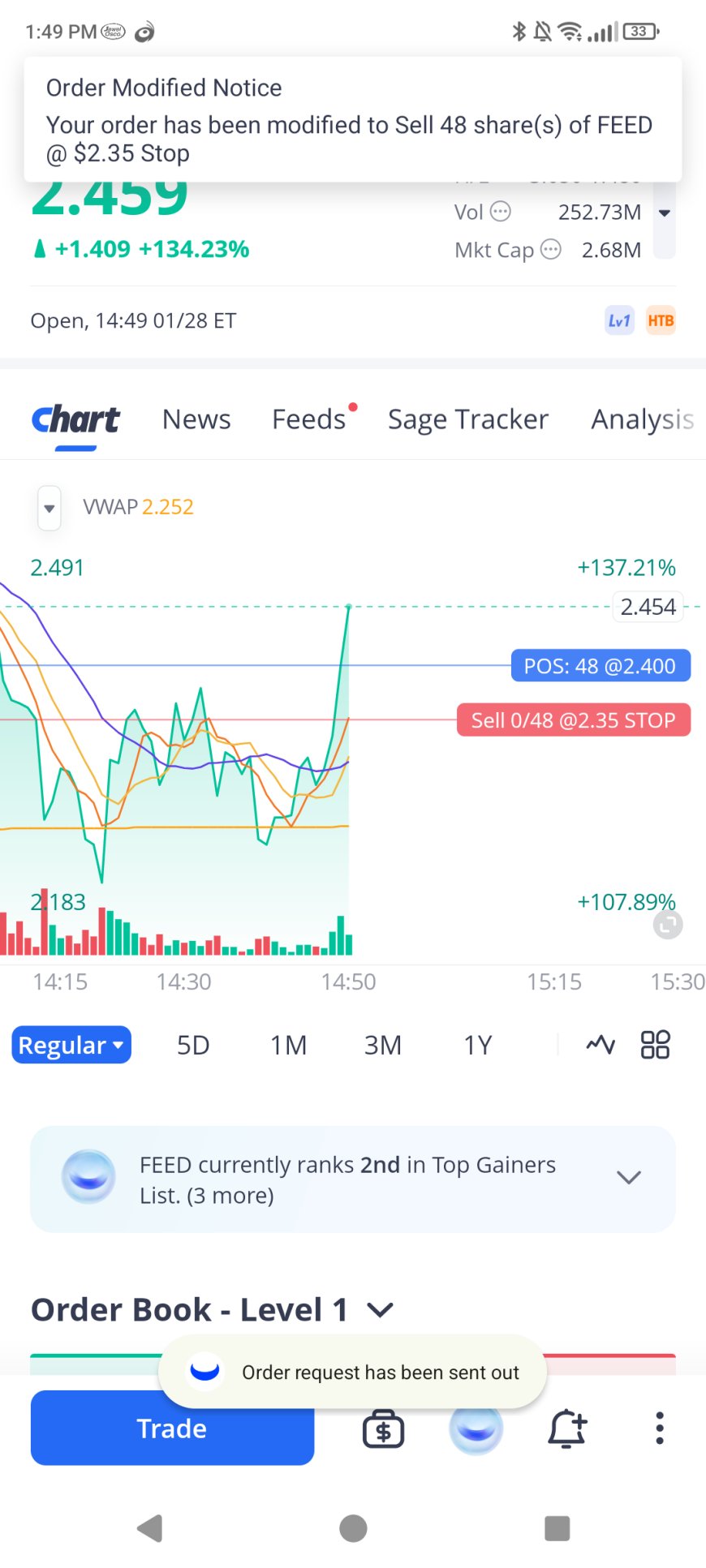
Scalp 1 (FEED) — mid-day bounce + stabilization
First trade was the classic pattern: early spike, pullback, bounce off the lower MA/EMA zone, then consolidation while it fought for the next move. I entered and immediately treated the stop as the whole point — not the profit target.
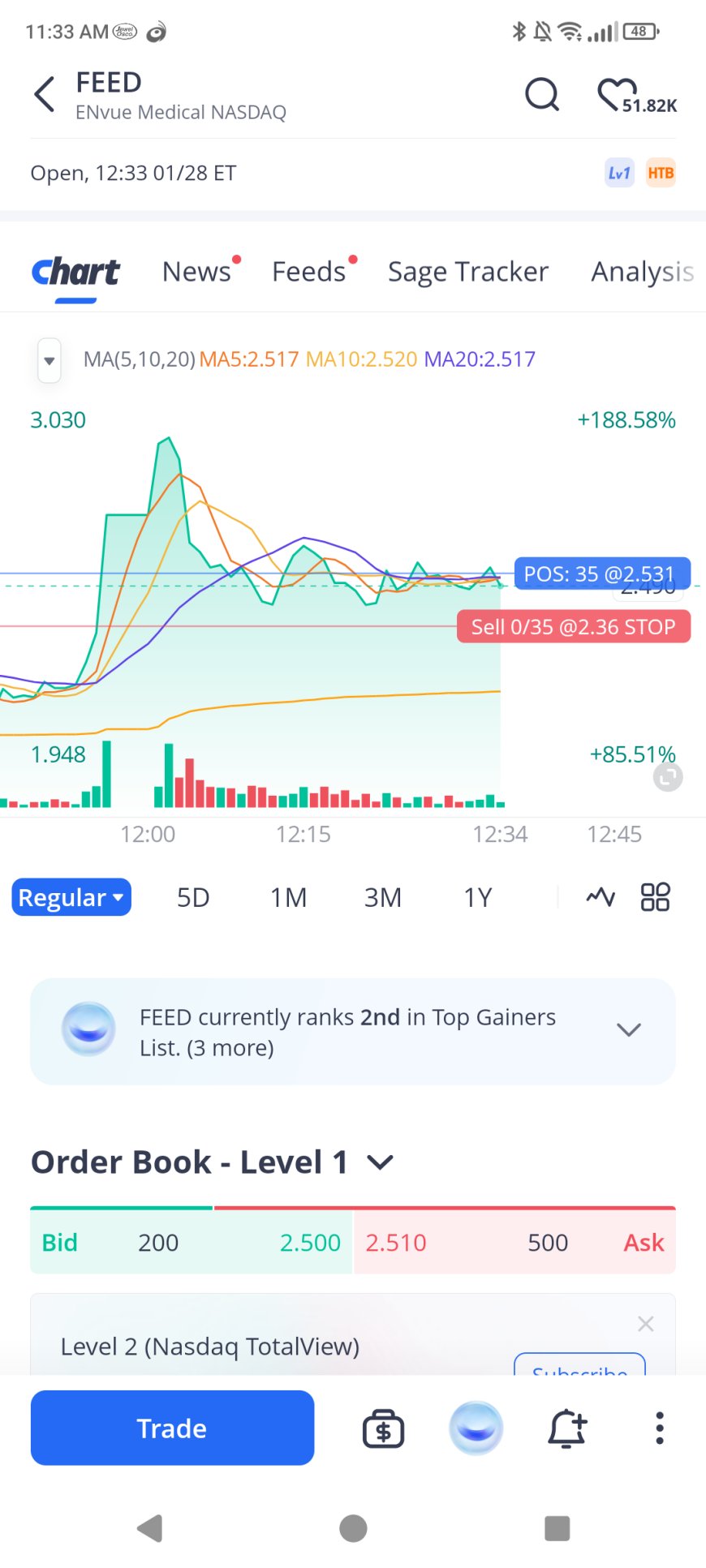
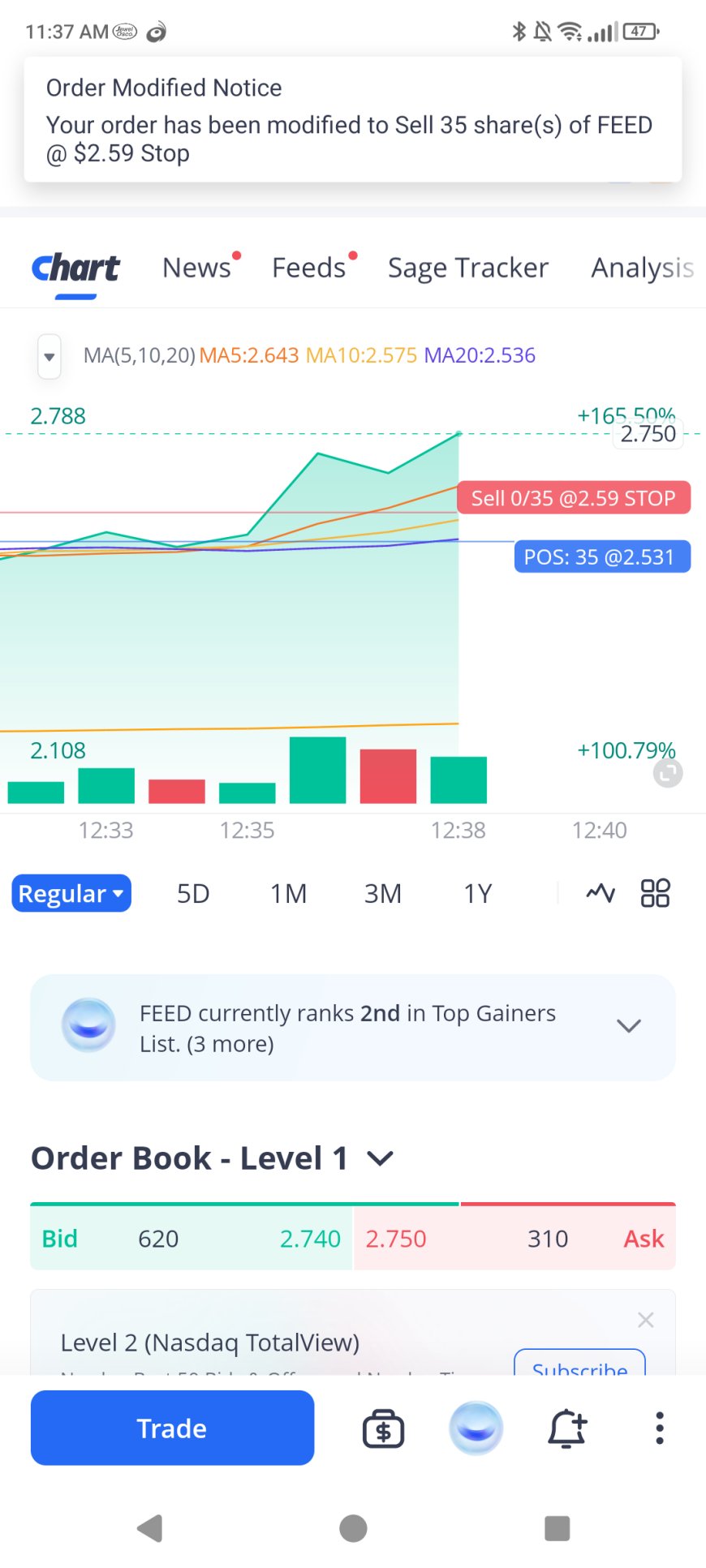
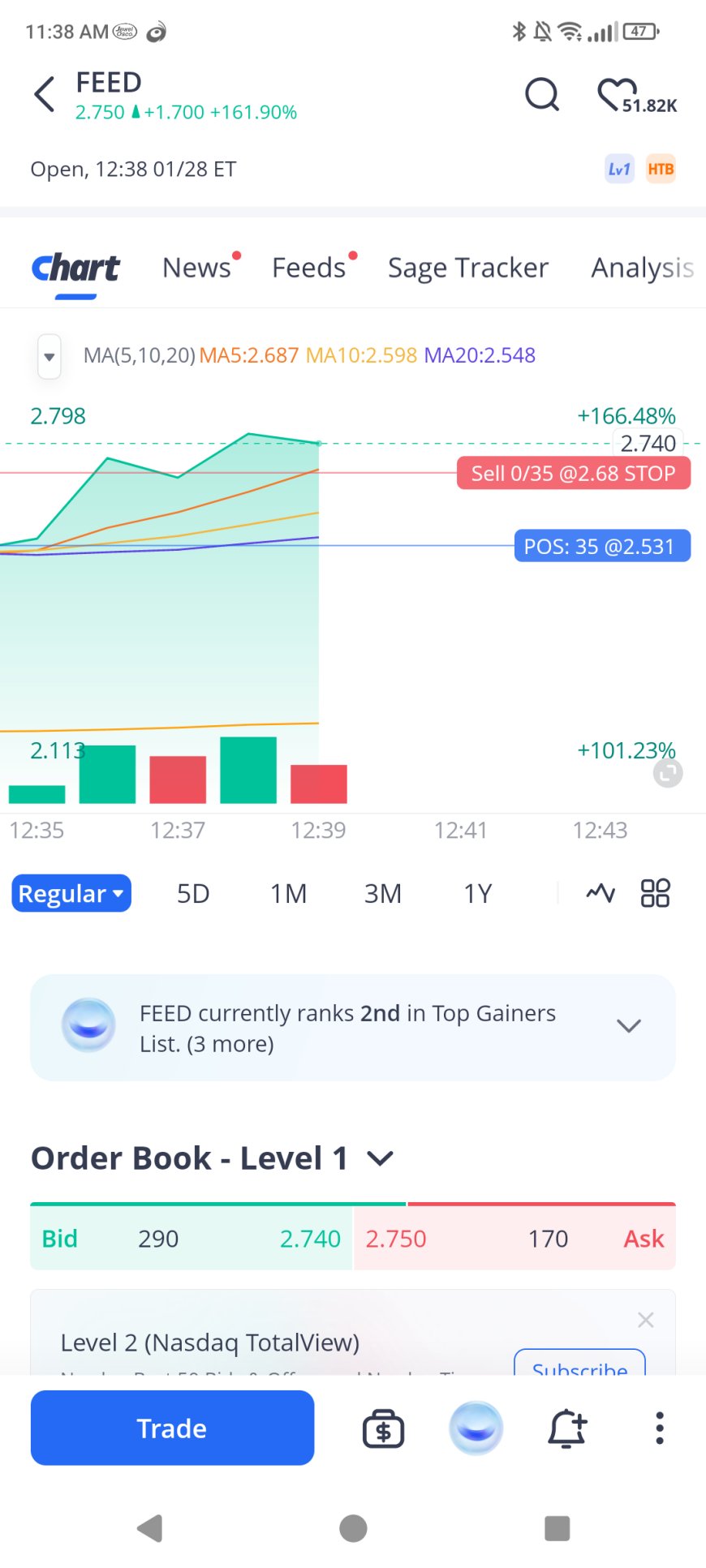
I’m not trying to be a hero. I’m trying to eliminate “big loss” outcomes. If the trade spikes and I can trail up behind it, great. If it turns and clips the stop, that’s the rule working. Small gains compound. Big drawdowns destroy.
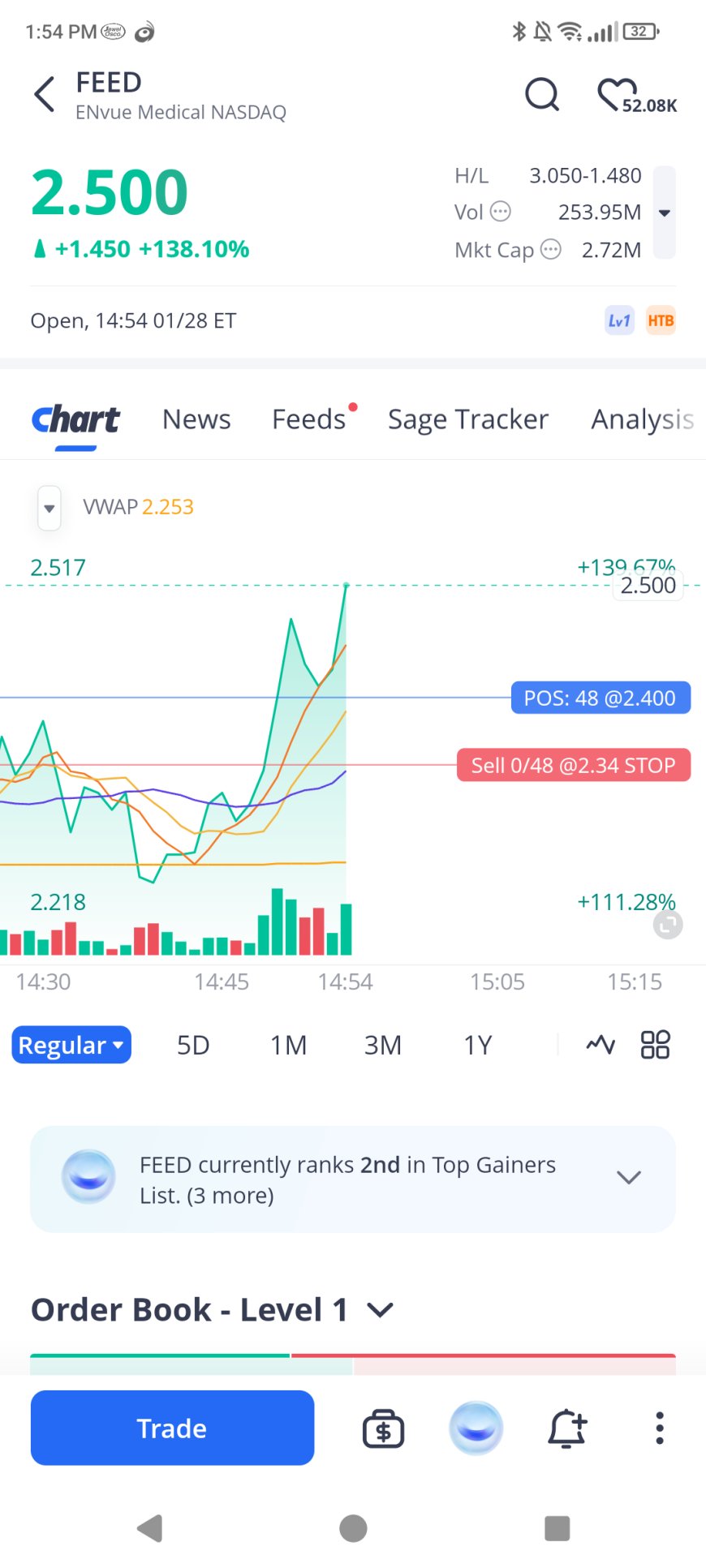
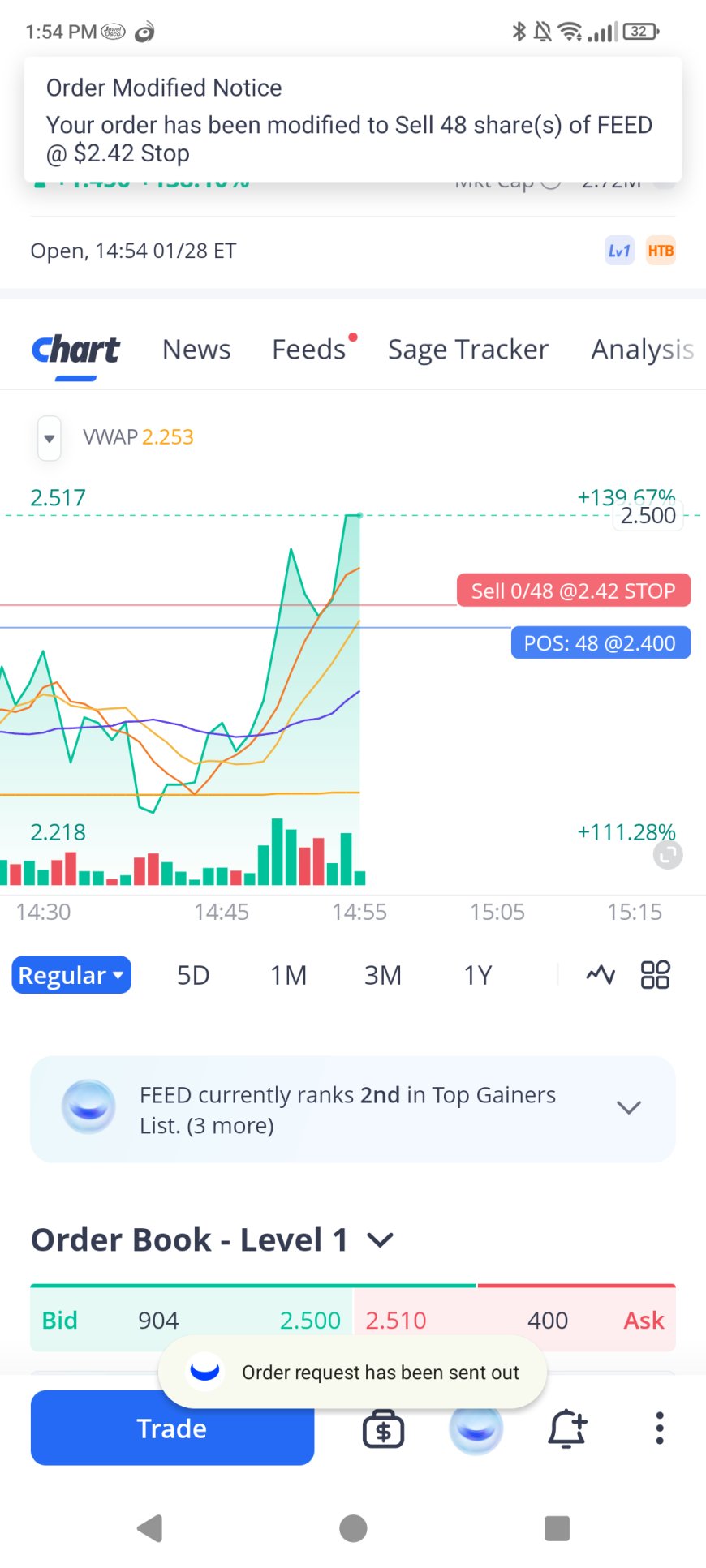
Scalp 2 (FEED) — later entry, same logic
Second trade was the same philosophy applied again: find the runner behavior, wait for the pullback/structure, enter with a defined stop, then trail risk tighter as it moved. More trades increases the chance of a loss, which is why I don’t turn this into a “10 trades a day” addiction.
P&L snapshot (small test routine)
I’m keeping receipts standardized because this isn’t about hype — it’s about documentation and repeatability.
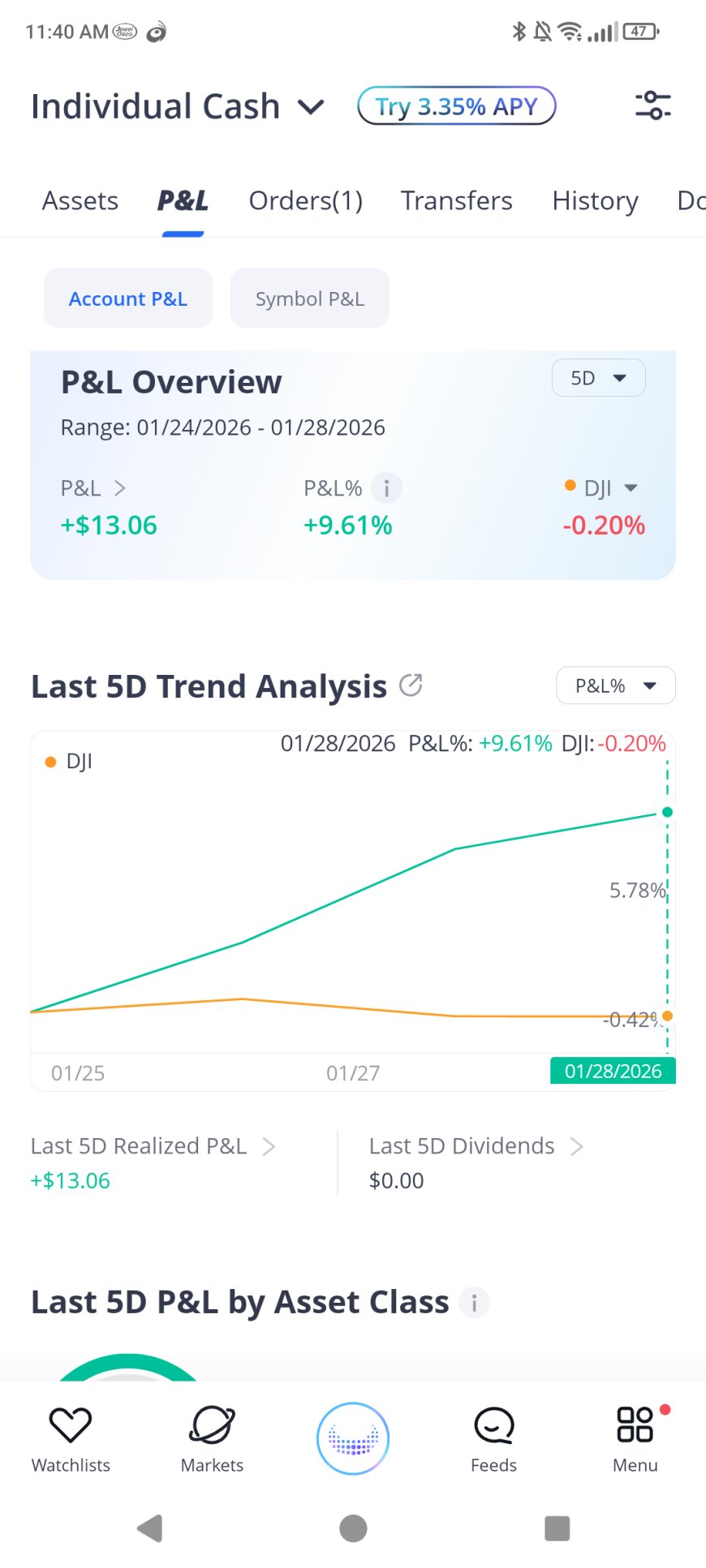
This isn’t a “how to get rich” post. It’s a demonstration of the premise: nothing is “real” in the way people pretend it’s real. Markets are an allocation machine. These runner are the machine showing itself—claims repricing violently based on structure, attention, and liquidity. My goal is to extract small controlled pieces of that motion without turning it into a casino lifestyle.
Pattern Nexus Lens
This is the premise I keep hammering: nothing is “real” in the way people want it to be real. Money is not a substance. Money is an allocation interface. It routes a share of productive output. That’s all it does.
And I don’t draw a religious line between fiat and gold. Gold is not magically exempt. Gold is just another consensus wrapper people trust more when credibility gets noisy. It can be scarce and physical and still be a claim. The only “real” thing is the underlying base layer: energy, food, production, security, logistics, and who gets what share.
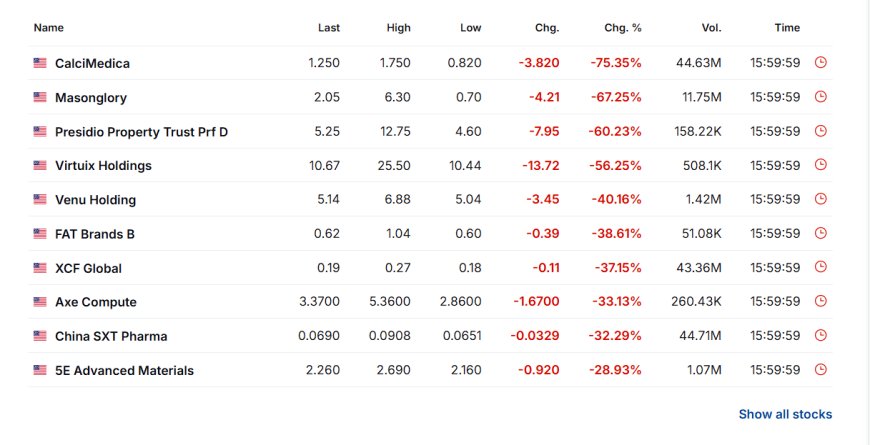
Jan 28 fits the frame perfectly. The Fed holds. The dollar firms. Yields rise. Yet gold and silver still go vertical. Oil moves on physical disruption. Equities chop around record levels. And microcaps flash +300% and -75% in the same ecosystem. That’s not contradiction. That’s a distribution engine repricing claims across different time horizons at once.
Stop asking what asset is “real.” Ask who controls the pipes, what rules are changing, and which claims get preferential treatment when the rule-set shifts.
FAQ
How can gold rip when the dollar is up and yields are up?
Because markets aren’t one mind. FX can react to the Fed statement while metals react to broader credibility, geopolitical risk, and long-horizon dilution narratives. Different constraints, same day.
Why did the S&P flirt with 7,000 but print flat on my snapshot?
Intraday chop. The Reuters narrative was “crossed 7,000.” The tape you captured shows the “after”: the market digested the Fed and earnings expectations with volatility and a near-flat print.
Are you telling people what to buy?
No. Trades are shown after the fact for transparency and process. No alerts. No recommendations. No solicitation.
Is scalp trading risky?
Yes. Extremely. It can look easy on screenshots and destroy people in real life. That’s why I keep it standardized, delayed, and focused on risk controls and process—not hype.
Sources
Same-day news drivers for Jan 28, 2026 (Fed decision, USD reaction, gold rally, oil supply disruption, equities/earnings) plus reference charts.
- Fed leaves rates unchanged; inflation “elevated” — Reuters (Jan 28, 2026)
- Dollar holds gains vs euro/yen after Fed — Reuters (Jan 28, 2026)
- Gold rally continues past $5,200; record highs — Reuters (Jan 28, 2026)
- Oil rises; U.S. supply worries linger after winter storm — Reuters (Jan 28, 2026)
- S&P crosses 7,000 intraday; semis/AI optimism — Reuters (Jan 28, 2026)
- S&P 500 chart — Yahoo Finance
- Nasdaq chart — Yahoo Finance
- DXY chart — Yahoo Finance
- USDJPY chart — Yahoo Finance
- Gold futures (GC=F) — Yahoo Finance
- Silver futures (SI=F) — Yahoo Finance
- WTI crude futures (CL=F) — Yahoo Finance
- Brent crude futures (BZ=F) — Yahoo Finance
- Bitcoin (BTC-USD) — Yahoo Finance
- SpaceX weighs June 2026 IPO at $1.5 trillion valuation (FT-sourced) — Reuters (Jan 28, 2026)
- Amazon cuts about 16,000 corporate jobs — AP (Jan 28, 2026)
- Trump warns Iran to make nuclear deal or next attack will be “far worse” — Reuters (Jan 28, 2026)
- US tells UN: Gaza demilitarization to include internationally funded buyback program — Reuters (Jan 28, 2026)
- Ukrainians face tough weeks as Russia targets power sector during freeze — Reuters (Jan 28, 2026)
- Israel buries last captive recovered from Gaza — Reuters (Jan 28, 2026)
- China pitches itself as a “reliable partner” as US allies visit Beijing — Al Jazeera (Jan 28, 2026)
- British PM arrives in Beijing for official visit — Xinhua (Jan 28, 2026)
- Shutdown looms over ICE/DHS funding fight — Washington Post (Jan 28, 2026)
Apa Reaksi Anda?
 Suka
0
Suka
0
 Tidak Suka
0
Tidak Suka
0
 Cinta
0
Cinta
0
 Lucu
0
Lucu
0
 Wow
0
Wow
0
 Sedih
0
Sedih
0
 Marah
0
Marah
0

Founder of Pattern Nexus. I research markets, macro, geopolitics, AI, history, ancient systems, and the patterns most people overlook. I’m also building Market Radar, a trading scanner designed to read pressure, risk, confirmation, and setup quality before chasing a move. Pattern Nexus is where I connect the dots between data, history, technology, and the bigger system playing out around us.














Komen-komen (0)