
Alone Together: The Dual Impact of the Internet and AI
From AOL chat rooms to artificial intelligence, technology has redefined connection and isolation. The evolution of the internet reshaped society, identity, and communication — making us more connected than ever, yet increasingly alone.

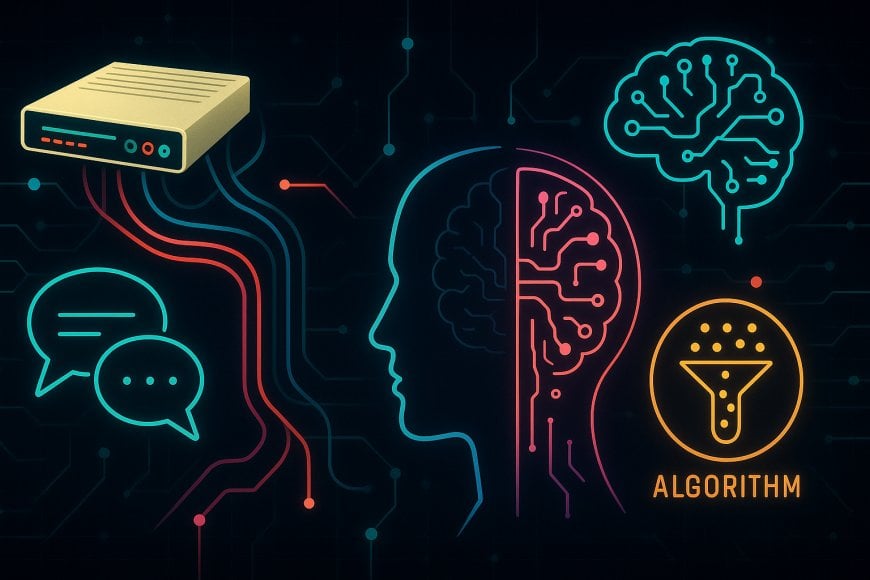
Alone Together: Navigating the Dual Impact of the Internet and AI
The internet has come a long way since the days of AOL and dial-up. I still remember the excitement—and patience—it took as the modem screeched and beeped its way online. Back then, connecting to someone across the world felt almost miraculous. What once required effort and waiting has evolved into an instant, high-speed system that touches nearly every part of our lives.
This transformation hasn’t just changed how we communicate—it’s changed how we think, learn, and experience the world. From the earliest chat rooms to the age of artificial intelligence, every leap forward has connected us more deeply while, paradoxically, pulling us further apart. Through the lens of social science, it becomes clear that while technology has enhanced connection and access, it has also reshaped social behavior, ethics, and our understanding of what it means to be human.
The Early Internet: Dial-Up and Discovery
In the 1990s, the internet felt like a digital frontier. Connecting took patience, but those modem sounds meant adventure. America Online (AOL) introduced millions to email, instant messaging, and chat rooms. For many, it was the first opportunity to meet people outside their immediate circles and to explore new sides of themselves. These online spaces fostered curiosity and connection, building the foundations of today’s social web. As danah boyd and Nicole Ellison (2007) later observed, early online interaction transformed how people expressed identity and community in digital environments.
Broadband and the Dot-Com Boom
As dial-up gave way to broadband, everything changed. Suddenly, we could stream, download, and play games with people around the world—without the endless buffering. The late 1990s saw the dot-com boom, a time when online businesses launched daily. Many vanished, but those that survived—like Amazon and Google—became the foundation of our digital economy. This shift turned the internet from novelty to necessity. It was no longer something we used; it became part of who we were—a central force in communication, commerce, and culture.
Web 2.0 and the Social Media Revolution
The arrival of Web 2.0 transformed the internet into a participatory space. Platforms like MySpace, Friendster, and Facebook allowed users to share their stories, photos, and creative expressions with the world. Then came YouTube, blogging, and meme culture—forms of expression that let anyone participate in the global conversation. As Kate Miltner (2018) explained, memes became cultural shorthand, communicating collective humor and critique across borders.
This democratization of content creation gave rise to influencers and the new economy of digital identity. Beneath it all, however, was data—every click, like, and post quietly feeding the algorithms that now shape modern life.
The Era of Big Data and Artificial Intelligence
When companies realized how valuable that user data was, the digital economy transformed. Shoshana Zuboff (2019) called it surveillance capitalism—a system where human experience itself becomes a product. The rise of machine learning and AI made this system even more powerful. Algorithms began learning from our patterns, predicting what we’d watch, buy, or believe. It’s why Netflix knows what to recommend before we do.
But this convenience comes at a cost. The Cambridge Analytica scandal revealed how personal data could be used to influence elections and manipulate public opinion. As Wardle and Derakhshan (2017) noted, this marked a turning point in the conversation about privacy, democracy, and trust in digital systems.
Technology’s Impact on Institutions
The influence of the internet and AI extends far beyond personal communication. Political systems, economies, and education have all been transformed.
- Politics: Data-driven campaigning now dominates, allowing microtargeted messaging based on personal behavior. While effective, it raises questions about democratic integrity. As Howard (2006) observed, the impact of technology depends on whether it is used to empower or manipulate citizens.
- Economy: Platforms like Uber and Airbnb redefined employment, fueling the gig economy. According to the Freelancers Union & Upwork (2020) report, 57 million Americans—about 35% of the workforce—now work independently, often without traditional protections.
- Education: Online learning has made education more accessible but has also revealed deep inequalities. The Pew Research Center (Vogels, 2021) found that rural and low-income households are still far less likely to have reliable broadband access, limiting opportunity in a world increasingly dependent on connectivity.
How Technology Shapes Social Practices
Algorithms now play a powerful role in shaping what we see. Eli Pariser (2011) called this phenomenon the filter bubble—a state where we are only exposed to ideas that reinforce what we already believe. This creates echo chambers, fueling polarization and distorting perception.
Meanwhile, social media platforms have redefined what communication looks like. As Sherry Turkle (2015) observed, we’ve become “alone together”—constantly connected but emotionally distant. We share highlights rather than honesty, building a culture of performance over presence.
And yet, these same tools have sparked global movements like #MeToo and climate activism, proving that connection can still be a force for unity and social change.
Rethinking Our Relationship with Technology
Looking at technology through a social science lens helps us see that it’s not neutral—it reflects human intentions, biases, and structures of power. Issues like privacy erosion, algorithmic bias, and digital inequality can be addressed through ethical design and stronger policy.
Transparency, diverse datasets, and robust privacy laws like the General Data Protection Regulation (GDPR) can help restore control to users. More equitable internet access ensures that opportunity isn’t limited by geography or income.
The Human Side of the Digital World
Our relationship with technology mirrors our relationship with ourselves. Confirmation bias shapes how we consume information, while the assumption that “innovation equals progress” often blinds us to unintended consequences. Recognizing this helps us engage technology more critically and compassionately.
Personally, I’ve learned to use technology more intentionally—seeking diverse viewpoints, questioning what algorithms feed me, and fostering real conversations beyond the screen. Awareness creates space for empathy, even in disagreement.
Applying These Lessons in Daily Life
Technology has transformed not just how I think but how I work. In my real estate business, I use data analytics to make strategic decisions and streamline operations. Yet, I also make it a point to maintain the human side of those interactions—meeting clients face-to-face, building trust, and ensuring that technology enhances rather than replaces genuine connection.
Continuous learning is crucial. Staying informed through research, courses, and observation allows us to adapt in a world that changes faster every year. Aligning our use of technology with our values ensures progress remains human-centered.
Final Reflection
The story of the internet and AI is both inspiring and cautionary. These innovations have expanded knowledge, creativity, and connection—but they’ve also deepened divisions and blurred boundaries between reality and algorithm. We stand at a crossroads where empathy and innovation must evolve together.
Technology should extend humanity, not diminish it. Our challenge is to ensure that the same tools that connect us don’t erode the very relationships that make us human. Connection, after all, isn’t measured in bandwidth—it’s measured in understanding.
References:
Pariser, E. (2011). The Filter Bubble. Penguin Press.
Turkle, S. (2015). Reclaiming Conversation. Penguin Press.
Zuboff, S. (2019). The Age of Surveillance Capitalism. PublicAffairs.
Vogels, E. A. (2021). Pew Research Center.
Wardle, C. & Derakhshan, H. (2017). Information Disorder. Council of Europe.
Miltner, K. (2018). Internet Memes. SAGE Publications.
Freelancers Union & Upwork. (2020). Freelancing in America: 2020.
Howard, P. (2006). Digital Campaigns and Democracy.
Smith, J. (2020). Algorithmic Bias in Artificial Intelligence. AI Ethics Review.
Johnson, K. (2018). Confirmation Bias and Technology Perception. Journal of Social Psychology.
Apa Reaksi Anda?
 Suka
0
Suka
0
 Tidak Suka
0
Tidak Suka
0
 Cinta
0
Cinta
0
 Lucu
0
Lucu
0
 Wow
0
Wow
0
 Sedih
0
Sedih
0
 Marah
0
Marah
0















Komen-komen (0)