
The State-Capital Stack: CHIPS-to-Equity, Rare Earths, and the U.S. Ownership Turn
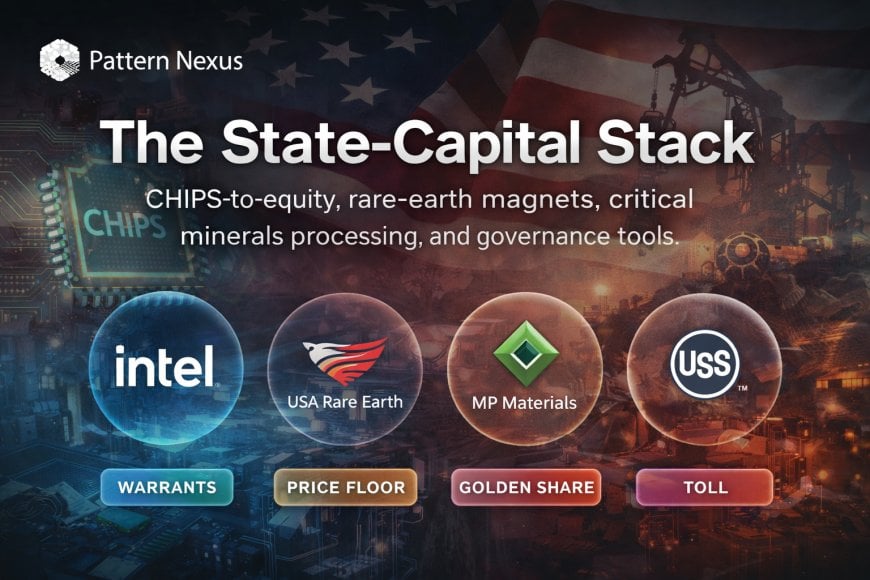
The Trump administration is turning industrial policy into cap-table leverage: converting CHIPS grants into equity, underwriting price floors and offtakes, and using governance instruments like golden shares and tolls. This is the state building rails and buying seats at chokepoints.
![[HERO_IMAGE_ALT: abstract schematic of industrial policy transforming into equity stakes and supply-chain chokepoints]](https://patternnexus.com/uploads/images/202601/image_870x_6976eed91f3c8.jpg)

Industrial policy is evolving into cap-table governance. If the node is critical, the state wants upside, veto power, and enforceable delivery timelines.
The risk is not “big government.” The risk is single-rail dependency: one permission stack, one eligibility regime, one financing gate, one choke.
“Buy seats at chokepoints” is the modern sovereign playbook. Ownership is just one method. Price floors, offtakes, golden shares, and tolls are the others.
From Subsidy to Leverage: The New Deal Desk
The headline is simple: the administration is reworking strategic funding so the public side captures upside and control, not just “job counts” and press releases. The mechanism is also simple: convert grants into equity, add warrants where execution matters, and pair financing with commercial strings that shape behavior.
The deeper shift is operational. A government that thinks in “control systems” will always prefer instruments that are enforceable: equity, warrants, governance rights, offtake agreements, price floors, export permissions, and financing gates. This is why the core artifact here is not a single deal. It is the standardization of the deal style.
In practice, you can think of this as a deal desk: a centralized negotiating posture that tries to turn “public risk” into “public upside” while hardening delivery outcomes. That deal desk logic is portable. You can apply it to chips. You can apply it to magnets. You can apply it to critical minerals. You can apply it to firm power. Once the logic exists, the portfolio builds itself.
Subsidy becomes equity, equity becomes governance, governance becomes eligibility, and eligibility becomes a permissioned rail.
![[IMAGE_1_ALT: diagram showing the state-capital stack from grants to equity, offtake, price floors, governance rights, and tolls]](https://patternnexus.com/uploads/images/202601/image_870x_6976ead6cbe18.jpg)
Treat this as the opening frame for everything below. Intel is the flagship example because it shows the most explicit conversion of CHIPS funding into an ownership position. Rare earths are the second flagship because they show the full-stack approach: upstream resource, midstream processing, downstream magnets, and the demand lock through offtake.
Negotiation power stops being rhetorical. A stake (or a veto right) turns missed milestones, cost overruns, and delivery slippage into enforceable events. The instrument becomes the enforcement channel.
CHIPS as a Capital Rail: Intel, Lithography, and the Perimeter Expansion
The public story of CHIPS was always “bring manufacturing home.” The deeper story is “build an industrial permission layer.” Once you accept that semiconductors are a sovereignty substrate, CHIPS stops being a subsidy program and becomes a financing rail that can be redirected toward any input that governs chip output.
This is the key: the CHIPS perimeter is not fixed. It expands to include whatever the system cannot function without. If photonics (lithography light sources) bottleneck the nodes, photonics enters the perimeter. If magnets bottleneck the motors, magnets enter the perimeter. If mineral processing bottlenecks the inputs, processing enters the perimeter.
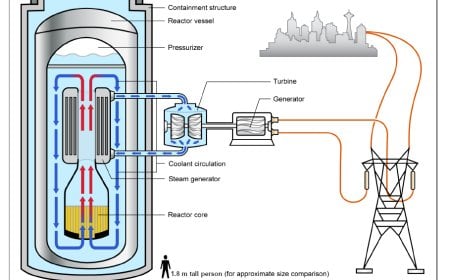
Instead of paying out the remaining CHIPS grants as a one-way transfer, the administration structured an equity stake funded by those unpaid grants plus Secure Enclave funding, producing a roughly 9.9% position. This is the template logic: if taxpayers are underwriting strategic capacity, taxpayers should capture upside and control.
![[IMAGE_2_ALT: flow chart showing CHIPS awards to Intel converting into equity stake plus Secure Enclave obligations]](https://patternnexus.com/uploads/images/202601/image_870x_6976eb4e3ac03.jpg)
The perimeter expands fast for one reason: inputs are power
Once CHIPS becomes a capital rail, the perimeter expands fast. You do not just fund fabs. You fund lithography enabling technology, wafer supply, packaging, materials, magnet inputs, and the midstream processing that makes upstream mineral resources “eligible” for downstream advanced manufacturing.
- Lithography enabling tech: xLight’s CHIPS R&D LOI signals that “the photon source” is strategic, not just the fab footprint.
- Critical minerals processing: awards tied to smelting/processing nodes (like Crucible Metals) reflect that bottlenecks often sit in the conversion layer: ore → usable input.
- Rare earth magnets: once you accept magnets as the motor of modern electrification and defense systems, they become semiconductors-adjacent in the CHIPS policy perimeter.
The most important question is not “how much does CHIPS spend?” The most important question is “what nodes does CHIPS define as sovereign?” Once a node is inside the perimeter, it becomes eligible for equity, financing gates, and procurement preference.
This is why rare earths show up in the same breath as semiconductors. Not because the materials are the same, but because the control logic is the same. If a downstream system cannot function without an upstream input, that input becomes a strategic rail.
Rare Earths and Magnets: Building the End-to-End Chain
Rare earths are not a “materials story.” They are a leverage story. The leverage is concentrated at three points: separation and processing, metallization, and high-performance magnet production (NdFeB). If you control those nodes, you control an enormous fraction of modern defense and electrification capabilities.
![[IMAGE_3_ALT: map of the rare earth magnet supply chain from mine to separation to metal to magnet to end-use systems]](https://patternnexus.com/uploads/images/202601/image_870x_6976ebb877861.jpg)
The administration’s moves here matter because they combine capital with commercial strings. The goal is not “domestic production” as a headline. The goal is domestic production that survives price cycles, scales fast enough to matter, and can be steered through contract.
- USA Rare Earth: reported debt-and-equity support targeting a Texas mine and an Oklahoma magnet facility, with the financing logic explicitly framed as strategic supply-chain hardening.
- MP Materials: a DoD-centered package pairing equity and warrants with a decade-long price floor and offtake commitments, underwriting the magnet business model under security logic.
- Vulcan Elements / ReElement: CHIPS incentives and financing commitments to expand domestic separation and magnet production capability, aiming to close the “processing-to-magnet” gap.
Equity gets headlines, but price floors and offtake are what make industrial capacity bankable. If a strategic industry is vulnerable to price-collapse cycles, a floor is a sovereignty instrument, not a commodity feature.
In Pattern Nexus terms, this is “eligibility engineering.” A domestic supply chain is not “domestic” if it dies the first time prices fall, financing tightens, or demand shifts. Eligibility means survivability across cycles, plus enforcement through procurement preference, offtake, and financing rails.
This is also why magnets keep showing up in national security memos. They are “small” components with outsize system impact: guidance, actuators, motors, drones, aircraft subsystems, EV drivetrains, robotics, and grid-scale equipment. A choke at magnets becomes a choke everywhere.
Critical Minerals Beyond Rare Earths: Lithium and the Copper Spine
Rare earths are the most obvious choke because magnets are irreplaceable in many high-performance systems. But the broader supply-chain posture includes lithium and copper because electrification is the macro substrate of the AI-industrial phase. Batteries and conductors are the physical layer.
![[IMAGE_4_ALT: electrification supply chain schematic emphasizing copper, transformers, and batteries as the physical layer of AI infrastructure]](https://patternnexus.com/uploads/images/202601/image_870x_6976ec58abb69.jpg)
The “copper spine” matters because it is the quiet scaling constraint. Compute demand can surge in quarters. Grid and transformer capacity scale in years. Copper-intensive buildouts scale in multi-year cycles. That mismatch forces states to treat materials and processing as timeline control, not just commodity input.
Two deals matter here because they show the same “ownership + gating” approach applied outside rare earths.
- Lithium Americas / Thacker Pass: warrants tied to DOE financing that produce equity exposure at both the company and JV level, turning loan support into an ownership hook.
- Trilogy Metals / Ambler: strategic stake plus warrants linked to an access-road and permitting timeline, blending equity with infrastructure gating.
A mine that cannot be accessed or permitted is not a resource. The access road, the permit, and the financing gate are all part of the same control layer.
This is the wider pattern: the state is not only “picking winners.” It is trying to re-wire time-to-build, time-to-permit, and time-to-scale into a predictable cadence that private capital can price. Predictability is a strategic asset when the base layer must expand quickly.
Control Without Equity: Golden Shares, Profit-Shares, and Tolls
If you only track equity stakes, you miss half the story. The other half is governance: instruments that create veto power, enforce compliance, or collect tolls without taking normal ownership. Control systems do not require full ownership. They require enforceable chokepoints.
![[IMAGE_5_ALT: control instruments diagram comparing equity stakes, golden shares, profit-share convertibles, and export-permission tolls]](https://patternnexus.com/uploads/images/202601/image_870x_6976ecdb60572.jpg)
Three examples show the spectrum of control instruments now being deployed as policy tools.
- U.S. Steel: the “golden share” style governance concept tied to transaction approval is a direct demonstration of veto power as a sovereign tool.
- Westinghouse reactor buildout: a reported profit-share that can convert into equity is a hybrid instrument: public participation in upside with optional ownership.
- AI chip export permissions: reported “fee/toll” concepts tied to export allow the state to monetize access to the compute rail, even without taking equity in the manufacturer.
When the state controls eligibility and export permission, it can charge tolls. This is the same logic as sanctions and compliance regimes: the rail is valuable because access is scarce and enforced.
In PN terms, this is how control systems become self-financing. They start as security policy, then evolve into an economic regime that extracts rents from the rails it governs. Ownership is one path. Permissioned access is another. Both converge into the same outcome: enforceable control.
Deal Ledger: The State-Capital Portfolio (So Far)
Below is the normalized ledger of the major instruments that fit the Pattern Nexus definition of a “state-capital stack” deal: equity, warrants, profit-share convertibles, governance rights, and toll-style permissions. Values reflect publicly reported announcements and summaries through late January 2026.
![[IMAGE_6_ALT: timeline graphic of major U.S. state-capital deals from mid-2025 to early-2026]](https://patternnexus.com/uploads/images/202601/image_870x_6976ed6ec3dc9.jpg)
| Company / Asset | Authority | Instrument | $ Amount (reported) | Stake | Strings / Milestones | Supply-chain role | PN Lens hook |
|---|---|---|---|---|---|---|---|
| Intel | Commerce (CHIPS) + Secure Enclave | Equity (grant-to-equity conversion) | $8.9B (funded by $5.7B unpaid CHIPS + $3.2B) | 9.9% | Secure delivery obligations; renegotiated “taxpayer upside” framing | Leading-edge logic manufacturing | CHIPS becomes ownership |
| USA Rare Earth | Commerce + Defense (reported) | Equity + warrants + senior secured debt | $1.6B total package (reported) | ~10% (reported) | Private financing requirement; build mine + magnet plant | Mine + magnet manufacturing | CHIPS rail for magnets |
| MP Materials | DoD | Convertible preferred + warrant + price floor + offtake + loan | $400M equity + $150M loan (reported/announced) | ~15% (reported) | 10-year price floor; 10-year offtake for magnets | Rare earths + magnets | Bankable sovereignty |
| Vulcan Elements / ReElement | Commerce (CHIPS) + DoD OSC (reported) | LOI incentives + equity component; conditional loan commitment | $50M incentives + $700M conditional loan (reported in releases) | Equity amount specified; % not public | Scale separation/metallization/magnet capability | Processing-to-magnet bottleneck | Midstream sovereignty |
| xLight | Commerce + NIST (CHIPS R&D) | LOI incentives + Commerce equity | Up to $150M incentives + $150M equity (LOI summary) | Equity amount specified; % not public | R&D milestones; prototype/demonstration path | Lithography enabling tech | Control begins at photons |
| Crucible Metals (Korea Zinc) | Commerce (CHIPS) | Direct funding award | $210M direct funding (award summary) | Not stated | Build processing capacity for multiple critical minerals | Processing chokepoint | Eligibility conversion |
| Lithium Americas / Thacker Pass JV | DOE (reported) | Warrants tied to financing | $2.26B loan (reported) + warrants | 5% + 5% (reported) | Execution tied to loan draw and buildout | Domestic lithium supply | Loan becomes ownership |
| Trilogy Metals / Ambler | U.S. government (reported) | Equity + warrants | $35.6M investment (reported) | 10% + warrants (reported) | Access-road/permitting timeline | Copper and critical minerals | Permitting as a rail |
| U.S. Steel (Nippon deal) | CFIUS / White House (reported) | Golden share governance | Control instrument, not an investment | Governance rights | Veto power over key strategic decisions | Steel industrial base | Control without equity |
| Westinghouse (reactor buildout) | U.S. government (reported) | Profit-share convertible to equity | $80B buildout plan (reported) | 20% profit-share; up to 20% equity option (reported) | Conversion triggers; IPO forcing mechanism in reporting | Firm power for AI-industrial scale | Energy as a strategic platform |
The goal is not “more deals.” The goal is to lock down the minimum viable domestic stack: chips, lithography, magnets, processing, and firm power. Everything else is optional. These are not optional.
Pattern Nexus Lens
This is the rail-building phase. You can frame it as state capitalism, mercantilism, industrial policy 2.0, or security-driven reshoring. The Pattern Nexus frame is cleaner: the U.S. is building a permissioned industrial stack where eligibility is defined by compliance, location, and integration into the sanctioned financing rails.
The deeper implication is that “ownership” is only one endpoint. The true endpoint is a durable control regime: procurement preference, financing gates, export permission, and standards-as-enforcement. Equity helps enforce it. Governance instruments expand it. Tolls monetize it.
We are watching the migration from “policy announcements” to “enforceable rails.” The moment the state starts buying seats in cap tables and writing price floors and offtakes into contracts, it is no longer persuading industry. It is programming industry.
FAQ
Is this nationalization?
Not in the classic sense. Most structures look like private capital tools used by the public sector: equity stakes, warrants, price floors, offtakes, profit-share convertibles, and governance rights. The state is not trying to run the companies day-to-day. It is trying to lock outcomes and control chokepoints.
Why convert grants into equity?
Grants are politically legible but economically weak. Once the money is paid, leverage is limited. Equity and warrants preserve upside for taxpayers and create durable negotiating power if milestones slip or priorities change.
Why are rare earth magnets treated like a CHIPS-adjacent issue?
Because magnets are a strategic input to the same end-state: defense platforms, electrification, and the AI-industrial stack. Once you think in systems, you stop drawing clean boundaries between “chips” and “materials.” The boundary is whichever node can halt the system.
What’s the biggest risk?
Single-rail dependency and politicization. The more the system becomes permissioned, the more it becomes vulnerable to governance capture, regime swings, and “eligibility” shifting from security logic to factional logic.
What should we watch next?
Watch for perimeter expansion into transformers, high-voltage gear, grid hardening, advanced packaging, wafer supply, and additional midstream processing nodes. Also watch the difference between equity stakes and control-without-equity instruments, because the latter often scales faster.
Sources
Primary announcements and major reporting supporting the deal structures, stake sizes, LOIs, and governance mechanisms described above.
- Intel press release: equity stake funded by unpaid CHIPS grants + Secure Enclave
- NIST/Commerce: CHIPS R&D LOI for xLight (proposed incentives + Commerce equity)
- MP Materials: DoD partnership details (convertible preferred, warrant, price floor, offtake)
- Financial Times: USA Rare Earth reported package (stake + CHIPS-linked financing)
- Reuters: USA Rare Earth stake and financing details
- DoD (Office of Strategic Capital): $700M conditional loan commitment with Vulcan Elements and ReElement
- NIST/Commerce: CHIPS incentives LOI for Vulcan Elements (incentives + Commerce equity)
- NIST/Commerce: CHIPS award for Crucible Metals (Korea Zinc subsidiary)
- Reuters: Lithium Americas / Thacker Pass warrants and DOE financing structure
- Reuters: Trilogy Metals stake and Ambler access-road context
- Reuters: U.S. Steel “golden share” governance arrangement details
- Reuters: Westinghouse reactor buildout profit-share convertible structure
- White House: Executive Order establishing the United States Investment Accelerator
- White House: Order regarding the proposed acquisition of U.S. Steel by Nippon Steel
- Reuters: reported “fee/toll” framework tied to Nvidia H200 export permissions
Wat is jouw reactie?
 Vind ik leuk
0
Vind ik leuk
0
 Niet leuk
0
Niet leuk
0
 Liefde
0
Liefde
0
 Grappig
0
Grappig
0
 Wauw
0
Wauw
0
 Verdrietig
0
Verdrietig
0
 Boos
0
Boos
0

Founder of Pattern Nexus. I research markets, macro, geopolitics, AI, history, ancient systems, and the patterns most people overlook. I’m also building Market Radar, a trading scanner designed to read pressure, risk, confirmation, and setup quality before chasing a move. Pattern Nexus is where I connect the dots between data, history, technology, and the bigger system playing out around us.


















Opmerkingen (0)