
Mar 12, 2026 Macro Wrap: Dollar at 100, Oil Shock Math, China’s Hormuz Exception, and the Credit Fault Lines
2026 is moving in whiplash mode. The dollar is pressing 100, yields are back in “you’re not supposed to be here” territory, oil is flirting with $100 again, and the Hormuz layer is no longer theoretical. China is negotiating for safe passage while credit quietly tightens. Here’s the systems-level breakdown.
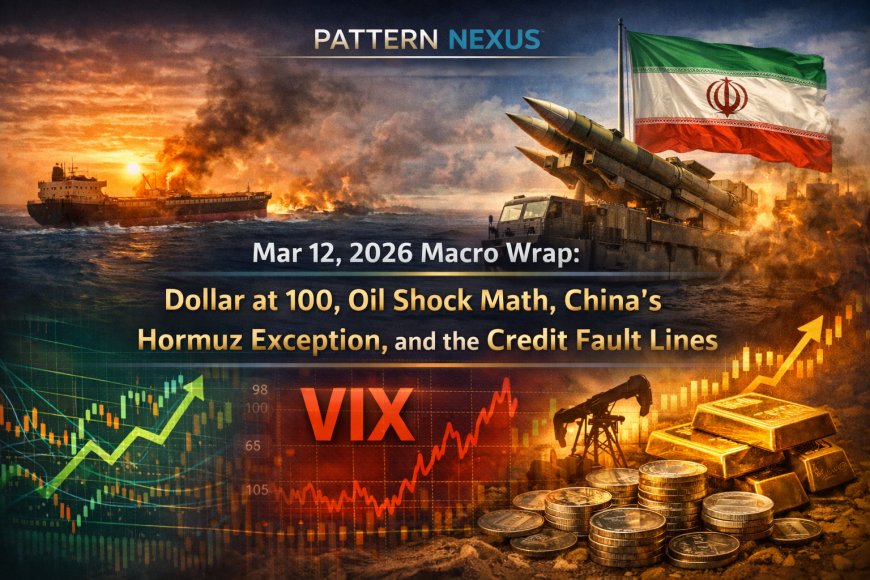


Here’s what’s going on. The market is trying to pretend we’re in a normal cycle, while the system is screaming “constraint.” The dollar keeps climbing and it’s about to test 100. Rates are sitting in territory we’re not supposed to be in. Oil keeps threatening $100+ again, and if it sustains, this gets ugly fast. The Fed can’t cut into an inflation impulse. Trump can yell at Powell all day. It doesn’t change the math. Meanwhile the real war story isn’t the TV narrative. It’s the physical layer: shipping, insurance, LNG, and energy throughput. Markets can price “peace” in an hour. Ships don’t. If this drags, inflation pressure gets worse, the Fed stays boxed, and credit starts snapping in places people are still ignoring.
The market doesn’t know what’s going on. But the dollar, rates, and energy are telling you exactly where the stress is.
If oil sustains above $100, cuts become politically and economically toxic. The Fed is boxed.
China is the pivot. If they’re the only ones getting barrels through, that tells you the Strait is being treated like a permissions system.
When institutions are short “everything” and options pressure clusters, the tape turns into a mechanical whip. Not a fundamentals debate.
The Whiplash Tape: “Everything Is Fine” Optics, “Nothing Is Fine” Plumbing
How’s it going everyone. Enjoying the whiplash of 2026? It feels like we’ve lived about three and a half years, and we’re only three months in. And the funniest part is watching people pretend this is a normal market.
Everybody has an opinion. It’s going up tomorrow. It’s going down tomorrow. It’s a bull market. It’s a crash. It’s AI. It’s the Fed. It’s China. It’s whatever. The truth is simpler: the market doesn’t have a coherent model right now because the system is running multiple layers of conflict at once.
You’ve got a war layer. An energy layer. A rates layer. An options/positioning layer. A credit layer. A political layer. And the market keeps trying to compress that into one clean story like it’s 2017. It’s not 2017.
So the way I read this is simple: stop watching opinions and watch constraints. Constraints show up in the dollar, rates, oil, shipping/insurance behavior, and credit. Those things don’t lie.
DXY at 100: The Break That Can Get Violent
I’ve been watching the dollar grind higher every day. DXY is pressing 100 and people act like that’s just a cute “round number.” It’s not.
When the world gets chaotic, capital wants the cleanest collateral in the room. That’s dollars and Treasuries. That’s what you’re watching happen.
If DXY breaks over 100 and actually holds, a faster leg toward the mid-100s is not crazy. That’s literally how these moves work when momentum kicks in. And if the dollar gets going, and we start talking 105, then 110, the rest of the system changes.
- Equities: strong dollar + sticky yields = multiple compression. That’s how you reprice indexes down hard without “bad earnings.”
- Imports: people think strong dollar makes imports cheaper. In theory, yes. In reality, if freight + insurance + energy costs spike, the delivered cost can rise anyway.
- Global: a rising dollar squeezes anyone funding in dollars. That’s when “random” cracks show up overseas, and people act surprised.
So no, I’m not saying “the dollar must go to 110.” I’m saying the dollar is pressing a pivot point during a war-driven energy shock with yields already elevated. That is a combo that can get violent if it breaks.
Rates: “They Can’t Cut” Isn’t a Hot Take
The rates structure right now is insane. 10-year around the low 4s. 30-year pressing 5. 5-year near 4. 3-month creeping toward the top of its range. We are back in “you’re not supposed to be here” territory.
Next week is the Fed meeting. I see basically a zero chance of cuts right now. Not because Powell is stubborn. Because they’re staring down inflation pressure from oil.
Trump can call for cuts all day. It doesn’t change the constraint. If they cut while oil is spiking, inflation expectations jump. If they don’t cut and growth rolls over, credit becomes the tightening mechanism anyway. Pick your poison.
This is why people are confused. They want the Fed to solve everything. The Fed can’t solve a physical supply constraint. The Fed can only change the cost of capital. And right now, the cost of capital is already restrictive while the inflation channel is threatening to re-ignite.
Oil + LNG: The Supply Shock Clock
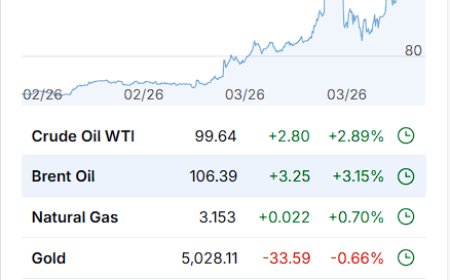
Oil is the input that runs the whole machine. If oil can sustain above $100 and actually get real buyers, this can get ugly. And yeah, $150 oil is not out of the question if this drags on and the corridor stays constrained. That’s not fear porn. That’s supply-risk math.
People keep thinking oil is just a “chart.” It’s not. It’s an inflation impulse. It’s a tax. It’s a margin compressor. It hits everything physical.
LNG is the sleeper grenade here. If LNG tankers are trapped, delayed, or rerouted, you don’t feel it instantly. You feel it later when inventories and contracts catch up with reality. That’s how supply problems work. They show up as “sudden” later, even though the constraint started weeks earlier.
An energy shock doesn’t need to “collapse stocks” immediately. It can slowly tighten everything until the cost of moving goods, financing inventory, and rolling credit becomes impossible. That’s how you get a lockup. Not overnight. Then all at once.
War Layer: Narrative vs Physical Reality
The story coming out of governments and mainstream media rarely aligns cleanly with what is actually happening on the ground. That’s not a conspiracy statement. That’s just how war works. Everyone is running narrative warfare, and the public gets fed whatever supports the objective.
I’m not going to sit here and play the “who’s winning” game because it turns into a propaganda argument. I’m going to focus on what’s observable and tradable:
- Are ships getting hit and rerouted?
- Is insurance pricing out or pulling back?
- Are energy flows constraining?
- Is the market hedging tail risk (vol, dollar, front-end)?
If those signals are tightening, then the system is tightening. That’s the entire point.
Options + Positioning: Why the Tape Whipsaws
This is the part most retail traders don’t understand. A lot of these day-to-day moves are not “fundamentals.” They’re mechanics.
You’ve got clustered calls and puts. You’ve got expiry pressure. You’ve got dealers hedging gamma. You’ve got institutions shorting broad baskets. That creates “up today, down tomorrow” even when the macro story hasn’t changed.
I’m watching next week’s put pressure and positioning because that’s where a lot of the forced behavior shows up. When institutions are short and the street has to hedge into a move, price can gap in a way that looks insane to people who are waiting for a headline to explain it.
Don’t confuse mechanical flows with “the system is fine.” Mechanical flows can hold the index together right up until they can’t.
China Focus: Securing Oil Flows and Where This Can Go
This is the pivot. China has more reserves than we do. China is not “cutting demand.” China is going to secure flows.
I’m getting reports that Iran is still sending oil to China. And the only people consistently getting oil out of the Strait are China, ironically. If that’s true, it tells you something important: Hormuz is already being treated like a permissions system. Not “open/closed.” Controlled access.
Here’s the ladder, because this is where escalation risk lives:
- Step 1: China negotiates carve-outs and safe passage.
- Step 2: China uses finance and insurance to keep voyages possible when private cover prices out.
- Step 3: China moves toward escort logic. “Defensive.” “Merchant protection.” Whatever label they use.
- Step 4: Multiple armed actors in the same tight maritime box. That’s how accidents turn into incidents.
People assume “China securing flows” automatically calms markets. Maybe it calms spot panic. But it can also increase systemic tail risk because now you have higher military density in the corridor. The tape can look calmer while the system becomes more brittle.
And if China is securing flows while the G7 is dumping reserves, you’re basically watching the transition from “market-based pricing” to “strategic allocation under stress.” That’s a different world.
Reserves: The SPR Is a Cushion. It’s Not a Solution.
We dumped reserves. The G7 dumped reserves. People act like that means “problem solved.” No.
Reserves buy time. They smooth spikes. They help politically. They do not reopen a chokepoint. They do not make insurers quote war-risk at normal terms. They do not make LNG tankers teleport out of the Gulf.
If you drain reserves into a prolonged disruption, you’re trading future stability for present optics. That’s not even a moral statement. That’s just what it is.
Private Credit + CRE: The Fault Line
Private credit is the “calm until it isn’t” market. It looks stable right up until it doesn’t. Because it’s not priced every second like equities.
When money is cheap and nobody redeems, it’s great. When liquidity tightens and people want their money back at the same time, you find out what you actually own. And you find out whether you can sell it.
Commercial real estate at scale is still a dumpster fire. Office is a dumpster fire. I’m seeing deals with insane markdowns. Ten million off here, fifteen million off there. That’s not “normal.” That’s forced repricing.
The reason is simple: refinancing at these rates doesn’t work for a lot of those capital stacks. So you get extensions, pretend values, and “it’s fine” until somebody has to sell. Then the market discovers reality.
Housing: Why Residential Still Holds While Commercial Bleeds
Residential housing is still doing better than people think. Small-scale investors are still buying single-family homes. People are still trying to expand portfolios. Supply is still tight in a lot of places.
But large-scale and commercial is where the damage is. And that’s the key distinction: residential can hold longer because the market structure is different, while commercial can fall apart even without a recession because it’s a refinancing and cashflow math problem.
Gold + Silver: People Keep Using the Wrong Model
Everybody asks me about gold and silver like it’s a video game power-up. “War means gold goes straight up.” Not how it works.
In early stress phases, the bid is usually Treasuries and dollars. That’s what happens when funding preference changes. Gold can get sold for liquidity. It can chop. It can fake people out. Then later, after policy response or when the system shifts again, you can get the real move.
Also, on the charts, I’m watching structure. My view is we’ve been in a downward pattern. People scream “new highs” and ignore the actual character. I’m not selling hopium. I’m watching the tape.
I’m not saying metals are dead. I’m saying stop acting like your preferred hedge has to validate your narrative on your schedule.
Pattern Nexus Lens
This is a control-systems problem. Markets can price a story instantly. The physical layer doesn’t move instantly.
If the Strait stays constrained, that constraint bleeds into inflation expectations, then rates, then equities, then credit. That’s the sequence. Not because it’s my opinion. Because that’s how the system transmits shocks.
The market can pretend “normal” for a while. The constraints don’t care. If oil stays unstable and China starts actively securing flows, tail risk grows even if the index looks calm.
War Scenarios + Market Projections
Not predictions. Pathways.
Scenario A: Slow Grind (most likely)
This drags. Shipping stays dangerous. Insurance stays tight. Oil stays jumpy. DXY stays bid. Rates don’t relax. Credit tightens in the shadows. Equities look “fine” until they’re suddenly not.
Scenario B: Escalation Without Formal Closure
More hits, more incidents, more interference, more fear. Oil spikes again. Vol spikes. Dollar firms. Equities reprice down. This is where the “market has no idea” phase ends and the repricing becomes obvious.
Scenario C: Behavioral Blockade
The Strait is technically open, but the expected value of transiting is negative. You don’t need a blockade headline for a blockade outcome. That’s when $150 oil becomes plausible and the recession conversation turns real.
Scenario D: Real Normalization
This requires the physical layer to normalize. Not headlines. Shipping behavior. Insurance terms. Throughput. LNG movement. If those don’t normalize, the “all clear” narrative is just cope.
What I’m Watching Next
- DXY: does 100 break and hold, or reject?
- Rates: do yields stay pinned into FOMC, and does the Fed admit the box?
- Oil: does it sustain above $100 and find buyers, or fail again?
- Shipping + insurance: does behavior normalize, or does the constraint deepen?
- LNG: do delays turn into a real supply problem in pricing and freight?
- China posture: diplomacy only, or visible “securing flows” action?
- Options pressure: where are the next clusters and what’s the dealer hedge flow likely to do?
- Private credit: gating, redemptions, forced selling, valuation marks.
- CRE: markdowns, forced sales, refinancing math breaking.
உங்கள் பிரதியாக என்ன?
 போல்
0
போல்
0
 எதிர்ப்பு
0
எதிர்ப்பு
0
 காதல்
0
காதல்
0
 காமெடி
0
காமெடி
0
 வா
0
வா
0
 துக்கம்
0
துக்கம்
0
 கோபமாக
0
கோபமாக
0

Founder of Pattern Nexus. I research markets, macro, geopolitics, AI, history, ancient systems, and the patterns most people overlook. I’m also building Market Radar, a trading scanner designed to read pressure, risk, confirmation, and setup quality before chasing a move. Pattern Nexus is where I connect the dots between data, history, technology, and the bigger system playing out around us.

















விமர்சனங்கள் (0)