
The Dollar Isn’t Collapsing — It’s Evolving
The dollar isn’t dying — it’s upgrading. The U.S. converts liabilities into globally demanded collateral (Treasuries), backstopped by the world’s largest official gold reserve and increasingly distributed over programmable rails (stablecoins, tokenized T-bills, institutional blockchains). This essay explains how that liquidity system actually works, why “hard pegs” like a BRICS gold currency would choke elasticity, and how the next easing cycle may flow through digital conduits.
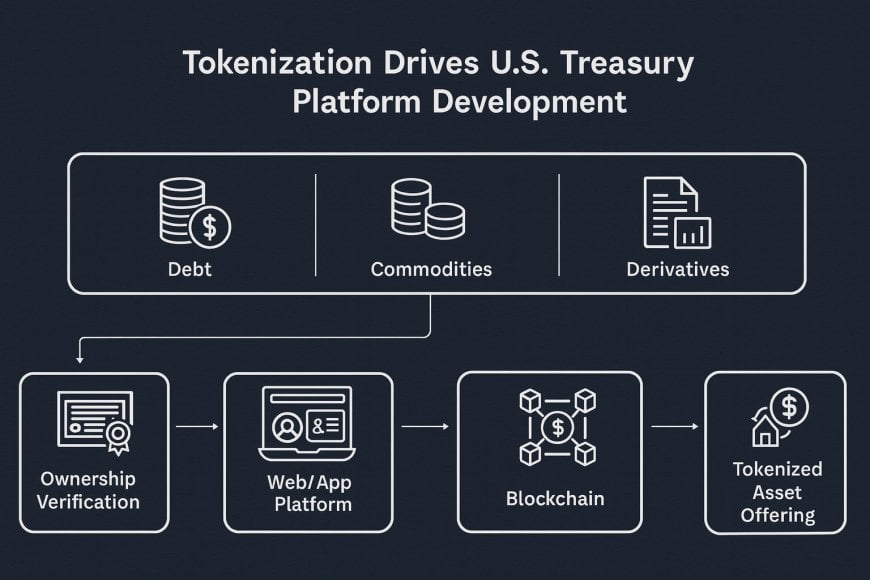
🟩 The Dollar Isn’t Collapsing — It’s Evolving
Commentary loves the “de-dollarization” story. Reality is far more complex — and, for the United States, more strategically favorable than most analysts admit. The U.S. doesn’t merely export debt; it converts liabilities into globally demanded collateral, distributes that collateral across deeper digital rails, and allows global market stress to reprice its hard-asset base higher. This system doesn’t implode — it mutates, reinforcing its dominance each cycle. The dollar’s next phase is not decay, but digitization — a programmable liquidity empire underpinned by Treasury collateral, gold revaluation, and the global hunger for stability.
The Hard-Asset Backstop: Gold as Collateral, Not Currency
At the heart of the U.S. monetary ecosystem sits a constant: 261.5 million fine troy ounces (≈8,133.5 tonnes) of official gold reserves. Valued at the statutory rate of $42.22/oz, the books claim about $11 billion — but at $4,200/oz market prices, those reserves represent roughly $1.1 trillion in latent hard-asset value. That delta matters. Gold serves as the shadow collateral underpinning faith in the dollar — a hard floor that appreciates precisely when the fiat system weakens. The United States doesn’t need to remonetize gold to benefit from it; it simply needs to own it when others panic.
When gold appreciates 10%, the U.S. Treasury’s implicit balance sheet strengthens. That appreciation acts as a passive deleveraging mechanism — a silent reinforcement of sovereign solvency in a world that increasingly marks credibility to collateral, not politics. The same dynamic underpins the modern “confidence loop”: fiat expansion creates inflationary signals → investors rush into gold → gold’s dollar price rises → U.S. hard-asset position improves → global trust in the U.S. balance sheet resets. It’s a feedback mechanism — not a collapse signal.
- U.S. Treasury — Status Report of U.S. Government Gold Reserve
- World Gold Council — Central Bank Gold Statistics
- Gold Demand Trends & Central Bank Accumulation
BRICS nations, by contrast, are pursuing the opposite strategy: anchoring their ambitions to a fixed, commodity-linked currency. Yet, pegging to gold or oil reintroduces deflationary rigidity — a problem the world left behind in 1971. Pegs cannot accommodate modern liquidity cycles; they die under their own inflexibility. The dollar’s superiority lies in its dual-natured design: elastic in issuance, but anchored by assets that appreciate when confidence fades.
The Liquidity Game: How the U.S. Exports Debt but Imports Demand
Critics often claim that the United States “exports its debt” to the world. That’s true in form, but misleading in function. The U.S. doesn’t dump unwanted liabilities abroad — it converts them into reserve-grade collateral that every global institution wants to hold. In essence, the rest of the world pays the U.S. for access to the safest collateral pool in existence. That dynamic — known as “exorbitant privilege” — is not an accident. It’s engineered through a century of liquidity architecture: from the 1944 Bretton Woods design to the 2020s Treasury market reforms and now the 2025–2026 wave of tokenization pilots.
When a foreign bank, sovereign wealth fund, or stablecoin issuer buys U.S. Treasuries, it’s not just lending to America — it’s purchasing entry into the global liquidity network. The U.S. effectively taxes the world’s desire for safety. Even when Washington runs deficits, those dollars reappear as foreign demand for Treasury collateral, creating a closed recycling loop. That’s why every “crisis” — inflation, recession, pandemic — ultimately ends in higher foreign Treasury holdings, not abandonment of the dollar.
- U.S. Treasury — TIC Data (Foreign Holdings of Treasuries)
- IMF World Economic Outlook (Reserve Asset Trends)
- Federal Reserve Research & Liquidity Flow Studies
This is why calls for “de-dollarization” misunderstand the system’s incentive design. You don’t defeat a system that monetizes your fear — you strengthen it. Every gold purchase, every stablecoin minted, every flight-to-quality trade reinforces the same structure: the dollar as the liquidity denominator of last resort.
Stablecoins, Tokenized Treasuries, and the 24/7 Dollar
Stablecoins are not the dollar’s rival; they are its software upgrade. Tokens like USDT, USDC, PYUSD, and institutional instruments like BlackRock’s BUIDL Fund are extensions of the Treasury market — each backed by short-dated T-bills or repo exposure to the Fed’s own plumbing. Every new stablecoin minted implies fresh demand for Treasuries. The IMF estimates that as of Q3 2025, stablecoins collectively held over $180 billion in U.S. government debt, equivalent to 1.3% of all outstanding bills — a share that is rising monthly.
- BIS Working Paper No.1270 — Stablecoin Flows & Treasury Market Impact
- Circle Transparency Reports (USDC Reserves)
- Tether Attestations & Reserve Composition
- BlackRock BUIDL Tokenized Treasury Fund
These instruments extend the dollar’s reach into new territories where banks are weak and inflation is endemic — from Argentina to Nigeria to Turkey — allowing citizens to hold synthetic dollars without ever touching the U.S. banking system. Paradoxically, “crypto dollarization” expands Washington’s monetary sphere of influence, even as traditional banking retreats. The dollar becomes more liquid, more global, and more granular — accessible through code rather than correspondent banking.
Meanwhile, tokenized Treasuries on platforms like JPMorgan Onyx and Broadridge DLR are rewriting how collateral moves. Institutions can now settle repo in minutes instead of hours, with audit trails verifiable on private blockchains. The Bank for International Settlements’ Project Guardian and Mariana pilots have already proven cross-border tokenized settlement between Singapore, Switzerland, and France — all denominated in dollars.
The Liquidity Cycle Always Ends the Same Way
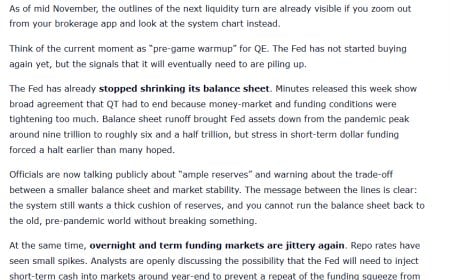
Since 2008, every tightening cycle has ended in the same pattern: reserve scarcity → repo stress → policy reversal. The 2019 repo spike, the 2020 pandemic QE, and the 2025 SRF drawdown are all chapters in this same rhythm. Each time, the Fed tightens until the “minimum ample reserve” line is crossed — when small funding disruptions start cascading through collateral chains. Once that threshold is breached, policy pivots from restraint to accommodation, often within weeks.
- NY Fed — Standing Repo Facility Overview
- Reuters — Reverse Repo Facility Drained by 2025
- Federal Reserve — H.4.1 Weekly Report
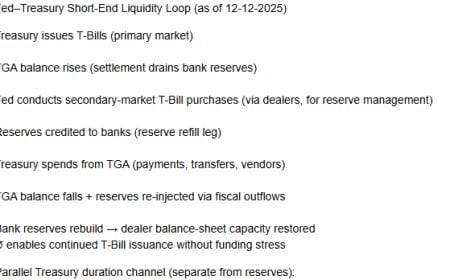
In mid-October 2025, repo rates again breached the upper bound of the Fed’s target. Banks quietly tapped the Standing Repo Facility for $15 billion in one day — the largest mid-month draw since the pandemic. That wasn’t panic; it was a signal: reserves are tight. Powell’s recent comments that the “end of balance sheet runoff is coming into view” echo the same logic as 2019’s forced pivot. The next easing cycle — QE 2026 — will likely coincide with the integration of digital collateral networks, meaning liquidity injections will travel through tokenized channels rather than traditional primary dealer desks.
The Digital Dollar Frontier: QE Meets Tokenization
QE in the next cycle won’t look like 2010’s spreadsheet-era bond buying. It will be programmable QE — direct liquidity injections through digital asset networks. Tokenized Treasuries allow the Fed (and Treasury) to push liquidity precisely where it’s needed, when it’s needed. Imagine repo facilities where collateral rehypothecation happens instantaneously, or targeted credit easing delivered to specific institutions via permissioned smart contracts. That’s not sci-fi; it’s the roadmap.
- BIS Project Helvetia — Wholesale CBDC for Settlement Efficiency
- SWIFT CBDC Interlinking Pilot Results
- World Economic Forum — The Tokenized Liquidity Era
When this system matures, “money printing” becomes liquidity programming. Instead of expanding M2 blindly, the Fed could allocate liquidity into tokenized collateral pools, controlling flow, duration, and counterparties dynamically. The line between fiscal and monetary operations blurs further — and Treasury coordination becomes automated. The dollar, in essence, becomes a self-regulating, data-driven operating system for global liquidity.
The Global Power Shift That Isn’t: Why the Dollar Still Anchors Everything
De-dollarization narratives ignore the network layer. The IMF’s COFER database still places the dollar’s share of global reserves above 58% (and nearly 70% adjusted for valuation effects). The BIS Triennial FX Survey shows the dollar involved in 88% of all currency trades. Commodities from oil to copper are still quoted and cleared in dollars. Even China’s Belt and Road loans are often structured in USD to attract investor participation. In short, every “alternative system” runs on dollar plumbing.
- IMF — COFER Reserve Composition
- BIS Triennial FX Turnover Survey
- Financial Times — The Myth of De-Dollarization
When BRICS nations attempt to settle trade in gold or local currencies, they still measure value against the dollar’s benchmark — just as 1970s OPEC pricing eventually circled back to the same unit. The dollar isn’t fighting competitors; it’s absorbing them into its architecture. The more systems that interconnect through tokenized Treasuries and stablecoins, the stronger the gravitational pull becomes. This is how empires evolve — not by conquest, but by interoperability.
The Fractures to Watch
No structure is invincible. The coming phase of dollar evolution introduces new failure points:
- Tokenized run risk: If stablecoin redemptions cascade, Treasury bills could experience “flash illiquidity” at the front-end.
- Regulatory fragmentation: Competing frameworks (EU MiCA vs. U.S. GENIUS Act) could fragment liquidity pools.
- Data concentration: Programmable liquidity centralizes control — whoever holds the levers of issuance and settlement holds geopolitical leverage.
But these are the growing pains of modernization — not omens of collapse. Every liquidity system in history has adapted by layering technology atop trust. From gold certificates to Fedwire to tokenized Treasuries, each iteration increases speed, granularity, and control. The dollar’s next evolution is no different.
Final Thesis: A Self-Reinforcing Monetary Organism
Every cycle follows the same pattern: liquidity expands, the dollar “weakens,” gold rallies, global demand for collateral explodes, and the U.S. reasserts control through elastic issuance. Each expansion phase strengthens the hard-asset side of the balance sheet; each crisis pushes the world deeper into dollar rails. What looks like instability is actually the heartbeat of a living system.
The dollar doesn’t die from competition — it feeds on it.
Every rival asset becomes dollar collateral; every alternative payment rail settles through Treasury-backed tokens; every flight from risk returns to the same liquidity denominator. This is not the end of the system — it’s its metamorphosis.
What’s next is not collapse, but integration — a hybrid financial ecosystem where the U.S. dollar, backed by Treasuries and reinforced by digital infrastructure, continues as the world’s programmable reserve. The 20th century built the dollar empire on oil and industry. The 21st will rebuild it on data, collateral, and code.
Disclaimer: This analysis reflects personal research and interpretation of public data. It is not financial advice. Readers should perform independent due diligence and consult qualified professionals before acting on market views.
உங்கள் பிரதியாக என்ன?
 போல்
0
போல்
0
 எதிர்ப்பு
0
எதிர்ப்பு
0
 காதல்
0
காதல்
0
 காமெடி
0
காமெடி
0
 வா
0
வா
0
 துக்கம்
0
துக்கம்
0
 கோபமாக
0
கோபமாக
0

Founder of Pattern Nexus. I research markets, macro, geopolitics, AI, history, ancient systems, and the patterns most people overlook. I’m also building Market Radar, a trading scanner designed to read pressure, risk, confirmation, and setup quality before chasing a move. Pattern Nexus is where I connect the dots between data, history, technology, and the bigger system playing out around us.













விமர்சனங்கள் (0)