
Auto Repos Are the New Foreclosures: The Household Stress Signal the Market Keeps Ignoring
Repossessions are rising, subprime delinquencies are hitting cycle highs, and loan terms keep stretching. This is the stealth foreclosure wave on wheels—and it maps cleanly to the next phase of the household credit cycle.



Listen to audio version:
Repossessions aren’t just a personal finance story. They’re a macro signal. When wages lag, living costs stay high, and credit terms stretch to keep monthly payments “affordable,” the system doesn’t gracefully delever—it enforces.
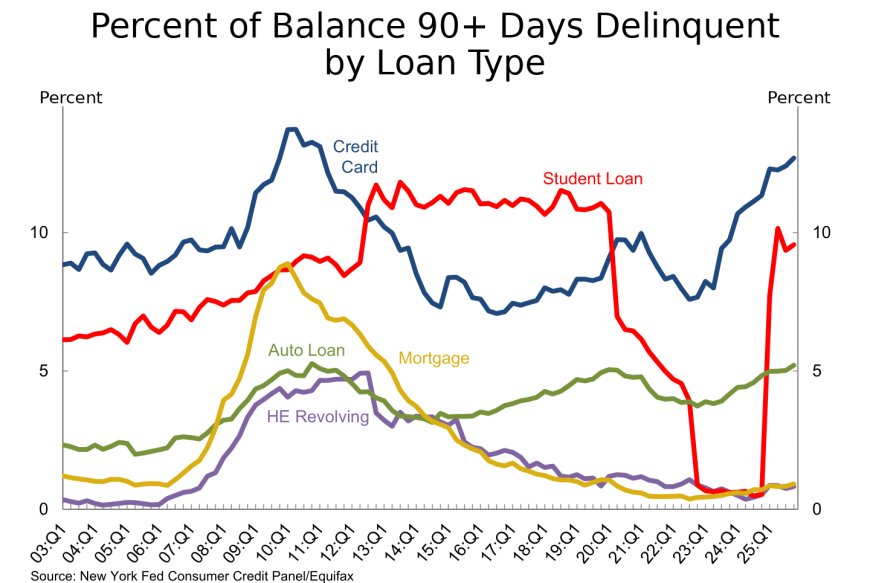
The New York Fed’s latest household debt report shows total household debt near $18.8T, with auto balances around $1.66T. Delinquencies have ticked up at the aggregate level—even if auto transitions look “steady,” the stress is concentrated and widening beneath the surface.
Meanwhile, subprime performance has been deteriorating in the securitized channel (auto ABS), and mainstream coverage has repeatedly flagged that repossessions have climbed sharply off the pandemic lows—back into “this feels like 2009” territory.
This article explains why auto repos are the stealth foreclosure wave on wheels, how the ABS plumbing transmits stress, and what to watch next if you want early warning signals that beat headlines by months.
Why Autos Break Before Housing
If you’re trying to understand household stress, don’t start with the most “important” asset. Start with the most enforceable one. Housing is politically sensitive, foreclosure processes can be slow, and servicers have learned how to stretch timelines. Autos are the opposite: short timelines, clean enforcement, fast liquidation.
That’s why auto repos function like the first tremor before the larger quake. When the household budget breaks, the car payment often fails before the mortgage—not because the car is more valuable, but because the mortgage is harder to unwind and more culturally “protected.”
So when repos accelerate, you’re not just seeing “people who made bad choices.” You’re seeing the system’s enforcement layer activate. It’s the credit cycle becoming physical.
What the Fed Data Actually Says
The New York Fed’s Quarterly Report on Household Debt and Credit is the baseline map. In 2025Q4, total household debt reached about $18.8 trillion. Auto loan balances edged up to roughly $1.66 trillion. Credit card balances rose to about $1.28 trillion. Aggregate delinquency worsened slightly, with 4.8% of outstanding debt in some stage of delinquency.
There’s another subtle signal in that same report: auto credit quality at origination loosened slightly, with the median credit score for new auto loans down from 724 to 716. That’s not a collapse—but it’s a directional tell. In late-cycle consumer credit, “slightly looser” underwriting often shows up right before the enforcement layer accelerates.
The Payment Shock Stack: Price, Rate, Term
Auto stress isn’t one variable. It’s a stack. A borrower doesn’t default because rates are up, or prices are up, or terms are longer. They default because all three stack into a monthly obligation that is no longer compatible with rent, food, insurance, and everything else.
There’s a psychological trick in long terms: consumers don’t buy “a car,” they buy “a payment.” Dealers and lenders know it. That’s why the term stretches. The side effect is predictable: negative equity persists longer, the vehicle depreciates while the loan amortizes slowly, and the borrower becomes trapped.
This is the “affordability mirage.” You can finance almost anything if you stretch it long enough. But the longer you stretch it, the higher the probability that one interruption—job loss, medical bill, rent increase, insurance spike—breaks the chain.
Recovery Math: Used Cars, Auctions, and Loss Severity
Repos are not the end of the story. The real story is recovery. What does the lender actually get when the car hits auction? If used-vehicle prices fall, recoveries drop, and the same repossession volume generates worse loss severity. If used prices stabilize or rise, recoveries improve and the credit system can “digest” more defaults without flashing systemic stress.
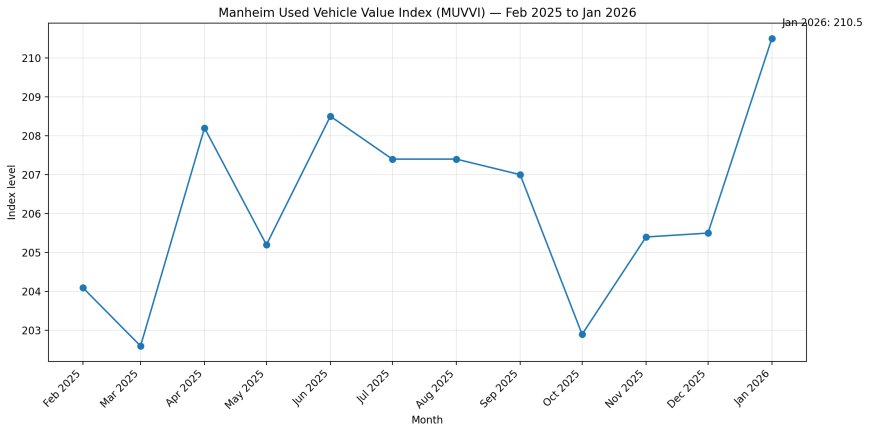
When repossessions rise into an environment of weak recoveries, you get a feedback loop: lenders tighten, approvals fall, dealers lose marginal buyers, used supply dynamics change, and the “payment market” gets squeezed from both sides.
That’s the hidden reason repos matter: they connect household stress to real-economy channels like auto sales, dealer financing, and employment in a sector that touches almost every region.
ABS Plumbing: Where the Risk Actually Sits
A lot of “subprime auto” doesn’t live on a bank’s balance sheet the way people assume. It lives inside structured products. Auto ABS performance data—delinquencies, net losses, recovery indices—often shows stress earlier than broad consumer narratives because securitized pools are measured relentlessly and reported consistently.
Reuters previously reported Fitch data showing subprime borrowers 60+ days delinquent hitting record highs in late 2025. Separately, Fitch maintains an “Auto Indices” dashboard that tracks 60+ delinquency, annualized net losses, and recovery rates—exactly the real-time telemetry you want if you’re serious about forecasting household stress.
This is where “not systemic” can still be very real. Auto credit stress may not topple major banks, but it absolutely can amplify a slowdown by tightening consumer credit, pushing more households into cash-only constraints, and pressuring regional economies dependent on auto production, sales, and logistics.
The K-Shaped Credit Consumer
One reason headlines feel contradictory is because the economy is splitting. Prime borrowers can still pay. Subprime borrowers are absorbing the shock. The New York Fed’s reporting and broader coverage both point to a pattern: lower-income households are struggling more under high living costs and a cooling labor market, while asset-holders remain resilient.
That split matters because autos are not optional for large parts of the country. In many regions, losing a vehicle means losing job access. That turns repossessions into a second-order employment amplifier: no car → missed shifts → job loss → more delinquency. The system isn’t just collecting collateral; it’s removing mobility from the workforce.
So when you hear “auto loans are fine,” ask: fine for who? Prime credit can look stable while subprime breaks hard enough to move repossession volumes and change lender behavior at the margin.
What to Watch Next: A Repo Dashboard
If you want to track this like a professional, don’t rely on viral anecdotes. Track the telemetry. Here’s a practical dashboard list that captures the full stack: borrower stress, collateral pricing, and securitized transmission.
- NY Fed Household Debt and Credit: total auto balances, transitions into delinquency, and broader household stress context.
- Fitch ABS Auto Indices: 60+ delinquency index, annualized net loss index, recovery rate index (subprime vs prime dynamics).
- S&P Global ABS trackers: prime/subprime delinquency rates and pool performance commentary.
- Manheim Used Vehicle Value Index: wholesale used pricing as the recovery math baseline.
- Payment affordability metrics: average monthly payments, average amount financed, and share of 84+ month terms.
- Repossessions and auction throughput: Cox and other auction-level reporting that indirectly confirms repo volume.
Pattern Nexus Lens
FAQ
Sources
- New York Fed: Quarterly Report on Household Debt and Credit (2025Q4, released Feb 2026)
- Reuters: Household credit troubles worsened at end of 2025 (Feb 10, 2026)
- Reuters: Record number of subprime borrowers miss car loan payments (Nov 12, 2025; Fitch data)
- Fitch Ratings: ABS Auto Indices (delinquencies, net losses, recoveries)
- Cox Automotive / Manheim: Used Vehicle Value Index (January 2026)
- Investopedia: Record-high monthly payments; longer terms becoming common (Jan 2026)
- S&P Global Ratings: U.S. Auto Loan ABS Tracker (Dec 2025 performance)
Ano ang Iyong Reaksyon?
 Gusto
0
Gusto
0
 Hindi Gusto
0
Hindi Gusto
0
 Pag-ibig
0
Pag-ibig
0
 Nakakatawa
0
Nakakatawa
0
 Wow
0
Wow
0
 Malungkot
0
Malungkot
0
 Galit
0
Galit
0

Founder of Pattern Nexus. I research markets, macro, geopolitics, AI, history, ancient systems, and the patterns most people overlook. I’m also building Market Radar, a trading scanner designed to read pressure, risk, confirmation, and setup quality before chasing a move. Pattern Nexus is where I connect the dots between data, history, technology, and the bigger system playing out around us.



















Mga Komento (0)