
🚨 The Fed Just Tapped the MBS Repo Valve — Why That Matters More Than People Think
The Federal Reserve quietly conducted nearly $9 billion in mortgage-backed repo operations after months of inactivity — signaling early liquidity strain in U.S. funding markets. Historically, this is how quantitative easing begins: the Fed provides collateral support before publicly announcing policy shifts. This article examines the data, the 2019 precedent, the QE connection, and what it could mean for 2026.
The Fed Just Tapped the MBS Repo Valve — Why That Matters More Than People Think
October 2025 | By Chris Grenke
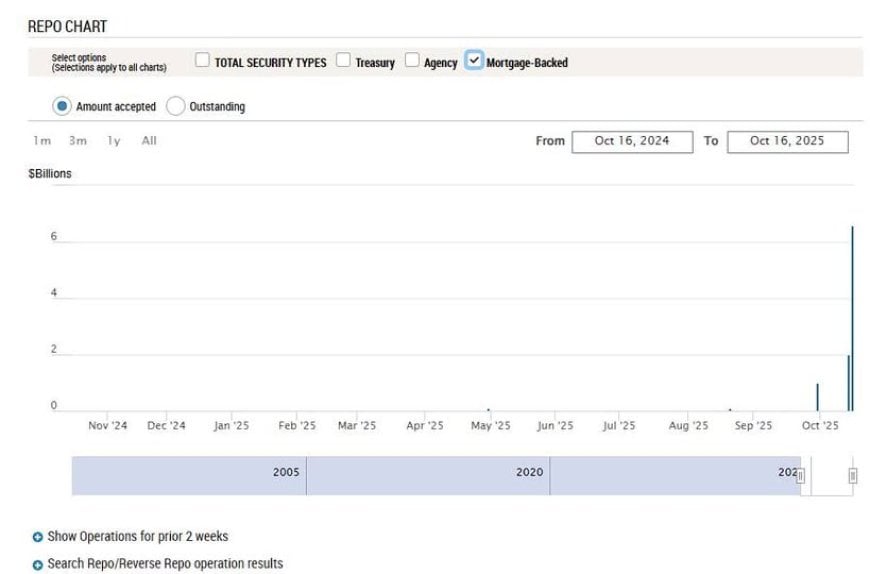
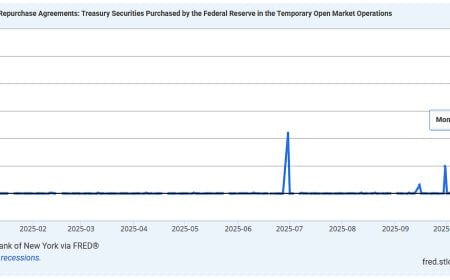
The Fed’s desk has just carried out nearly $9 billion in repo operations using **agency mortgage-backed securities (MBS)** collateral over two days — after virtually zero such activity all year. That is not random. When the Fed begins lending cash against mortgage collateral, it signals tightness in the plumbing of collateral and funding markets. If sustained, it’s often the quiet onset of a new easing cycle — think of it as the pre-phase of QE 2026.
---
What Just Happened
On the New York Fed’s repo operations page, collateral types (Treasury, agency, MBS) are broken out daily. Suddenly, the “Mortgage-Backed” line — which had been flat for months — surged into billions. That’s confirmed by SRF (Standing Repo Facility) usage hitting highs and interdealer funding strains emerging in market color. (FT reporting)
The SRF was created after the 2019 repo spike as a safety valve: dealers can exchange high-quality collateral (Treasury or agency securities) for cash at a penalty-like rate when funding is stressed. (NY Fed SRF FAQ) The fact that the Fed is now accepting **MBS collateral** (agency mortgage paper) is telling: mortgage markets are tightening, and balance-sheet stress is creeping upward.
---
Historical Backdrop & Why This Triggers Alarms
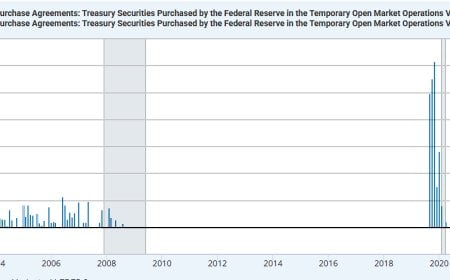
- 2019 Repo Crisis: Overnight rates spiked into double digits. The Fed intervened with daily repos. That event exposed that even with ample reserves, stress can cascade through collateral plumbing. (Fed Feds Note)
- 2020–2022 QE Surge: At its peak, the Fed bought ~$80 billion/month in Treasuries and $40 billion/month in MBS, ultimately holding ~32% of the total agency MBS market. (Brookings on Fed COVID response)
- 2022–2025 QT Drawdown: The Fed’s balance sheet shrank from ~$9 trillion to ~\$6.7 trillion. Meanwhile, the ON RRP buffer — previously ~\$2–3 trillion — largely vanished, removing a cushion against volatility. (Reuters on draining reverse repos)
With the ON RRP exhausted, the next stress shows up in bank reserves, repo markets, and collateral chains — exactly where the Fed now seems to be intervening again.
Federal Reserve Chair Powell, in remarks in October 2025, even referenced the Fed’s historical use of MBS purchases when easing was needed — implicitly reminding the audience: these tools remain in the toolkit. (Powell October speech)
---
What This Move Probably Signals
- Liquidity & Collateral Strain Exist: If funding were ample, the Fed wouldn’t need to offer repo against MBS. This shows pressure creeping into less liquid corners of the system.
- QT Is Running Into Limits: The margin for continued balance-sheet contraction is shrinking. » If repo usage stays elevated, the Fed may need to pause or slow QT sooner than anticipated.
- Mortgage Market Sensitivity: Using MBS collateral for liquidity support ties this move directly to mortgage originations, spreads, and refinancing dynamics.
---
“How It Always Starts” — A Pattern We’ve Seen Before
- 2019 → Repo rate spike → Fed intervenes - 2020 → Massive QE including MBS - 2025 → SRF and Desk revival via MBS collateral If this develops into a sustained stress cycle, the likely path is: **slow QT → pause QT → targeted balance-sheet support → eventual QE if macro weakens**. ---
What to Watch Going Forward
1. **Day-to-day SRF usage:** If it remains elevated (not just monthly or quarter-end bump), that’s a red flag. 2. **Composition of Fed Desk collateral:** Are MBS operations growing relative to Treasury operations? 3. **ON RRP metrics:** If the reverse repo facility is still near zero, that buffer is gone. 4. **Mortgage basis & spread widening:** If MBS spreads blow out relative to UST, stress is leaking into housing finance. 5. **FOMC tone on QT:** Watch for hints at reduced runoff plans or signals of balance-sheet flexibility. ---
Scenario Outlooks
**Base / Likely Case:** Repo stress lingers; the Fed slows QT; mortgage basis stays choppy. Markets anticipate a gentler posture ahead. **Upside / Soft Landing:** Stress dissipates. The Fed keeps QT limited but doesn’t reverse it. This becomes remembered as a temporary disturbance. **Downside / Turning Point:** Persistent stress forces a full policy pivot: the Fed halts QT, starts targeted balance-sheet growth, and quietly begins QE support again. ---
The Mortgage Angle That Gets Ignored
During the QE expansion period, the Fed’s footprint in agency MBS became enormous, profoundly affecting mortgage markets. If the repo desk is again leaning on MBS paper, it means the mortgage system is near a liquidity tipping point. Widening MBS spreads, fewer new originations, or liquidity stress in the housing finance chain can force earlier Fed intervention. ---
Bottom Line
This is more than a $9B blip. It is a flashing neon sign from the plumbing: collateral stress, tighter funding, cracks in the system. If this persists, we’ll see a sequence: **slow QT → pause QT → balance-sheet support** — all before they ever call it “QE.” The whispers are already happening — it’s just a matter of time before the Fed has to speak. ---
Sources & Further Reading
- New York Fed — Repo Operations & Collateral Results
- New York Fed — Reverse Repo Facility
- NY Fed — SRF FAQ / Counterparties
- Reuters — Reverse Repo Drained, Fed Tightening Phase
- Fed — What Happened in Money Markets in September 2019
- Brookings — Fed’s QE & MBS Role During COVID
- Powell Remarks | October 2025
- FT — Funding Strain and Repo Market Jumps
- Reuters — Banks Tap Fed Repo, Rates Jump
#MBS #RepoMarket #FederalReserve #QE2026 #LiquidityCycle #MonetaryPolicy #HousingFinance #CollateralStress
Ano ang Iyong Reaksyon?
 Gusto
0
Gusto
0
 Hindi Gusto
0
Hindi Gusto
0
 Pag-ibig
0
Pag-ibig
0
 Nakakatawa
0
Nakakatawa
0
 Wow
0
Wow
0
 Malungkot
0
Malungkot
0
 Galit
0
Galit
0

Founder of Pattern Nexus. I research markets, macro, geopolitics, AI, history, ancient systems, and the patterns most people overlook. I’m also building Market Radar, a trading scanner designed to read pressure, risk, confirmation, and setup quality before chasing a move. Pattern Nexus is where I connect the dots between data, history, technology, and the bigger system playing out around us.
















Mga Komento (0)