
Market Update — November 6, 2025: Volatility Surges, Tech Cracks, and Bonds Flash a Global Warning
Markets extend yesterday’s weakness as tech sells off, volatility jumps, and bond markets continue to reprice policy direction. A full Pattern Nexus macro breakdown.
Equities extend yesterday’s weakness as liquidity thins, volatility stays elevated, and global bond markets keep dictating the tape. Tech leads the selloff while policy risks multiply.

1. The Market Snapshot: A Second Day of Stress
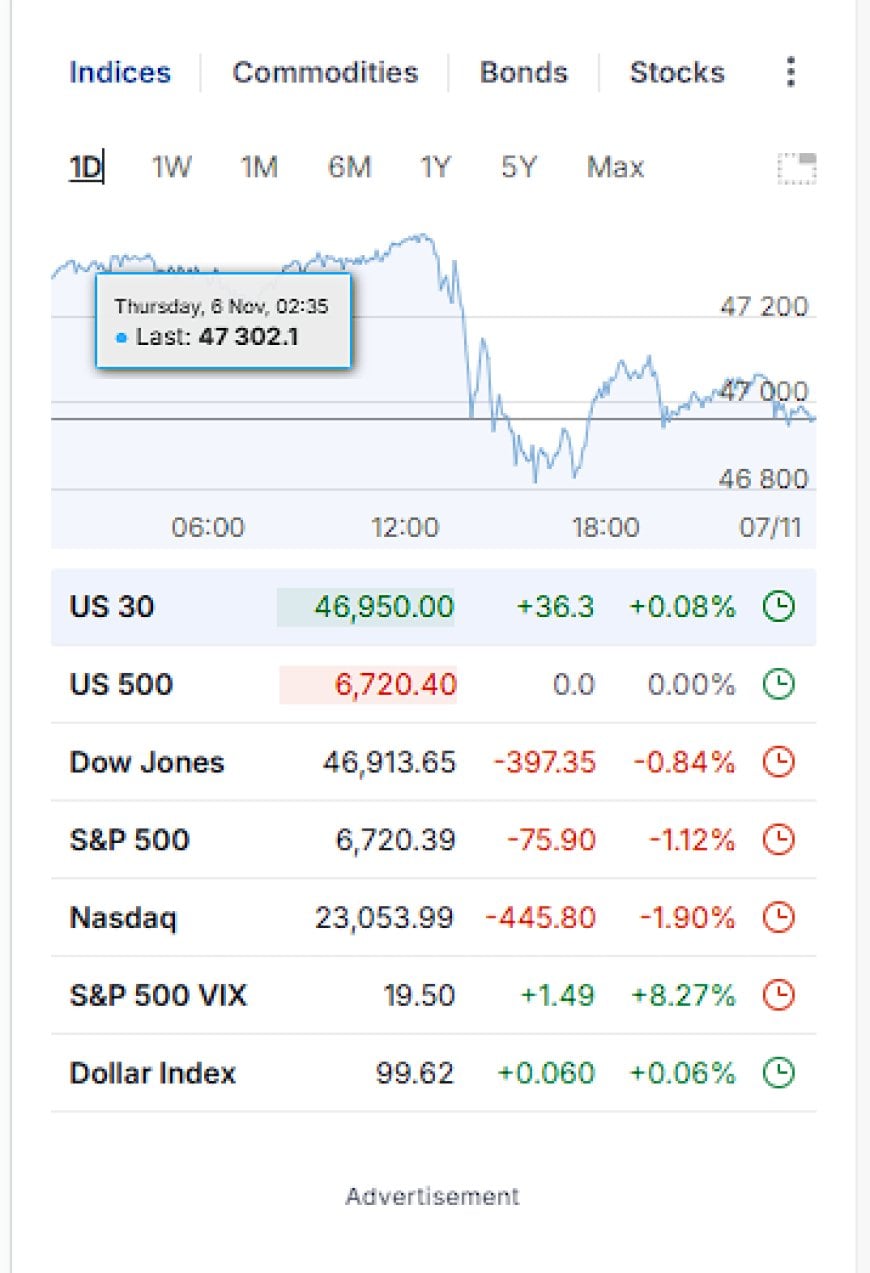
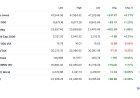
Markets didn’t stabilize overnight—if anything, today amplified the fractures exposed yesterday. The Nasdaq shed another 1.90%, the S&P 500 lost 1.12%, and the Dow slipped 0.84%. This looks less like a one-off correction and more like a repricing of an entire risk regime.
- Nasdaq: -1.90%
- S&P 500: -1.12%
- Dow Jones: -0.84%
- VIX: high-teens/near ~20 (elevated vs last week)
- Dollar Index: softer on the day
The most important dynamic today isn’t the size of the equity losses—it’s the change in character. The tape shifted from low-vol melt-up to high-vol fragility, exactly the kind of regime-turning behavior we’ve been tracking in Systemic Realignment.
Sentiment deteriorated further following:
- Treasury keeping coupon sizes steady while signaling potential future increases
- Mixed global sovereign moves (Germany flat-to-lower; UK firmer; Japan near cycle highs)
- Large-cap guidance tone cooled across select names
Add it all together and markets finally acknowledged: the soft-landing narrative is cracking around the edges.
2. Tech Leads the Selloff — AI Trade Hit Again
Tech’s decline isn’t random—it’s mechanical. When rates chop violently, the longest-duration assets get repriced first. The Nasdaq is now down nearly 3.8% in two sessions, wiping out almost three weeks of gains. But several deeper signals matter:
- Large-cap tech tone turned cautious on forward outlooks
- Cloud capex is flattening, a theme we highlighted in The AI Industrial Flywheel
- Options dealers unwound gamma-heavy tech positions
- ETF flows reversed sharply after seven straight weeks of inflows
Investors aren’t abandoning AI—they’re simply repricing the path. The market is transitioning from “infinite growth momentum” to “earnings must now justify valuations.” This rotation was inevitable. Liquidity is the oxygen of the AI trade, and oxygen levels are dropping.
3. Bond Market Repricing Accelerates — Globally
The bond market is the story of the week. U.S. yields whipped again, and the move had a global echo:
- Germany 10-year: roughly flat to slightly lower on the day
- UK gilts: firmer as markets leaned dovish on the BoE path
- Japan 10-year: near multi-decade highs, keeping pressure on the yen
Global bond VAR shocks transmit into U.S. markets instantly, pulling liquidity from risk assets. That’s exactly what we saw today.
The U.S. Treasury added fuel by keeping sizes steady while leaving the door open to future increases. Not confirmed, not formal, but enough to keep supply anxiety in focus.
This follows our view from yesterday: deficits + refinancing cycle + tariff-case uncertainty = unstable issuance path. The market knows the math doesn’t work without intervention.
“The U.S. can’t issue into a vacuum. Either yields come down or something in the system gives.”
Bond volatility is the macro regime.
4. Liquidity Thread Tightens Further
The liquidity picture worsened materially in the last 24 hours:
- TGA balances remain inconsistent, suggesting uneven federal cash flows
- RRP balances are near cycle lows, removing a major liquidity buffer
- Bank reserves are inching toward the “scarcity” threshold
- Funding spreads widened—modestly, but meaningfully
This is exactly the scenario described in The Repo Trap: when reserves tighten, risk assets lose their immunity. Volatility becomes the transmission channel, not the outcome.
5. Big News of the Day: The Macro Drivers Behind the Selloff
Beyond price action, several developments shaped today’s session:
• The SCOTUS Tariff Case Continues to Hang Over Markets
Legal analysts are increasingly vocal that the Court may limit executive tariff powers. Markets aren’t fully pricing the possibility of duty refunds or a large disruption in trade policy. Our full deep dive is here: SCOTUS vs. Tariffs.
• China Stimulus Chatter
Unconfirmed local-media and social chatter pointed to targeted easing measures; take with caution. The yuan saw mild support from suspected smoothing operations.
• Corporate Earnings: Cautious Tone
Selective large-cap names sounded more conservative on near-term demand. None of this is catastrophic, but at high multiples even small changes in tone can reset the price-to-path.
• Crypto
Digital assets were mixed, broadly tracking the risk-off tone rather than providing a clean hedge.
6. What the Next 2–4 Weeks Likely Look Like
This is not a crash setup—this is a stress repricing setup. Expect:
- VIX in the low 20s is plausible if rates vol stays elevated
- More downside in tech as duration premiums reset
- A potential Fed communication shift toward rate-cut discussions
- Lower long-end yields via either market action or policy pressure
- Higher bond-vol as global central banks diverge
- Rotation into commodities and real assets if geopolitical tension persists
Markets can absorb bad news. What they can’t absorb is uncertainty that adds volatility to the denominator of every valuation model. That’s what this week is.
7. How Today Fits Into the Pattern Nexus Macro Framework
The entire setup reinforces the big-picture themes we’ve been writing on for months:
- Systemic Realignment — global capital rotation + geopolitical restructuring
- The Repo Trap — reserve scarcity + hidden plumbing stress
- AI Industrial Flywheel — long cycle intact, but not immune to liquidity shocks
- Great Housing Plateau — real assets outperform in unstable monetary regimes
Volatility isn’t the anomaly—it’s the beginning of a regime reset.
你的反应是什么?
 喜欢
0
喜欢
0
 不喜欢
0
不喜欢
0
 爱
0
爱
0
 有趣
0
有趣
0
 哇
0
哇
0
 悲伤
0
悲伤
0
 愤怒
0
愤怒
0

Founder of Pattern Nexus. I research markets, macro, geopolitics, AI, history, ancient systems, and the patterns most people overlook. I’m also building Market Radar, a trading scanner designed to read pressure, risk, confirmation, and setup quality before chasing a move. Pattern Nexus is where I connect the dots between data, history, technology, and the bigger system playing out around us.












评论s (0)